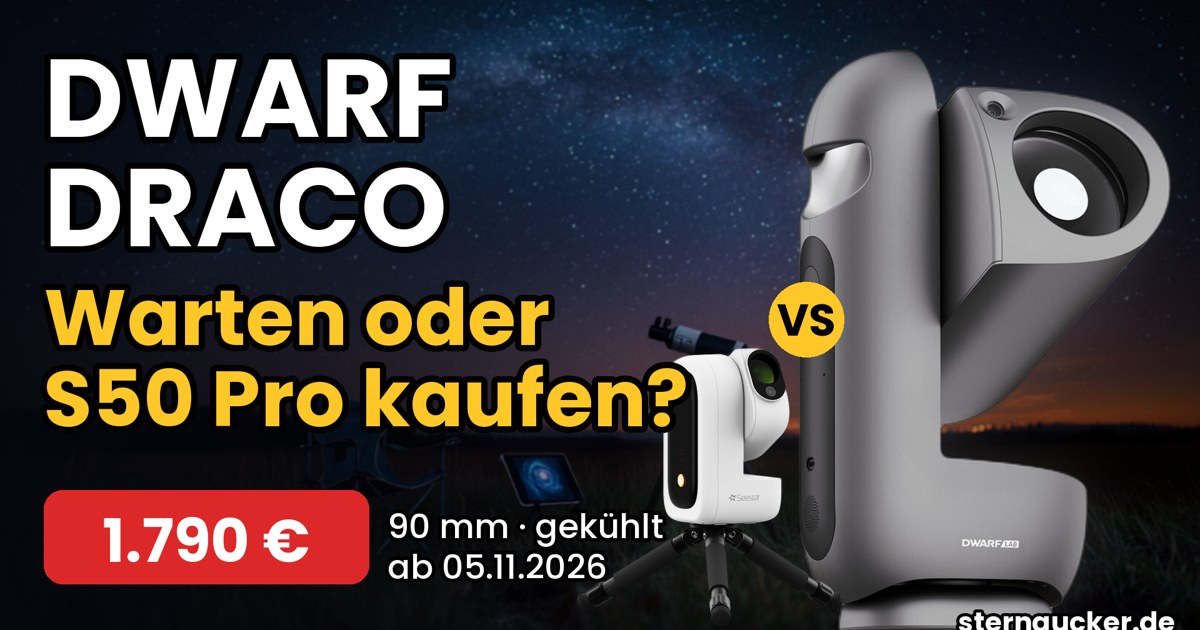
By Alexander Merz · Updated on · Details checked on 20 September 2026
The DWARFLAB Draco is a smart telescope with 90 mm of aperture and 340 mm of focal length (f/3.8). It is the first device in its class to bring an actively cooled, physically rotatable sensor (OV50Q40) and a built-in guide scope, which allows single exposures of up to 300 seconds. It costs € 1,499 and ships from November 2026.
DWARFLAB has announced the Draco, and ever since the forums have been full of one sentence: “I was going to buy the Seestar S50 Pro – now I’m waiting.” 90 mm aperture, cooled sensor, guiding with five-minute single exposures: that is a different class from anything DWARFLAB has built so far. Here is what has actually been confirmed, what the Draco costs, when it ships – and who should wait for it.
⭐ In short: The DWARFLAB Draco costs € 1,499, the SHO version with an additional SII filter € 1,669 – direct from DWARFLAB and at Astroshop, shipping from November. It is not a rival to the Seestar S50 Pro but plays a league higher – one and a half times the price, twice the weight, and not before November. If you want to get started now, buy the Seestar S50 ProSeestar S50 Pro ($999.00€ 999) and you won’t miss a thing. If you were considering a Vespera Pro or a Celestron Origin, wait for the first Draco reviews.
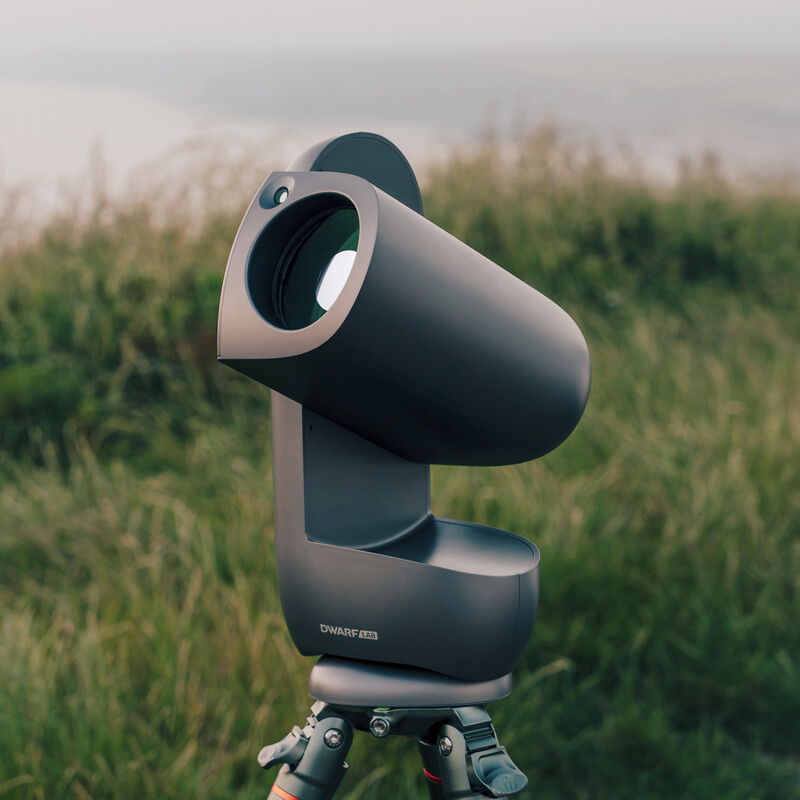
Premium class under €1,500: DWARFLAB Draco Smart Telescope
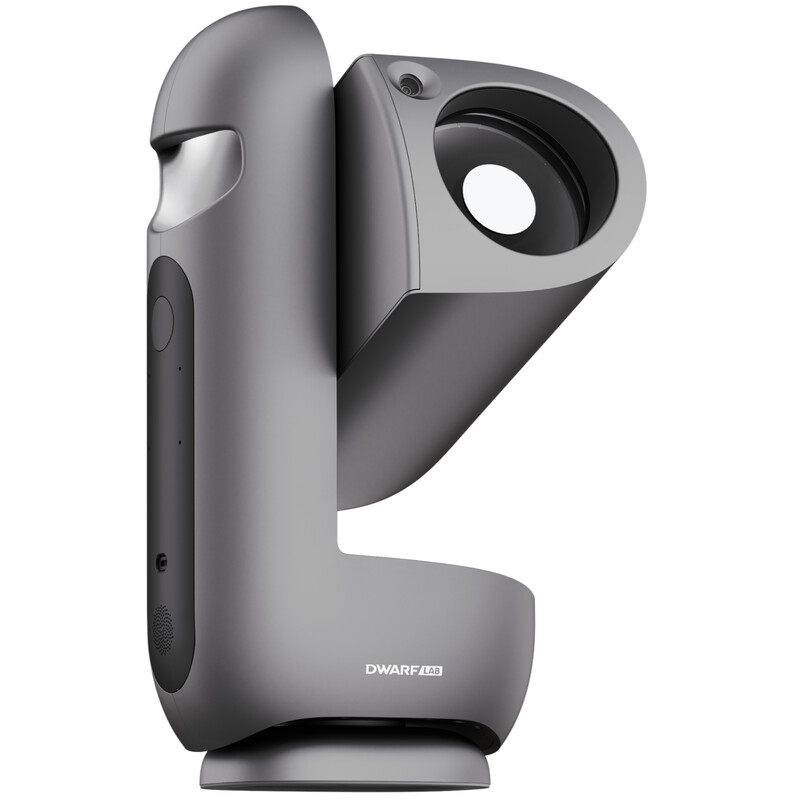
90 mm aperture, cooled sensor, built-in guide scope for exposures up to 300 seconds and a rotating sensor: the first premium-class smart telescope under €1,500. Pre-order at Astroshop – you are only charged once the unit is ready to ship; shipping from November.
Price: € 1,499
Would you rather be imaging now than in winter? Then read our Seestar S50 Pro check first – it is the telescope the Draco does not replace.
What’s confirmed about the Draco – and what isn’t
Nobody outside DWARFLAB has used the Draco yet. There is no independent review and no third-party raw image (as of 12.09.2026). Everything you read here comes from four sources.
✅ Confirmed
- The official DWARFLAB spec sheet and shop (dwarflab.com): prices, technology, shipping window.
- The Astroshop listing with the same prices and the 5 November date.
- The experience of the DWARF community with the app, delivery and mosaic mode – from the comments under our video.
- The optical patent the community dug up: a fast, folded 90 mm astrograph.
⚠️ Nobody knows yet
- Image quality – every image is a manufacturer rendering.
- Guiding, cooling and sensor rotation in practice – the hardware is new; the app is not (DWARFLAB app 3.4.2, used for years on the DWARF II, 3 and Mini).
- Whether the delivery date holds (see the community’s concerns further down).
Transparency: This page is based on the DWARFLAB spec sheet, the Astroshop listing, the patent, the comments under our video and the discussions on Cloudy Nights and forum.astronomie.de – put into context with our experience from more than six years of telescope advice. It is not a hands-on test. As soon as the first units arrive in Germany, we will check the Draco and update this page.
DWARFLAB Draco: price, delivery date and specs
The Draco comes in two versions: Standard for € 1,499 and SHO for € 1,669. DWARFLAB quotes shipping within three months of the order date from its EU warehouse, Astroshop 5 November. The prices on this page are updated automatically every day.
| Feature | DWARFLAB Draco (according to the Astroshop spec sheet) |
|---|---|
| Optics | catadioptric (mirror-lens system), 90 mm / 340 mm, f/3.8 |
| Tele sensor | 1/1.3-inch CMOS (OV50Q40), physically rotatable |
| Tracking | built-in guide scope (guiding), single exposures up to 300 s, EQ mode |
| Cooling | active sensor cooling; the waste heat warms the front lens against dew |
| Wide-angle camera | 1/1.8 inch, usable at the same time as the tele |
| Battery / storage | 10,000 mAh (77 Wh), approx. 5 h / 128 GB |
| Filters | astro, dark-frame and ND solar filter, dual narrowband Hα+OIII (SHO: additionally SII+OIII) |
| Housing | IP56, 386 × 196 × 133 mm, total weight 5.5 kg |
| Operating temperature | −20 to +45 °C |
| Price / delivery | € 1,499 (SHO € 1,669) · shipping from November |
5.5 kilograms is twice the weight of the Seestar S50 Pro (2.8 kg). This is no longer a telescope for your daypack, but one for the car boot and a sturdy tripod.
What 90 mm really gives you
Light-gathering area grows with the square of the aperture. But the Draco has a secondary mirror of around 40 mm in the light path, which has to be subtracted. Net, the Draco collects as much light as an 80 mm refractor: a good 2.6 times as much as the Seestar S50 Pro, around seven times as much as the S30 Pro and a good five times as much as the DWARF 3.
It is not quite that simple, and this is the point the forum is currently chewing on. The Draco is a mirror-lens system with a secondary mirror in the middle, and that blocks part of the aperture. Depending on how you calculate it, the net result is roughly equivalent to a refractor with 70 to 80 mm aperture – still considerably more than 50 mm, but not the ninefold amount of light the number 90 suggests.
On top of that come two things the Seestar does not have. Single exposures of up to five minutes instead of ten seconds, made possible by the built-in guide scope, and a cooled sensor with less noise. Together, on faint objects – galaxies, planetary nebulae, globular clusters – that is a different level.
Draco or Seestar S50 Pro: head-to-head comparison
The question we get asked most often. The short answer: the two telescopes solve different problems – for different budgets, at different points in time.
| Feature | DWARFLAB Draco | Seestar S50 Pro |
|---|---|---|
| Price | € 1,499 | $999.00€ 999 |
| Aperture / focal length | 90 mm (effectively approx. 80 mm) / 340 mm, f/3.8 | 50 mm / 260 mm, f/5.2 (apo) |
| Field of view (tele, diagonal) | 2.06° | 2.8° |
| Single exposure | up to 300 s with guiding | approx. 10–30 s |
| Cooled sensor | yes | no |
| Weight | 5.5 kg | 2.8 kg |
| Battery | approx. 5 h | up to 9 h |
| Delivery | “within 3 months” (DWARFLAB) / from 5 November (Astroshop) | 3–5 weeks |
| Maturity | App established for years (DWARF series) · optics, cooling, guiding new and untested | App established for years · proven optics |
| Product | DWARFLAB Draco | Seestar S50 ProSeestar S50 Pro |
Links marked with an asterisk are affiliate links.
Maturity is the one thing no spec sheet shows. Both apps have been on the market for years: the Seestar app with hundreds of thousands of users, the DWARFLAB app (version 3.4.2) with the large DWARF 3 and Mini community. What is new and untested on the Draco is the optics, the cooling, the guiding and the sensor rotator. That could turn out great; it could also mean a few months of teething problems.
For everyone who wants to start now: ZWO Seestar S50 Pro Smart Telescope
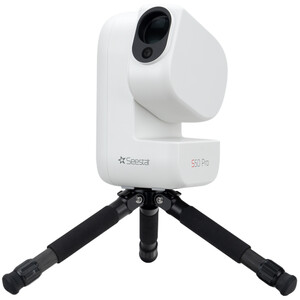
Mature, available immediately, a third cheaper: if you want to be imaging this autumn and winter, you miss nothing with the S50 Pro.
Price: € 999
Which league? Draco, Vespera Pro and Origin
The most important thought on this page: the Draco is not the Seestar’s rival, it is the rival of Vaonis and Celestron. Look at where it sits on price.
| Telescope | Aperture | Class | Price |
|---|---|---|---|
| Seestar S30 ProSeestar S30 Pro | 30 mm | Beginner | $699.00€ 699 |
| Seestar S50 ProSeestar S50 Pro | 50 mm | Beginner | $999.00€ 999 |
| DWARFLAB Draco | 90 mm (eff. approx. 80) | ⭐ Price breaker of the premium classPremium | € 1,499 |
| Vaonis Vespera Pro 2 Smart TelescopeVaonis Vespera Pro II | 50 mm | Premium | approx. $2,990.00€ 2,990 |
| Celestron Origin Mark IICelestron Origin Mark II | 152 mm | Premium / home observatory | approx. $4,299.00€ 5,499 |
90 mm with cooling and guiding for under €2,000 – that has never existed before. If you were already considering a Vespera Pro or an Origin, the Draco is the most exciting news of the year. If you were torn between the S30 Pro and the S50 Pro, it is the answer to a question you never asked.
Our video: wait or buy the Seestar S50 Pro?
In eleven minutes: what is confirmed, the fair comparison with the S50 Pro, what the community says and the planet question, properly calculated. If you prefer listening to reading, this is the short version of this page. The video is in German – the key points are summarised in this article.
A note on the video: it quotes the launch price of € 1,399. That price ended on 14 September 2026 – since 15 September the Draco costs € 1,499 and the SHO version € 1,669.
What the community says
We read through the comments under our video and the big English-language videos, the Cloudy Nights thread now running to 73 pages and the German forum. Four topics come up again and again.
The planet question
The most-liked comment under the biggest English-language video says, in essence: “Hope it’s good for planets.” The Draco looks like a Maksutov but is the opposite – a very fast, folded astrograph with 340 mm focal length. But what matters for planets is not the focal length alone but the pixel scale: focal length divided by pixel size.
With 340 mm and 1.2 µm pixels, the Draco comes to 0.73″ per pixel – Jupiter ends up around 60 pixels across, about three times as large as in the Seestar S50 Pro (2.3″ per pixel, approx. 20 pixels). That is real progress over every smart telescope so far, but a classic 150 mm telescope with a planetary camera delivers Jupiter at 100 to 200 pixels in diameter – for €400. For the Moon and Sun (solar filter included), on the other hand, the Draco is strong. If you mainly want planets, buy neither Seestar nor Draco but a classic telescope.
Who should wait – and who shouldn’t
| Your situation | Recommendation | Why |
|---|---|---|
| You want to be imaging this autumn and winter, budget under €1,000, lightweight for travel and the balcony | Seestar S50 ProSeestar S50 Pro | ⭐ Our recommendation for most peopleAvailable now, proven optics, 2.8 kg |
| You already own a Seestar, have hit its limits and want galaxies and faint nebulae | DWARFLAB Draco – but wait for the first reviews | 90 mm, cooling and guiding are built for exactly that; at € 1,499 a strong offer |
| Vespera Pro or Celestron Origin are on your list | DWARFLAB Draco straight to the top | Same class for €1,600 to €4,100 less |
| Budget under €700 | Seestar S30 ProSeestar S30 Pro ($699.00€ 699) or DWARF 3DWARF 3 ($549.00€ 529) | S30 Pro: larger field of view, Seestar ecosystem · DWARF 3: smaller, cheaper, up to 60 s exposures – many DWARF owners call it the best entry point |
| Mainly planets | no smart telescope | Both apertures are too small – a classic telescope from our buying guide |
Links marked with an asterisk are affiliate links.
Draco or Draco SHO?
The standard version comes with astro, dark-frame and solar filters plus a dual narrowband filter (Hα+OIII). The SHO version adds a second narrowband filter (SII+OIII) – which lets you capture nebulae in the so-called Hubble palette, familiar from the famous space telescope images.
For the vast majority, the standard version is the right choice. The SHO version is for people who already know what narrowband imaging is and process their images themselves on a computer.
For narrowband specialists: DWARFLAB Draco SHO Smart Telescope
The Draco variant with an extra SII/OIII narrowband filter for Hubble-palette imaging – for astrophotography specialists, not for beginners.
Price: € 1,669
Frequently asked questions about the DWARFLAB Draco
What does the DWARFLAB Draco cost?
€ 1,499 for the standard version and € 1,669 for the SHO version with the additional SII/OIII filter. Same price direct from DWARFLAB and at Astroshop; both prices are updated here automatically every day.
When will the Draco be available?
DWARFLAB quotes shipping within three months of the order date, Astroshop 5 November 2026. With the DWARF 3, many pre-orderers waited longer than announced in 2024; the DWARF Mini, according to owners, arrived on time.
Is the Draco better than the Seestar S50 Pro?
On faint, small objects very probably yes: more aperture, cooling and long exposures. But it costs one and a half times as much, weighs twice as much, has the smaller field of view, and its optics are untested. For beginners, the Seestar S50 ProSeestar S50 Pro remains the better choice.
Can you photograph planets with the Draco?
Better than any smart telescope so far, but limited. At 0.73″ per pixel, Jupiter ends up around 60 pixels across – three times as large as in the Seestar S50 Pro, but a long way from a classic 150 mm telescope with a planetary camera (100–200 pixels). The Moon and Sun (with the included filter), on the other hand, work well.
How much light does the Draco really collect?
The secondary mirror of around 40 mm blocks part of the 90 mm. Net, the Draco is equivalent to an 80 mm refractor: 2.6 times as much light as the Seestar S50 Pro, around seven times as much as the S30 Pro.
What is the sensor rotator?
The image sensor can be physically rotated inside the housing. This lets the Draco adapt the image format to the object and, so the community suspects, compensate for field rotation during long exposures. How well that works in practice, nobody knows yet.
Do I need accessories?
Tripod, solar filter and filters are included. At 5.5 kg, a sturdier photo tripod makes sense for windy nights. For deep sky from the city, the built-in filtering is enough.
Should I pre-order now or wait?
If you want the telescope anyway, order at Astroshop without paying upfront or direct from DWARFLAB without shipping costs. If you are unsure, wait for the first real reviews in winter – we will update this page as soon as they exist.
Verdict: the most exciting launch since the first Seestar
90 mm, cooling and guiding for under €1,500 – that has never existed before. But it is no reason not to buy a Seestar S50 Pro. If you want to get started today, start with the Seestar or the DWARF 3 and you won’t miss a thing.
If you are looking for a telescope for the next five years, have patience and were already shopping in the premium class, put the Draco at the very top of your list. An overview of all smart telescopes is in our best smart telescopes 2026 ranking, and the comparison of the two Seestar models at Seestar S50 Pro vs. S30 Pro.
Is the Draco right for you?
- ✔ Yes, if you want galaxies and faint nebulae and are looking for a telescope for several years.
- ✔ Yes, if the Vespera Pro or Origin were on your list – the Draco costs a fraction.
- ✘ No, if you want to start now or want to stay under €1,000: the Seestar S50 ProSeestar S50 Pro ($999.00€ 999) is the right choice.
- ✘ No, if you mainly want to see planets – a classic telescope is better for that.
* Affiliate link: if you buy through this link we may earn a small commission from Astroshop or High Point Scientific, at no extra cost to you.
How would you rate this telescope?
No reader ratings yet. Yours would be the first.
Stars only, no text – one vote per device. To prevent duplicate votes we only store check values (hashes), never your IP address in plain text.