By Alexander Merz · Updated on · Details checked on 7 October 2026
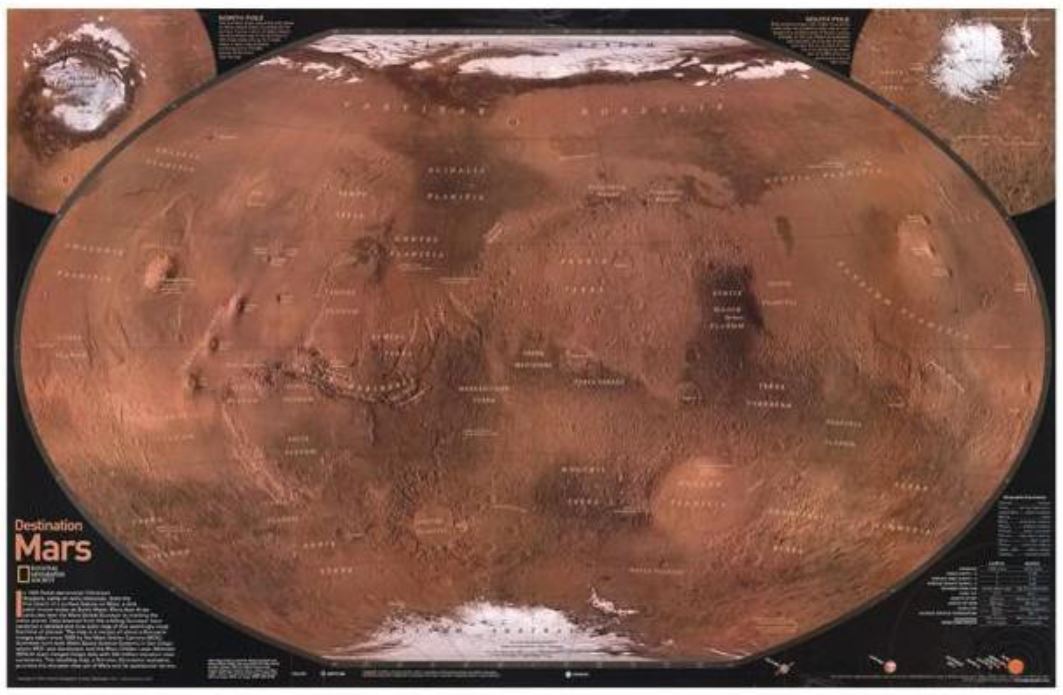
Astronomers, geologists, and private collectors alike are captivated by meteorites. Among them, Mars meteorites hold a special fascination: these rocks were blasted off the surface of the Red Planet and eventually fell to Earth, carrying with them clues about our neighbor’s geological past — and perhaps about life elsewhere in the solar system.
⚡ The quick answer: Mars meteorites are rocks ejected from the Martian surface by asteroid impacts that later landed on Earth. Identified since the 1980s by their composition and by trapped gases matching Mars’s atmosphere, they fall into three main groups — shergottites, nakhlites, and chassignites. Around 300 are known today, including famous specimens such as Shergotty, Nakhla, Zagami, and Tissint 2011.
What is a Mars meteorite?
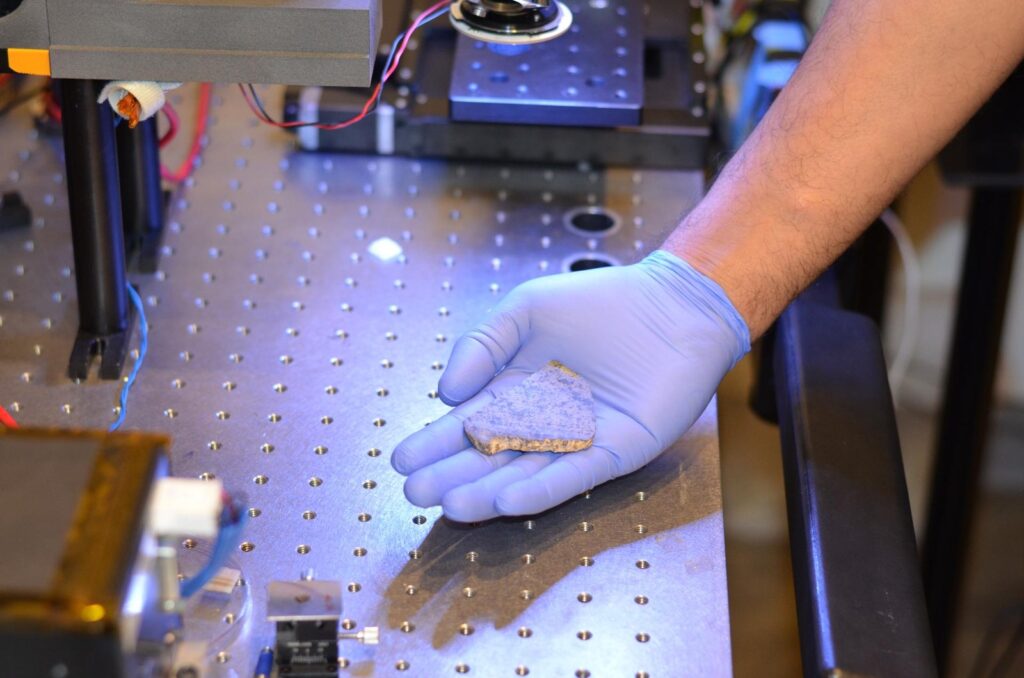
A Martian meteorite is a piece of Mars’s crust or mantle that was hurled into space by a violent asteroid impact, drifted for millions of years, and finally plunged through Earth’s atmosphere. Scientists confirm their origin using two signatures: a mineral makeup closely matching what Mars probes have measured, and — most tellingly — tiny bubbles of noble gases trapped in impact glass whose isotopic ratios exactly match the Martian atmosphere sampled by the Viking landers.
The main families: shergottites, nakhlites, and chassignites
The classic classification rests on three founding stones, grouped under the acronym “SNC.” Each group represents a different rock type and a different depth of origin within Mars.
| Group | Rock type | Origin on Mars | Examples |
|---|---|---|---|
| Shergottites | Volcanic basalt | Surface / young crust | Shergotty, Zagami, Tissint 2011 |
| Nakhlites | Clinopyroxene cumulate | Lava flows | Nakhla |
| Chassignites | Dunite (mantle rock) | Up to 400 km deep | Chassigny |
Shergotty: the first Mars meteorite ever identified
The fall happened in India in the summer of 1865, but it took until the 1980s for researchers to recognize the Martian origin of this 5 kg sample. Named “Shergotty” after where it landed, it showed strong similarities to other rocks attributed to Mars. The properties of the parent body were only understood by studying additional specimens, and as more matching stones turned up, they were grouped together as the shergottites.
In 1979, the nearly 8 kg meteorite EETA 79001 was discovered in an Antarctic ice field. Having landed on cold ground, it was only lightly weathered. Its analysis confirmed that Shergotty and this later find shared the same parent body, cementing the shergottite family for good.
Chassigny: recognized only later
This meteorite fell as far back as 1815 near the village of Chassigny, France, its arrival recorded by eye- and earwitnesses. Its dunite composition — a mantle rock known on Earth down to depths of 400 km — indicates that the collision that tore it from Mars struck very deep into the planet’s surface. Curiously, it holds noble gases different from Mars’s known atmosphere, which scientists attribute to its cumulate nature rather than a separate origin.
The legend of the “Nakhla dog”
The Nakhla meteorite fell over Egypt in the summer of 1911, breaking apart into a shower of debris that threw witnesses into a panic. The largest fragments bored up to a meter into the ground. A local farmer claimed that one shard struck a dog head-on and vaporized the animal outright. No one else saw it happen, and no trace was ever found — and so one of astronomy’s most enduring legends was born.
Beyond the folklore, the study of Nakhla delivered a major finding: watery processes did once occur on its parent body. More recent analyses even spotted, under the electron microscope, what looks like a fossilized bacterial colony — a hint of possible primitive life on Mars.
Zagami: the largest single Martian stone
In October 1962 in Nigeria, a scene worthy of the movies unfolded: a meteorite triggered a powerful explosion that knocked over a farmer standing just ten meters away. Once the smoke and thunder cleared, the “Zagami” meteorite — weighing about 18 kg — was dug out from two meters down. It remains the largest single, unfragmented Martian meteorite ever recovered. Its analysis revived the hypothesis that the origin of life on Earth may have come from elsewhere in the solar system.
Kaidun and Bassikounou: two extraordinary falls
In December 1980, at Al-Khuraybah (Yemen), then a Soviet military base, a 2 kg stone fell without breaking apart. Classified as “Kaidun,” it likely did not come directly from Mars — its parent body may be one of the two Martian moons. Researchers first suspected Phobos, then Deimos, because of rare minerals for which no other known rock in the solar system offers a match.
In October 2006, the “Bassikounou” meteorite fell in Mauritania (Sahara) — the ninth observed Martian fall. Entering the atmosphere as a glowing stone, it split into three pieces after thirty seconds of flight, then into a meteorite shower. Nomads recovered a little over 3 kg before the Mauritanian military seized the rest. Its Martian origin was officially announced in the Meteoritical Bulletin 92 in 2007.
Tissint 2011: the fall that reignited research
In 2011, a meteorite breathed fresh life into scientific debates about Mars. “Tissint 2011” fell in Morocco’s Tata region, witnessed by many who saw and heard it. Thanks to the desert climate, the fragments did not weather in the weeks before collection and escaped terrestrial contamination — meaning the samples reached laboratories in an exceptionally pristine state.
Like the shergottites, Tissint 2011 comes from Martian surface material comparable to volcanic rock on Earth. What makes its study so exciting is the question it revives: could a form of life have existed on another planet in the solar system?
Fossil traces inside Tissint 2011?
In September 2012, a publication sparked intense media interest: Professor Chandra Wickramasinghe announced he had found carbon and hydrogen in the meteorite whose production in the solar system, he argued, is exclusively the work of living organisms. Since fossil bacterial traces had already been reported in Nakhla, these findings could suggest that Mars, millions of years ago, saw the first stirrings of biological evolution — before a colossal collision tore these meteorites, and perhaps the seeds of nascent life, from its crust.
Mars meteorite FAQ
How do we know a meteorite came from Mars?
Through the noble gases trapped in their impact glass: the isotopic signature exactly matches the Martian atmosphere measured by the Viking probes, ruling out any other origin.
How many Mars meteorites are known?
About 300 are on record today — a tiny fraction of the tens of thousands of known meteorites, which makes them rare and highly sought after.
Can you buy a Mars meteorite?
Yes, authenticated fragments circulate among collectors, but their scarcity pushes prices far above gold per gram. Beware of fakes sold without certification.
Do Mars meteorites prove Martian life existed?
No, there is no definitive proof. Some contain structures and organic molecules consistent with past biological activity, but a purely chemical origin cannot be excluded.
What is the largest Mars meteorite ever found?
Zagami, which fell in Nigeria in 1962, remains the largest single, unfragmented specimen at nearly 18 kg.