By Alexander Merz · Updated on · Details checked on 7 October 2026
Observing the night sky with both eyes open changes everything: comfort goes up, eye strain disappears, and your brain assembles a surprisingly three-dimensional, almost tactile view. That is exactly what an astronomical binocular viewer delivers — a binoviewer that mounts on your telescope and splits the light to two eyepieces. Here is how it works, who it is for, and what to check before you buy.
More in our overview: Telescope Accessories.
⚡ The quick answer: A binocular viewer (binoviewer) splits the light gathered by your telescope between two eyepieces so you can observe with both eyes. The view becomes more comfortable and takes on a striking sense of depth. Watch-outs: it needs a long optical path (often a Barlow or optical corrector), the image is dimmer because light is shared, and you have to buy eyepieces in matched pairs.
What is a binocular viewer?
A binocular viewer is a piece of visual observing gear that slides into the focuser in place of a single eyepiece. Inside, a set of prisms divides the beam into two identical paths feeding two eyepieces. The result: you view the Moon, planets, or deep-sky objects with both eyes — like a pair of binoculars, but with the aperture and power of your telescope behind it.
The payoff is more than comfort. Using both eyes, the brain averages out noise and pulls out finer detail: lunar craters, the festoons on Jupiter, or the Cassini Division take on real depth. It is a genuine “wow” moment that often wins observers over on their very first binocular view.
Why a long optical path is essential
The main technical hurdle: most binoviewers require roughly 100 mm of optical path, plus the extra distance through a star diagonal. In other words, the focal plane has to sit well behind the racked-in focuser — you need plenty of back focus.
On refractors and Schmidt-Cassegrain telescopes this is rarely an issue, because their focus naturally falls far behind the focuser. Trouble shows up with Newtonian telescopes, which have a deliberately short back focus to keep the secondary mirror small. Here you need an optical path corrector or a Barlow lens to extend the light path (and, with it, the focal length) so the image lands within the focus range.
These correctors are sometimes bundled with — or built into — the binoviewer. If not, be sure to factor their cost into your budget.
Light split between two eyepieces
The second thing to understand: the light your tube collects is divided across two eyepieces. That makes the quality of the mirrors, prisms, and lenses critical. The image looks a little dimmer than in single-eyepiece observing — but a large aperture compensates for that loss very well.
With a 1.25-inch barrel on the objective side, the light beam is about 27 mm across. Budget models often pass less light because of a smaller field stop. The consequence: you can only use eyepieces with a small field stop — typically short focal lengths for high magnification. These affordable binoviewers are therefore best for the Moon and planets.
To chase large, faint deep-sky objects you need a binoviewer with a large field stop instead. High-throughput models with an integrated corrector (such as the Baader Mark V large-field binoviewer) are expensive, but they handle planets and lunar detail at high power as well as deep-sky at low power. One last budget note: eyepieces have to be bought in pairs.
Table: which binoviewer for which use?
| Type | Field stop | Best targets | Budget |
|---|---|---|---|
| Entry-level binoviewer | Small (< 27 mm) | Moon, planets (high power) | $ |
| Mid-range binoviewer | Medium (~27 mm) | Moon, planets, bright clusters | $$ |
| Premium binoviewer + corrector | Large | Deep-sky + planetary | $$$ |
Which telescopes does it work on?
Refractors and Schmidt-Cassegrains: the sweet spot
Thanks to their generous back focus, they take a binoviewer with no fuss. SCTs add a large aperture that offsets the light loss beautifully.
Newtonians and Dobsonians: possible, with a corrector
A binoviewer works on a Dobsonian as long as you add a Barlow or path corrector to reach focus. On big apertures, the view of the Moon and planets is spectacular.
Preparing your eyepieces: the right foundation
A binoviewer needs two matched eyepieces and often a Barlow. A complete eyepiece kit is a great starting point for building matched pairs and testing different magnifications before you invest further.
Ideal starter base: Omegon Eyepiece Starter Kit
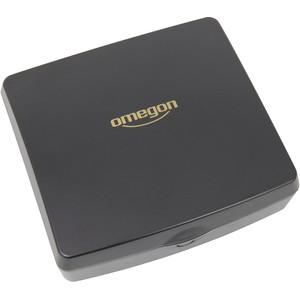
Eyepieces, filters and a Barlow in one case: everything to round out your telescope at once, cheaply.
Price: € 89
* Affiliate link: if you buy through this link we may earn a small commission from Astroshop or High Point Scientific, at no extra cost to you.
Binoviewer recommendation
| Model | Who is it for? | Price |
|---|---|---|
| William Optics Binoviewer W/Eyepieces & Barlow NosepieceOmegon Binocular Head Pro Tritron 1.25'' | ⭐ Our recommendationThe sensible entry point. Fits 1.25-inch focusers and needs no special accessories – for your first two-eyed views it is all you need. | $369.00€ 569 |
| Baader Binocular Head Mark V | The reference for ambitious observers: wide field, best light throughput and first-class mechanics. On a Newtonian it only works together with a path corrector – see the box below the table. | about $1,425€ 1,425 |
On the fence because of the cost? Ask your local astronomy club or public observatory whether you can take a look through a binoviewer. The two-eyed experience has converted more than a few observers on the spot.
Frequently asked questions
What does a binoviewer actually do?
It is an accessory that splits the light your telescope collects across two eyepieces, letting you observe with both eyes for a more comfortable, more three-dimensional view.
What is the benefit of a binoviewer?
Observing with both eyes reduces eye strain and reveals more detail, with an immersive sense of depth on the Moon and planets.
Does a binocular viewer work on any telescope?
No. It needs a long optical path. Refractors and Schmidt-Cassegrains accept one easily; Newtonians and Dobsonians require a Barlow or optical path corrector.
Is the image dimmer with a binoviewer?
Slightly, because the light is shared between two eyepieces. A large aperture compensates for the loss, and it is barely noticeable on bright objects.
Do I have to buy eyepieces in pairs?
Yes, a binoviewer requires two matched eyepieces. Budget for that alongside a possible Barlow lens.
Read next:
Other languages: Deutsch (original) · Français · Italiano