By Alexander Merz · Updated on · Details checked on 14 September 2026
Ever since humans first looked up at the night sky, we have connected the stars into familiar shapes. Those imaginary pictures are the constellations: groups of bright stars that different cultures named, wove into stories and used to find their way. This guide explains what constellations really are, where they come from, why they seem to move across the sky, and how to spot the best ones season by season.
⚡ The quick answer: A constellation is a group of prominent stars that the eye links into a recognisable figure. The sky is now officially divided into 88 constellations, fixed by the International Astronomical Union in the 1920s. They have served as navigation and observing landmarks since antiquity, and most can be enjoyed with the naked eye under a dark sky.


What is a constellation?
Our brains automatically group stars into shapes — a knack for pattern recognition that is probably as old as human consciousness itself. Over the millennia, those groupings became our constellations: bright stars in the night sky that people joined into figures. The pictures are often very rough, so we tend to recognise them only when we already know what to look for.
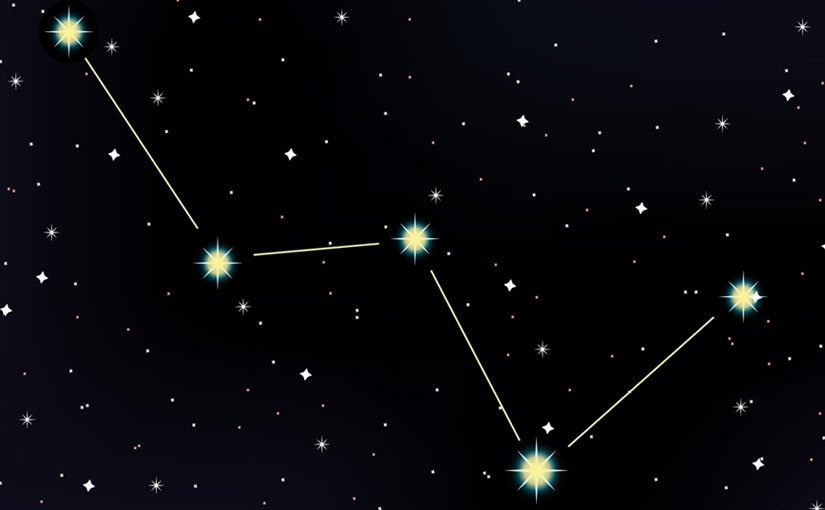
Cygnus, the Swan, does resemble a bird with outstretched wings, whereas the five stars of Cassiopeia only faintly suggest a queen from Greek mythology. It also helps to distinguish a constellation from an asterism: an asterism is a well-known star pattern that is not an official constellation in its own right. The Big Dipper, for example, is only part of the constellation Ursa Major.
Why do constellations exist?
It is human nature to want to bring order to the world. Look up at the night sky and, even as a complete beginner, you will automatically see familiar shapes. Our ancestors were no different: from those shapes grew characters and stories, and the night sky took on deep meaning in the mythology of many cultures.
Constellations quickly gained practical value, too. Nomads and seafarers used their guide stars to navigate. In amateur astronomy they remain essential signposts for locating and observing distant objects such as nebulae and galaxies, even with a modest first instrument.
Where do constellations and their names come from?
Stone Age people may already have seen figures in the sky, as the famous Lascaux cave paintings suggest. The first documented constellations, however, come from Babylon and ancient Egypt, which also gave us the signs of the zodiac. The ancient Greeks then mapped their mythology onto the sky — Perseus, Orion, Hercules, Lyra — and the Romans inherited it. These are known today as the 48 classical constellations.
With the Renaissance and the invention of the telescope, European astronomy revived. The age of exploration made the southern sky important for navigation, so it too was carved into constellations (the Southern Cross, the Toucan, the Indian, and more). In the 1920s the boundaries and names of today’s 88 constellations were finally settled by international agreement.
Constellations vs. star signs: what’s the difference?
The twelve zodiac signs trace back to the earliest Babylonian constellations, so every sign is based on a real constellation. The claims of astrology — a pseudoscientific, esoteric practice — about people’s character and fate have nothing to do with astronomy and are beyond the scope of this article. Note, too, that because of precession your astrological sign no longer matches the constellation the Sun actually occupied at your birth.
Why do constellations appear to move?
To picture this, imagine the Earth as a spinning sphere inside a much larger, fixed sphere. From the ground we look at the inside of that great sphere — our starry night sky. What we see then depends on where we are standing on the globe.
At the poles
At the North Pole we would always see the same constellations circling Polaris, the North Star, which lies on the extension of Earth’s rotation axis. Nothing would rise or set: every constellation traces a circle parallel to the horizon.
At mid-latitudes
From a mid-latitude location such as the UK or the northern US, many constellations rise in the east and set in the west. Because we are no longer on the rotation axis but offset from it, roughly half of all stars eventually dip below the horizon. Those that never set are called circumpolar constellations.
At the equator
At the equator the situation is the opposite of the unchanging polar sky. Standing at right angles to Earth’s axis, we watch new stars rise on one side and set on the other all night long. This is one reason so many observatories are built near the equator.
The role of the seasons
On top of these nightly changes come the seasons. As Earth orbits the Sun over the year, at night we look out in the direction away from the Sun. Six months later that same stretch of sky lies on the daytime side, drowned in sunlight, while we now see by night the constellations that were previously hidden. That is why the sky wears a different face in each season.
Which constellation is visible when?
It would be impossible to list the rise and set times of every constellation here — they depend on your latitude and the date. The table below gives handy pointers for the northern hemisphere, with the standout constellations to look for in the evening in each season.
| Season | Prominent constellations (northern hemisphere) | What to look for |
|---|---|---|
| Spring | Ursa Major, Leo, Virgo, Boötes | Arcturus, the orange star of Boötes |
| Summer | Cygnus, Lyra, Aquila, Scorpius | The Summer Triangle (Vega, Deneb, Altair) |
| Autumn | Pegasus, Andromeda, Cassiopeia, Perseus | The Great Square of Pegasus and the Andromeda Galaxy |
| Winter | Orion, Taurus, Gemini, Canis Major | Sirius, the brightest star in the sky |
| All year | Ursa Major, Ursa Minor, Cassiopeia | Circumpolar constellations, visible every night |
You can find the constellations with the naked eye. What sits between the stars, you cannot.
Six short questions, an honest answer by e-mail – including when binoculars would do.
What do I need to observe the constellations?
Because constellations are large, imagined links between bright stars, all you really need are your eyes and a sky that is as dark as possible. To identify them with confidence, a planisphere (a rotating star chart) or an app works wonders. The drawback of an app is that the screen’s brightness spoils your night vision, making faint objects harder to find. That is why an old-fashioned star chart plus a red-light torch is still the observer’s friend.
A pair of binoculars then takes things further: they reveal hundreds of stars invisible to the naked eye, resolve star clusters and hint at the Orion Nebula or the Andromeda Galaxy. A 10×50 model is the sweet spot for exploring constellations — powerful enough to show plenty, light enough to hold steady by hand.
Great for exploring constellations: Celestron Cometron 7x50 Binoculars
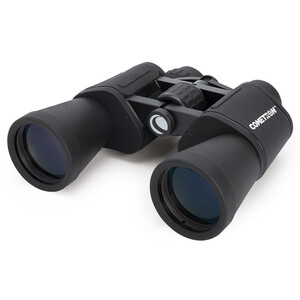
The astronomy classic among affordable binoculars: 7×50 with a large exit pupil for bright handheld views of the Moon and Milky Way – the ideal first step before a telescope.
Price: € 65
* Affiliate link: if you buy through this link we may earn a small commission from Astroshop or High Point Scientific, at no extra cost to you.
Do constellations change over time?
They do, but so slowly that it makes no difference within a human lifetime. Constellations are merely projections of stars onto the great fixed sphere of the sky. Those stars are not necessarily close together in space: some stars in Orion are nearer to our Sun than to other stars in the same figure. Thanks to their proper motion, the patterns slowly distort — yet it would take tens of thousands of years to notice the change with the naked eye.
Conclusion
Constellations grew out of our instinct for patterns, probably as far back as our earliest ancestors. The first great civilisations gave them mythological meaning, and they found practical use in maritime navigation and in amateur astronomy, for tracking down nebulae, galaxies and star clusters. Every star you can pick out with the naked eye belongs to our own galaxy, the Milky Way.
Frequently asked questions about constellations
What are constellations used for in astronomy?
The whole sky is divided into constellations. In amateur astronomy their bright stars serve as signposts to “navigate” toward objects invisible to the naked eye (nebulae, galaxies, double stars). They are also a perfect way to introduce a beginner to the night sky.
What is the largest constellation?
The largest by area is Hydra, spanning more than 1,300 square degrees. It is followed by Virgo and Ursa Major.
What is the smallest constellation?
The smallest lies in the southern sky: it is Crux, the Southern Cross, with only about 68 square degrees.
How many constellations are there?
The sky has been officially divided into 88 constellations since the 1920s, spread across both hemispheres and covering the entire celestial sphere.
Do I need a telescope to see the constellations?
No — constellations are naked-eye targets. A pair of 10×50 binoculars does enrich the experience, though, revealing star clusters and faint stars within the figures.
Read next:
- Best beginner telescopes
- Stargazing guide: how to read the night sky
- Choosing binoculars for astronomy
In other languages: Deutsch (original) · Français · Italiano