By Alexander Merz · Updated on · Details checked on 7 October 2026
The allure of the starry sky knows no season: whatever the time of year, there are exciting targets to explore with a beginner’s telescope or even a simple pair of binoculars. Planets, comets, asteroids, or deep-sky objects—this complete guide to the astronomy highlights of the Northern Hemisphere in 2026 walks you through the entire year so you can make the most of the night sky. Let our observing tips and jaw-dropping facts inspire you, and dive into the cosmos one season at a time.
⚡ The quick answer: From the Northern Hemisphere, every season has its stars. Spring is prime time for galaxies (Virgo, Ursa Major, Leo) and Venus; summer brings Jupiter, Saturn, the Milky Way, and the Perseids; fall showcases the Andromeda Galaxy (M31); winter delivers the Orion Nebula (M42) and the Pleiades. A pair of 10×50 binoculars is enough to start, while a 6-inch (150 mm) telescope reveals the fine detail.
The Northern Hemisphere sky, season by season
Before we dig into the details, here’s a quick overview of the year’s biggest attractions. Use this table to see at a glance what to observe in each season and which instrument works best.
| Season | Star attractions | Recommended gear |
|---|---|---|
| Spring (Mar–May) | Venus, Mars, galaxies (Leo, Virgo, Ursa Major), asteroid Vesta | 6-inch (150 mm)+ telescope under dark skies |
| Summer (Jun–Aug) | Jupiter, Saturn, Milky Way, Perseids, M13, M57 | Binoculars or a small telescope |
| Fall (Sep–Nov) | Andromeda Galaxy (M31), M33, Great Square of Pegasus | 10×50 binoculars, telescope |
| Winter (Dec–Feb) | Orion Nebula (M42), Pleiades (M45), Hyades | Binoculars or telescope |
Spring: the season of galaxies
The planets under clear spring skies
As spring arrives, temperatures climb in many regions and the sky often turns more transparent than in winter. The planet Venus shines as a brilliant evening or morning “star,” easy to spot with the naked eye. At higher magnification, beginner telescopes already reveal its changing phases, much like those of the Moon.
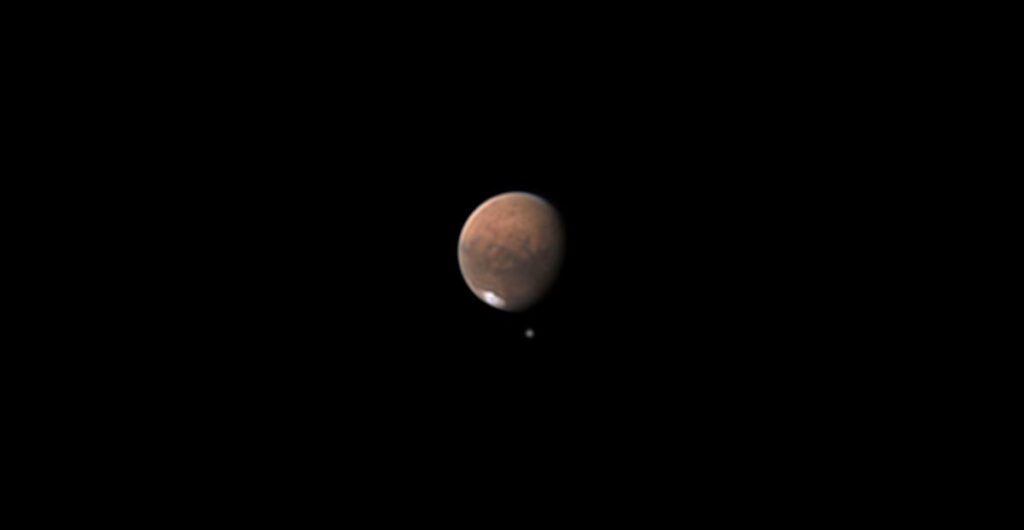
- Mars, depending on its position relative to the Sun, appears as a reddish point of light on clear nights. Through binoculars it’s just a bright dot, but a telescope can bring out subtle surface detail such as darker regions or the edge of a polar cap.
Fascinating asteroids and comets in spring
The asteroid Vesta regularly draws attention: it’s one of the few asteroids that can be seen with binoculars, or even the naked eye under very dark conditions (around 6th magnitude). If you enjoy a small challenge, try tracking down Vesta with a star chart in the constellations of Virgo or Leo.
Comets aren’t guaranteed every year, but it pays to check current comet forecasts regularly. Comets like C/2020 F3 (NEOWISE) have shown off stunning tails in the morning or evening sky in certain years. The best time to hunt for them is often just before dawn, from a site with a clear horizon and little light pollution.
Deep-sky highlights: galaxies galore
The spring months offer a fantastic chance to observe distant galaxies. The constellations Virgo, Ursa Major, and Leo are especially rich in them. Among the best known:
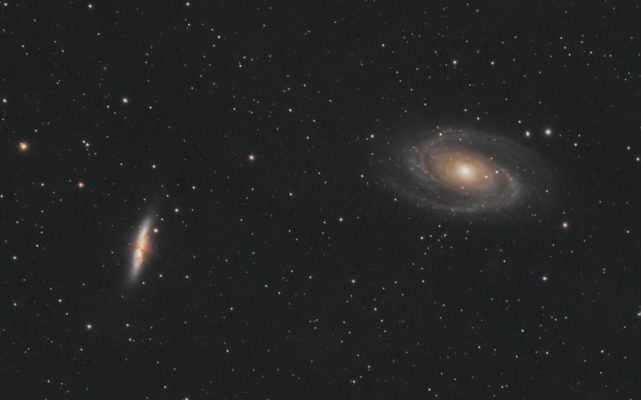
- M81 and M82: two galaxies in Ursa Major. Even smaller telescopes show both objects in the same field of view.
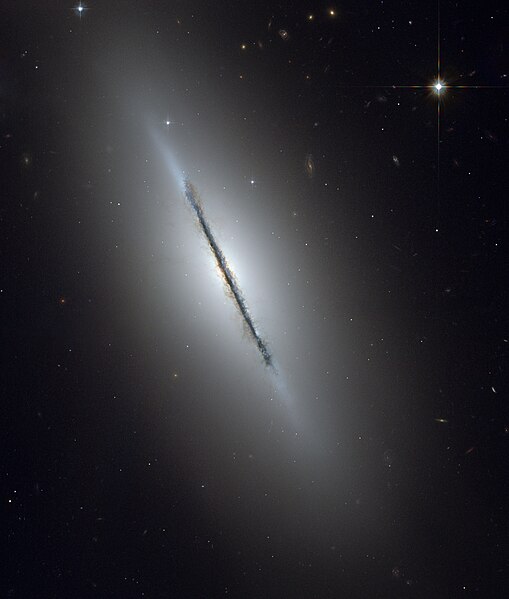
- M104, the Sombrero Galaxy: a galaxy with a striking dust lane, located in Virgo.
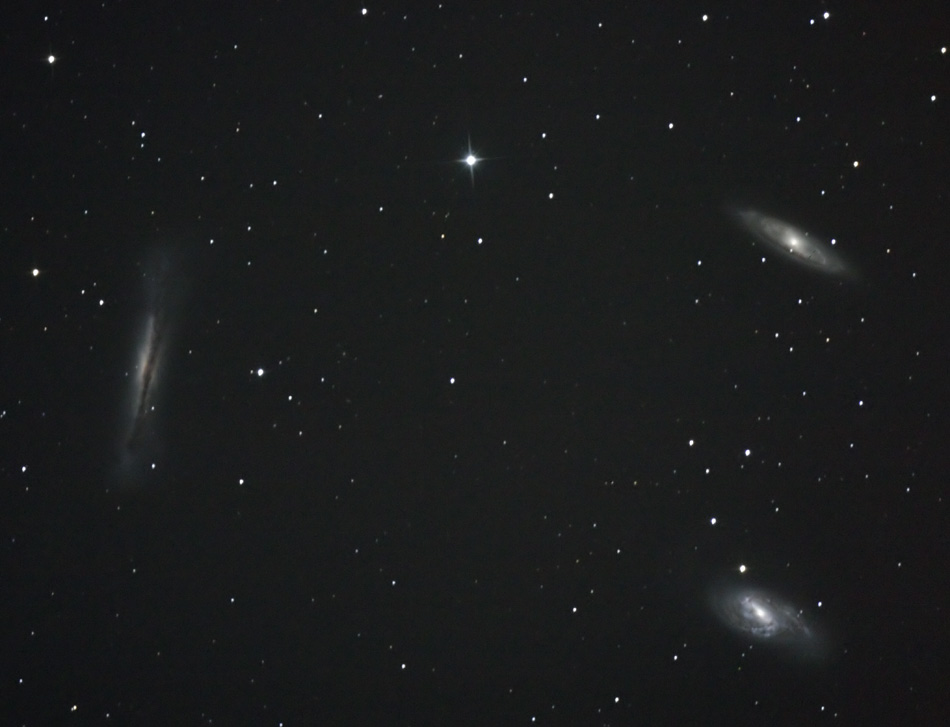
- The Leo Triplet (M65, M66, and NGC 3628): three galaxies close together in Leo—a wonderful target for owners of light-gathering scopes.
Amazing fact
The Virgo Cluster region, about 50 million light-years away, contains thousands of galaxies, from dwarfs to giants. Each one is home to billions of stars—a staggering glimpse of the scale of the Universe.
Observing tips for spring
- Binoculars: use a steady support (such as a tripod) or lean against something to get a stable image. Stars look brighter through binoculars, but galaxies usually show up only as faint, hazy patches.
- Telescope: for galaxies, aim for at least a 6-inch (150 mm) aperture to glimpse spiral structure or dark dust lanes. Under a dark sky you’ll see more detail—light pollution makes galaxy hunting significantly harder.
Summer: giant planets and the Milky Way
The summer planet parade
On many summer nights, Jupiter and Saturn put on an especially impressive show.
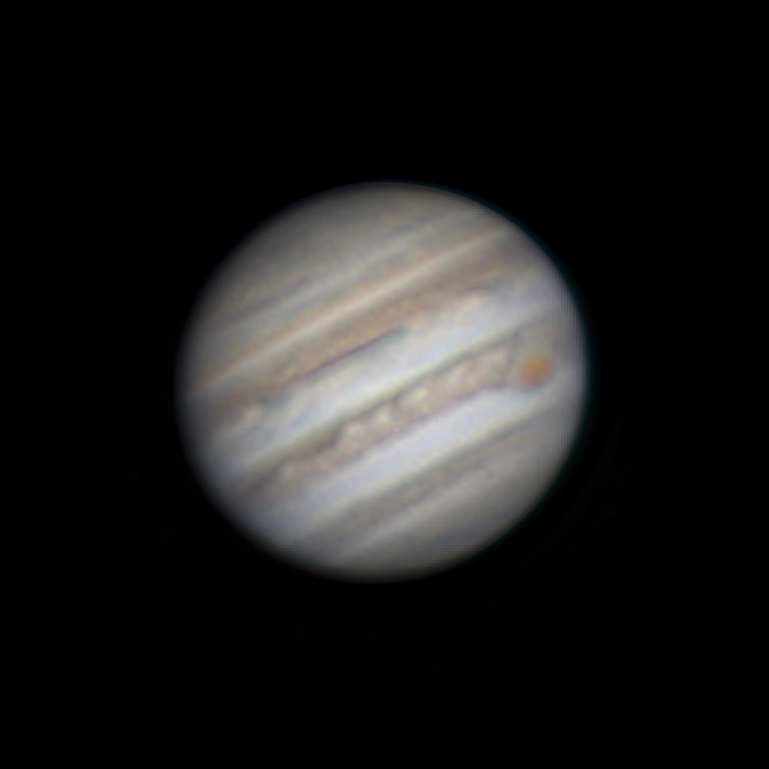
- Jupiter: even with binoculars or a small telescope you can see the four bright Galilean moons (Io, Europa, Ganymede, and Callisto). A larger telescope reveals cloud belts, the famous Great Red Spot, and sometimes even a moon’s shadow tracking across the planet.
- Saturn: with its rings, it’s the true “star” of the night sky. Even a very simple telescope shows part of the ring structure. The Cassini Division and the shadow the rings cast on the planet are especially striking.

Meteor showers, comets, and asteroids
A summer highlight is the Perseid meteor shower in August. Under a dark sky you can often see more than 100 shooting stars per hour, seeming to stream out of the constellation Perseus. Focus on the hours after midnight, when the radiant climbs higher in the sky.
As for occasional comets, summer is another good time to keep an eye on current comet charts. Asteroids such as Ceres or Pallas typically shine between 7th and 9th magnitude, so they can be located with a telescope or binoculars. With a little practice reading star charts, they’re easy to identify.
The Milky Way and deep-sky treasures
When the nights are dark and the Moon isn’t in the way, the summer Milky Way is an absolute must. It arcs across the sky as a glowing band from Sagittarius up to Cygnus.
- The Summer Triangle: the bright stars Deneb (Cygnus), Vega (Lyra), and Altair (Aquila) form an easy-to-find pattern in the night sky.
- M13 in Hercules: one of the brightest globular clusters in the northern sky. In binoculars it looks like a hazy patch; telescopes of 6 inches (150 mm) and up begin to resolve individual stars.
- M57, the Ring Nebula in Lyra: a small but striking planetary nebula. Through a telescope it appears as a smoke-ring-shaped object set in a star-rich field.
Amazing fact
Our Solar System sits near the edge of the Milky Way, which itself contains several hundred billion stars. If you shrank the Milky Way down to the size of a major city, our entire planetary family would be no more than a small suburban lot.
Observing tips for summer
- Cool-down time: especially heading into summer, when temperature swings are large, let your telescope acclimate fully and make sure the optics are properly collimated.
- Filters: against a brighter summer sky, a UHC or OIII filter helps boost contrast on certain nebulae.
To get started without breaking the bank, a good pair of binoculars is the most versatile instrument in this year-round guide—perfect for sweeping the Milky Way, following the Perseids, or picking out star clusters.
Best for beginners: Omegon Brightsky 10x50 Binoculars

Bright, high-contrast binoculars: perfect for the Moon, star clusters and Milky Way fields, handheld.
Price: € 289
* Affiliate link: if you buy through this link we may earn a small commission from Astroshop or High Point Scientific, at no extra cost to you.
Fall: the return of Andromeda
Planets on the rise
In fall the days shorten after summer, and the evening sky is often dominated by Venus or Mars (depending on the year). The key is to consult a visibility table or planetarium software, since planetary configurations change from year to year.
- Jupiter and Saturn remain well placed into late fall in some years, with the exact window depending on the date of opposition.
Comet and asteroid hunting on clear fall nights
Fall nights can be exceptionally clear and crisp, creating excellent viewing conditions. Use the opportunity to hunt again for asteroids like Ceres, now found in different constellations. Comet forecasts remain tricky, but it’s worth checking regularly for possible “fall candidates.”
Deep-sky gems between the summer and winter constellations
Fall is a transitional time between the summer constellations (Cygnus, Lyra, Aquila) and the prominent winter constellations (Orion, Taurus, Gemini). A few constellations are especially rewarding right now:
- Pegasus: home to the famous Great Square of Pegasus, and off its edge, the constellation Andromeda with the Andromeda Galaxy (M31)—the brightest galaxy in the northern sky, already visible to the naked eye as a diffuse smudge.
- Triangulum: home to the galaxy M33, one of our nearest neighbors. Through binoculars, though, it takes a dark sky and some patience to track down.
Amazing fact
The Andromeda Galaxy (M31) lies about 2.5 million light-years away and is racing toward the Milky Way. In roughly 4 to 5 billion years, these two galaxies will collide and slowly merge—a cosmic mega-event.
Observing tips for fall
- Gear up against the cold: fall nights turn noticeably chillier. Warm clothing and a thermos of a hot drink are a must so your session doesn’t end too soon.
- Star charts and apps: when chasing faint objects like M33, detailed star charts or dedicated apps make all the difference. Just keep your phone in night mode to preserve your dark adaptation.
Winter: Orion and the clearest skies
The dazzling planets of winter
The winter sky is often cold, but it offers superb transparency when the weather cooperates. Mars, Jupiter, and Saturn can—depending on the orbital lineup—become true showstoppers during the long nights. Just remember that in very low temperatures your telescope needs plenty of time to acclimate before you observe.
Comets and asteroids under the winter sky
Dark, clear winter evenings are also excellent for hunting bright comets. With a bit of luck, you might even catch a spectacular one unfurling a tail across the sky.
Sometimes asteroids such as Eros or Pallas are well placed this time of year. If you follow them, you can even notice their slight motion against the background stars from one night to the next—a unique way to experience the Solar System live.
Spectacular deep-sky objects in the cold season
One of the winter sky’s crowning glories is the constellation Orion. It holds the famous Orion Nebula (M42), recognizable even in binoculars as a glowing patch of nebulosity. A telescope reveals a mesmerizing cloud of gas and dust, at whose heart sits the so-called Trapezium star system.
- Open star clusters like the Pleiades (M45) in Taurus or the Hyades are also very eye-catching. The Pleiades resemble a miniature version of the Little Dipper and are a favorite target for both telescopes and binoculars.
Amazing fact
The Orion Nebula lies about 1,300 light-years away and is a stellar nursery: young stars are forming right now out of clouds of gas and dust, making it one of the most active star-birth regions in our galactic neighborhood.
Observing tips for winter
- Protect your gear from the cold: a sharp temperature change can fog up lenses and mirrors. Shield your equipment with dew shields or insulation.
- Vary the magnification: start at low power to frame the object, then increase it to tease out detail. In winter the air is usually steadier, so you can sometimes push higher magnifications than on warm summer nights.
Final observing notes
The Northern Hemisphere serves up breathtaking astronomical experiences in every season. Here are a few closing tips to make sure your trip into the cosmos is always a success:
- Planning: check ahead for weather conditions, the Moon’s phase, and the visibility windows of the planets.
- Observing site: whenever possible, choose a spot far from city lights to minimize light pollution.
- Equipment: even simple binoculars can show incredible things. If you own a telescope, keep it well collimated and give it enough time to cool down.
- Patience and enjoyment: a clear starry sky invites you to take in the cosmos at your own pace. Rest your eyes now and then, and marvel at the vastness of the Universe.
Spring, summer, fall, or winter—with a little preparation and persistence, new wonders open up in the night sky every year. Use this overview as a source of inspiration and look forward to many exciting encounters with planets, comets, asteroids, and deep-sky objects. Clear skies and happy observing!
Frequently asked questions about the Northern Hemisphere sky
What are the must-see astronomy events in 2026?
Every season has its highlights: spring galaxies, the Perseids and the Milky Way in summer, the Andromeda Galaxy in fall, and the Orion Nebula in winter. For exact dates (eclipses, oppositions, meteor showers), check our dedicated year-by-year calendar.
Do I need a telescope to observe the night sky?
No. Many targets—the Milky Way, the Pleiades, the Andromeda Galaxy, the Perseids—are visible to the naked eye or with binoculars. A pair of 10×50 binoculars is the best starting point; a 6-inch (150 mm) or larger telescope then reveals detail in galaxies and nebulae.
What’s the best season to observe galaxies?
Spring is galaxy season in the Northern Hemisphere: the constellations Leo, Virgo, and Ursa Major are packed with them, including the famous Leo Triplet and the Sombrero Galaxy.
When can I watch the Perseids?
The Perseids peak in mid-August. The best conditions are after midnight under a dark sky, when the radiant in Perseus is high—you can then count up to 100 meteors per hour.
How do I deal with light pollution?
Get away from city lights, let your eyes adapt to the dark for 20 to 30 minutes, and use a red flashlight. For nebulae, a UHC or OIII filter noticeably improves contrast.
Read next:
This article is also available in German (original), French, and Italian.