By Alexander Merz · Published on · Details checked on 22 September 2026
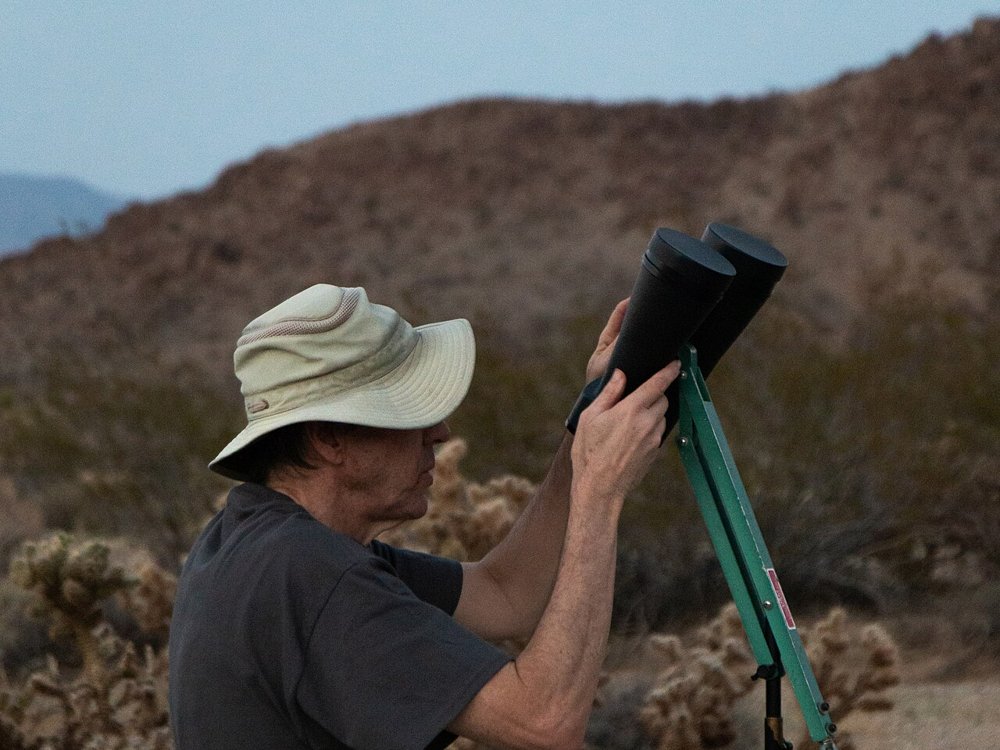
Image stabilized binoculars cancel out the shaking of your hands: sensors or a freely suspended prism mechanism keep the image steady, so you can observe at 12× to 18× without a tripod.
How do image stabilized binoculars work?
Even a steady hand constantly trembles by fractions of a degree. Binoculars magnify this trembling just as much as the image: at 15×, a star in the eyepiece jumps 15 times as far as it does to the naked eye.
Every stabilizer solves the problem the same way: a component in the light path moves against the motion of your hand, so the image stays still at your eye. The only difference is what controls that component – gravity, an electric motor or a gyroscope.
Opto-mechanical: freely suspended prisms
In the Zeiss 20×60 S, the prism system sits in a gimbal suspension, i.e. in two bearings that rotate inside each other. At the push of a button you release the lock, and the heavy prism stays still thanks to its inertia while the housing wobbles in your hand.
The big advantage: there is no battery to give up in the cold. The downside is a weight of around 1.7 kg and a price that is more reminiscent of a good telescope.
Electronic: a gyro sensor controls a prism or lens
Almost all current models work electronically. A gyro sensor – a tiny rotation-rate sensor like the one in your smartphone – reports every movement to a chip, which counter-steers an optical component in a split second.
Canon uses a Vari-Angle Prism for this: two glass plates with a liquid between them whose wedge angle can be adjusted. In the 15×50 IS AW, according to Canon, it compensates for movements of up to ±0.7°.
Nikon shifts a lens group, much like in camera lenses. Fujinon, Vixen, Kite, Bresser and others instead mount the entire prism block in a motorized gimbal, which can handle larger deflections – Bresser quotes up to 2° for its 16×42. That helps above all on rocking boats.
Gyro-stabilized: the professional league
The original gyro stabilization works with a fast-spinning gyroscope that resists every change in position. Today you still find it in specialist binoculars such as the Fujinon Stabiscope for marine and government use – at several times the price of a Canon 15×50 IS and unnecessary for the night sky.
Digital binoculars with image stabilization
Digital binoculars are really a camera with two screens as eyepieces. Stabilization there merely shifts the image crop on the sensor, much like with a phone video.
That is handy for daytime shots and night vision on wildlife. Under the starry sky, however, the small sensors are very noisy, and no display shows star clusters as finely as good glass optics.
| Technology | How it works | Power | Examples |
|---|---|---|---|
| Mechanical | Prism hangs in a gimbal and stays still through inertia | no | Zeiss 20×60 S |
| Electronic (prism/lens) | Gyro sensor + motor tilts prism or shifts lens | yes, usually AA | Canon IS, Nikon Stabilized |
| Electronic (gimbal) | Entire prism block in a motorized gimbal | yes, AA or CR123 | Fujinon Techno-Stabi, Vixen Atera, Kite APC, Bresser, Sig Sauer |
| Gyroscope | Spinning gyroscope holds the optics in position | yes | Fujinon Stabiscope |
| Digital | Image crop on the camera sensor is shifted | yes | digital camera and night-vision binoculars |
What does image stabilization bring to the night sky?
Your eye only picks up fine detail when the image stands still for a moment. A shaking 10×50 therefore shows less than its optics could – part of its performance is lost to hand tremor.
We explain more about choosing the magnification and when a tripod becomes a must in our guide to binocular magnification. Here the focus is on what exactly you see more of with a steady image.
Jupiter’s moons: four points instead of a jitter
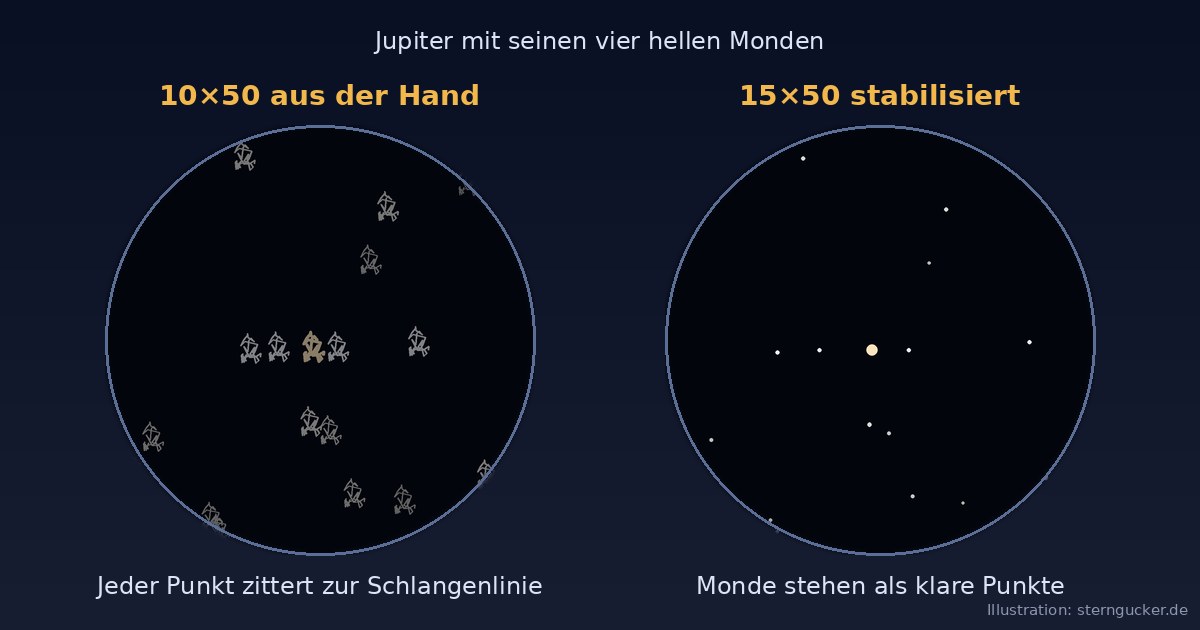
The four bright moons of Jupiter are already visible in a 10×50, but handheld they keep blurring into the planet’s glare. Stabilized at 15×, they sit beside it as clear points, and you can follow from evening to evening how they swap places.
Star clusters and double stars: resolved instead of smeared
In the Double Cluster in Perseus or the Pleiades, you count noticeably more individual stars in a steady image. Globular clusters such as M13 in Hercules appear as a round ball with a bright core instead of a flickering smudge.
Double stars such as Albireo in Cygnus are already split by a 10×50 – stabilized, you also see their colors, gold and blue, without constantly readjusting your grip.
The Moon: craters right up to the terminator
The effect is most impressive on the Moon. Along the boundary between light and shadow, crater rims, central peaks and mountain ranges become visible that blur into a bright mush in a shaking image.
What experienced observers report
In a German-language astronomy forum (astronomie.de), an owner who has used his Canon 15×50 IS since 1998 describes the first look as such a big gain that he never wanted to observe without stabilization again. He sold a 10×42 IS in between because 15× showed much more in the sky – and later bought it back after all.
The dissenting voices in the same thread are just as instructive: on a tripod, high-quality unstabilized binoculars show finer star points than the Canon 10×42. And with a tripod you can show fellow observers an object without holding the binoculars.
Downsides: price, weight, batteries and exit pupil
Stabilized binoculars are not a better 10×50, but a different tool. You should know these trade-offs before you buy.
Price: many times that of a 10×50
The cheapest stabilized Canon with a useful aperture, the 10×30 IS II, costs € 609. The astronomically interesting 15×50 (€ 1,549) and 18×50 (€ 1,819) cost many times more – a good 10×50 is available from around € 62.
Weight: the 15×50 weighs almost 1.2 kilos
According to the manufacturer, the Canon 15×50 IS AW weighs around 1,180 g without batteries, the Zeiss 20×60 S around 1.7 kg. Lightweight models such as the Canon 12×36 IS III or the Bresser 16×42 stay below 700 g, but also gather less light.
Batteries and cold
Electronic stabilizers run on batteries, usually AA cells. In the cold, runtime drops dramatically: for the 15×50 IS AW with alkaline batteries, Canon quotes around 2.5 hours at 25 °C, but only about 10 minutes at −10 °C.
That is why observers rely on lithium AA cells and spare batteries in an inside pocket. If the power fails, you can keep looking through most models – just without stabilization.
Small exit pupil in 10×30 and 12×36
The exit pupil is the diameter of the light beam leaving the eyepiece – objective diameter divided by magnification. If it is much smaller than your dark-adapted pupil, the image looks darker, and this is exactly where many stabilized binoculars cut corners.
| Binocular | Exit pupil | For nebulae and galaxies |
|---|---|---|
| 10×50 (regular) | 5.0 mm | very good |
| 15×70 (regular) | 4.7 mm | very good |
| Canon 10×42 L IS WP | 4.2 mm | good |
| Canon 15×50 IS AW | 3.3 mm | decent |
| Canon 10×30 IS II | 3.0 mm | limited |
| Canon 12×36 IS III | 3.0 mm | limited |
| Canon 18×50 IS AW | 2.8 mm | limited |
| Nikon Stabilized 10×25 S | 2.5 mm | too dark |
For the Moon, planets and bright star clusters this hardly matters. For faint galaxies and nebulae under a dark sky, however, a 10×50 or 15×70 is brighter – there, light counts for more than steadiness.
Glasses, warranty and floating effect
Many stabilized binoculars have only 13 to 15 mm of eye relief, which is tight for eyeglass wearers – be sure to try them first. Some manufacturers give only a two-year warranty on the electronics.
Stabilized binoculars or a tripod with regular binoculars?
The honest alternative to image stabilization costs a fraction: regular binoculars on a photo tripod. Both approaches have clear strengths.
| Criterion | Stabilized binoculars | Binoculars + tripod |
|---|---|---|
| Cost | from € 609, for a 15×50 € 1,549 | a fraction of that, tripod included |
| Setup | none – switch on, look | set up tripod, screw on adapter |
| Image steadiness | very good, slight residual shake | perfectly still |
| High in the sky | comfortable, even in a deck chair | awkward on a photo tripod |
| Showing others something | hand over binoculars, find it again | binoculars stay on the object |
| Power | batteries needed (except Zeiss) | none |
Who stabilized binoculars are worth it for
- ✅ You observe spontaneously – in the garden, when traveling, on the balcony – and don’t want to set anything up.
- ✅ You use the binoculars during the day as well: birds, hiking, boating, stadium.
- ✅ Your hands shake more than they used to, and even 8× gets unsteady.
- ✅ You already own a telescope and want a quick second instrument for the Moon, Jupiter and star clusters.
When a tripod and regular binoculars are better
If your budget is below the price of the cheapest stabilized binoculars, or you mostly observe from the same spot, large binoculars on a tripod are the better choice. A 15×70 gathers twice as much light as a 50 mm binocular and stands steadier on a tripod than any stabilized model.
Our pick without stabilization: Omegon Nightstar 15x70 Binoculars
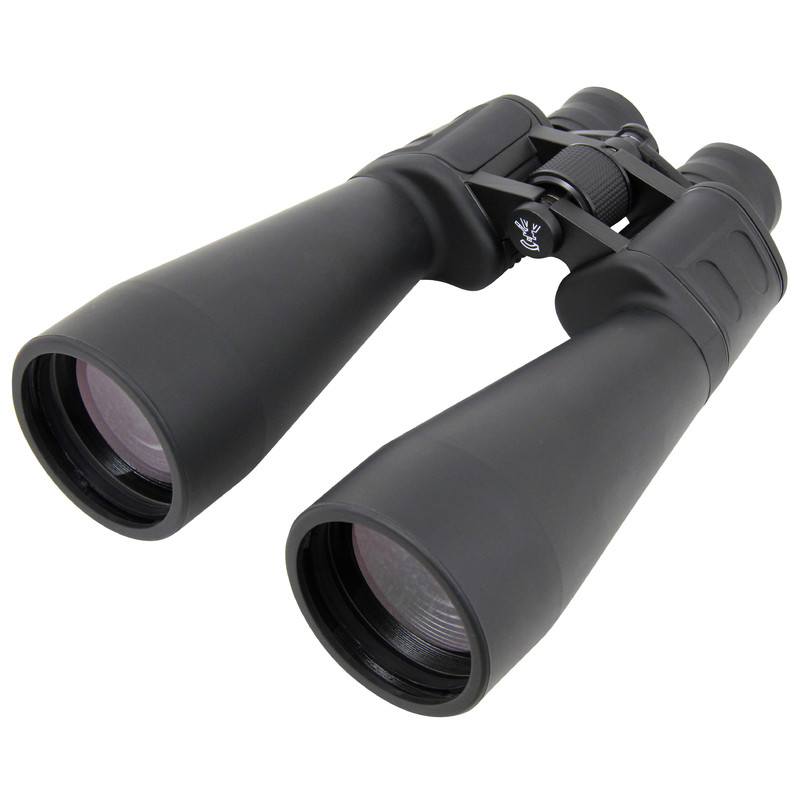
70 mm aperture, 4.7 mm exit pupil and a tripod thread: on a photo tripod, this 15×70 shows faint star clusters and nebulae brighter than any stabilized 15×50 – for a fraction of the price.
Price: € 119
If you lie back in a deck chair and prop up your elbows, you can hold even a 10×50 surprisingly steady for minutes. For getting started, an inexpensive pair is perfectly sufficient.
Budget tip to try it out: Celestron UpClose G2 10x50 Porro Binoculars
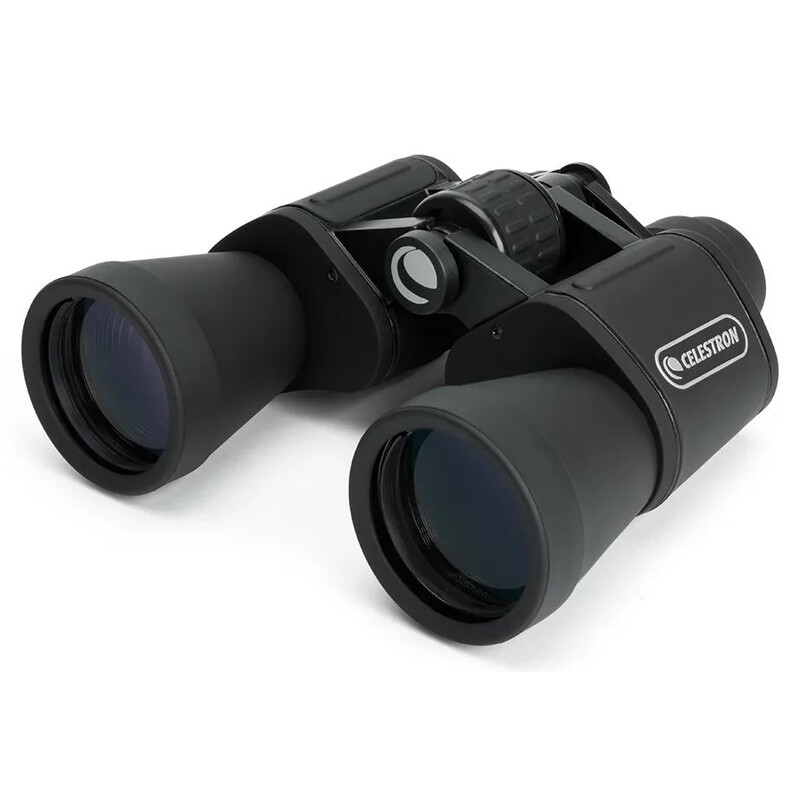
Inexpensive 10×50 with a 5 mm exit pupil – ideal for finding out whether the shaking bothers you at all before you spend many times as much on stabilization.
Price: € 62
The best image stabilized binoculars compared
We have not tested these binoculars ourselves. The assessment is based on manufacturer specifications, retailer prices and user reports from astronomy forums – with a view to the night sky.
| Model | Stabilization | Exit pupil | Price | Astronomy verdict |
|---|---|---|---|---|
| Canon 10×20 IS | Vari-Angle Prism | 2.0 mm | € 579 | pocket binocular for daytime, too dark at night |
| Canon 10×30 IS II | Vari-Angle Prism | 3.0 mm | € 609 | affordable entry: Moon, Jupiter’s moons, bright clusters |
| Canon 12×36 IS III | Vari-Angle Prism | 3.0 mm | € 919 | light all-rounder for travel and the sky |
| Canon 15×50 IS AW | ⭐ Our astronomy pickVari-Angle Prism | 3.3 mm | € 1,549 | the classic for the night sky |
| Canon 18×50 IS AW | Vari-Angle Prism | 2.8 mm | € 1,819 | more detail on the Moon and double stars, darker |
| Canon 10×42 L IS WP | Vari-Angle Prism | 4.2 mm | € 1,919 | brightest Canon, best optics, waterproof |
| Nikon Stabilized 10×25 S | lens shift | 2.5 mm | € 719 | travel and sports, too faint at night |
| Nikon Stabilized 12×25 S | lens shift | 2.1 mm | € 737 | travel and concerts, not for stars |
| Vixen Atera II 12×30 | electronic | 2.5 mm | € 899 | light, for the Moon and bright clusters |
| Artesky 15×42 ED Stabilized | electronic | 2.8 mm | € 699 | cheapest 15×, few user reports |
| Bresser 16×42 Stabilizer OIS | prism gimbal | 2.6 mm | slightly below the Fujinon TS-X 14×40 | light, 1 AA cell for around 30 hours |
| Fujinon Techno-Stabi TS-X 14×40 | prism gimbal | 2.9 mm | € 1,299 | large correction range, strong on boats |
| Sig Sauer Zulu6 HDX 16×42 | electronic | 2.6 mm | price class of the Canon 18×50 IS AW | light and waterproof, from the hunting world |
| Zeiss 20×60 S | mechanical | 3.0 mm | more than four times the Canon 15×50 IS AW | no battery, reference for the Moon and planets |
Links marked with an asterisk are partner links.
Canon image stabilized binoculars: the IS series
Canon has been building stabilized binoculars since the 1990s and has the widest range. For the sky, the 15×50 IS AW is the proven middle ground between magnification, aperture and price; the 18×50 shows a little more detail, but a darker image.
The 10×42 L IS WP has the best optics in the range and the largest exit pupil. If you mainly observe during the day and only occasionally at night, it serves you best.
Our astronomy pick with stabilization: Canon 15x50 IS AW Image-Stabilised Binoculars
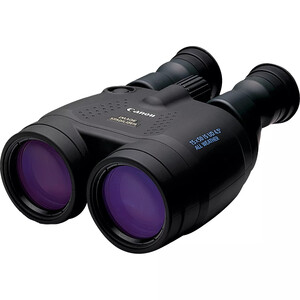
15× at 50 mm aperture: Jupiter's moons, lunar craters and star clusters stand still handheld, with no setup at all. To be honest, you pay for it with almost 1.2 kg of weight, batteries and a darker image than a 15×70 on a tripod. It is worth it if you want to observe spontaneously and a tripod would otherwise stay in the cupboard.
Price: € 1,549
Nikon image stabilized binoculars: small and light
Nikon currently offers the Stabilized 10×25 S and 12×25 S – compact binoculars for travel, sports and concerts. With 25 mm aperture they are too faint at night; the earlier, larger StabilEyes series can only be found second-hand.
Zeiss image stabilized binoculars: the 20×60 S
The Zeiss 20×60 S is practically the only series-production binocular available with purely mechanical stabilization. At 20× with 60 mm aperture it shows lunar craters almost like a small telescope, but it costs as much as a big one.
Sig Sauer image stabilized binoculars: Zulu6
The Zulu6 series from Sig Sauer comes from the hunting and outdoor world: 10×30, 12×42, 16×42 and larger Pro models. According to the retailer, the 16×42 weighs only 620 g, but with a 2.6 mm exit pupil it delivers a rather dark image for the night sky.
Swarovski image stabilized binoculars?
As of September 2026, Swarovski does not have image stabilized binoculars in its range. If you are looking for Swarovski quality with stabilization, you will end up with the Canon 10×42 L IS WP or the Zeiss 20×60 S.
Bresser, Fujinon, Kite and Vixen
These manufacturers mount the entire prism block in a gimbal and can therefore also compensate for larger movements. According to the manufacturer, the Bresser 16×42 Stabilizer OIS runs for around 30 hours on one AA cell, but is only splash-proof.
Buying image stabilized binoculars: what to look for
- Magnification 12× to 15×: below that, stabilization hardly pays off in the sky; above it, the image gets dark and the field narrow.
- Exit pupil of 3 mm or more: otherwise you lack light and contrast on star clusters and nebulae.
- AA batteries: available everywhere, and as lithium cells usable in winter too.
- Eye relief of 15 mm or more if you observe with glasses.
- Tripod thread: handy if you do want to mount the binoculars after all.
- Try before you buy: everyone perceives residual shake and the floating effect differently.
For advanced observers: the telescope as the next step
For a fraction of the price of a stabilized 15×50, you get a telescope that shows far more on the Moon, Jupiter and Saturn. It does not replace your binoculars – but it offers 130 mm aperture and magnifications of over 100×.
For advanced observers: Skywatcher Dobson Telescope N 130/650 Heritage FlexTube
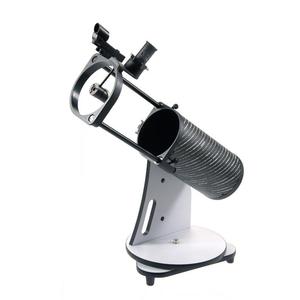
130 mm aperture on a stable tabletop Dobsonian mount – more light than any binocular and enough magnification for Saturn's rings and Jupiter's cloud belts. Needs a table or stool as a base.
Price: € 265
FAQ about image stabilized binoculars
Are image stabilized binoculars worth it for astronomy?
Yes, if you want to observe at more than 10× without a tripod and can spend at least € 609. The Moon, Jupiter’s moons and star clusters gain a lot. For faint nebulae, large binoculars on a tripod are brighter and cheaper.
Do stabilized binoculars work without batteries?
With most electronic models you can keep looking through them without power, only the image then shakes like with any binocular. The Zeiss 20×60 S needs no battery at all.
What magnification makes sense with image stabilization?
For the sky, 12× to 15×. 18× shows a little more detail, but the image gets darker and the field of view smaller.
How long do the batteries last?
That depends heavily on the model and the temperature. For the 15×50 IS AW with alkaline cells, Canon quotes around 2.5 hours at 25 °C, but only minutes in frost. Lithium cells last much longer in the cold; Bresser quotes around 30 hours for its 16×42.
Can I look at the Sun with stabilized binoculars?
No, never without a filter. Only certified objective solar filters in front of both objectives make solar observation safe – the stabilizer changes nothing about that.
Links marked with an asterisk (*) are affiliate links. If you buy through them, we receive a small commission – the price stays the same for you.