By Alexander Merz · Updated on · Details checked on 20 September 2026
At first glance, a Maksutov and a Schmidt-Cassegrain look almost identical: a short, fat tube, a glass plate at the front, the eyepiece at the back. Both gather light with mirrors and lenses — which is why they are called catadioptric telescopes. The difference between them is small, but it decides which of the two suits you.
⭐ In short: The Maksutov is the specialist for the Moon and the planets — very sharp, very compact, very high in contrast, but dim and slow to cool down. The Schmidt-Cassegrain is the all-rounder — considerably more aperture for your money, usable for deep-sky and astrophotography too, at the price of being a little less crisp on planets. Rule of thumb: up to 5 inches take the Maksutov, from 8 inches up take the Schmidt-Cassegrain. In between, it comes down to whether you want to observe or photograph.
The Cassegrain light path: what both have in common
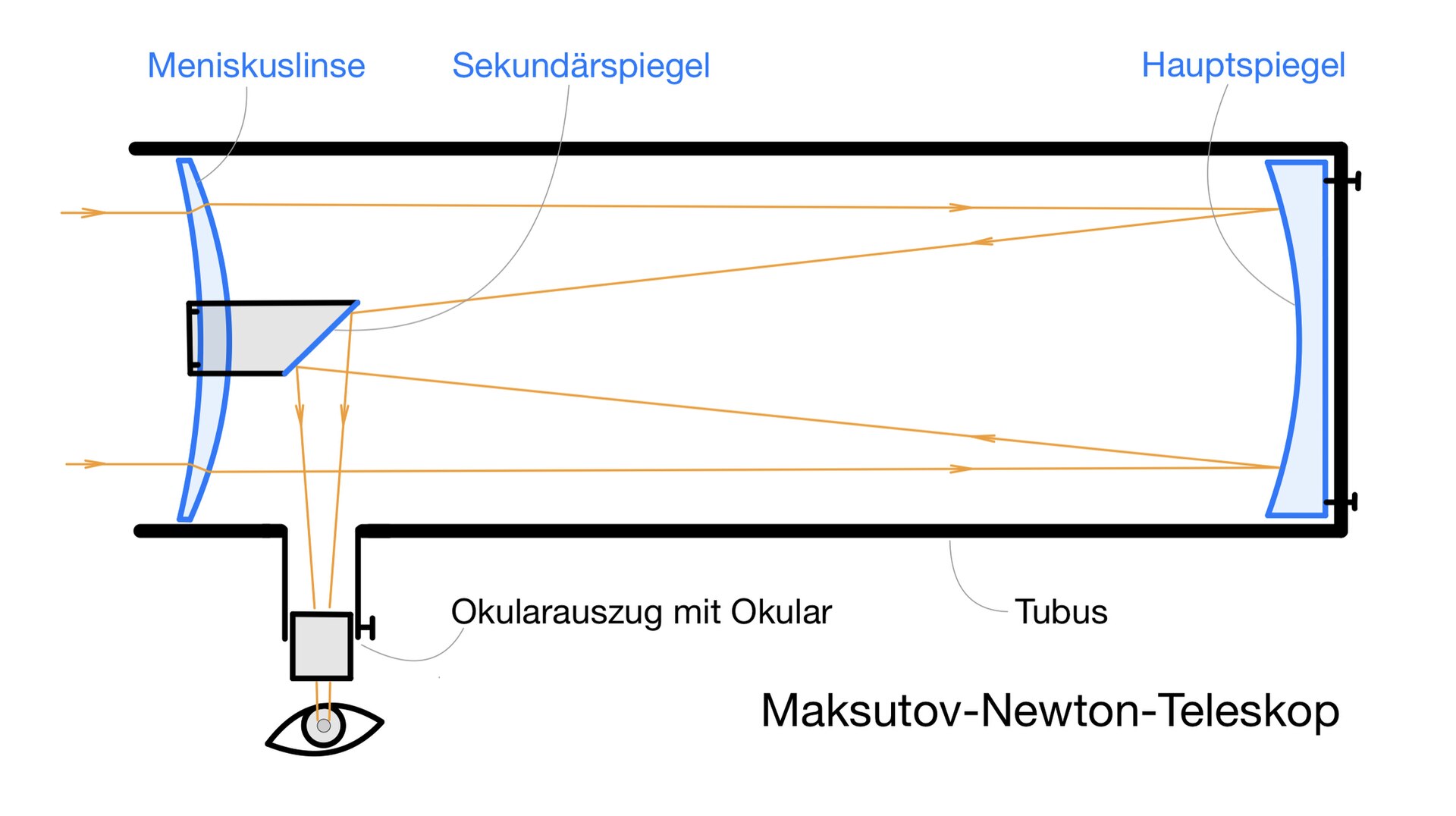
Both designs go back to the same basic idea, described by Laurent Cassegrain in 1672: the light travels up and down the tube twice before it reaches the eyepiece.
A primary mirror at the bottom of the tube collects the light and throws it forward. Up front sits a small convex secondary mirror that sends it back again — through a hole in the middle of the primary mirror, straight into the eyepiece.
That folding is the whole trick. A Cassegrain telescope with 2,000 mm of focal length is not two metres long, but a good 40 centimetres. The long focal length sits folded up inside a tube you can carry with one hand. That is exactly why these instruments are popular with people who have no room for a beam of a telescope.
A pure Cassegrain would still have a problem at this point: a spherically ground primary mirror does not image cleanly. That is precisely what the glass plate at the front is there for — the corrector plate. And that plate is the only real difference between a Maksutov and a Schmidt-Cassegrain.
The difference sits in the front plate
In the 1930s the Estonian optician Bernhard Schmidt developed a wafer-thin plate that is only minimally curved in a few places. It is optically weak but extremely demanding to grind — from the outside it looks almost like ordinary window glass.
The Russian optician Dmitri Maksutov found a different route in 1941: a thick, strongly curved lens shaped like a crescent moon — the meniscus. It is easier to manufacture because its surfaces are ordinary spherical surfaces. In return it is heavy, and it stores heat.
Everything else follows from that single design decision: because the meniscus is so heavy, Maksutovs beyond 180 mm of aperture become absurdly expensive. Because the Schmidt plate is so light, there are Schmidt-Cassegrains up to 400 mm at prices an equally large Maksutov would never come close to.
The Maksutov telescope: the sharpshooter
A Maksutov has a very small secondary mirror — often it blocks only a fifth of the diameter. Little obstruction means plenty of contrast. On the Moon, Saturn, Jupiter and double stars a Maksutov draws so cleanly that it holds its own against expensive refractors.
On top of that comes the long focal length. A Maksutov with 102 mm of aperture typically has 1,300 mm of focal length — that works out to f/13. It gets you to high magnifications with ordinary eyepieces, and even simple eyepieces deliver a clean image in such a slow light cone.
The sealed tube is a practical advantage that rarely gets a mention: no dust settles inside, and the mirrors stay untouched for years. A Maksutov is an instrument you pull out of the cupboard, set up and use.
Where the Maksutov hits its limits: at f/13 the field of view is tiny and the image is dim. Large nebulae, open clusters or the Andromeda Galaxy simply do not fit into the field. If you are after deep-sky, a Dobsonian for the same money serves you considerably better.
The Schmidt-Cassegrain telescope: the all-rounder
Celestron and Meade have been mass-producing Schmidt-Cassegrains since the 1960s, and production is by now so well practised that an 8-inch model — the legendary C8 — costs a fraction of what an equally large Maksutov would.
203 mm of aperture at f/10 is a different calibre from 102 mm at f/13. The Schmidt-Cassegrain resolves globular clusters, shows structure in galaxies and puts planets on a decent scale — and still fits on the back seat.
The second big point is the accessory ecosystem. For Schmidt-Cassegrains there are focal reducers that turn f/10 into a photographically usable f/6.3, guide cameras, off-axis guiders and adapters for practically every camera. If you ever want to get into astrophotography, an SCT gives you a future; a Maksutov rather less so.
The price for that: the secondary mirror is bigger, blocking a good third of the diameter. That costs contrast. Put a 102 mm Maksutov and a 203 mm SCT side by side on Saturn — the SCT shows more, but the Maksutov shows it more “calmly”.
Maksutov or Schmidt-Cassegrain: the head-to-head comparison
| Maksutov | Schmidt-Cassegrain | |
|---|---|---|
| Typical aperture | 90–180 mm | 150–400 mm |
| Focal ratio | f/12 to f/15 | f/10 (f/6.3 with a reducer) |
| Central obstruction | approx. 20 % | approx. 33 % |
| Moon & planets | outstanding | very good |
| Deep-sky | limited | good |
| Astrophotography | Moon and planets | Moon, planets, deep-sky |
| Cool-down time | 45–90 minutes | 30–60 minutes |
| Collimation needed? | practically never | rarely, but possible |
| Price per millimetre of aperture | high | moderate |
What the brochure does not tell you
Both designs share four quirks. None of them is a deal-breaker, but every one of them causes confusion the first time round — and none of them appears in the product description.
1. The cool-down time is real, and it is long
A sealed tube with a thick front lens holds on to room warmth. As long as the air in the tube is warmer than the air outside, currents rise through the light path and the image shimmers. With a ten-degree temperature difference, a Maksutov realistically needs a good hour before it shows its full image.
The solution is not technology but planning: put the telescope outside, have a coffee, then start. If you store your instrument in an unheated shed or on the balcony, you never have the problem in the first place.
2. The front plate fogs up
The corrector plate sits right at the front, exposed to the open sky — it cools below the ambient temperature and attracts dew like a car windscreen. After an hour the image is milky, after two it is gone.
A dew shield — at its simplest a rolled-up camping mat — pushes the problem back by one to two hours. If you are out for long stretches on a regular basis, get a heated dew strap. What you should not do: wipe the plate. That just smears dust across the delicate coating in scratch marks.
3. The focus wanders (mirror shift)
On both designs you focus by moving the primary mirror along an axis. At the end of a movement it tilts a fraction — the image jumps sideways a little when you reverse the direction of the focuser. At high magnification that is clearly visible, and in astrophotography it is a nuisance.
The experienced observer’s trick: always come at the sharp point from the same direction, usually against gravity. If you photograph a lot, you can retrofit a focuser with a fine-adjustment knob later. Shift is not a defect, it comes with the design.
4. The field is curved
Looking through the eyepiece you barely notice it. On a camera sensor you do: when the centre is sharp, the corners are not. That is why the EdgeHD and ACF versions exist, with extra correction in the back end — they cost more, but they solve the problem properly. For purely visual observing you do not need it.
Do Maksutovs and Schmidt-Cassegrains need collimating?
This is the big advantage over the Newtonian telescope, where collimation is part of routine maintenance.
A Maksutov is practically collimation-free. The secondary mirror is usually coated straight onto the meniscus, so there is nothing to adjust at all. Plenty of instruments run their whole lives without ever being touched.
A Schmidt-Cassegrain has three screws on the secondary mirror and can go out of alignment after a rough journey. You rarely need to do anything — but if you do, here is how: pick a bright star high in the sky, magnify heavily, then defocus slightly. A properly collimated instrument shows an exactly concentric ring with the shadow of the secondary right in the middle. If the shadow sits off-centre, adjust the screw on the side it has shifted towards — in very small steps, usually an eighth of a turn is enough.
Tip: never collimate a Schmidt-Cassegrain before it has cooled down. A warm instrument shows a restless, distorted ring — you end up correcting against air currents instead of against a real error, and knock a working telescope out of alignment.
Which one suits you?
Take a Maksutov if the Moon and the planets are your main subject, you have little space or want to take the telescope with you often, you observe from a balcony in the city (where deep-sky is off the table anyway) and you have no interest in astrophotography.
Take a Schmidt-Cassegrain if you want both — planets and deep-sky —, if you want to photograph at some point, if you drive out to dark sites and have to keep an eye on boot space.
Take neither if this is your first telescope and your budget is under 500 euros. In that class the same money buys you a Dobsonian with twice the aperture. Which design fits your goals in the first place is what the telescope buying guide sorts out.
Recommended Maksutov and Schmidt-Cassegrain telescopes
These instruments cover the steps that actually make sense — from the compact Maksutov for the balcony to the big Schmidt-Cassegrain for a permanent pier:
Maksutov and Schmidt-Cassegrain
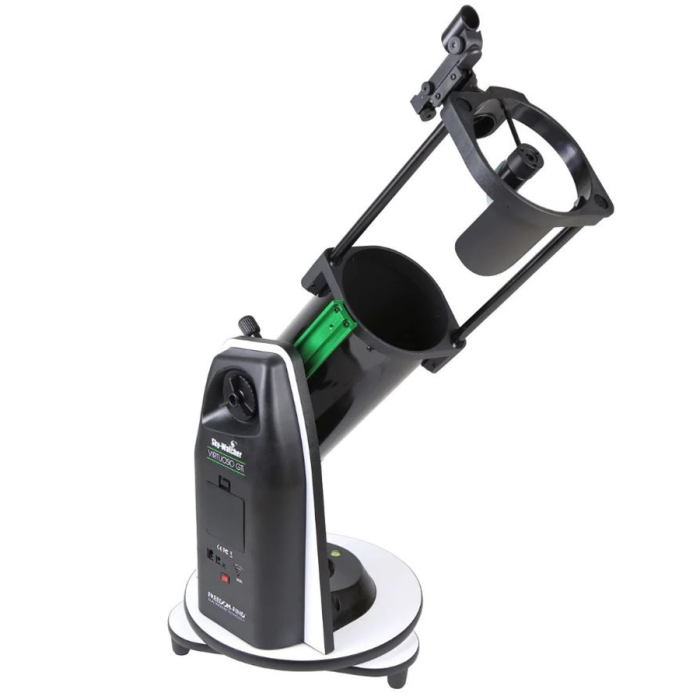 Sky-Watcher Virtuoso GTi 130P Tabletop GoTo Dobsonian
A Maksutov with 1,300 mm of focal length in a short tube: crisp Moon and planet views, almost no colour fringing, easy to carry.
Price: $495.00
View at High Point Scientific* →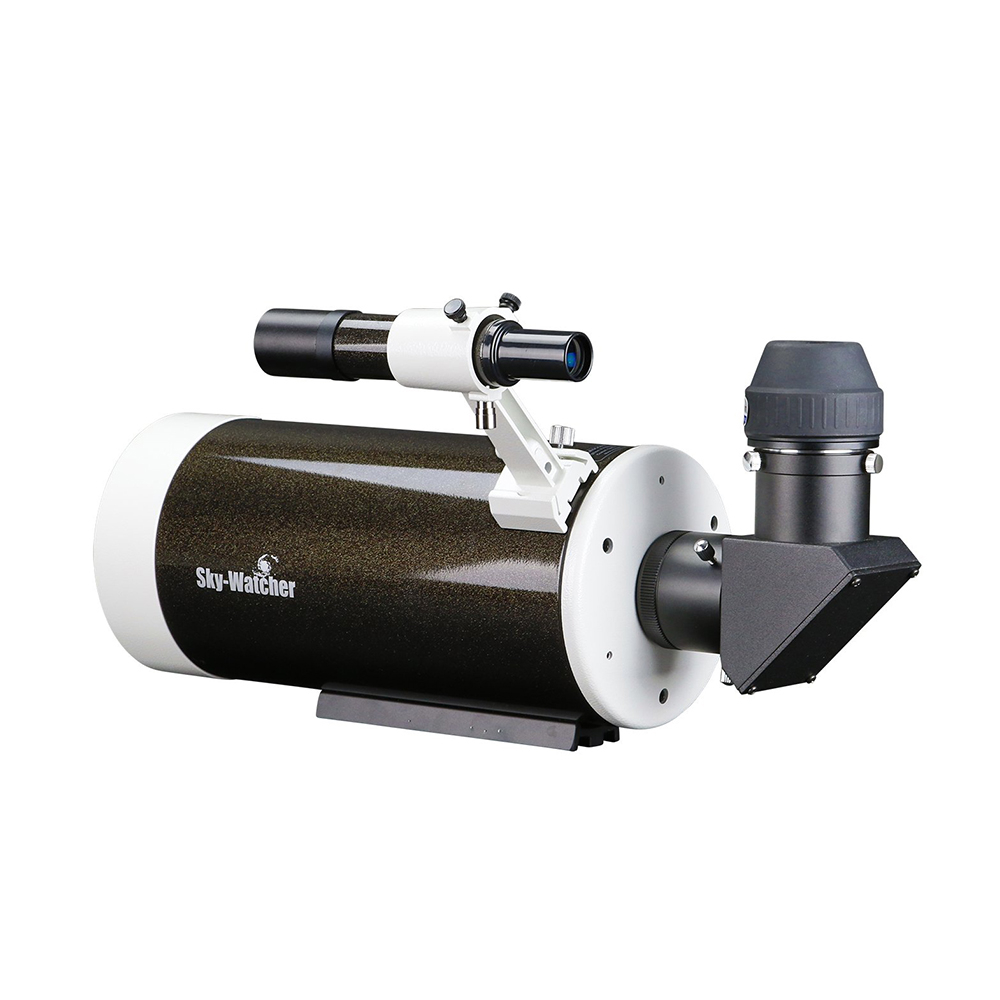 Sky-Watcher Skymax 127 mm Maksutov-Cassegrain OTA
The classic 127 mm Maksutov as a bare tube: 1,500 mm of focal length in a 33 cm package. Only worth it if you already own a sturdy mount – none is included.
Price: $610.00
View at High Point Scientific* →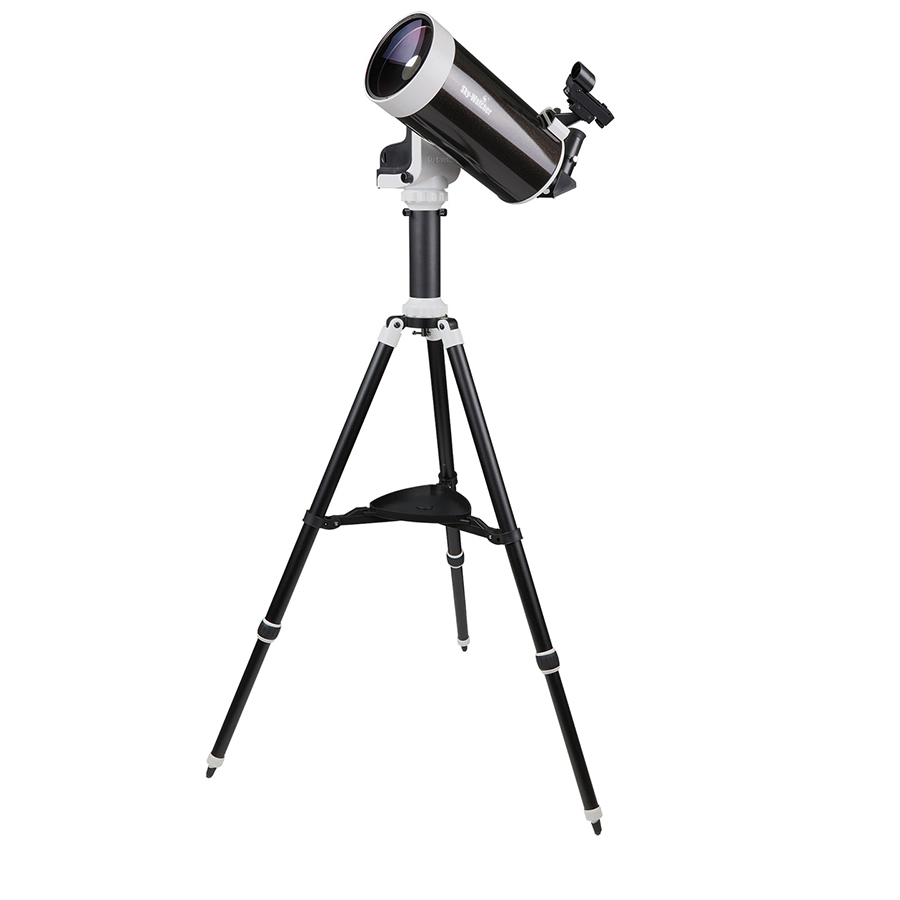 Sky-Watcher Skymax 127 mm with AZ-GTi Mount & Tripod
The same 127 mm Maksutov, but complete: a WiFi GoTo mount you drive from your phone. The shortest route to sharp Moon and planet views without hunting for targets.
Price: $995.00
View at High Point Scientific* →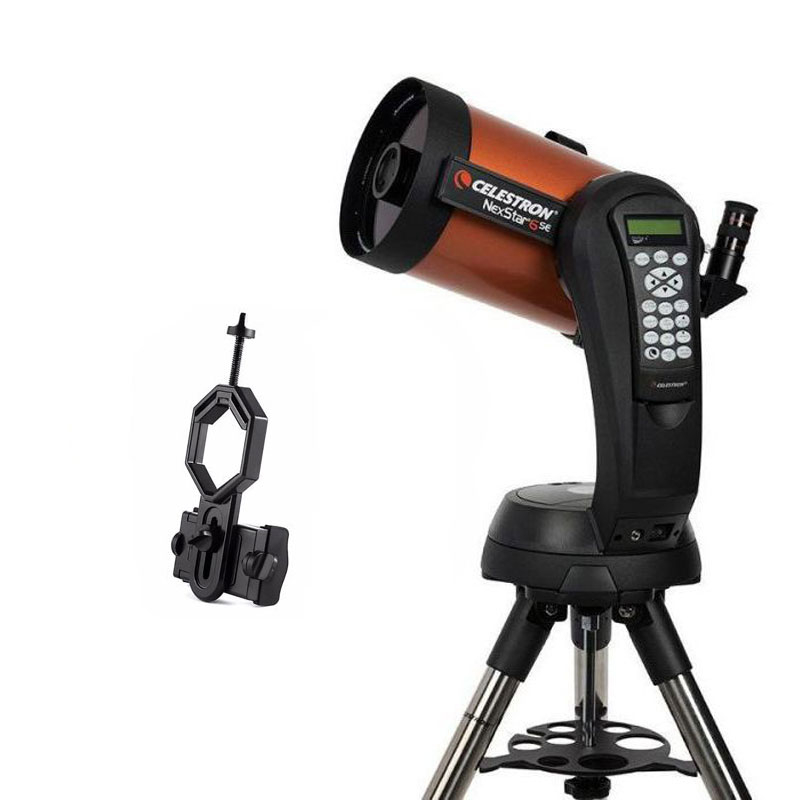 Celestron NexStar 6SE Computerized Telescope
The way into Schmidt-Cassegrains: 150 mm of aperture on a single-arm GoTo, set up in minutes. The mount is too light for long exposures.
Price: $1,199.00
View at High Point Scientific* →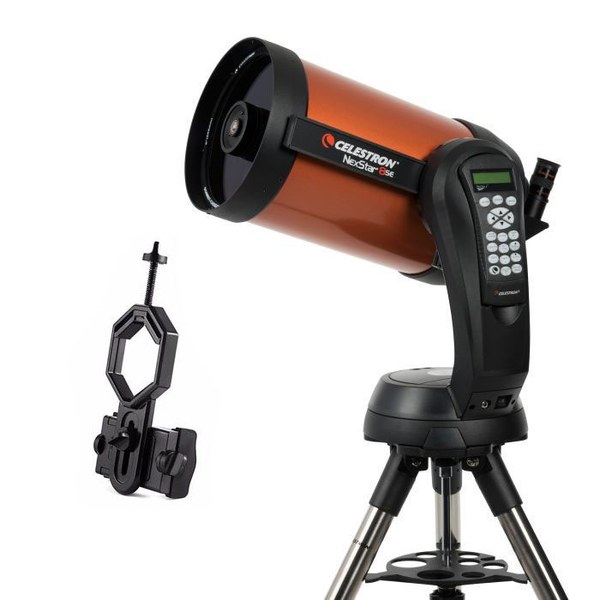 Celestron NexStar 8SE Computerized SCT
The 203 mm GoTo classic: finds over 40,000 objects at the push of a button. Strong on planets.
Price: $1,699.00
View at High Point Scientific* →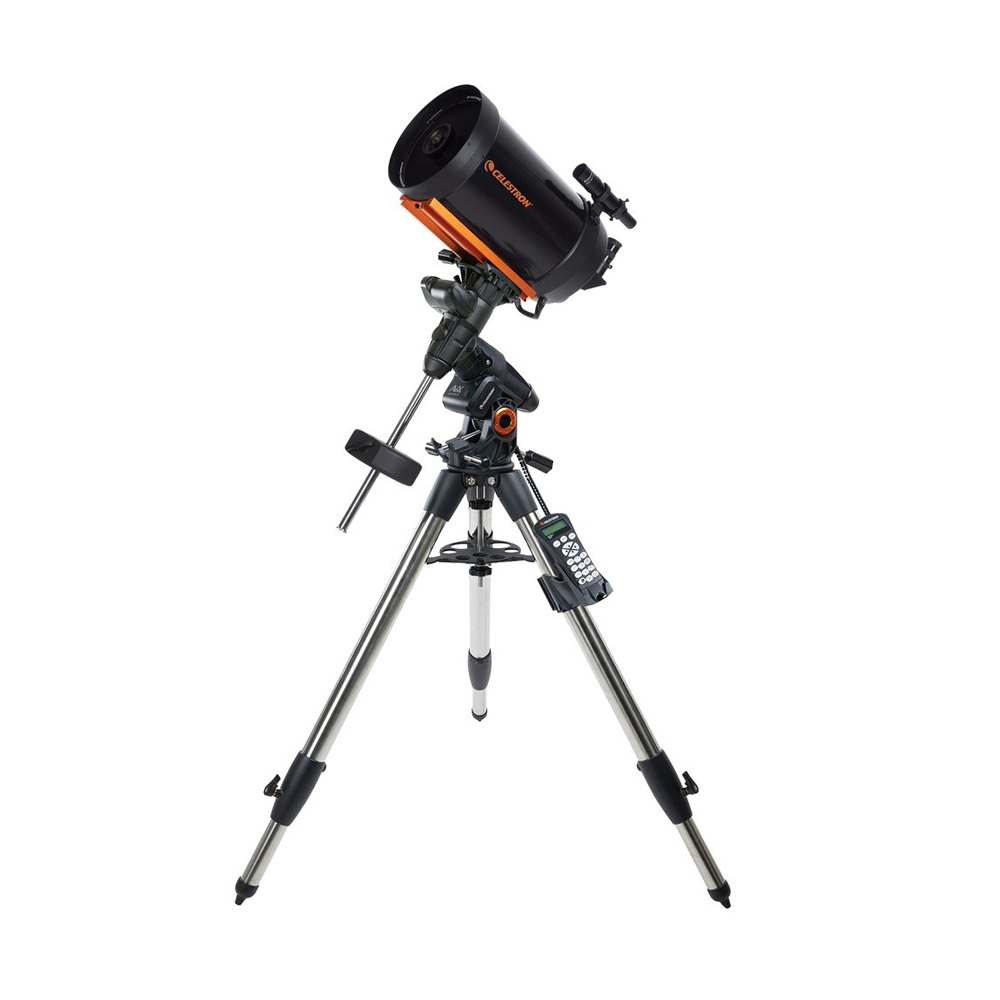 Celestron Advanced VX 8" Schmidt-Cassegrain GoTo
The same 203 mm optics on an AVX equatorial mount – the version for anyone who wants to photograph later on.
Price: $2,199.00
View at High Point Scientific* →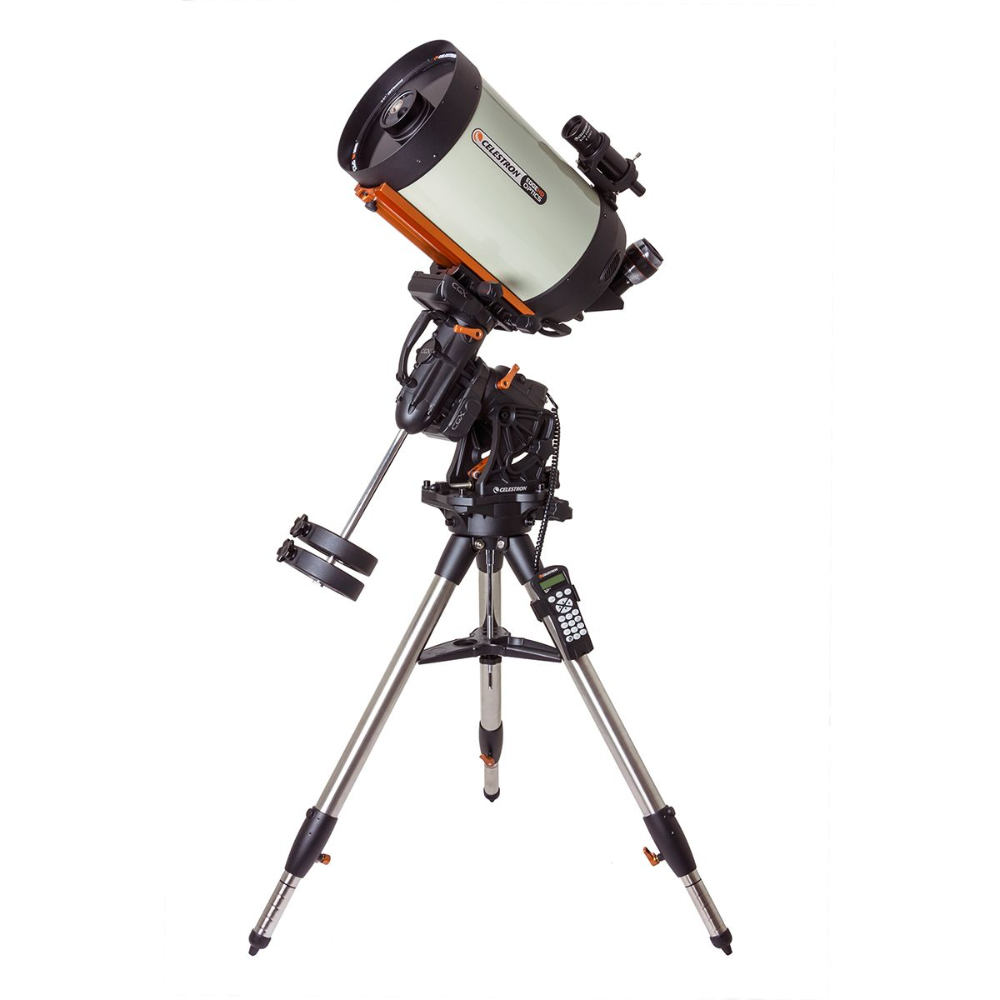 Celestron CGX 1100 EdgeHD Computerized Telescope
The top end: 279 mm with flat-field EdgeHD optics on a heavy CGX mount. Not a beginner scope, and nothing for a balcony.
Price: $5,399.00
View at High Point Scientific* →
* Affiliate link: if you order through it we earn a small commission, at no extra cost to you. Prices as of the last update.
Frequently asked questions about Maksutovs and Schmidt-Cassegrains
What does “catadioptric” mean?
A catadioptric telescope gathers light with mirrors and lenses. Pure reflectors (Newtonian, Dobsonian) are called catoptric, pure refractors dioptric. The Maksutov and the Schmidt-Cassegrain are the two most widespread catadioptric designs among amateurs.
Is a Maksutov-Cassegrain the same thing as a Maksutov?
In practice, yes. “Maksutov-Cassegrain” is the full name: Maksutov stands for the meniscus corrector plate, Cassegrain for the folded light path. There is also the rarer Maksutov-Newtonian, where the light exits at the side as it does on a Newtonian.
Is a Maksutov any good as a spotting scope for nature watching?
Yes, and that is one of its underrated strengths. With an Amici prism the image is correctly oriented, and the long focal length delivers magnifications no ordinary spotting scope reaches. For fast-moving subjects, though, the field of view is very tight.
Why is my image milky even though the sky is clear?
Almost always dew on the front plate — you can see it if you shine a torch across it at an angle. If the plate is dry, the instrument had not cooled down. Both causes are harmless and are solved with a dew shield and some patience.
What is the difference to a Ritchey-Chrétien?
A Ritchey-Chrétien is also a Cassegrain, but it works entirely without a front plate: both mirrors are ground hyperbolically and correct each other. No fogging, no cool-down trouble with thick optics — in return it is more expensive, has to be collimated and is almost exclusively an imaging instrument.
Can I take photographs with a Maksutov?
The Moon and the planets, yes, and very well at that: the long focal length plays to its strengths in video capture with a planetary camera. For deep-sky, f/13 is too dim — the exposure times get so long that the demands on your tracking become unrealistic.
Read on:
- Newtonian telescope – more aperture for your money, but with collimation
- Achromat or apochromat? – the refractors compared
- Reflector or refractor? – the fundamental decision
- Buying a telescope: the big guide – every design and our recommendations