By Alexander Merz · Updated on · Details checked on 17 October 2026
Astrophotography is where patience meets the night sky. In this astrophotography gallery we share real images captured by the sterngucker community — from sprawling spiral galaxies to glowing emission nebulae — along with the exact gear, exposure times and processing details behind every shot. Get inspired, then grab your own camera or smart telescope and start collecting photons.
⚡ The quick answer: This gallery showcases deep-sky astrophotos (M51, the Dolphin Head Nebula and M109) with full capture data — telescope, camera, filters, total exposure and processing software. You do not need pro equipment to start: a modern smart telescope like the DWARF 3 or Seestar S30 Pro can deliver impressive results in a single evening, straight from your smartphone.
M51 – The Whirlpool Galaxy

One of the most photographed galaxies in the northern sky, M51 shows its graceful spiral arms and the smaller companion galaxy NGC 5195 caught mid-interaction. A rewarding target for both beginners and seasoned imagers.
Object information: M51
| Distance from Earth | 24,000,000 light-years |
| Diameter | 30,000 light-years |
| Constellation | Canes Venatici |
| Notable features | Interacting pair with companion NGC 5195 |
Capture details: M51
| Photographer | Stefan Kuehn |
| Capture date | March 9, 2022 |
| Additional info | |
| Total exposure | 123 × 180 seconds |
| Camera | QHY268m |
| Filters | LRGB |
| Telescope | TSED94PH |
| Focal length | 414 mm |
| Image processing | Astro Pixel Processor, Photoshop |
The Dolphin Head Nebula (Sh2-308)

This delicate blue bubble is blown by the fierce stellar wind of a Wolf-Rayet star deep in Canis Major. Its striking color comes from ionized oxygen — a favorite for narrowband imagers.
Object information: Sh2-308
| Distance from Earth | 5,200 light-years |
| Diameter | 60 light-years |
| Constellation | Canis Major |
| Notable features | The blue color comes from ionized oxygen |
Capture details: Sh2-308
| Photographer | Stefan Kuehn |
| Capture date | Feb 26–28, 2022 |
| Additional info | |
| Total exposure | 360 minutes |
| Camera | QHY268m |
| Filters | LRGB + O-III |
| Telescope | TS94EDPH |
| Focal length | 414 mm |
| Image processing | Astro Pixel Processor, Photoshop |
M109 – A Barred Spiral in Ursa Major

Sitting just off the star Phecda in the bowl of the Big Dipper, M109 is a beautiful barred spiral. Its faint outer arms reward long total integration and a dark sky.
Object information: M109
| Distance from Earth | 60,000,000 light-years |
| Diameter | 180,000 light-years |
| Constellation | Ursa Major |
| Notable features | Barred spiral near the Big Dipper |
Capture details: M109
| Photographer | Stefan Kuehn |
| Capture date | March 8, 2022 |
| Additional info | |
| Total exposure | Nearly 6 hours |
| Camera | QHY268c |
| Filters | IDAS D2 |
| Telescope | C11 SCT |
| Focal length | 1,764 mm |
| Image processing | Astro Pixel Processor, Photoshop |
Want to shoot images like these? Start here
The photos above were taken with dedicated cooled cameras and premium optics — but you absolutely do not need that to begin. Today’s smart telescopes handle alignment, tracking and stacking automatically, so your first deep-sky shot can happen on your very first night. They are the fastest, most beginner-friendly way into astrophotography, and they still impress experienced observers as a grab-and-go setup.
Lightest for travel: DWARFLAB DWARF mini Smart Telescope
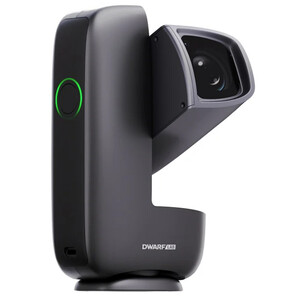
Just 840 g: the lightest smart telescope. Bigger pixels, 90-second exposures – but Full HD instead of 4K.
Price: € 429
Beginner favorite: ZWO Seestar S30 Pro Smart Telescope

ZWO's benchmark smart telescope: a polished app, mosaic mode and stunning results in minutes.
Price: € 699
* Affiliate link: if you buy through this link we may earn a small commission from Astroshop or High Point Scientific, at no extra cost to you.
Share your own astrophotos
We love featuring images from the community — absolute beginners included. Whether it is your first blurry Moon or a multi-hour deep-sky integration, we would be happy to publish it and link back to your blog or gallery. Just send your shot and the capture details (object, telescope, camera, exposure, processing) and we will add it here.
Astrophotography FAQ
What is the best telescope for astrophotography beginners?
A smart telescope such as the DWARF 3 or the Seestar S30 Pro is the easiest entry point. Both automate focusing, tracking and live stacking, so you can capture galaxies and nebulae from your phone with almost no learning curve.
How long an exposure do I need for deep-sky objects?
Faint galaxies and nebulae reward total integration times from 30 minutes up to several hours, built from many shorter sub-exposures. The M109 image above, for example, stacks nearly six hours of data.
Can I do astrophotography from the city?
Yes. Light-pollution and narrowband filters (like the O-III used for the Dolphin Head Nebula) let you image emission nebulae even under bright suburban skies. Galaxies are tougher in the city and benefit from darker locations.
What software is used to process astrophotos?
Many imagers stack in tools like Astro Pixel Processor or DeepSkyStacker, then finish in Photoshop or PixInsight. Smart telescopes do the stacking for you and export a ready-to-share image.
Do I need an equatorial mount and autoguiding?
For long-exposure deep-sky work with a DSLR or dedicated camera, yes — a tracking mount and guiding keep stars pinpoint. Smart telescopes bypass this entirely with built-in tracking.
Read next:
Also available in other languages: Deutsch (original) · Français · Italiano