By Alexander Merz · Updated on · Details checked on 20 September 2026
A smart telescope is a telescope with a built-in camera, motorized tracking and app control – also sold as a digital or fully automatic telescope. It finds nebulae and galaxies on its own and shows them on your phone within a few minutes; most models have no eyepiece.
More in our overview: Best Telescopes.
Smart Telescopes 2026 Compared
Seven devices, one question: which one suits you? The “Who it’s for” column answers that in one sentence, and “Not ideal if” tells you honestly when another model is the better pick.
| Model | Who it’s for | Not ideal if | Key specs | Price | Offer |
|---|---|---|---|---|---|
| ⭐ Our pickZWO Seestar S50 ProZWO Seestar S50 Pro | Beginners who want the best all-round package for nebulae and galaxies – tripod, solar filter and dew heater are included. | … 2.8 kg is too heavy for you or you want the whole Andromeda Galaxy in one frame. | Ø 50 mm FOV 2.8° 2.8 kg | $999.00€ 999 ● Available to order | To the shop* |
| ZWO Seestar S30 ProZWO Seestar S30 Pro | Large nebulae and star fields: the widest field of view in this list, same app as the S50 Pro. | … you mainly want to photograph small galaxies – 30 mm gathers little light. | Ø 30 mm FOV 4.6° 1.8 kg | $699.00€ 699 ● In stock · ready for shipping in 24 h | To the shop* |
| DWARFLAB DWARF 3DWARFLAB DWARF 3 | Travel and value for money: light, 4K sensor, fits in any backpack. | … you want the most detail from galaxies – the S50 Pro is better at that. | Ø 35 mm FOV 3.4° 1.35 kg | $549.00€ 529 ● In stock · ready for shipping in 3-7 days | To the shop* |
| DWARFLAB DWARF miniDWARFLAB DWARF mini | Smallest budget and maximum portability – the cheapest way into smart telescopes. | … you care about 4K and fine detail – the mini records in Full HD only. | Ø 30 mm FOV 2.4° 840 g | $419.00€ 429 ● In stock · ready for shipping in 24 h | To the shop* |
| DWARFLAB DracoDWARFLAB Draco | Advanced users who want maximum deep-sky performance: cooled sensor, built-in guide scope. | … you want a light travel scope (5.5 kg) or don’t want to wait until November. | Ø 90 mm FOV 2.1° 5.5 kg | $1,399.00€ 1,499 ● Available from 5 Nov | To the shop* |
| Vaonis Vespera Pro 2 Smart TelescopeVaonis Vespera Pro II | Premium travel scope with high resolution, mosaic mode and around 11 hours of battery life. | … you want to start on a budget – the S50 Pro shows almost as much for far less money. | Ø 50 mm Apo 5 kg incl. tripod | $2,990.00€ 2,990 ● Available to order | To the shop* |
| Celestron Origin Mark IICelestron Origin Mark II | The backyard observatory: the most powerful smart telescope, 152 mm at f/2.2. | … you have to carry it – with tripod it weighs almost 19 kg. | Ø 152 mm RASA 18.9 kg incl. tripod | $4,299.00€ 5,499 ● Available to order | To the shop* |
Priced just above the Draco, but with much smaller optics, sits the Vaonis Vespera IIVaonis Vespera II at $1,590.00€ 1,590 – the same 50 mm optics as the Pro II, without its resolution and, in the basic version, without a tripod (Vaonis sells one separately or as a bundle). What it’s good for and who it’s worth it for is covered in our smart telescope buying guide.
Its successor is now available: the Vaonis Vespera IIIVaonis Vespera III at $2,490.00€ 2,490 keeps the Vespera II’s sensor (Sony IMX585) but gets revised optics and a battery for about 11 hours. Its field of view is 2.5 × 1.4°, or 4.3 × 2.4° in mosaic mode.
Recommended Smart Telescopes
All seven devices at a glance – what they can do, who they’re worth it for and the current price.
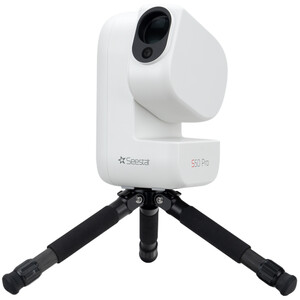
ZWO Seestar S50 Pro ⭐ Our pick
50 mm apo optics, 4K camera and built-in dual-band filter – tripod, solar filter and dew heater included.
Worth a look for beginners who want the best all-round package for nebulae and galaxies, even from the city. The smart telescope our readers buy most often.
$999.00€ 999 · ● Available to order
Check availability* →
ZWO Seestar S30 Pro
30 mm aperture and the widest field of view in its class (4.6°), same app as the S50 Pro.
Worth a look if you want large nebulae and the whole Andromeda Galaxy in one frame and would like to save a little.
$699.00€ 699 · ● In stock · ready for shipping in 24 h
Check availability* →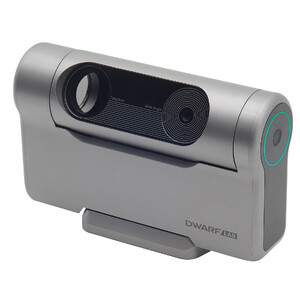
DWARFLAB DWARF 3
35 mm aperture, 4K sensor and a weight of just 1.35 kg.
Worth a look for travellers and the budget-conscious who want a light scope for the backpack and still want fine detail.
$549.00€ 529 · ● In stock · ready for shipping in 3-7 days
Check availability* →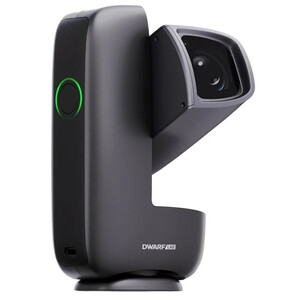
DWARFLAB DWARF mini
30 mm aperture, two cameras, 840 g – the lightest device on the list.
Worth a look for the cheapest entry, the balcony and travel. Important: it records in Full HD, not 4K.
$419.00€ 429 · ● In stock · ready for shipping in 24 h
Check availability* →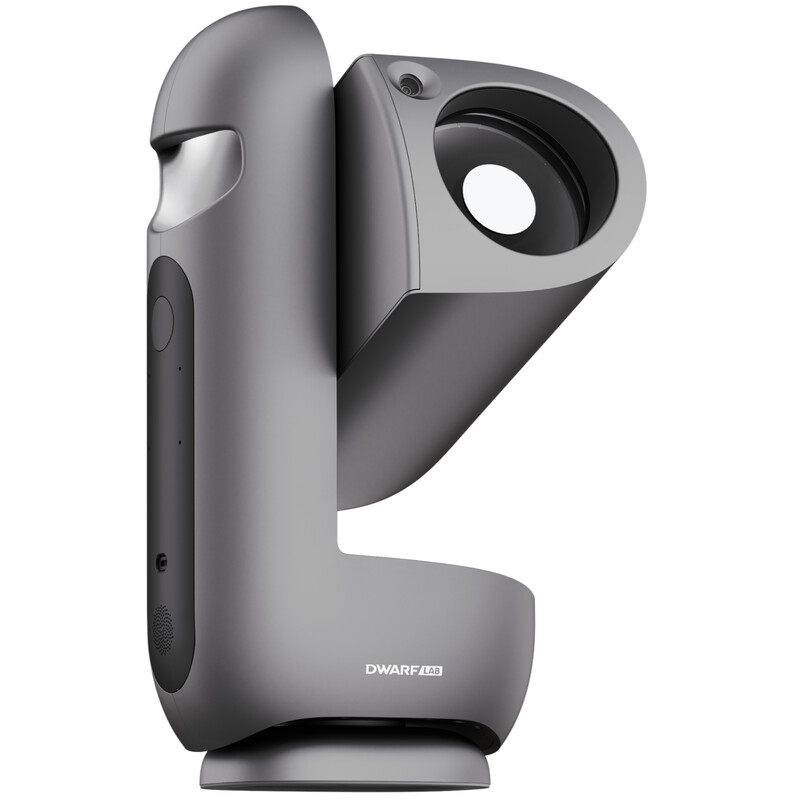
DWARFLAB Draco
90 mm aperture, cooled sensor and built-in guide scope for exposures of up to 300 seconds.
Worth a look for advanced users who want maximum deep-sky performance. At 5.5 kg it is no longer a backpack scope.
$1,399.00€ 1,499 · ● Available from 5 Nov
Check availability* →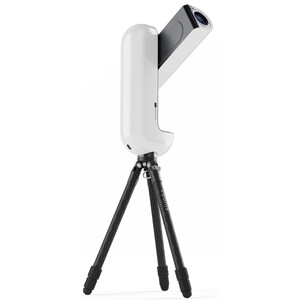
Vaonis Vespera Pro II
50 mm apo, high-resolution Sony sensor, mosaic mode and around 11 hours of battery life.
Worth a look for demanding travellers who want lots of resolution and are willing to pay considerably more for it.
$2,990.00€ 2,990 · ● Available to order
Check availability* →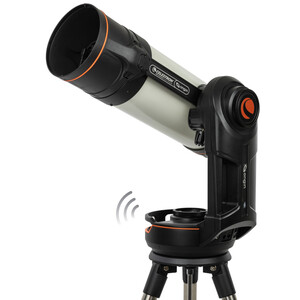
Celestron Origin Mark II
152 mm RASA optics at f/2.2 – the most powerful smart telescope you can buy.
Worth a look for a permanent spot in the garden: with tripod it weighs almost 19 kg.
$4,299.00€ 5,499 · ● Available to order
Check availability* →Links marked with an asterisk are affiliate links – the price stays the same for you.
🎬 Rather watch than read? In our video (in German) we compare all five entry-level devices – including which one fits the whole Andromeda Galaxy in a single frame and which accessories owners actually buy afterwards.
Note on the video: the upper end of the price range it mentions was the introductory price of the DWARFLAB Draco SHO, which ended on 14 September 2026. Current prices: Draco $1,399.00€ 1,499, SHO version $1,599.00€ 1,669.
All Models in Detail
Here are the five entry-level devices one by one, with their pros and cons. The top class has its own section further down.
ZWO Seestar S50 Pro
The S50 Pro is the best all-round package for nebulae and galaxies. It replaced the discontinued Seestar S50 in August 2026 and has since been by far the smart telescope our readers buy most often. All the specs on the Seestar S50 Pro
Pros
- ✓50 mm aperture – almost three times as much light as the 30 mm devices
- ✓Complete package with tripod, solar filter and dew heater
- ✓Mosaic mode for objects larger than the field of view
- ✓Finer sampling than the DWARF 3: around 2.3 instead of 2.75 arcseconds per pixel
Cons
- –2.8 kg – twice as heavy as the DWARF 3
- –Smaller field of view than the S30 Pro: the Andromeda Galaxy doesn’t fit in completely
Check price & availability* → $999.00€ 999 · ● Available to order
ZWO Seestar S30 Pro
At 4.6 degrees, the S30 Pro has the widest field of view in its class – the Andromeda Galaxy fits into the frame as a whole. It uses the same app as the S50 Pro and costs around 30 percent less. The Seestar S30 Pro in detail
Pros
- ✓Widest field of view, ideal for large nebulae and star fields
- ✓Mature Seestar app with a large user base
- ✓1.8 kg, fits in any backpack
Cons
- –Only 30 mm aperture: small galaxies stay small and need long exposures
- –Coarser sampling than the DWARF 3 – fine detail is more easily lost
Check price & availability* → $699.00€ 699 · ● In stock · ready for shipping in 24 h
DWARFLAB DWARF 3
The DWARF 3 samples more finely than the DWARF mini and the Seestar S30 Pro – at just 1.35 kilograms. It’s the travel scope among smart telescopes and, by day, also works for birds and landscapes. The DWARF 3 in detail
Pros
- ✓4K sensor at 2.75 arcseconds per pixel
- ✓Built-in dual-band filter – good for city skies
- ✓A second job by day: birdwatching, landscapes, time-lapses
Cons
- –35 mm aperture, noticeably less light than the S50 Pro
- –No tripod included
- –Real-world battery life in deep-sky use: two to four hours
Check price & availability* → $549.00€ 529 · ● In stock · ready for shipping in 3-7 days
DWARFLAB DWARF mini
The DWARF mini is the cheapest way in and, at 840 grams, the lightest device on the list. It isn’t a successor to the DWARF 3 but a smaller sibling. Our DWARF 3 review
Pros
- ✓The cheapest way into the world of smart telescopes
- ✓Larger pixels and single exposures of up to 90 seconds in EQ mode – smoother backgrounds on faint nebulae
Cons
- –Only Full HD instead of 4K
- –Smallest battery (7,000 mAh) and 64 GB of storage
- –No tripod included
Check price & availability* → $419.00€ 429 · ● In stock · ready for shipping in 24 h
DWARFLAB Draco
The Draco is the first device in its price class to come with a cooled sensor and a built-in guide scope. Among our readers it is already the second most ordered smart telescope, even though it isn’t shipping yet. DWARFLAB Draco: worth the wait?
Pros
- ✓90 mm aperture – more than three times as much light as the S50 Pro
- ✓Actively cooled, rotating sensor to fight noise and field rotation
- ✓Single exposures of up to 300 seconds thanks to guiding
Cons
- –5.5 kg – no longer a backpack scope
- –Smallest field of view on the list (2.1°)
- –Ships from 5 November 2026
Check price & availability* → $1,399.00€ 1,499 · ● Available from 5 Nov
The Draco comes in two versions. The standard version is $1,399.00€ 1,499, the SHO versionSHO version $1,599.00€ 1,669 – it adds a second narrowband filter (SII+OIII) for imaging nebulae in the Hubble palette. For most people the standard version is the right choice; the SHO version only pays off if you already process your images yourself.
Still unsure which smart telescope suits you?
Get a free, personal recommendation: six quick questions, one honest answer by email – even if it turns out to be “no smart telescope”.
What Is a Smart Telescope?
In stores, the same devices go by many names: digital telescope, automatic telescope, smartscope or app telescope. They all mean the same principle – optics, tracking and camera in a single housing.
If you’re searching for a “telescope with a screen”, you’ll usually end up here too. The screen is your phone or tablet – most devices don’t have one of their own.
After switching on, the device works out on its own where it is pointing, using plate solving. You pick a target in the app, the telescope slews to it and starts exposing – that’s all you have to do.
The actual trick is called live stacking: the telescope takes many short exposures and combines them in real time. With every minute, the image on your phone gets cleaner and more detailed – you watch the photo take shape.
What You Can See with a Smart Telescope – and What You Can’t
| Object | Result | Why |
|---|---|---|
| Nebulae and galaxies | very good | This is what the devices are built for: short focal length, wide field of view, live stacking |
| Open star clusters | very good | The stars show up in color after just a few seconds |
| Globular clusters | fair | At 30 to 35 mm of aperture, a cluster like M 13 stays a smudge instead of a cloud of stars |
| Moon | good | The whole disk fits in the frame; individual craters stay small |
| Sun | good, only with a filter | Only with a front-mounted (objective) solar filter; the Seestar models and the DWARF 3 include one. Without a filter, the Sun destroys the sensor within seconds |
| Planets | poor | Jupiter and Saturn are only a few pixels across – there isn’t enough focal length for them |
The key difference from a classic telescope is the sensor’s field of view: with the Seestar S50 ProSeestar S50 Pro it is 2.45° × 1.38° – at a good 3° in length, the Andromeda Galaxy is too big for it, and Jupiter stays a small dot. The widest field of view in this comparison belongs to the Seestar S30 ProSeestar S30 Pro at 3.99° × 2.24°. Compare it here with a Dobsonian or a refractor.
Object
- Magnification
- –
- True field of view
- –
- Exit pupil
- –
- Limiting magnitude
- –
- Resolution (Dawes)
- –
Drawn to scale: the circle is the eyepiece view, the objects appear at the size that follows from magnification and field of view. Colours and brightness are simplified – the nebula stays grey in the eyepiece, the galaxy a faint glow.
This telescope delivers this view
Skywatcher Dobson Telescope N 130/650 Heritage FlexTube
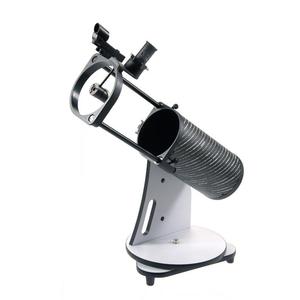
A compact tabletop Dobson with a true parabolic mirror. Folds down, fits in a bag: the Moon, planets and the bright deep-sky classics.
Price: € 265
This telescope delivers this view
Skywatcher Dobson Telescope N 200/1200 Skyliner Classic
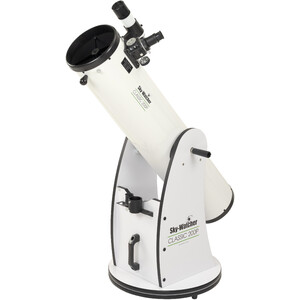
200 mm of aperture — the most sky for your money. Set it on the ground, point by hand: nebulae, clusters and galaxies for years to come.
Price: € 479
This telescope delivers this view
Omegon Telescope AC 70/700 AZ-2
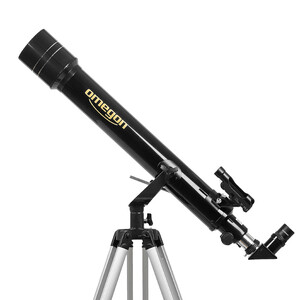
The no-pitfall starter refractor: Moon, Saturn's rings and Jupiter's moons from the very first night. No collimation.
Price: € 119
This telescope delivers this view
ZWO Seestar S50 Pro Smart Telescope
The direct successor to the Seestar S50: a 50/260 apochromatic quadruplet, two cameras and a built-in dual-band filter that pulls nebulae out of a city sky.
Price: € 999
This telescope delivers this view
Celestron Cometron 7x50 Binoculars
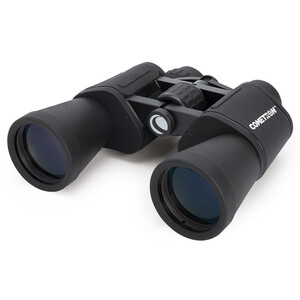
The astronomy classic among affordable binoculars: 7×50 with a large exit pupil for bright handheld views of the Moon and Milky Way – the ideal first step before a telescope.
Price: € 65
If planets and lunar craters are what excite you most, you’ll be better served by a classic telescope – our telescope buying guide shows which design suits which purpose. The Moon as a whole, however, smartscopes handle quite well.
The second honest point: you’re not looking through an eyepiece, you’re looking at a screen. The real photon experience of a Dobsonian – the galaxy’s light hitting your eye directly – is something no display can replace. Only the eVscope 2eVscope 2 ($4,999.00€ 4,911) simulates the classic view with its electronic eyepiece.
And finally: the images are impressive, but they don’t match a dedicated astrophotography rig where every component is chosen freely and exposures run for hours. For the price and the effort involved, though, the results are unbeatable.
Binoculars, telescope or smart telescope? The right device for stargazing
Many people first search for a “device for stargazing” or an “automatic telescope” – and mean quite different things by it. There are three routes to the night sky, and they don’t exclude one another. The honest answer depends on what you want to see and how much effort you’re willing to put in.
| Device | Strong at | Weak at | From about |
|---|---|---|---|
| Binoculars | overview, star clusters, comets, lunar landscape | planetary detail, faint galaxies | $47.95€ 62 |
| Classic telescope | planets, lunar craters, double stars, a real view through the eyepiece | setting up, cool-down time, learning curve | $305.00€ 265 |
| Smart telescope | imaging nebulae and galaxies, app control, suburban skies | planets, no view through an eyepiece | $419.00€ 429 |
For deep sky: the big Seestar: ZWO Seestar S50 Pro Smart Telescope
The direct successor to the Seestar S50: a 50/260 apochromatic quadruplet, two cameras and a built-in dual-band filter that pulls nebulae out of a city sky.
Price: € 999
The term fully automatic telescope almost always means a smart telescope: it finds its target itself, tracks itself and sends the image to your phone. A GoTo telescope, by contrast, slews to an object automatically but you still look through the eyepiece – that’s a classic telescope with motors, not a smartscope.
If you’re unsure which of the three suits you: take our telescope quiz – six short questions, and the recommendation arrives by email.
Tested Ourselves: The eVscope 2
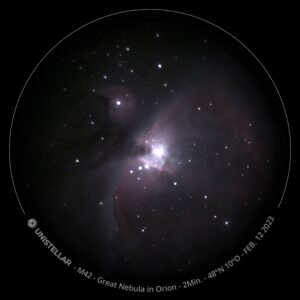
I’ve spent several nights with a smart telescope myself and wrote up my experiences: Unistellar eVscope 2: a critical review of the all-in-one telescope. The images below are real, unedited results from those nights – not marketing material.
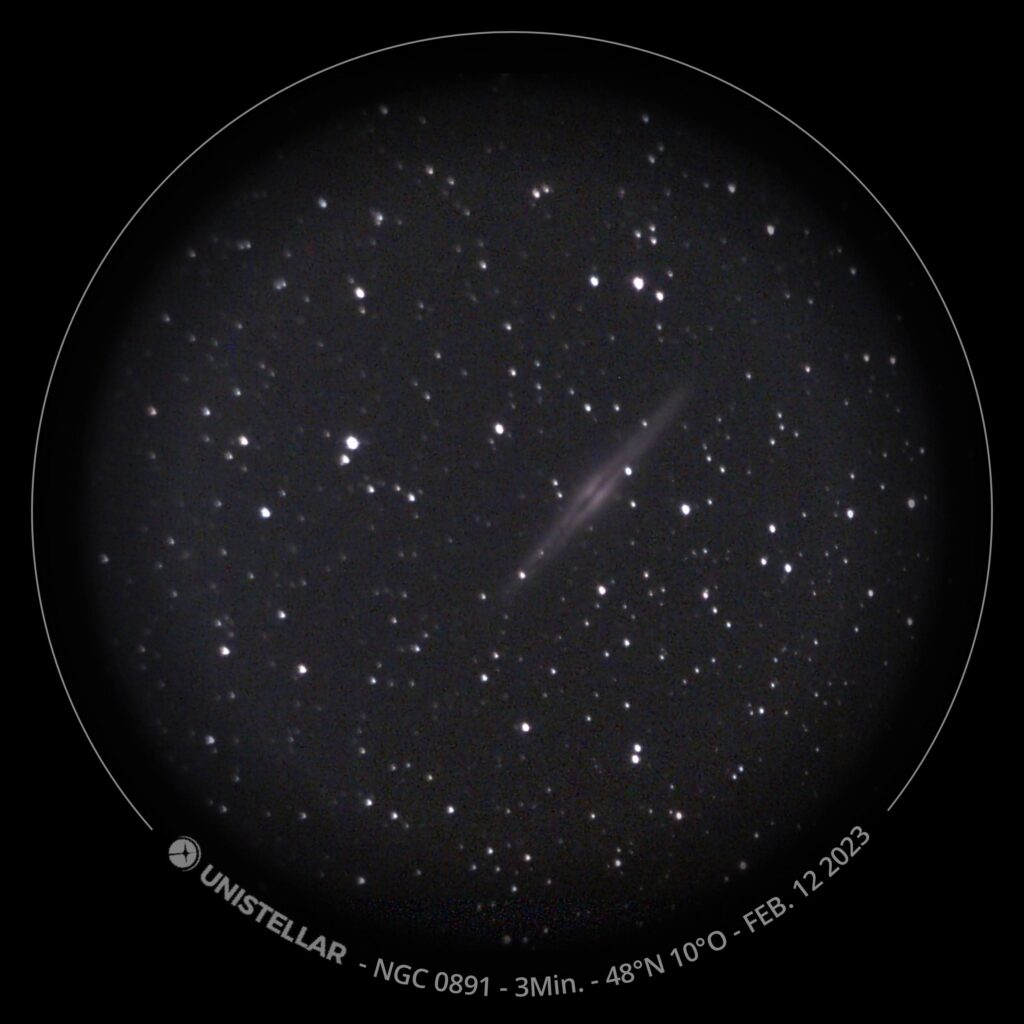
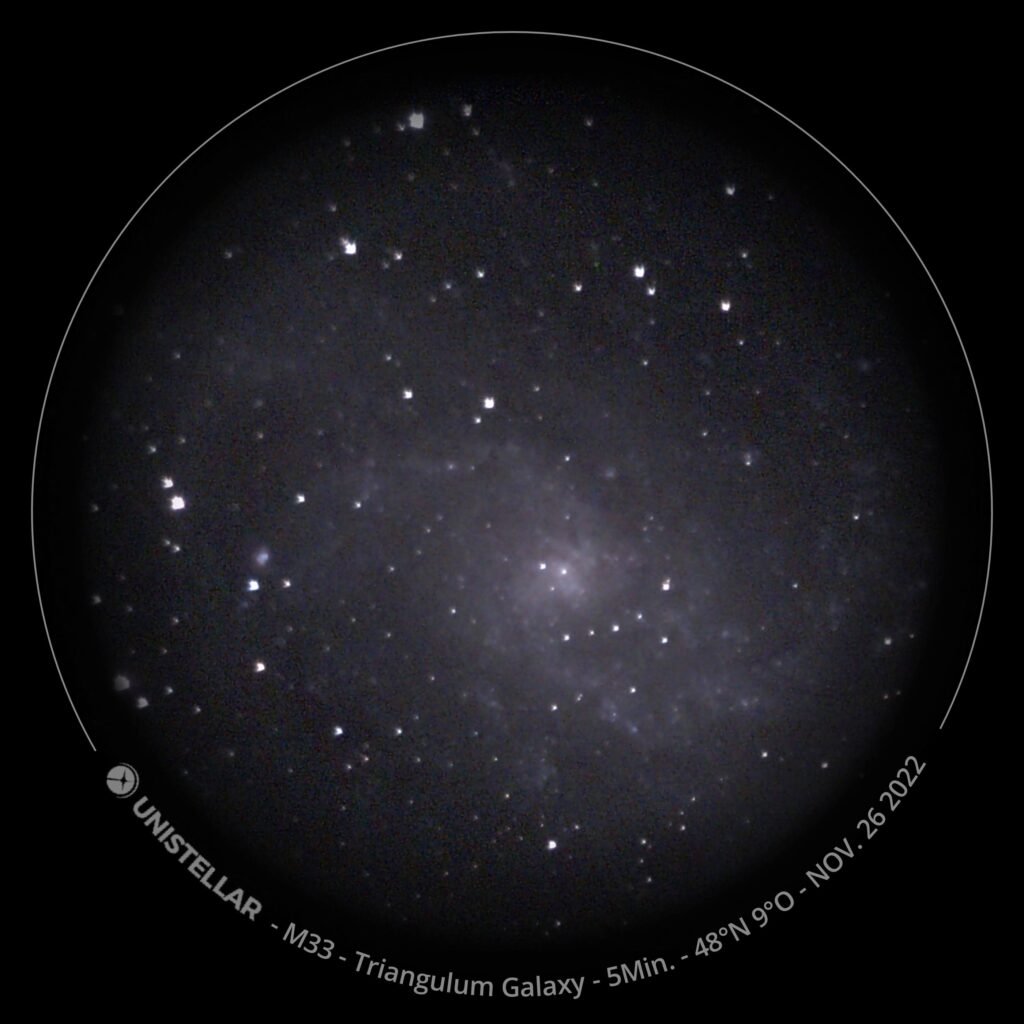
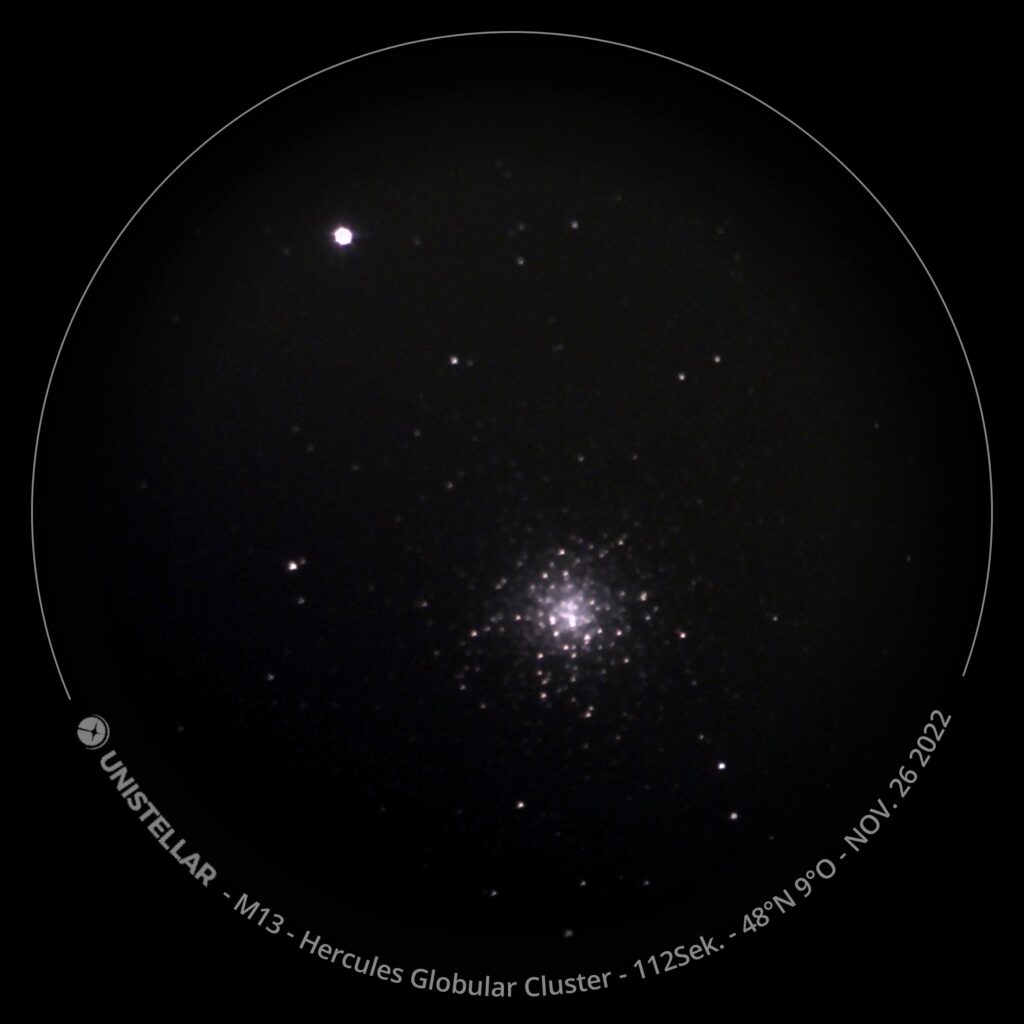
These images were taken with the Unistellar eVscope 2Unistellar eVscope 2.
Who Should Buy a Smart Telescope?
Anyone who wants results instead of technical frustration. A smartscope is the right choice especially in these cases:
- ✅ Beginners with no prior knowledge: open the app, pick a target, done – the learning curve is practically zero.
- ✅ City dwellers: the image processing removes a large part of the light pollution – a balcony or backyard is enough.
- ✅ Families: the image appears on a phone or tablet – everyone watches at the same time, nobody jostles at the eyepiece.
- ✅ Frequent travelers: the small models weigh just a few kilos and fit in a backpack.
Experienced amateur astronomers now use smartscopes as second instruments, too. Most models export raw data (FITS) that you can post-process in software like PixInsight or Photoshop – and filters let you squeeze out even more.
If, on the other hand, you want to go deep into astrophotography and choose your subjects freely (planets, deep sky, Moon), you’ll hit limits. A smartscope does not replace a freely configurable imaging rig – it’s the convenient path, not the most flexible one.
The Top Class: Vespera Pro II and Celestron Origin
Far above the entry-level class, besides the eVscope 2, there are two instruments that are both called “smart telescopes” and still have hardly anything in common. One is a travel instrument, the other a backyard observatory.
| Instrument | Aperture | Weight | Special feature | Price |
|---|---|---|---|---|
| Vaonis Vespera Pro 2 Smart TelescopeVaonis Vespera Pro II | 50 mm apo | 5 kg | Sony IMX676, mosaic mode, around 11 hours of battery life | $2,990.00€ 2,990 |
| Celestron Origin Mark IICelestron Origin Mark II | 152 mm RASA | 18.9 kg | f/2.2, limiting magnitude 12.7 mag, 8.4 MP, 6 hours of battery life | $4,299.00€ 5,499 |
The Celestron Origin Mark II is the most capable smart telescope you can buy – and, at 152 mm of aperture, the largest. 152 mm at f/2.2 collects 470 times as much light as the naked eye; the RASA optics expose so fast that a usable image is there after a few minutes.
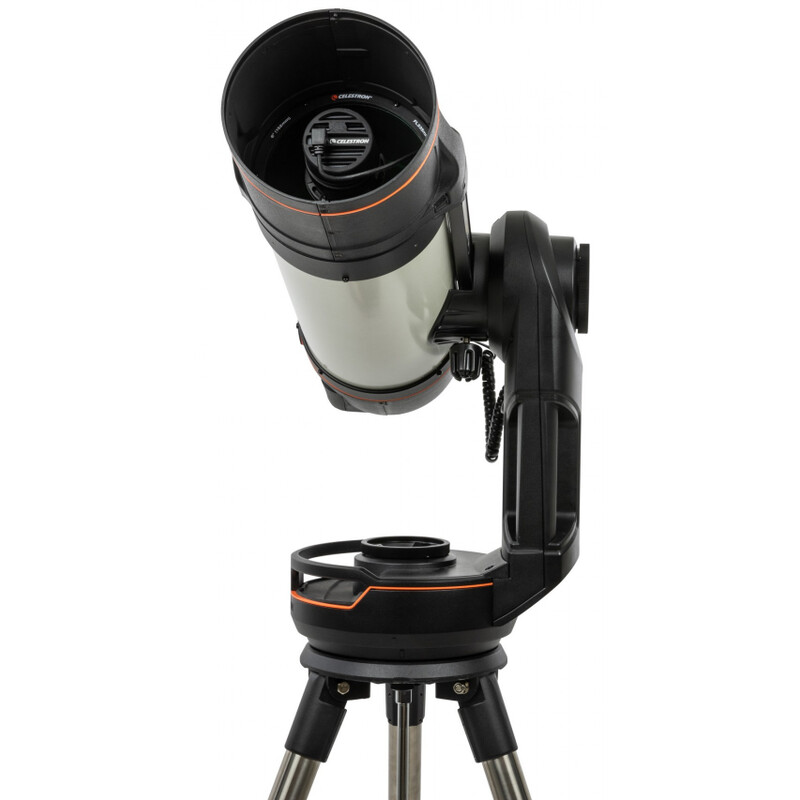
The price for that is the weight. 4.8 kg of tube, 7.7 kg of mount and 6.4 kg of tripod add up to 18.9 kg – almost seven times as much as a Seestar S50 Pro (2.8 kg). If you have to haul the instrument up from the basement every evening, you’ll stop using it after a month.
The Vespera Pro II solves the same task from the other side: a 50 mm apochromat, 5 kg with the tripod, eleven hours of battery life. It shows less than the Origin, but it actually comes along to the coast or into the mountains – and its mosaic mode assembles large nebula regions into images that other instruments would need a wide-angle lens for.
Astrophotography Made Easy
Autofocus, automatic tracking and image stacking take care of everything that costs months of learning in classic astrophotography. On your very first night you get images that are vastly superior to visual observation – especially of nebulae and galaxies.
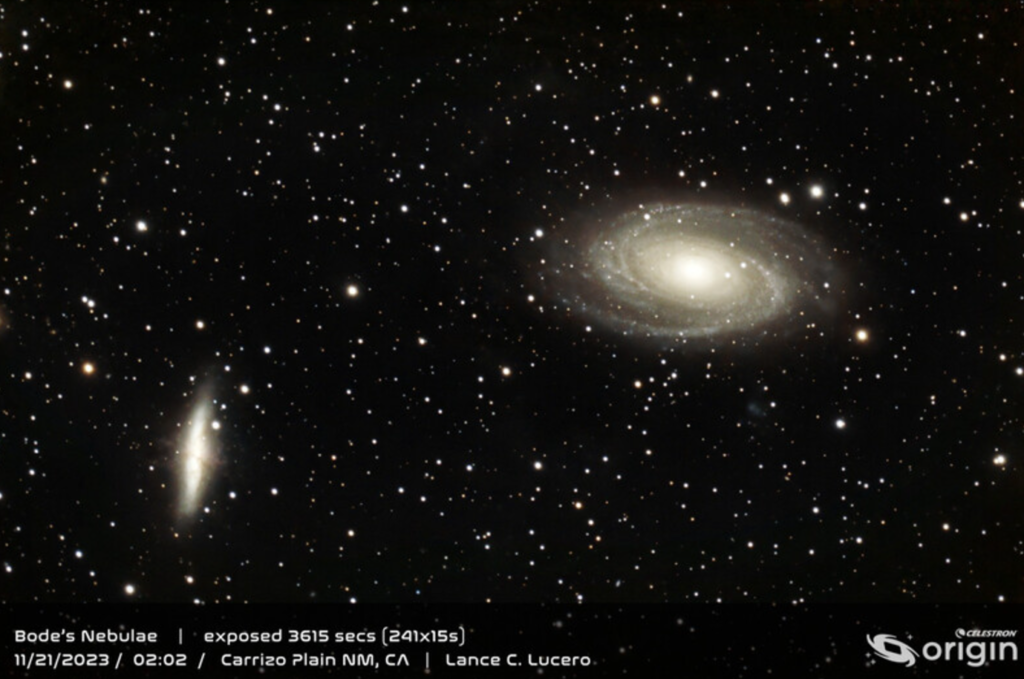
The difference from a phone photo through an eyepiece is enormous: the telescope keeps exposing for minutes and combines hundreds of individual frames. Structures become visible that your eye would never see at the telescope.
What Comes After a Smart Telescope?
After about a year, many owners want more: longer exposures, a freely chosen focal length, images big enough to print. The obvious idea is a bigger smart telescope.
Experienced astrophotographers usually advise something else: not bigger, but in building blocks. The reason is the mount.
Out of the box, smart telescopes sit on an alt-azimuth mount, so they move up and down, left and right. The stars, however, trace arcs across the sky – which is why the field of view rotates during long exposures.
The EQ mode on some devices eases this by tilting the telescope. It doesn’t replace a real equatorial mount.
A classic astrophotography rig solves this with an equatorial mount whose axis points at the celestial pole. On top of that come three building blocks that can each be swapped out – that’s the real advantage over an all-in-one device.
| Building block | Entry level (example) | Price |
|---|---|---|
| Optics: small apo refractor | Askar SQA55Askar SQA55 | $795.00€ 999 |
| Equatorial mount | Sky-Watcher Star Adventurer GTi Mount KitSkywatcher Star Adventurer GTi | $830.00€ 567 |
| Astro camera, cooled | ZWO ASI 585 MC ProZWO ASI 585 MC Pro | $599.00€ 799 |
| Control | ZWO ASIAIR PlusZWO ASIAIR Plus | $399.00€ 499 |
Links marked with an asterisk are affiliate links.
For Seestar owners, the ASIAIR is the obvious next step: it comes from the same manufacturer, and operating it feels familiar. All together, an entry-level setup like this costs just under three times as much as a Seestar S50 Pro.
What getting started looks like step by step is covered in our guide to deep-sky astrophotography.
Buying a Used Smart Telescope: What Matters
The second-hand market has only recently become interesting – and it is very unevenly stocked. For the current Pro models you’ll barely find anything, and when you do, the gap to the new price is so small that giving up your warranty simply isn’t worth it.
It’s a different story with the Seestar S50: there’s a lot of movement there right now, because plenty of owners are moving up to the Pro models. A sample we took on the German classifieds site Kleinanzeigen in September 2026 turned up 46 listings ranging from just over a quarter to just over half the price of a new S50 Pro, with most of them at just under half. The reason for selling was almost always the same sentence: upgrading to the Pro.
| Model | New price | Realistic used price | Worth it? |
|---|---|---|---|
| Seestar S50 (predecessor) | discontinued | just under half the price of a new S50 Pro | yes, at the low end of that range |
| Seestar S30 Pro | $699.00€ 699 | roughly 7–14% below new | probably not |
| Seestar S50 Pro | $999.00€ 999 | hardly any listings | no |
| DWARF 3 | $549.00€ 529 | few listings | probably not |
The Five Things to Check Before You Buy
- Battery. The most common weak point. Ask how many hours the device lasted in one go the last time it was used – clearly below the manufacturer’s figure means the battery is worn out.
- Optics. Ask for a photo of the front lens held against the light. Dust is normal; condensation or spots between the lens elements are a deal-breaker.
- Tracking. Ask for an image taken with a longer exposure. If the stars are streaks instead of points, something is wrong with the drive.
- Account. The device has to be unlinked from the previous owner’s account, otherwise you won’t be able to register it in the app.
- Completeness. Buying the tripod, power supply and solar filter separately eats up the savings very quickly.
Accessories: What Actually Makes a Difference
A smart telescope is deliberately a complete package: tripod, optics, camera and control come in one box. You don’t need any accessories for your first season – anyone who sells you a shopping list before your first night is selling you something. Two things do keep coming up, though, once you’ve been at it for a while.
Longer exposures. On an alt-azimuth mount the field of view rotates, so the automatic mode only takes short exposures and stacks many individual frames. Tilt the device into the equatorial position and that limit disappears – that’s exactly what the ZWO Tripod Head for SeeStar Smart TelescopeZWO Video Tilt Head TH10 ($99.00€ 159) is built for.
Two caveats come with it: according to the manufacturer, on the Seestar S50 Pro the combination is only secure with the sturdier ZWO TH10 Quick Release PlateZWO Quick Release Plate TH10 ($9.90€ 19.90). And below about 15 degrees of latitude the tilt head hits the tripod – not an issue in the US or Europe, but it is on a trip near the equator.
Bridging a cloudy spell. If clouds roll in or you have to pop inside, your aligned setup would otherwise have been for nothing. The Omegon STC Cover Seestar S50 (about $29.90€ 29.90) covers the device right where it stands; for the smaller size it’s available as the Omegon STC Cover Seestar S30 / S30 Pro.
To be honest: Omegon recommends the cover for a few hours, explicitly not for storage over days or weeks and not for heavy rain. No dedicated size for the S50 Pro is listed yet.
And in case you’re still choosing the device rather than accessories: which model fits which budget is covered in our smart telescope buying guide. If you’re right at the beginning, our beginner’s guide is the better place to start.
How We Rate the Devices
That gives you recommendations, not lab wins. Where we haven’t seen something with our own eyes, we say so.
Our Smart Telescope Guides 2026
After buying: our Seestar manual takes you from unboxing to your first stacked image, with the official ZWO PDFs.
- 🏆 The Best Smart Telescope 2026 – ranking & buying advice by budget
- 🎯 Smart telescope finder – set budget, goal and weight, compare matching models
- 🔭 ZWO Seestar S30 Pro review – the widest field of view in the Seestar range
- 🎒 DWARF 3 review – the value champion for travelers
- ⚔️ Seestar S30 Pro vs. DWARF 3 – the beginner-class duel
- ⚔️ Seestar S30 Pro vs. DWARF mini – the two smallest compared
- 🔭 Smart telescope or Dobsonian? – a photo on your phone or a look through the eyepiece
- 📦 Seestar S50 Pro: price and comparison – the successor is here
- 🧪 Unistellar eVscope 2 hands-on test
- 🆕 DWARFLAB Draco: worth the wait? – the announced challenger, with a price and specs check
- ⚔️ DWARFLAB Draco vs. Seestar S50 Pro – wait or buy now?
Frequently Asked Questions
Which smart telescope is best for beginners?
For deep sky, the ZWO Seestar S50 ProZWO Seestar S50 Pro ($999.00€ 999) is the best choice; on a smaller budget, pick the ZWO Seestar S30 ProZWO Seestar S30 Pro ($699.00€ 699), which uses the same app. If you want to spend even less, go for the DWARF 3DWARF 3 – you’ll find the direct comparison in our Seestar S30 Pro vs. DWARF 3 duel.
Can you observe planets with a smart telescope?
Only to a very limited extent. Smart telescopes have short focal lengths designed for large objects – Jupiter and Saturn remain small disks without detail. If you still want a smart telescope for planets, the 50 mm devices such as the Seestar S50 ProSeestar S50 Pro are the best bet for the Moon and Sun, but even there planets remain dots with just a hint of rings or bands. For planets and lunar craters, a classic telescope with a long focal length is the better choice – how much aperture you need for what is covered in our guide Which Telescope for Planets?
How much does a good smart telescope cost?
Much less than it used to: entry starts at the DWARF miniDWARF mini for $419.00€ 429, and the best beginner package, the Seestar S30 ProSeestar S30 Pro, costs $699.00€ 699. Premium devices like the eVscope 2eVscope 2 sit at around $4,999.00€ 4,911 – unnecessary for getting started.
Is a used smart telescope worth it?
Yes, with two caveats: the built-in battery ages, and the device depends entirely on the manufacturer’s app – if the manufacturer drops support, things get critical. The discontinued Seestar S50 shows what that means in practice. So check battery condition and app compatibility before buying.
Are there smart telescopes with an eyepiece?
Only from Unistellar: the Unistellar eVscope 2Unistellar eVscope 2 and the Odyssey Pro have an electronic eyepiece that shows the image on a small built-in display; it feels like looking through a telescope, but it is a screen. Seestar, DWARF and Vaonis show images exclusively on a phone or tablet. If you really want to look through glass, you need a classic telescope – if in doubt, as a second instrument alongside your smart telescope.
Can you rent or borrow a smart telescope?
There’s no nationwide rental service in Germany, where we’re based; individual retailers and camera rental shops occasionally carry Seestar devices, and availability changes. Two routes are more practical: public observatories that demonstrate smart telescopes at their observing nights, and buying used on classifieds platforms with buyer protection. If you just want to try one out, the DWARF miniDWARF mini at $419.00€ 429 costs you less than three weeks of rental.
What’s the difference between a smart telescope and a normal telescope?
A normal telescope shows you the object live through the eyepiece – a smart telescope photographs it with a built-in camera and shows the result in an app on your phone. In return, setup, alignment and prior knowledge are almost entirely eliminated, because the device works fully automatically. In short: one is observing, the other is effortless astrophotography.
Can you observe the Sun with a smart telescope?
Yes – the Seestar S50 ProSeestar S50 Pro, Seestar S30 ProSeestar S30 Pro and DWARF 3DWARF 3 ship with a matching solar filter and slew to the Sun automatically in solar mode. The one thing that matters is actually fitting the filter before every slew towards the Sun. What else to watch out for – and which filters fit other devices – is covered in our guide How to Observe the Sun Safely.
What is a digital telescope?
A digital telescope is another name for a smart telescope: it takes pictures with a built-in camera instead of showing the image through an eyepiece. The term isn’t protected – some manufacturers also use it for classic telescopes with smartphone navigation. Those are instruments with an eyepiece, though, such as the Celestron StarSense Explorer.
What new smart telescopes are there in 2026?
The most important new models are the ZWO Seestar S50 ProZWO Seestar S50 Pro (since August 2026), the DWARFLAB DWARF miniDWARFLAB DWARF mini (since April 2026) and the DWARFLAB DracoDWARFLAB Draco with 90 mm of aperture. The Draco can be ordered and ships from 5 November: ● Available from 5 Nov.
Conclusion
If you love the stars but dread the technology, a smart telescope is exactly right for you. It delivers images of nebulae and galaxies from the very first evening that classic astrophotographers need months of experience for.
My recommendation is the ZWO Seestar S50 ProZWO Seestar S50 Pro ($999.00€ 999) – the big Seestar for deep sky and the device our readers choose most often. If you want to spend less, the ZWO Seestar S30 ProZWO Seestar S30 Pro ($699.00€ 699) gives you the same app one step down. If you want maximum flexibility and mobility, you can’t go wrong with the DWARF 3DWARF 3 ($549.00€ 529).
Only for planet fans is the honest advice: get a classic telescope. We compare all designs and price ranges in our big Telescope Test 2026.