By Alexander Merz · Updated on · Details checked on 24 September 2026
Smart telescopes have democratised astrophotography: set it up, open the app, tap on a target – alignment, tracking and stacking all happen by themselves. In this buying guide we compare every model you can actually buy right now to name the best smart telescope 2026 for your goals and budget.
Transparency: this guide draws on manufacturer specifications, verified user feedback and reviews from the specialist press – rounded out by more than six years of telescope advice at Sterngucker. Our own hands-on test of a smart telescope is written up in our Unistellar eVscope 2 review.
⚡ The quick answer: For most beginners the ZWO Seestar S30 Pro is the best smart telescope in 2026: apochromatic optics, built-in filters, an included solar filter and the most polished app on the market. Travel a lot or want the best value? The featherweight DWARF 3 (1.35 kg) is the obvious pick. And if you’d rather look through an eyepiece than at a screen, a smartphone-guided classic telescope is a great alternative.
Smart telescope finder: which one suits you?
Set your budget, your goal and the weight you want to carry below. The finder sorts the smart telescopes currently available by how well they match you and tells you honestly what each one can’t do. We check prices and delivery times against Astroshop every day.
 Best match
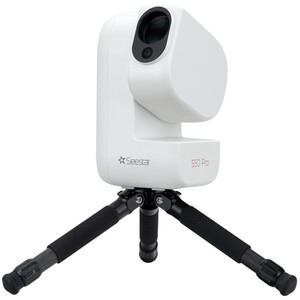
Seestar S50 Pro
Manufacturer data checked · 22 Sep 2026- Tripod already included
- Up to 9 h battery life¹
No long-exposure images of our own in the article yet; longer delivery time quoted.
Retailer quotes 3–5 weeks delivery time
Check availability*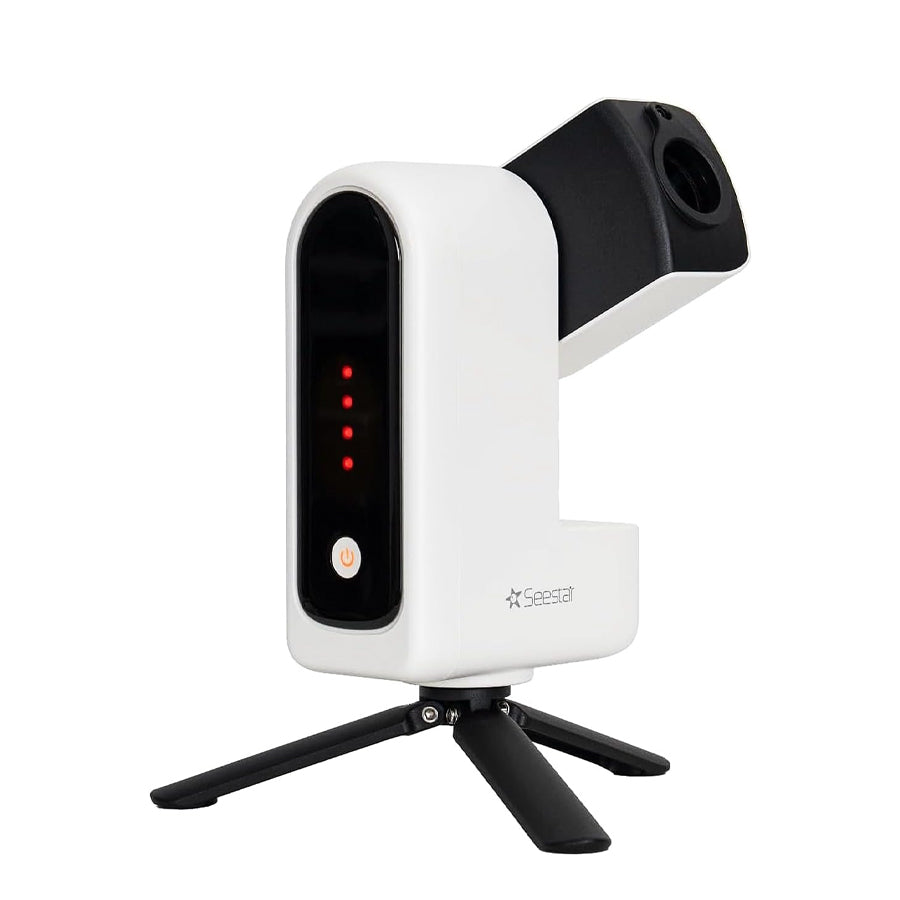 Alternative 2
Seestar S30
Manufacturer data checked · 22 Sep 2026Basic bundle without Universe2go+
- Tripod already included
- Up to 6 h battery life¹
Approx. 2.1 MP native. The S30 Pro has a different sensor and more storage.
Check price & availability with the retailer
Check availability*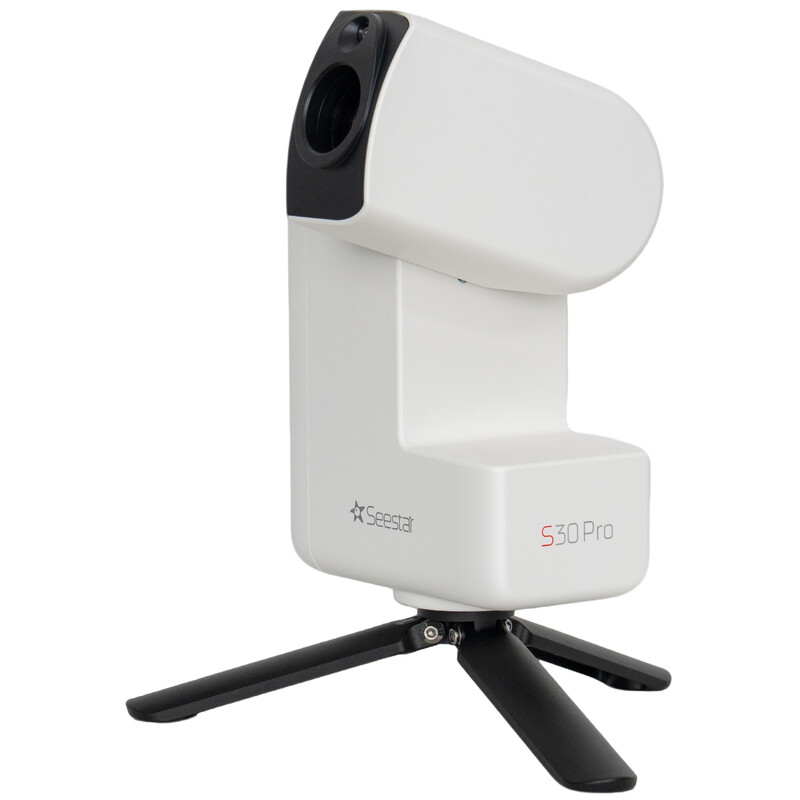 Alternative 3
Seestar S30 Pro
Manufacturer data checked · 22 Sep 2026- Tripod already included
- Up to 6 h battery life¹
30 mm aperture: keep your expectations modest for small, highly detailed targets.
Check price & availability with the retailer
Check availability*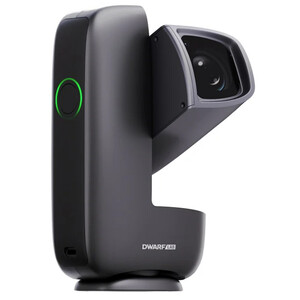 Alternative 4
DWARF mini
Manufacturer data checked · 22 Sep 2026- Compact and easy to carry
- Automatic alignment & phone view
2.07 MP native; plan for a tripod separately. Not a small DWARF 3 with an identical sensor.
Check price & availability with the retailer
Check availability*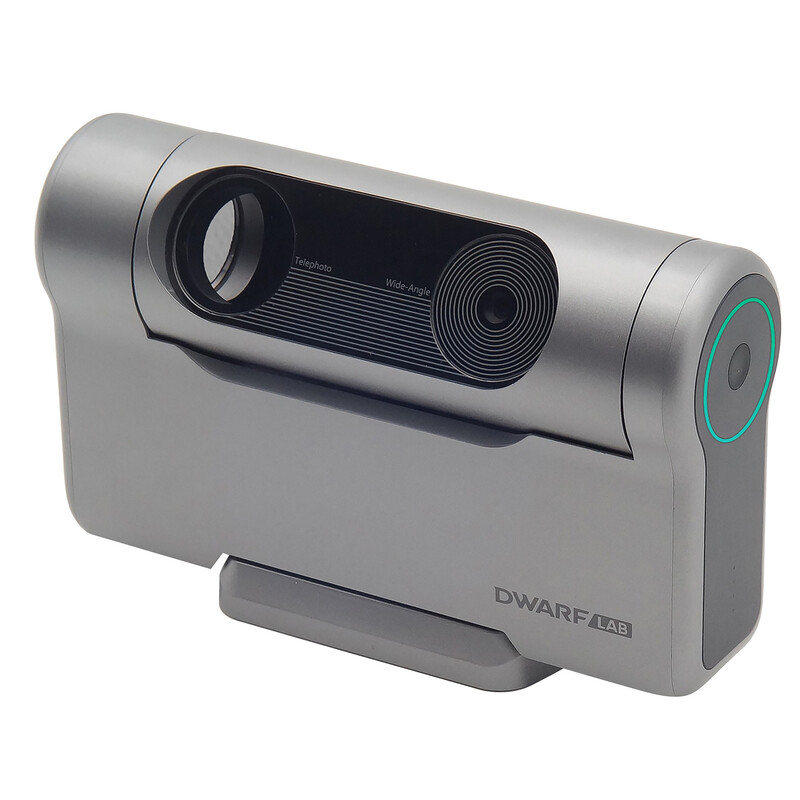 Alternative 5
DWARF 3
Manufacturer data checked · 22 Sep 2026- Compact and easy to carry
- Automatic alignment & phone view
Plan for a tripod separately. Actual battery life depends on usage; no confirmed hour figure in the checked manufacturer datasheet.
Check price & availability with the retailer
Check availability*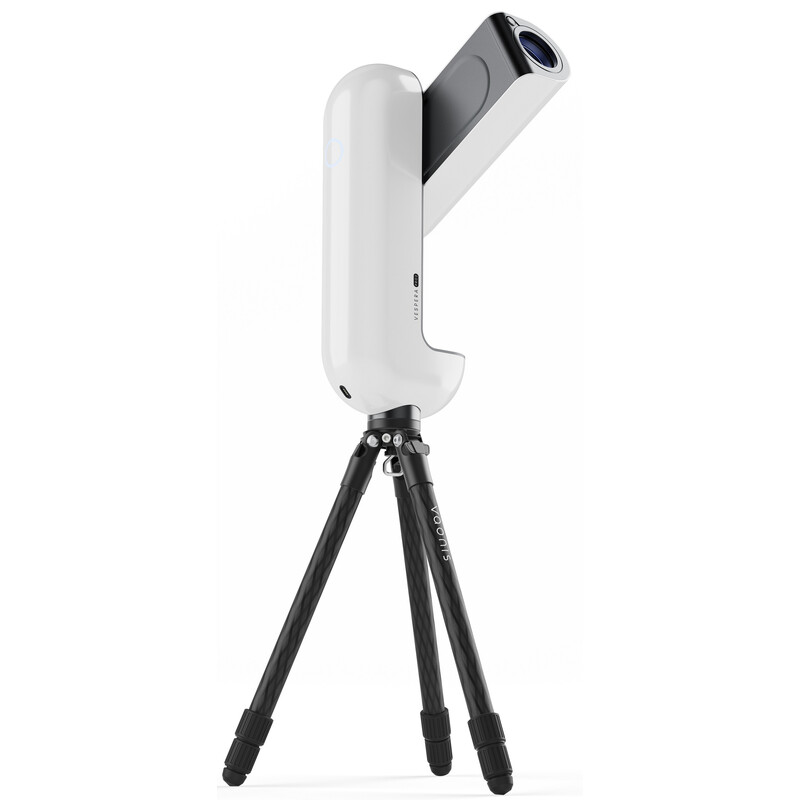 Alternative 6
Vespera Pro 2
Manufacturer data checked · 22 Sep 2026- Tripod already included
- Up to 11 h battery life¹
Much more expensive than the Vespera II; check accessory filters separately. 5 kg device weight.
Check price & availability with the retailer
Check availability*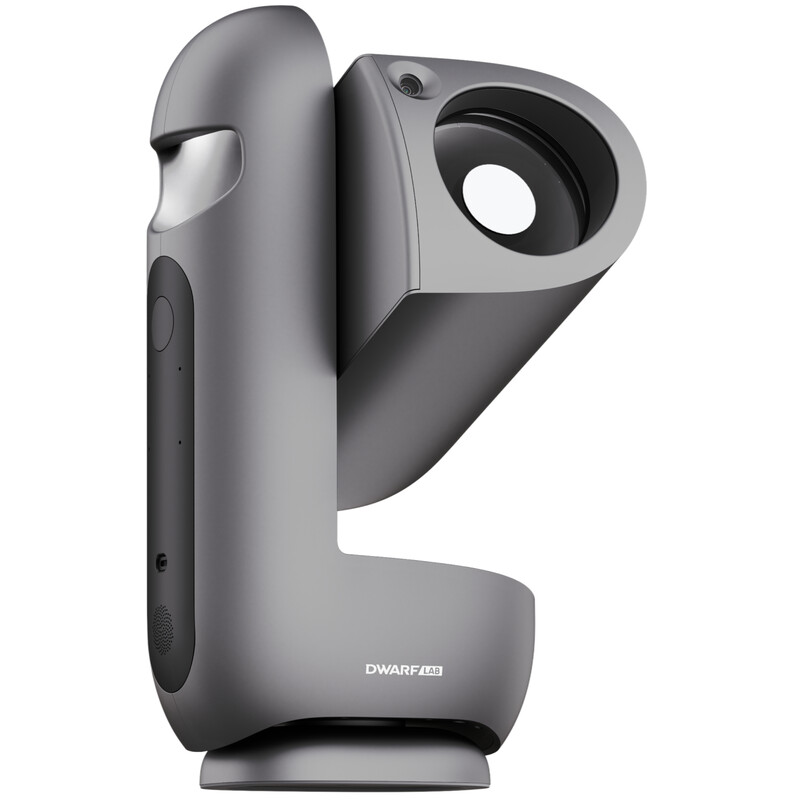 Manufacturer rendering · not a hands-on photoAlternative 7
Draco Standard
Manufacturer data checked · 22 Sep 2026Standard · internal solar filter
- Guiding & sensor rotation announced
- Tripod already included
Pre-order. Forecast based on the datasheet; an independent hands-on assessment is still pending.
Available for pre-order · retailer date 5 Nov 2026 (not guaranteed)
Check availability*Manufacturer rendering · not a hands-on photoAlternative 8Draco SHO
Manufacturer data checked · 22 Sep 2026SHO · extra SII/OIII filter
- Extra SII/OIII filter for SHO
- Guiding & sensor rotation announced
Pre-order. External solar filter on the tele lens instead of the internal ND; same optics as the Standard.
Available for pre-order · retailer date 5 Nov 2026 (not guaranteed)
Check availability* Alternative 9
Vespera II
Manufacturer data checked · 22 Sep 2026- Automatic alignment & phone view
Plan for a tripod separately. At approx. 5 kg, less suited to longer walks.
Check price & availability with the retailer
Check availability*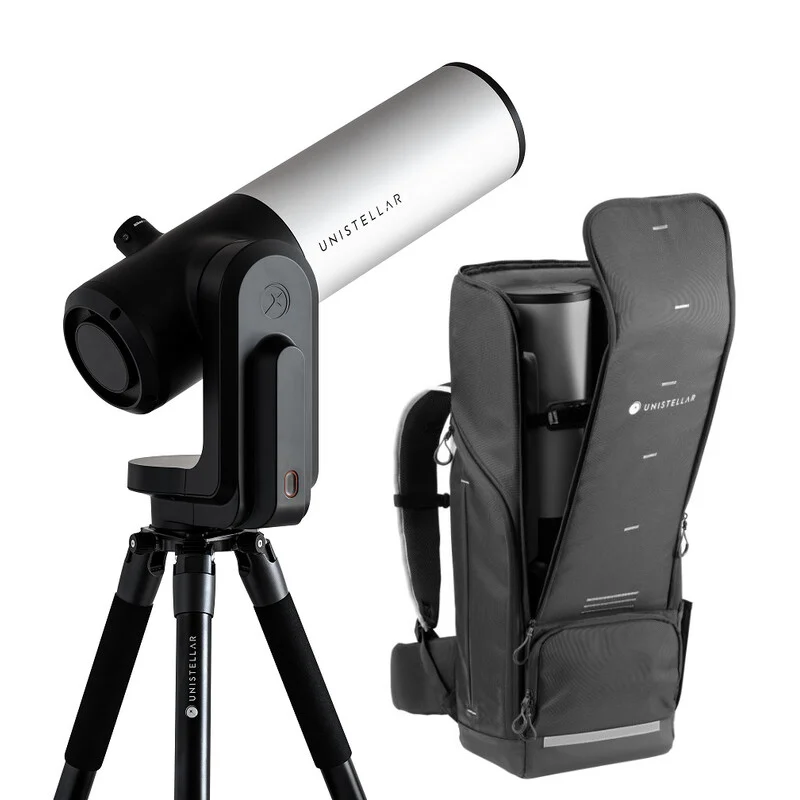 Alternative 10
eVscope 2
Manufacturer data checked · 22 Sep 2026- Tripod already included
- Up to 9 h battery life¹
The eyepiece is digital, not optical. High price; not a planetary specialist.
Check price & availability with the retailer
Check availability*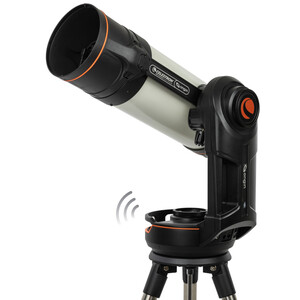 Alternative 11
Origin Mark II
Manufacturer data checked · 22 Sep 2026- Tripod already included
- Up to 6 h battery life¹
Around 19 kg as a complete system and far more expensive than every other device – more a home observatory than a travel scope. Not yet tested by us.
Check price & availability with the retailer
Check availability*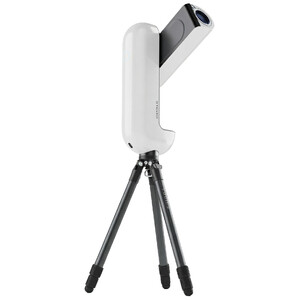 Alternative 12
Vespera III
Manufacturer data checked · 22 Sep 2026- Automatic alignment & phone view
According to the manufacturer page, no tripod is included. At 5 kg better suited to short walks; not yet tested by us.
Check price & availability with the retailer
Check availability*¹ Runtimes are guide values and depend on factors such as cold and heating. Prices: checked daily against Astroshop, without guarantee. The match is an editorial assessment, not a test score. Draco: provisional forecast based on the datasheet. * Affiliate link: if you buy, Sterngucker receives a commission; the price stays the same for you.
How are the filters and recommendations created?
The filters reflect recurring wishes from a small qualitative sample of private telescope consultations: easy transport, a quick start, phone photos, power supply and the difference between taking photos and actually looking through the eyepiece. No customer messages are shown.
Budget and must-have features rule out unsuitable models first. The stored ratings are then weighted: target fit, ease of use, portability, price, runtime and your own image editing. The usage profile you choose changes the weighting. In a tie, the cheaper device comes first. Missing information never meets a must-have requirement.
Reddit and forum reports help shape the selection questions, but they are not representative test data. Statements about a model are kept separate from editorial ratings.
Product data & original photos: sterngucker.de · Reddit: getting started with the S30 Pro · Cloudy Nights: the DWARF 3 in practice
Draco: Our latest video – corrected version (in German). Technical details are checked against the manufacturer’s data. As of 11 Sep 2026.
* Partner link: if you order through it, we receive a small commission. The price stays the same for you.
Missing a telescope or a filter?
The best smart telescopes 2026 at a glance
Three profiles, three recommendations: the Seestar S30 Pro for the most complete package, the DWARF 3 for portability and a smaller budget, and – for anyone who really wants to look through an eyepiece – a smartphone-guided classic telescope. Here are our top picks, with the current price shown automatically for your country.
Best for beginners: ZWO Seestar S30 Pro Smart Telescope

ZWO's benchmark smart telescope: a polished app, mosaic mode and stunning results in minutes.
Price: € 699
Best value: DWARFLAB DWARF 3 Smart Telescope
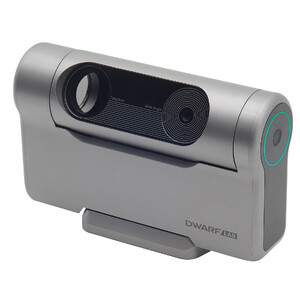
A 1.3 kg smart telescope: it photographs nebulae and galaxies straight to your phone, even from the city. The simplest way into astrophotography.
Price: € 529
Visual alternative: Celestron StarSense Explorer DX 130 AZ
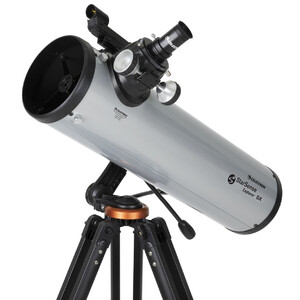
Your smartphone guides the scope to the target via the StarSense app. 130 mm optics: detailed planets and deep sky, without the frustration of star-hopping.
Price: € 599
* Affiliate link: if you buy through this link we may earn a small commission from Astroshop or High Point Scientific, at no extra cost to you.
Smart telescopes 2026 compared
| Model | Aperture | Sensor | Weight | Battery | Standout feature |
|---|---|---|---|---|---|
| DWARFLAB DWARF 3 | 35 mm / f4.3 | Sony IMX678 + wide-angle | 1.35 kg | approx. 4 h | AI tracking, also daytime wildlife |
| ZWO Seestar S30 Pro | 30 mm / f5.3 | Sony IMX585 + IMX586 (63°) | 1.8 kg | approx. 6 h | Quadruplet apo, 3 filters, solar filter, 8K mosaic |
| Vaonis Vespera II | 50 mm / f5 | Sony IMX585 | approx. 5 kg | approx. 4 h | Same optics as the Pro II, tripod not included |
| Vaonis Vespera Pro II | 50 mm / f4.9 | High-resolution Sony sensor | approx. 5 kg | approx. 4 h | Best mosaic engine, premium build |
| Celestron Origin Mark II | 152 mm / RASA | Sony sensor | approx. 19 kg | external | Largest aperture, backyard observatory |
How does a smart telescope work?
A smart telescope packs optics, camera, motorised mount and a small computer into a single housing. Once switched on, it photographs the sky, recognises its position from the star patterns (plate solving) and points itself. Instead of one long exposure it takes many short frames and combines them live into an ever-cleaner image (live stacking) – you watch on your phone as nebulae and galaxies sharpen minute by minute.
The key difference from a classic telescope: you don’t look through an eyepiece, but at a screen. If you’re after the “real” photon experience, a classic beginner telescope (a Dobsonian, say) suits you better – if you want striking images, a smart telescope does.
What matters when buying
- Aperture & focal ratio: more aperture gathers more light; a fast focal ratio (f/4–f/5) shortens exposures. The small apertures (30–50 mm) are surprisingly capable on bright deep-sky objects – but don’t expect miracles on very faint targets.
- Sensor: modern Sony sensors (IMX585, IMX678) are far less noisy than the first smart-telescope generation. 4K resolution is now standard.
- Built-in filters: a dual-band filter (H-alpha + OIII) reveals emission nebulae even from a light-polluted city – almost a must for urban skies.
- Battery & storage: 4–6 hours of runtime is typical; a USB-C power bank extends it. Internal storage (128 GB on the S30 Pro) makes long sessions easier.
- EQ mode: run equatorially with an optional wedge, longer single exposures without field rotation become possible – the single biggest jump in quality.
- App & community: the Seestar app is widely seen as the most mature; DWARF is catching up fast. Both offer “tonight’s best” suggestions and catalogues of thousands of objects.
The devices in detail
ZWO Seestar S50 Pro – the big Seestar for deep sky
Since August 2026 the S50 Pro replaces the discontinued Seestar S50: 50 mm quadruplet apo, 8.3 MP tele camera with a 2.8° field, second 63° wide-angle camera, 10,000 mAh battery for up to nine hours. Compared with the S30 Pro it gathers almost three times as much light – the difference you see on galaxies and small nebulae.
Best Seestar for deep sky: ZWO Seestar S50 Pro Smart Telescope
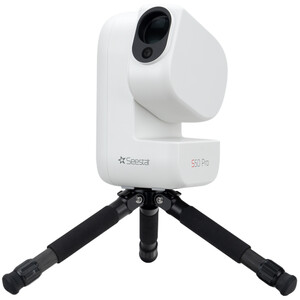
The direct successor to the Seestar S50: a 50/260 apochromatic quadruplet, two cameras and a built-in dual-band filter that pulls nebulae out of a city sky.
Price: € 999
ZWO Seestar S30 Pro – the most rounded package
The S30 Pro replaces the hugely popular S30 and adds apochromatic quadruplet optics, the low-noise Sony IMX585 and a second 63° wide-angle camera (IMX586). On top come three fixed filters (UV/IR-cut, dual-band, dark), a dew heater, a magnetic solar filter for sunspot photography and a mosaic mode that stitches 4K frames into 8K composites. Buyers routinely rate it five stars and praise above all how quickly first results appear – even from a city balcony. Weaknesses: the short focal length is poorly suited to planets, and the bundled tripod is fairly basic.
DWARFLAB DWARF 3 – the value champion for the road
At 1.35 kg the DWARF 3 is the lightest device in the field – it slips into any bag, making it the ideal travel telescope. The f/4.3 optics with Sony IMX678 deliver remarkably clean deep-sky images for the price, and built-in filters (including a dual-band) help against light pollution. Its unique selling point is AI-based object recognition: by day the DWARF 3 automatically tracks birds and wildlife – two hobbies in one device. Note: no tripod is included (a standard photo tripod is enough) and battery life, at just under four hours, is shorter than the Seestar’s.
Vaonis Vespera II and Vespera Pro II – the upgrade class
The French Vespera line is for anyone who wants uncompromising image aesthetics: 50 mm apo optics, a high-resolution sensor and the best mosaic engine on the market, capable of rendering sweeping nebula regions. Build quality and app are first-rate – so is the price. For getting started we’d steer you towards the S30 Pro or DWARF 3 (our Seestar S30 Pro vs DWARF 3 comparison helps you choose); the Vespera is the device you upgrade to. Looking at the premium class instead? The DWARFLAB Draco brings 90 mm and a cooled sensor.
In between sits the Vaonis Vespera IIVaonis Vespera II at $1,590.00€ 1,590. It closes the gap between the S30 Pro and the premium class: the same 50 mm apo optics as the Pro II, without its higher resolution.
Its successor is now available: the Vaonis Vespera IIIVaonis Vespera III at $2,490.00€ 2,490 keeps the Vespera II’s sensor (Sony IMX585) but gets revised optics and a battery for about 11 hours. Its field of view is 2.5 × 1.4°, or 4.3 × 2.4° in mosaic mode.
Two things worth knowing before you buy: a tripod is not included – the original one costs about $100€ 100 extra, though any sturdy photo tripod will do. And the internal storage of roughly 23 GB cannot be expanded.
The step in between: Vaonis Vespera II Smart Telescope
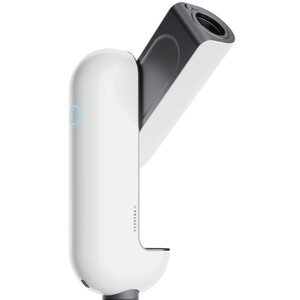
The same 50 mm optics as the Pro II at almost half the price. For anyone who finds the S30 Pro too small and wants deep-sky objects larger in frame. Budget for a tripod and free space on your phone.
Price: € 1,590
Still unsure whether a smart telescope is the right call? Read our beginner’s guide first – for visual observing, a classic instrument is clearly ahead at this budget.
And the alternatives?
The Unistellar eVscope 2 (114 mm mirror optics, electronic eyepiece), which we tested at length ourselves, is a compelling concept but now priced in Vespera territory. The Celestron Origin Mark II, with 152 mm RASA optics, is the most powerful “smart observatory”, but at 19 kg it’s a backyard station rather than a grab-and-go device. And if you’re set on visual observing, a smartphone-guided classic telescope such as the Celestron StarSense pairs assisted star-hopping with a real view through the eyepiece.
New in this class is the DWARFLAB Draco ($1,399.00€ 1,499): 90 mm of aperture, a cooled sensor and a built-in guide scope for exposures of up to 300 seconds – at half the price of a Vespera Pro II. It only ships from November, though, and nobody has real-world images with it yet. Whether waiting beats buying a Seestar S50 Pro is the question our DWARFLAB Draco check answers.
What about the Seestar S50?
The Seestar S50 was the best-selling smart telescope of all – but it is no longer regularly available from our partner. Since August 2026 its successor is here: the Seestar S50 ProSeestar S50 Pro ($999.00€ 999) continues the 50 mm class with quadruplet optics, an 8.3 MP sensor and a second wide-angle camera. Our S50 Pro guide compares the two; the S30 Pro remains the more affordable step below it.
The honest limits of smart telescopes
- No visual experience: you look at a display, not through an eyepiece. They don’t replace the “live” feeling of a Dobsonian.
- Planets & lunar detail: short focal lengths are unsuited to high-resolution planetary close-ups – that calls for classic planetary photography technique.
- Small apertures: 30–50 mm gather a physically limited amount of light; very faint objects remain the preserve of large optics.
- Post-processing pays off: the app results are good – but anyone who stacks and edits the saved FITS raw data themselves visibly gets more out of them.
Do you need accessories?
Short answer: not at the start. A smart telescope arrives as a closed package, and everything you need for the first season is in the box. Two parts still get bought later on – both of them only once you know why.
When the exposures get too short: on an alt-azimuth mount the field rotates, so the automation exposes in short slices. The ZWO Tripod Head for SeeStar Smart TelescopeZWO Video Tilt Head TH10 ($99.00€ 159) tilts the unit into an equatorial position and removes that limit – with the Seestar S50 Pro only together with the sturdier ZWO TH10 Quick Release PlateZWO Quick Release Plate TH10 ($9.90€ 19.90), according to the maker.
One restriction gets lost in the data sheet: below roughly 15 degrees of latitude the head runs into the tripod. Irrelevant in Central Europe, real on a trip near the equator.
When you want to leave the setup standing: the Omegon STC Cover Seestar S50 (about $29.90€ 29.90) – for the smaller bodies the Omegon STC Cover Seestar S30 / S30 Pro – covers the telescope during a cloudy break instead of you packing up and realigning.
Omegon explicitly recommends it for a few hours, not for days or weeks of storage and not for heavy rain. There is no dedicated size for the S50 Pro so far.
Either way this is a later purchase, not a buying criterion. If you are right at the beginning, our beginner’s guide will help you more than any accessory list.
Verdict: which smart telescope should you buy?
For most beginners the ZWO Seestar S30 Pro is currently the best choice: a mature app, complete kit including solar filter, long battery life. If you want maximum portability or are on a tight budget, reach for the DWARF 3 – there’s no more smart telescope for less money right now. And if you want the very best and can invest accordingly, the Vespera Pro II will make you happy. Unsure whether a smart or a classic telescope suits you? Our telescope finder and beginner’s guide help you decide. By the way: a smart telescope also makes a great gift idea.
Frequently asked questions
Can I look through a smart telescope directly?
No – smart telescopes have no eyepiece. You observe via the app on a smartphone or tablet (the eVscope 2 uses an electronic eyepiece). For visual observing we recommend a classic telescope.
Do smart telescopes work in the city?
Yes, surprisingly well: the built-in dual-band filters block out much of the light pollution. Emission nebulae succeed even from an urban balcony; galaxies still benefit from darker skies.
How much does a good smart telescope cost?
Full-featured devices start with the DWARF 3, the mid-range sits around the Seestar S30 Pro, and premium models run from the Vespera Pro II up to the Celestron Origin. The current price of each model is shown in the panels above.
Smart or classic telescope for beginners?
Want to photograph and get quick results: smart telescope. Want to look through it yourself and get maximum optics for your money: classic telescope, a Dobsonian for example – details in our beginner’s guide.
Do I need a moonless sky for a smart telescope?
It isn’t essential thanks to the filters, but a moonless night noticeably improves contrast on galaxies and faint nebulae. For bright nebulae, the dual-band filter compensates well for the Moon’s presence.
📚 Read next:
This article is also available in German (original), French and Italian.