By Alexander Merz · Updated on
Which telescope is really worth it in 2026? We’ve been observing for years with instruments across every price bracket, we analyse the feedback from our readers – and for this big guide we’ve put the current models head to head, from the cheapest entry point that still makes sense right up to the high-end GoTo class. The result: clear recommendations for every budget, without the jargon – and honest warnings about where buying simply isn’t worth it.
⚡ The quick answer – our 2026 top picks: Best all-rounder (value for money): Apertura AD8 8" Dobsonian TelescopeSkywatcher Dobson Telescope N 200/1200 Skyliner Classic (approx. $699.95€ 479) · Best beginner telescope: Sky-Watcher Heritage 130 Tabletop DobsonianSkywatcher Dobson Telescope N 130/650 Heritage FlexTube (approx. $305.00€ 265) · Best smart telescope: ZWO Seestar S30 Pro All-In-One Smart TelescopeZWO Seestar S30 Pro Smart Telescope (approx. $699.00€ 699, cheaper alternative: DWARF 3 for approx. $549.00€ 529) · Best budget entry: Celestron AstroMaster 70AZ RefractorOmegon Telescope AC 70/700 AZ-2 (approx. $199.95€ 119). You’ll find all the details and alternatives in the comparison below.
If you want to buy a telescope, you should first gather thorough information. This can take the form of buying advice from a dealer you trust, or it can happen online, where there is plenty of information about telescopes to be found.
How we rate
A “telescope test” built on lab figures won’t help you much out in the field at night. What counts is real-world use – which is why we rate against five criteria: aperture for the money (aperture decides what you see – not magnification!), mount stability (wobbly tripods are frustration source number one), ease of use for beginners, quality of the supplied accessories, and long-term suitability. We also factor in which instruments our readers actually buy and keep – that feedback is more honest than any spec sheet.
Best telescopes 2026: all our recommendations at a glance
| Price range | Our recommendation | Type | Aperture | Price | Ideal for |
|---|---|---|---|---|---|
| up to $150150 € | Celestron AstroMaster 70AZ RefractorOmegon Telescope AC 70/700 AZ-2 | Refractor | 70 mm | approx. $199.95€ 119 | Moon & first planetary views |
| up to $250250 € | Orion SkyScanner 100mm Tabletop Reflector TelescopeSkywatcher N 100/400 Heritage Telescope | Tabletop Dobsonian | 100 mm | approx. $129.95€ 179 | Kids, travel, balcony |
| up to $350350 € | Sky-Watcher Heritage 130 Tabletop DobsonianSkywatcher Dobson Telescope N 130/650 Heritage FlexTube | Tabletop Dobsonian | 130 mm | approx. $305.00€ 265 | Ambitious beginners |
| up to $600600 € | Apertura AD8 8" Dobsonian TelescopeSkywatcher Dobson Telescope N 200/1200 Skyliner Classic | Dobsonian | 200 mm | approx. $699.95€ 479 | ⭐ Our recommendationValue-for-money king |
| up to $700700 € | Celestron StarSense Explorer DX 130AZCelestron StarSense Explorer DX 130 AZ | Newtonian + app | 130 mm | approx. $449.95€ 599 | Finding objects via phone |
| Smart up to $700700 € | DwarfLab DWARF 3 Smart TelescopeDWARFLAB DWARF 3 Smart Telescope | Smart telescope | 35 mm | approx. $549.00€ 529 | Astrophotos to go |
| Smart premium | ZWO Seestar S30 Pro All-In-One Smart TelescopeZWO Seestar S30 Pro Smart Telescope | Smart telescope | 30 mm | approx. $699.00€ 699 | Deep-sky photos via app |
| High end | Celestron NexStar 8SE Computerized SCTCelestron NexStar 8 SE GoTo Telescope | Schmidt-Cassegrain GoTo | 203 mm | approx. $1,699.00€ 2,149 | Advanced observers |
All prices verified on 01.08.2026 with our partner Astroshop – daily prices may vary, and the “Check availability” buttons always show you the current figure.
The best telescopes in detail
🏆 Overall value-for-money winner: Skywatcher Skyliner 200/1200 Dobson
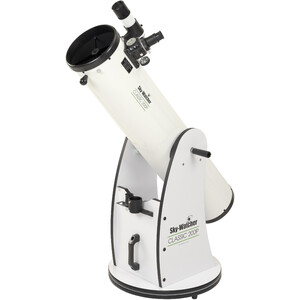
For years this has been our standard answer to “Which telescope should I buy?” – and in 2026 it’s still unbeaten: nowhere else do you get more aperture for your money. 200 mm gather so much light that globular clusters, gas nebulae and galaxies become visible – targets that defeat smaller instruments. The Dobsonian mount is the simplest in the world: set it down, push it by hand, done. No motor, no battery, nothing that can break.
Best value for money: Skywatcher Dobson Telescope N 200/1200 Skyliner Classic
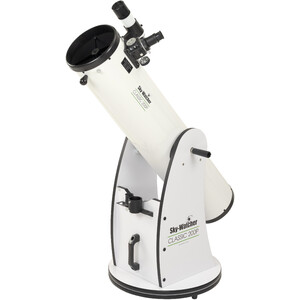
200 mm of aperture — the most sky for your money. Set it on the ground, point by hand: nebulae, clusters and galaxies for years to come.
Price: € 479
🥇 Best beginner telescope: Skywatcher Heritage 130/650
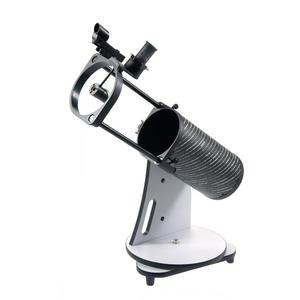
This compact tabletop Dobsonian is our beginner winner because it sidesteps two of the classic newcomer hurdles at once: it’s set up in a minute and, collapsed, fits into any cupboard. Its 130 mm of aperture show far more than the classic 70 mm department-store instruments – Jupiter’s moons, Saturn’s ring and the bright deep-sky classics included.
Best for beginners: Skywatcher Dobson Telescope N 130/650 Heritage FlexTube
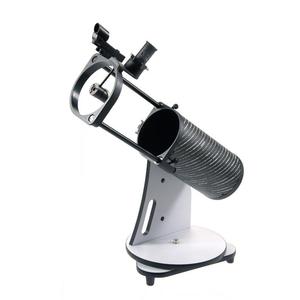
A compact tabletop Dobson with a true parabolic mirror. Folds down, fits in a bag: the Moon, planets and the bright deep-sky classics.
Price: € 265
💶 Best budget entry: Omegon AC 70/700 AZ-2
Below $150150 € the air gets thin – this is where most of the disappointments lurk. The AC 70/700 is the exception: a rock-solid refractor that shines on the Moon and shows Saturn’s ring as an actual ring. Perfect for dipping your toes in and as a first “real” telescope for children from primary-school age.
Budget pick: Omegon Telescope AC 70/700 AZ-2
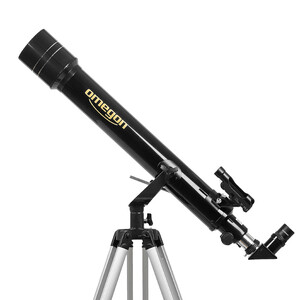
The no-pitfall starter refractor: Moon, Saturn's rings and Jupiter's moons from the very first night. No collimation.
Price: € 119
🎒 Best compact: Skywatcher Heritage 100P
For the balcony, travel and younger children: the 100P weighs just over 2.5 kg, stands on any table and is practically indestructible. If you’re after maximum simplicity, you’ll be happy here – more on that in our telescope-for-kids guide.
Skywatcher N 100/400 Heritage Telescope
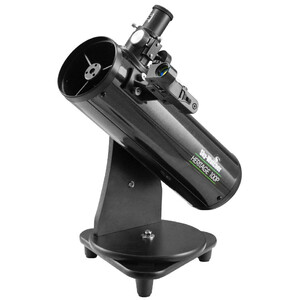
Tabletop Dobson with a 100 mm parabolic mirror. Light, portable — an ideal first real instrument on a small budget.
Price: € 179
📱 Best app support: Celestron StarSense Explorer DX 130
The clever idea: your smartphone becomes a navigation system. The StarSense app uses the camera to recognise where the telescope is pointing and guides you to any object with arrows – the “where on earth do I find that?” problem vanishes into thin air. You still observe the classic way, with your own eye.
Celestron StarSense Explorer DX 130 AZ
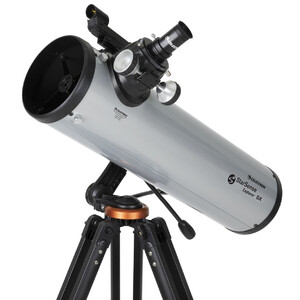
Your smartphone guides the scope to the target via the StarSense app. 130 mm optics: detailed planets and deep sky, without the frustration of star-hopping.
Price: € 599
🤖 The smart telescopes: Seestar S30 Pro & DWARF 3
The category everyone’s talking about in 2026: smart telescopes photograph nebulae and galaxies fully automatically and send the finished image straight to your phone – with zero prior knowledge. The Seestar S30 Pro is our category winner (best image quality and app), the DWARF 3 the ultra-portable alternative for the road. Important to know: you can’t look through these – they’re photo machines. You’ll find the detailed comparison in our smart telescope test.
Best smart telescope: ZWO Seestar S30 Pro Smart Telescope

ZWO's benchmark smart telescope: a polished app, mosaic mode and stunning results in minutes.
Price: € 699
DWARFLAB DWARF 3 Smart Telescope
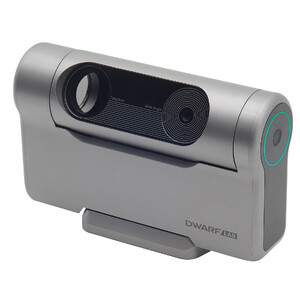
A 1.3 kg smart telescope: it photographs nebulae and galaxies straight to your phone, even from the city. The simplest way into astrophotography.
Price: € 529
🚀 The high end: Celestron NexStar 8 SE
When budget is no object: the orange classic combines 203 mm of aperture with motorised GoTo control – over 40,000 objects at the push of a button, in a compact form. The reference for advanced observers who want maximum convenience. More options in this class: telescopes for advanced observers.
Celestron NexStar 8 SE GoTo Telescope
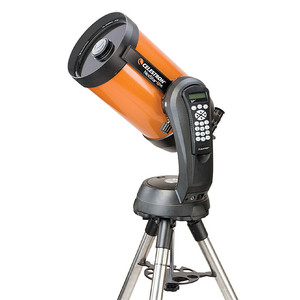
The 203 mm GoTo classic: finds over 40,000 objects at the push of a button — the advanced-level reference.
Price: € 2,149
All our recommendations with photo, price and link
The comparison above is the short version. Below is every telescope we currently recommend, grouped by what you want to do with it, each with a picture, a plain verdict and today’s price. If you already know your purpose, jump straight to that group.
Single-model guides based on counted owner reports: Apertura AD8, Celestron NexStar 4SE and Celestron PowerSeeker 127EQ.
For beginners: solid gear up to about $350For beginners: solid gear up to about €350
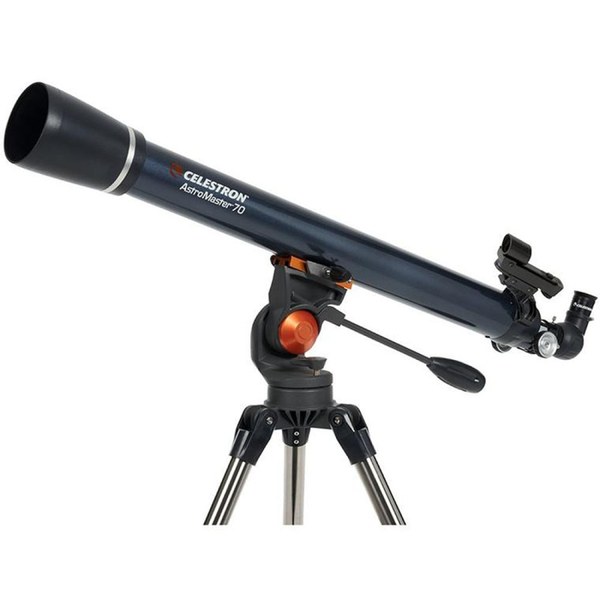 Celestron AstroMaster 70AZ Refractor
The cheapest telescope still worth buying. Moon, Saturn’s rings and Jupiter’s moons, set up in two minutes.
Price: $199.95
View at High Point Scientific* →- Omegon Telescope AC 70/700 AZ-2
The cheapest telescope still worth buying. Moon, Saturn’s rings and Jupiter’s moons, set up in two minutes.
Price: € 119
Check availability* → 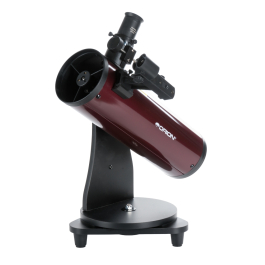 Orion SkyScanner 100mm Tabletop Reflector Telescope
A tabletop Dobson you can carry anywhere — fits in a backpack and still shows lunar craters and Jupiter’s moons.
Price: $129.95
View at High Point Scientific* →- Skywatcher N 100/400 Heritage Telescope
A tabletop Dobson you can carry anywhere — fits in a backpack and still shows lunar craters and Jupiter’s moons.
Price: € 179
Check availability* → 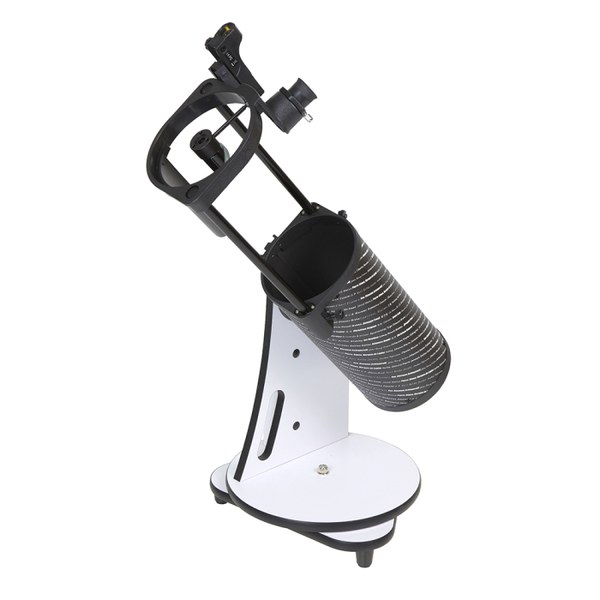 Sky-Watcher Heritage 130 Tabletop Dobsonian
Our pick for beginners: a lot of aperture for the money, a real parabolic mirror, and it folds down for transport.
Price: $305.00
View at High Point Scientific* →- Skywatcher Dobson Telescope N 130/650 Heritage FlexTube
Our pick for beginners: a lot of aperture for the money, a real parabolic mirror, and it folds down for transport.
Price: € 265
Check availability* →  Celestron SkyMaster Pro ED 7x50 Binoculars
Not a telescope, but often the better start: star clusters, the Milky Way and the Moon, handheld.
Price: $219.95
View at High Point Scientific* → Omegon Brightsky 10x50 Binoculars
Not a telescope, but often the better start: star clusters, the Milky Way and the Moon, handheld.
Price: € 289
Check availability* →
More aperture: Dobsonians from 6 to 12 inches
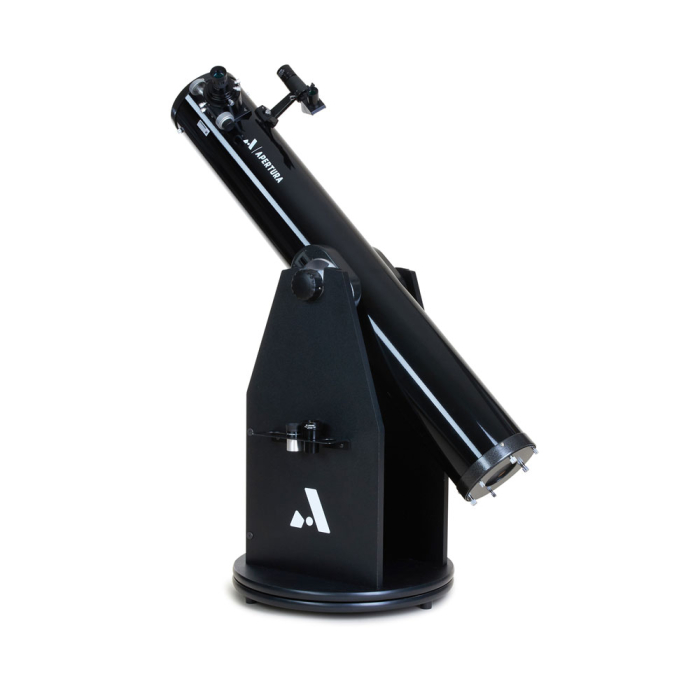 Apertura AD6 6" Dobsonian Telescope
The cheaper way into the Dobson class: 150 mm of aperture when the 8-inch is too big or too expensive.
Price: $499.95
View at High Point Scientific* →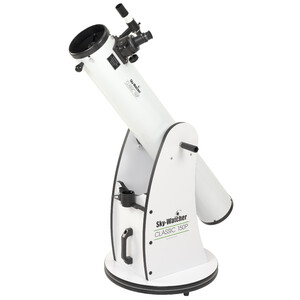 Skywatcher Dobson Telescope N 150/1200 Skyliner Classic DOB
The cheaper way into the Dobson class: 150 mm of aperture when the 8-inch is too big or too expensive.
Price: € 359
Check availability* →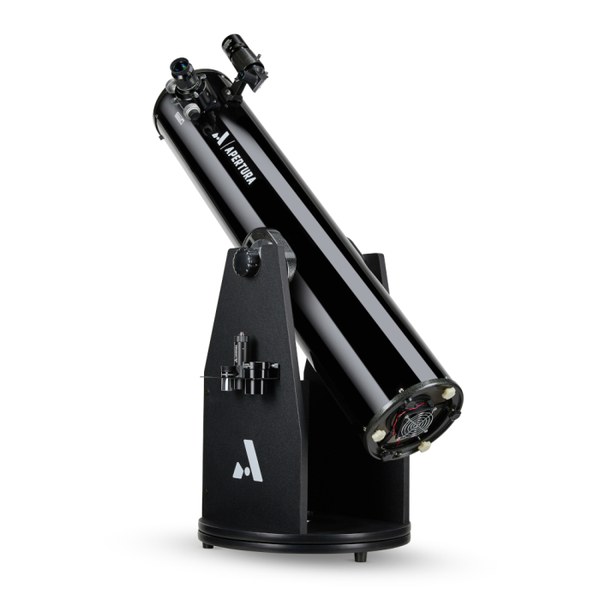 Apertura AD8 8" Dobsonian Telescope
Our best value pick. 200 mm of aperture brings globular clusters and the brighter galaxies into view.
Price: $699.95
View at High Point Scientific* →- Skywatcher Dobson Telescope N 200/1200 Skyliner Classic
Our best value pick. 200 mm of aperture brings globular clusters and the brighter galaxies into view.
Price: € 479
Check availability* →  Celestron StarSense Explorer 10" Dobsonian
10 inches for the price of many 8-inch scopes — the cheapest route to much fainter objects.
Price: $1,199.00
View at High Point Scientific* →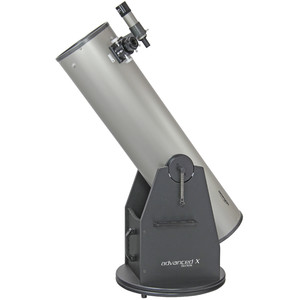 Omegon Dobson Telescope Advanced X N 254/1250
10 inches for the price of many 8-inch scopes — the cheapest route to much fainter objects.
Price: € 622
Check availability* →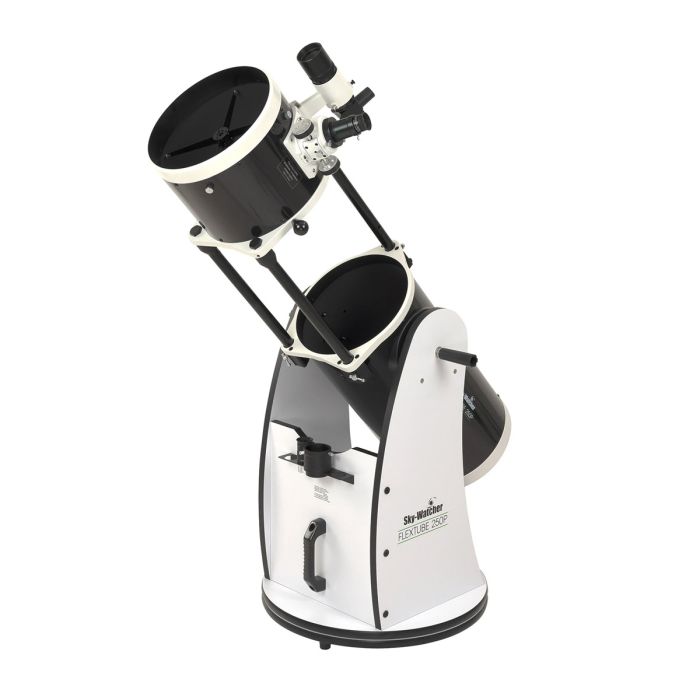 Sky-Watcher 10" Flextube Dobsonian Telescope
254 mm, yet it collapses: still fits in a car and shows noticeably more galaxies than an 8-inch.
Price: $1,150.00
View at High Point Scientific* → Skywatcher Dobson Telescope N 254/1200 Skyliner FlexTube BD DOB
254 mm, yet it collapses: still fits in a car and shows noticeably more galaxies than an 8-inch.
Price: € 899
Check availability* →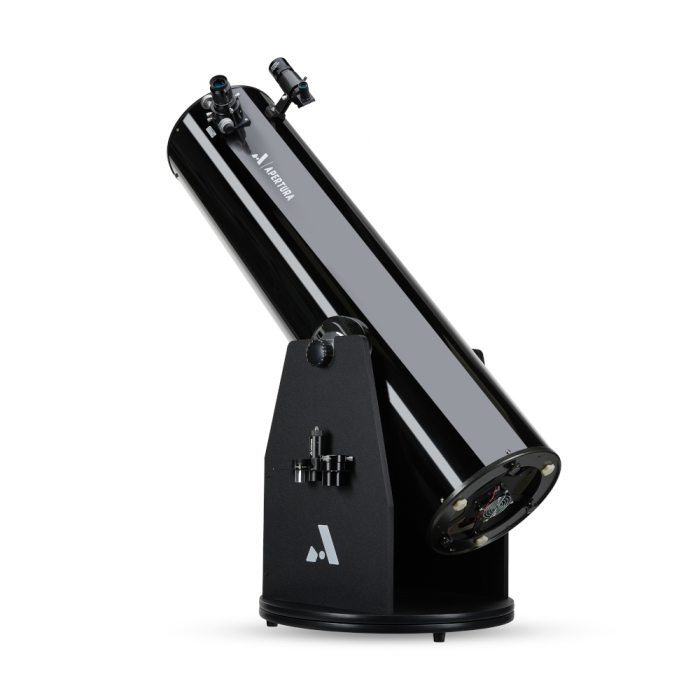 Apertura AD12 12" Dobsonian Telescope
12 inches for serious deep-sky work. Big and heavy — but structure inside galaxies instead of faint smudges.
Price: $1,299.95
View at High Point Scientific* →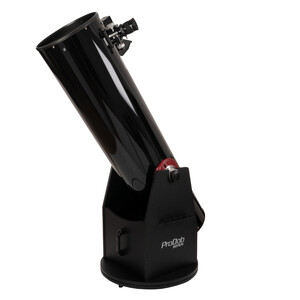 Omegon Dobson Telescope ProDob N 304/1500 DOB II
12 inches for serious deep-sky work. Big and heavy — but structure inside galaxies instead of faint smudges.
Price: € 1,019
Check availability* →
With app or GoTo control
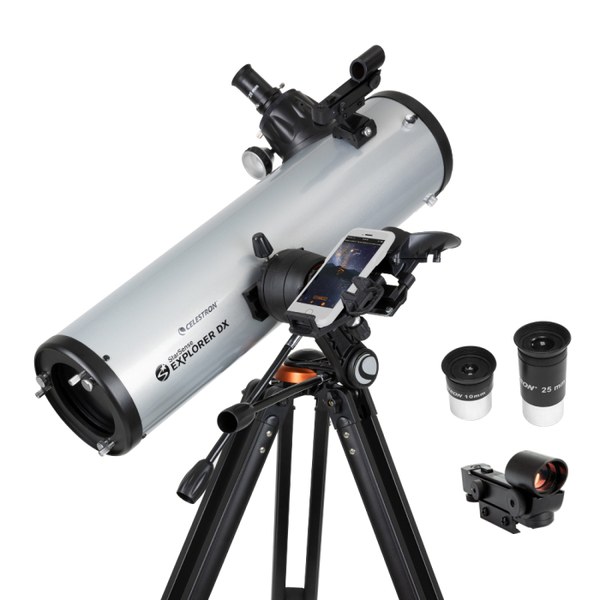 Celestron StarSense Explorer DX 130AZ
Your phone guides you to the object: dock it, follow the arrow, done. Good if star-hopping frustrates you.
Price: $449.95
View at High Point Scientific* →- Celestron StarSense Explorer DX 130 AZ
Your phone guides you to the object: dock it, follow the arrow, done. Good if star-hopping frustrates you.
Price: € 599
Check availability* → 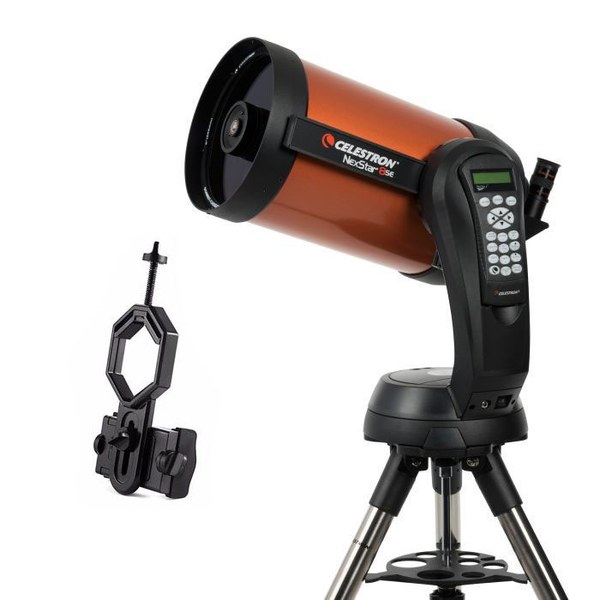 Celestron NexStar 8SE Computerized SCT
The 203 mm GoTo classic: finds over 40,000 objects at the push of a button. Strong on planets.
Price: $1,699.00
View at High Point Scientific* →- Celestron NexStar 8 SE GoTo Telescope
The 203 mm GoTo classic: finds over 40,000 objects at the push of a button. Strong on planets.
Price: € 2,149
Check availability* →
Smart telescopes: they photograph for you
- ZWO Seestar S30 Pro All-In-One Smart Telescope
Our smart-telescope pick: a mature app, mosaic mode, and it photographs nebulae and galaxies on its own.
Price: $699.00
View at Agena Astro* → - ZWO Seestar S30 Pro Smart Telescope
Our smart-telescope pick: a mature app, mosaic mode, and it photographs nebulae and galaxies on its own.
Price: € 699
Check availability* → 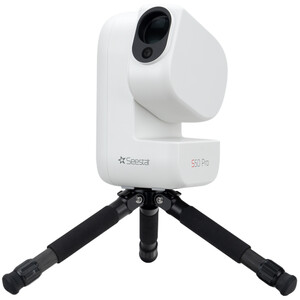 ZWO Seestar S50 Pro All-In-One Smart Telescope
The direct successor to the S50: a 50/260 apo with two cameras and a built-in dual-band filter — it pulls nebulae out of a city sky.
Price: $999.00
View at Agena Astro* →- ZWO Seestar S50 Pro Smart Telescope
The direct successor to the S50: a 50/260 apo with two cameras and a built-in dual-band filter — it pulls nebulae out of a city sky.
Price: € 999
Check availability* → 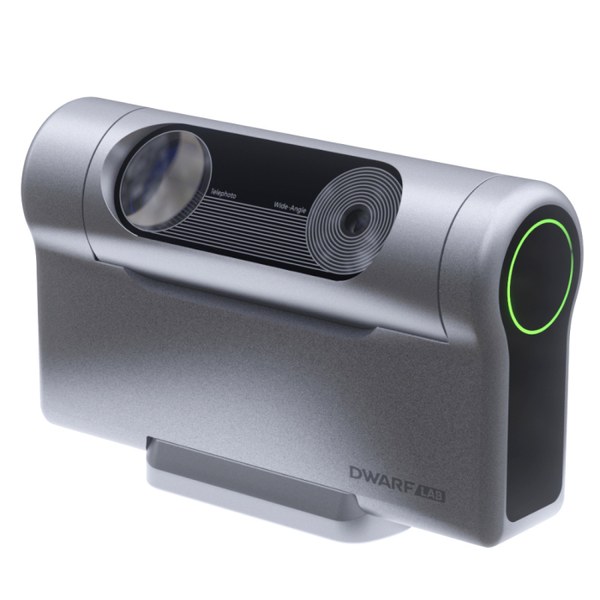 DwarfLab DWARF 3 Smart Telescope
Just 1.3 kg with a wide field — the alternative if large nebulae are what you are after.
Price: $549.00
View at Agena Astro* →- DWARFLAB DWARF 3 Smart Telescope
Just 1.3 kg with a wide field — the alternative if large nebulae are what you are after.
Price: € 529
Check availability* → 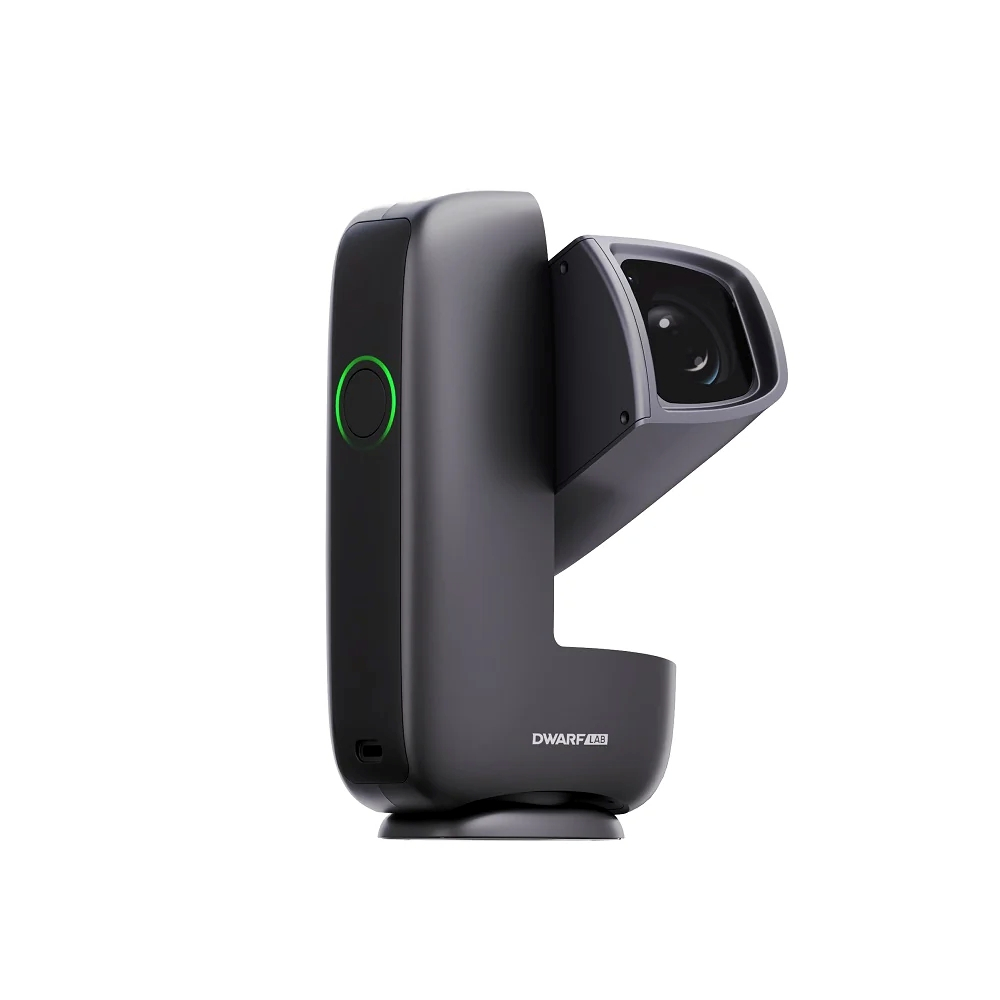 DwarfLab DWARF Mini Smart Telescope
The lightest smart telescope at 840 g: fits in a jacket pocket, made for travelling.
Price: $419.00
View at Agena Astro* → DWARFLAB DWARF mini Smart Telescope
The lightest smart telescope at 840 g: fits in a jacket pocket, made for travelling.
Price: € 429
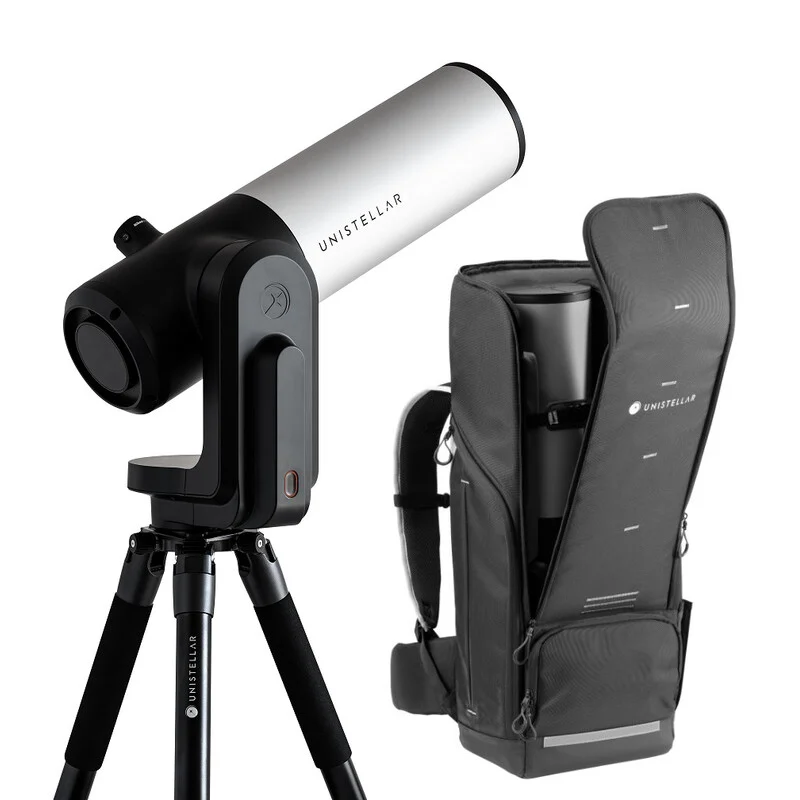
Check availability* →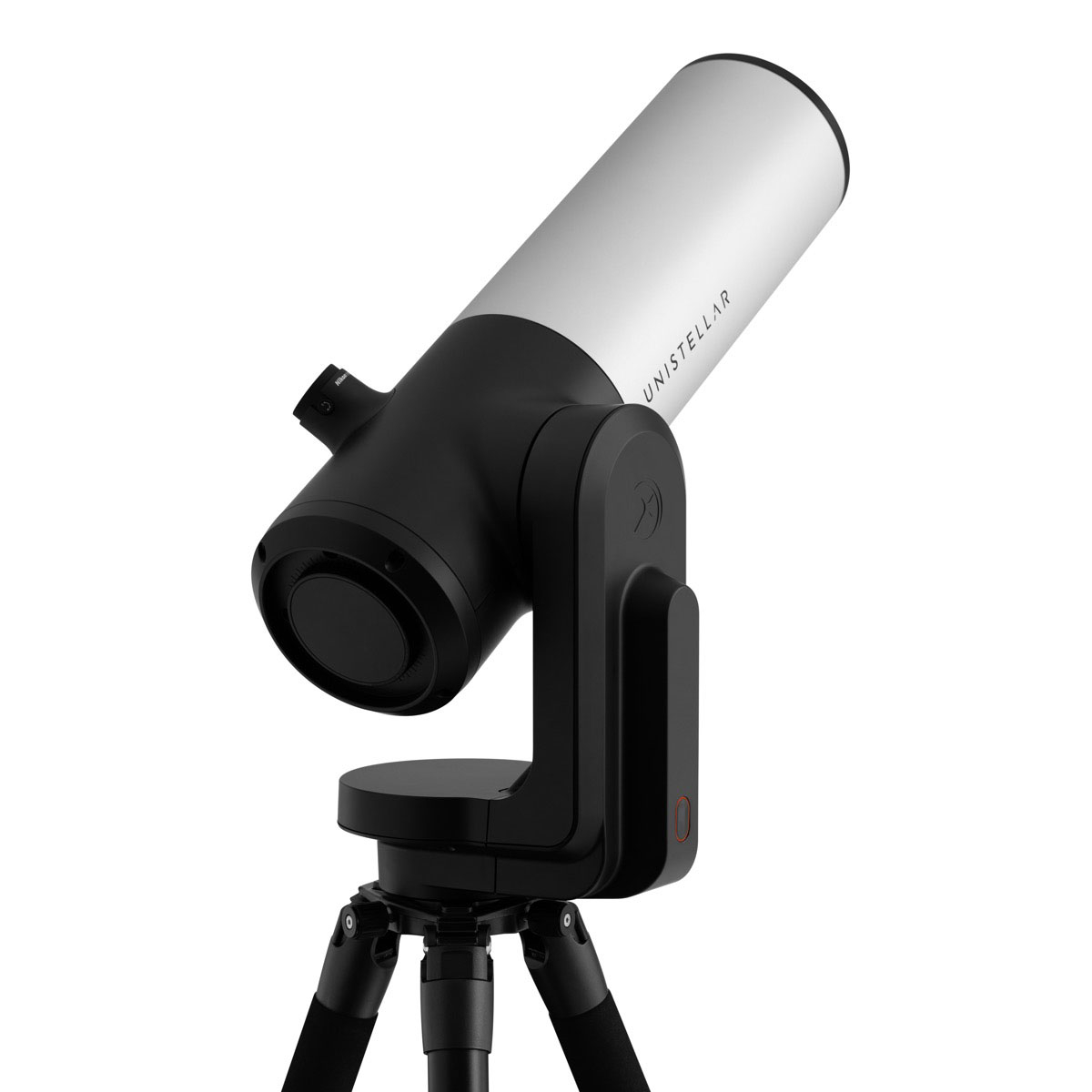 UniStellar eVscope 2 Smart Telescope
Premium class: Enhanced Vision shows galaxies almost live, plus a real OLED eyepiece.
Price: $4,999.00
View at High Point Scientific* →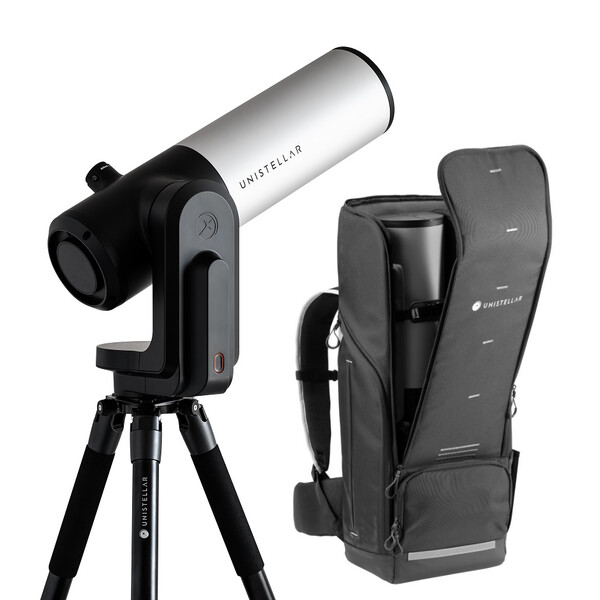 Unistellar eVscope 2 Smart Telescope
Premium class: Enhanced Vision shows galaxies almost live, plus a real OLED eyepiece.
Price: € 4,911
Check availability* →
For astrophotography with your own camera
 Skywatcher 150/750 PDS + EQM-35 PRO GoTo
A photo-capable Newtonian on a tracking GoTo mount — the set that makes deep-sky imaging possible.
Price: € 1,190
Check availability* →
* Affiliate link: if you order through it we earn a small commission, at no extra cost to you. Prices as of the last update.
🧭 Quickly find the right telescope
No time for theory? Here you go straight to the right buying guide:
- 🔭 Telescope for beginners – our most-read guide: the best first telescopes from $199.95€ 119
- 🧒 Telescope for children – age-appropriate recommendations that won’t frustrate
- 📱 Smart telescopes – fully automatic observing and imaging: the big trend since 2024
- 💶 Telescope under $300300 euros – the three best budget picks for 2026
- 💶 Best telescope under $1,000€1,000 – eight instruments sorted by what you actually want to do, from a 10-inch Dobson to a smart telescope
- 🚀 Telescopes for advanced users – the second telescope that lasts
- 🧮 Telescope calculator – work out magnification & exit pupil yourself
Or go straight to our readers’ three most popular telescopes:
*Affiliate link: if you buy through it, we receive a small commission – the price stays the same for you.
You can benefit from the mistakes and decisions of other amateur astronomers who are not subject to any conflict of interest.
The basis for a well-informed decision is having enough basic knowledge of telescope optics, the pros and cons of the individual systems and what telescopes are capable of. In the telescope guide you will find the most important fundamentals without getting lost in too much detail.
The guide Telescope for children deals specifically with the question of how parents can support their child’s interest in astronomy and what to pay particular attention to. At the end, suitable telescopes are presented in three price categories.
The guide Telescope for beginners and newcomers is aimed at enthusiastic would-be astronomers who are seriously toying with the idea of buying a telescope. It covers the different types of telescope and clears the obvious and less obvious pitfalls out of the way. How to divide up and spend your budget is discussed as well. At the end, suitable telescopes are presented in three price categories.
Below, the most important telescopes are described briefly and, for each type of telescope, three suitable telescopes are presented. You will also find below an overview of telescopes for ambitious beginners with a larger budget.
If you want to take photos with your telescope, you will find lots of helpful information under astrophotography.
 Our partner shop: a trusted US astronomy retailer – telescopes, binoculars & accessories.Visit High Point Scientific* →
 Our partner shop: Europe’s large astronomy retailer – telescopes, binoculars & accessories, shipping across Europe.Visit Astroshop* →
Buying a telescope – what to look out for
Realistic expectations
Anyone who wants to buy a telescope has to think clearly in advance about their expectations and honestly work out what they expect from their telescope.
Interest in astronomy is often sparked by news reports and TV documentaries. There you get to see very impressive and imposing images. However, these images are often animations, come from large observatories, from long-exposure tracked astrophotographs, from the Hubble Space Telescope or from space probes.
With an amateur telescope you will not achieve these images. Photos taken with an amateur telescope can also be very spectacular. However, these photos are often long-exposed and processed, so that the visual observation of the same object through the same telescope often does not match what you expect.
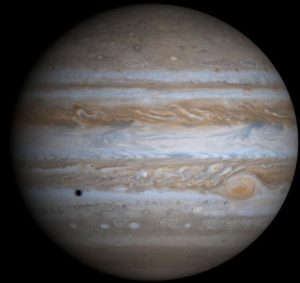
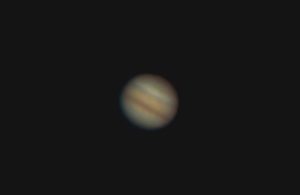

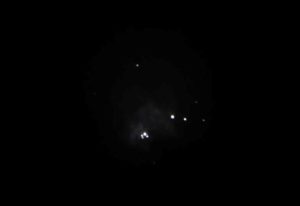
The comparison drawn above is certainly drastic and somewhat exaggerated. Nevertheless, it gives beginners – especially those who have never looked through a telescope – a certain recalibration of their expectations.
With amateur telescopes, stars will always remain points of light. Only from 3000x magnification do they turn into tiny discs. Often the realistic magnification is limited to 300x by seeing.
Our eyes are not made to see colours at night. In darkness, our eyes are particularly sensitive to differences in brightness. That is why most astronomical objects such as nebulae and galaxies appear grey during visual observation and not colourful as in photos.
Nevertheless, numerous details can be seen in good entry-level telescopes: the arms of galaxies, cloud bands on Jupiter, the rings and ring division of Saturn, details of the lunar surface and much more.
But anyone who realises that at this very moment the photons of an object light-years away are triggering a photochemical reaction on the retina, which then creates an image in the brain, will grasp the beauty of observing under the open sky.
For everyone who still wants to see more, and immediately, but does not want to get into elaborate astrophotography, smart telescopes are a great new class of telescope.
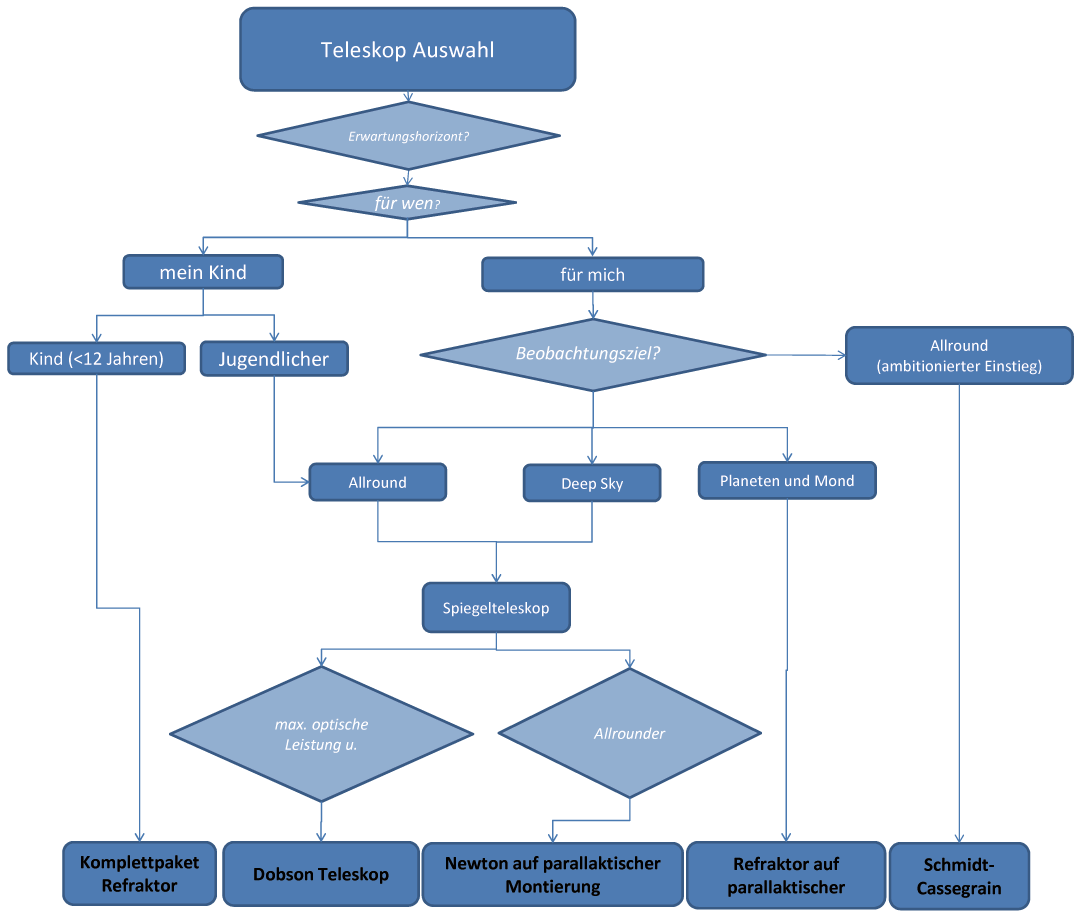
Decision tree for buying a telescope
🆕 Our newest buying guides
- What does a telescope cost? – every price range explained honestly
- Telescope or binoculars? – what beginners need first
- Reflector or refractor? – the design comparison
- Garden observatory: dome, roll-off roof or tent? – prices, pier, planning permission
- Building a garden observatory yourself – foundation, pier and roll-off roof step by step
- Which telescope for galaxies? – aperture & expectations
- Which telescope for planets? – Maksutov, Dobson and honest expectations
- StarSense Explorer put to the test – a telescope with smartphone navigation
- Essential first accessories – what is really worth it
- Telescope with tracking and GoTo – what it costs and when it pays off
- Equatorial mount – tracking, payload and which one fits you
Telescope for children
Anyone who wants to support their astronomy-loving child with a telescope has to ask themselves some special questions when choosing the right telescope:
- Is my child even old enough for a telescope?
- What makes sense in a telescope and what might overwhelm my child?
- What is a reasonable budget for a telescope that might have to be packed away again after a short time?
These and other questions are explored in the guide Telescope for children.
| Price range up to $150 | Price range up to $250 | Price range up to $450 |
|---|---|---|
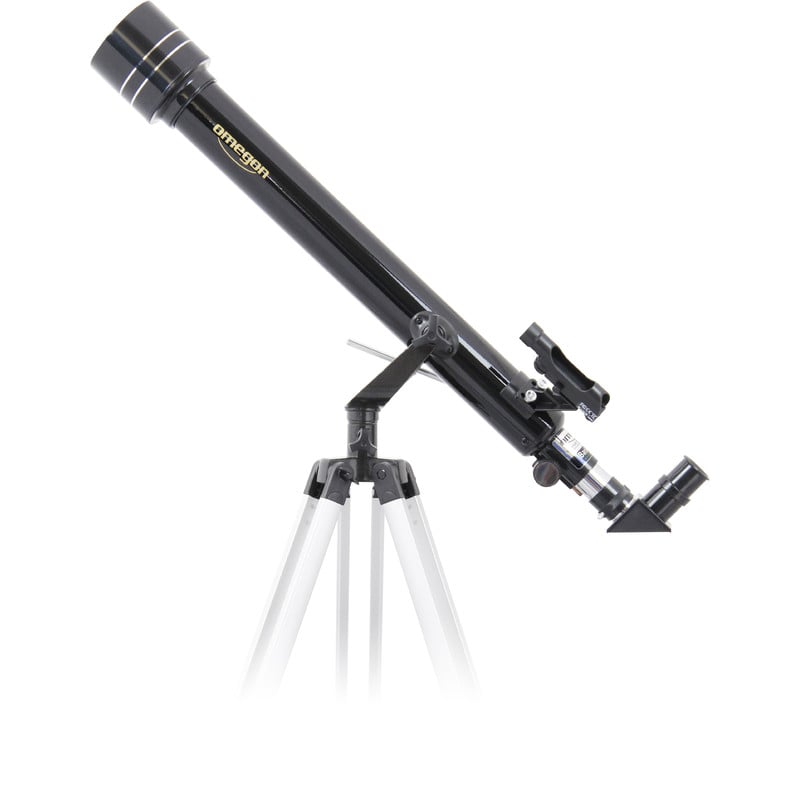
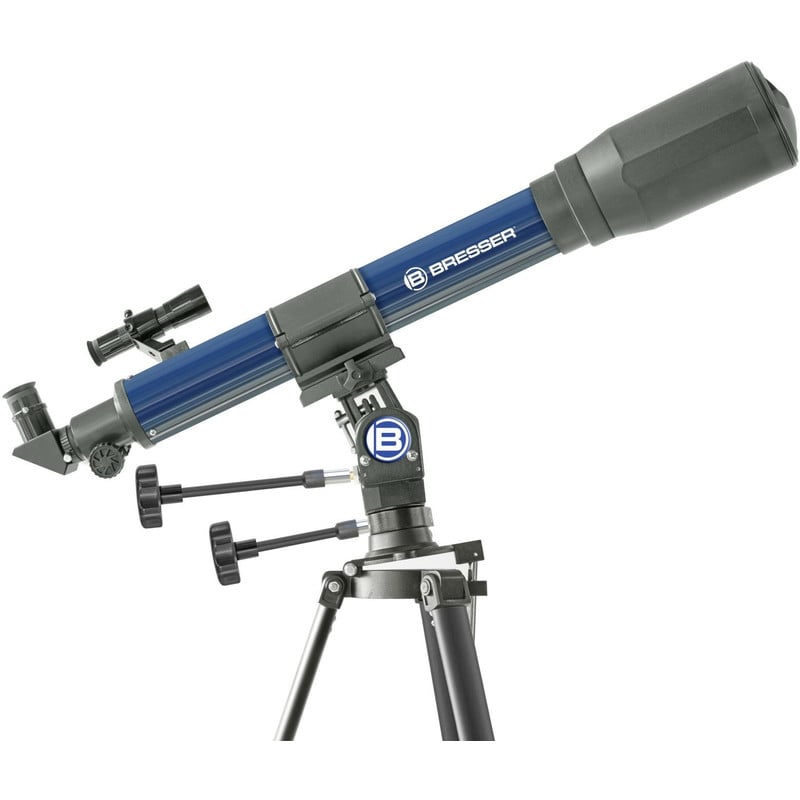
| Celestron Travel Scope 70 Portable Refractor | Celestron StarSense Explorer LT 80AZ | Celestron StarSense Explorer DX 102AZ (102 mm / 4″) |
 |  |  |
| Check availability*Check availability*$79.95€ 125 | Check availability*Check availability* | Check availability*Check availability*$429.00€ 529 |
| Model | Aperture | Best for | Price |
|---|---|---|---|
| Omegon Telescope AC 60/700 AZ-1 | 60 mm | smallest budget – the Moon and bright planets, don’t expect more | € 99 |
| Celestron AstroMaster 70AZ RefractorOmegon Telescope AC 70/700 AZ-2 | 70 mm | ⭐ Our pickthe affordable start our kids’ buying guide also recommends: light and set up in two minutes | $199.95€ 119 |
| Bresser Junior Telescope AC 70/900 EL | 70 mm | built with children in mind, longer focal length – a steadier view of the Moon | € 139 |
| Sky-Watcher Heritage 130 Tabletop DobsonianSkywatcher Dobson Telescope N 130/650 Heritage FlexTube | 130 mm | from about age 10: twice the light, first deep-sky objects, lasts for years | $305.00€ 265 |
Prices are synced with the shop automatically every day. Which telescope suits which age, and why kids’ telescopes fail in practice, is covered in detail in our guide Telescope for children.
Telescope for beginners/newcomers
If, as an interested beginner in amateur astronomy, you want to get a telescope, you should be clear about a few things:
- What are my expectations?
- What is my budget?
- What is my observing preference?
- How do I best divide my budget across the components?
- Is the included accessory enough for me, or do I need more for a sensible start?
The basis of every well-informed decision is the fundamentals in the telescope guide. Further important aspects and common pitfalls are examined in more detail in the guide Telescope for beginners and newcomers.
Refractor telescopes
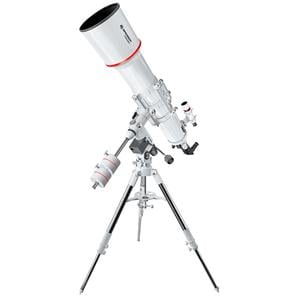
Refractors are lens telescopes such as achromats or apochromats. They produce a very high-contrast and sharp image and are particularly suited to observing the Moon and planets. Anyone who also wants to observe fainter objects such as galaxies and nebulae has to accept a considerably higher price for larger lenses. Simple lens telescopes (achromats) show a noticeable colour error (chromatic aberration). This can be compensated for by cementing together different lens glasses (apochromats).
You will find detailed information in the telescope guide and in the guide Telescope for beginners.
| Price range around $700 | Price range around $800 | Price range around $1,200 |
|---|---|---|
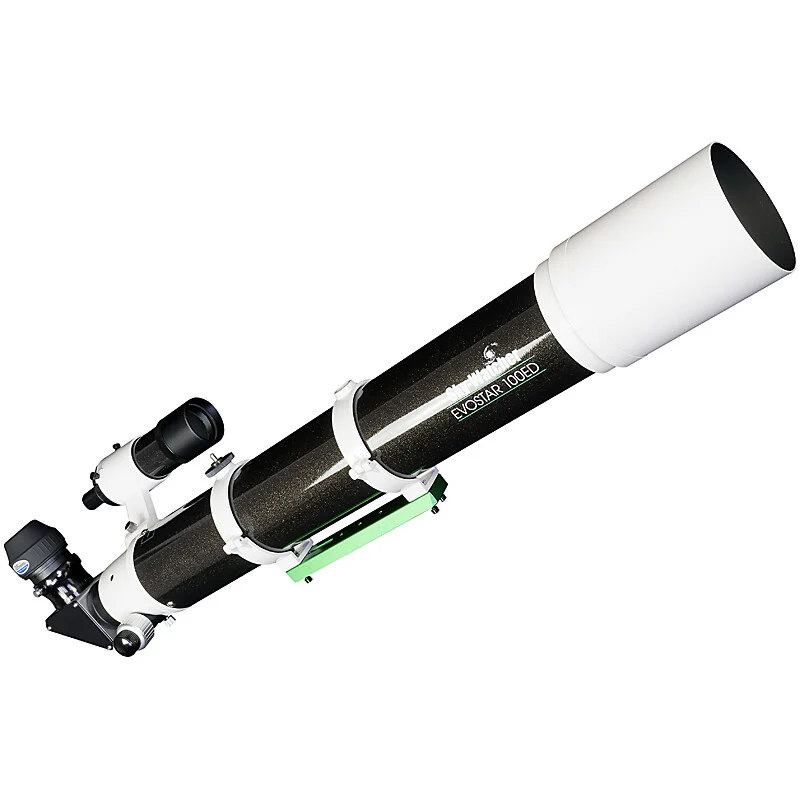
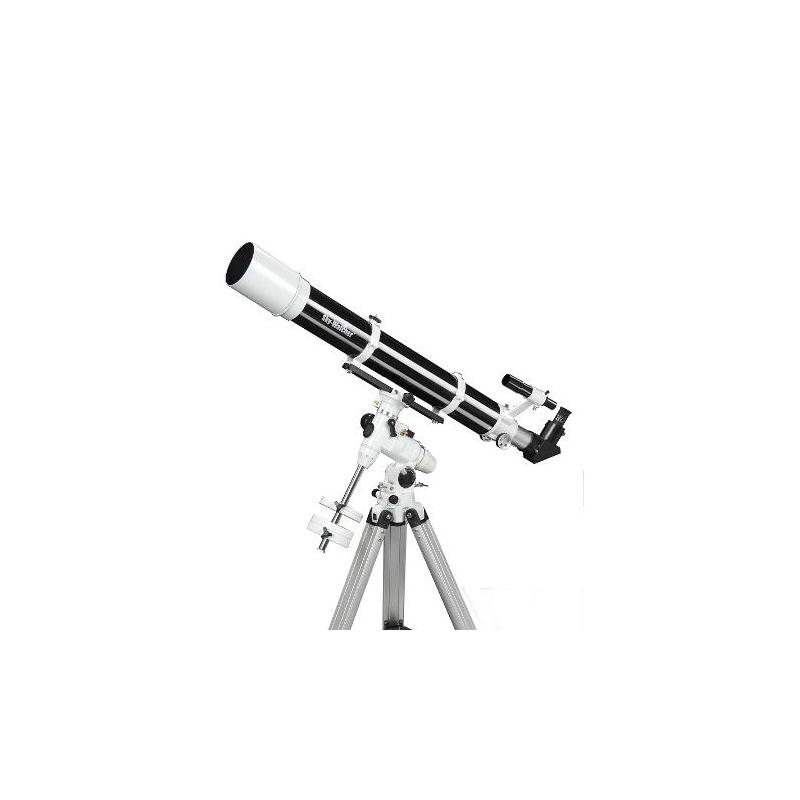
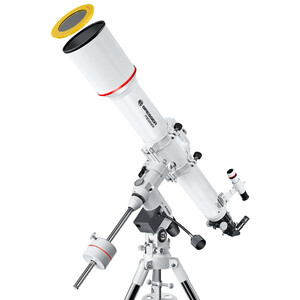
| Celestron Omni XLT 102 (4″ achromat, EQ) | Explore Scientific AR152 (6″ achromat OTA) | Sky-Watcher EvoStar 100ED APO |
 |  |  |
| Check availability*Check availability* | Check availability*Check availability* | Check availability*Check availability*$895.00€ 759 |
| Model | Aperture | Best for | Price |
|---|---|---|---|
| Orion Observer 90EQ Refractor TelescopeOmegon Telescope AC 90/1000 EQ-2 | 90 mm | a first equatorial refractor – Moon, planets, bright double stars | $124.95€ 275 |
| Bresser First Light AR-102/1000 EQ-3 | 102 mm | four inches on an EQ-3: noticeably more light, still portable | € 399 ● Currently unavailable (Product can be shipped as of 15.12.2026) |
| Orion AstroView 102 mm EQ Refractor TelescopeBresser Telescope AC 102/1000 Messier Hexafoc EXOS-2 | 102 mm | ⭐ Our pickthe same aperture on the much sturdier EXOS-2 – the mount decides whether you enjoy observing | $349.95€ 778 |
| Bresser Telescope AR 152L/1200 Messier Hexafoc EXOS-2 | 152 mm | a six-inch lens: lots of light, long tube, needs a fixed spot | € 1,287 |
Newtonian telescopes
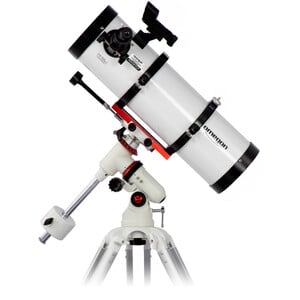
Newtonian telescopes are reflector telescopes mounted on a tripod mount. Compared with refractors of the same price, reflectors have a considerably larger aperture. A large aperture allows a lot of light-gathering power and has a positive effect when observing faint deep-sky objects. The secondary mirror sits in the light path, which causes some shadowing. The secondary mirror occasionally needs to be re-adjusted. For classic observing under the open sky, Newtonian telescopes are a good choice.
You will find detailed information in the telescope guide and in the guide Telescope for beginners.
| Price range around $360 | Price range around $430 | Price range around $1,300 |
|---|---|---|
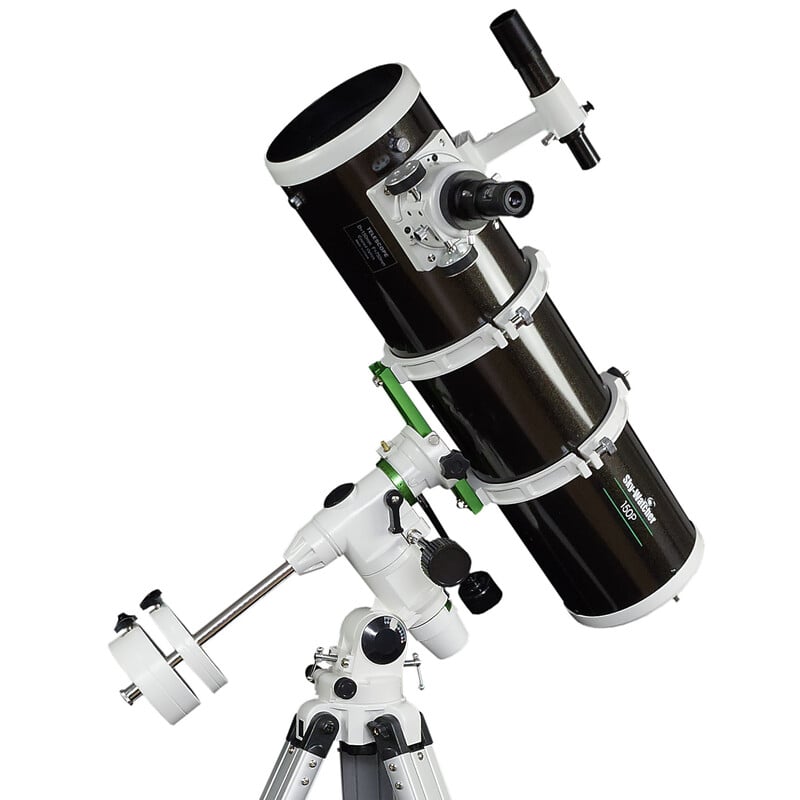
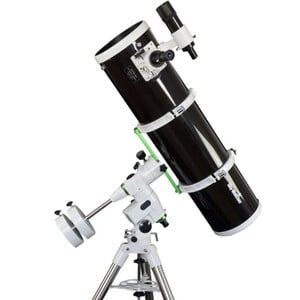
| Celestron AstroMaster 130EQ | Celestron StarSense Explorer DX 130AZ | Celestron Advanced VX 6″ Newtonian GoTo |
 |  |  |
| Check availability*Check availability*$329.95€ 309 | Check availability*Check availability*$449.95€ 599 | Check availability*Check availability*€ 1,190 |
| Model | Aperture | Best for | Price |
|---|---|---|---|
| Orion SpaceProbe 130ST EQ Reflector TelescopeOmegon Advanced Telescope 130/650 EQ-320 | 130 mm | the most affordable equatorial Newtonian – a good balance of price and aperture | $329.95€ 399 |
| Skywatcher N 150/750 PDS Explorer EQ3-2 | 150 mm | ⭐ Our pickPDS focuser: strong visually and ready for photography later | € 710 |
| Apertura AD8 8" Dobsonian TelescopeSkywatcher Telescope N 200/1000 Explorer 200P EQ5 | 200 mm | eight inches on an EQ5 – more aperture for deep sky, still affordable | $699.95€ 824 |
Dobson telescopes
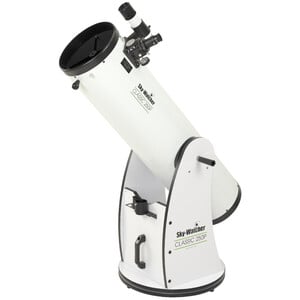
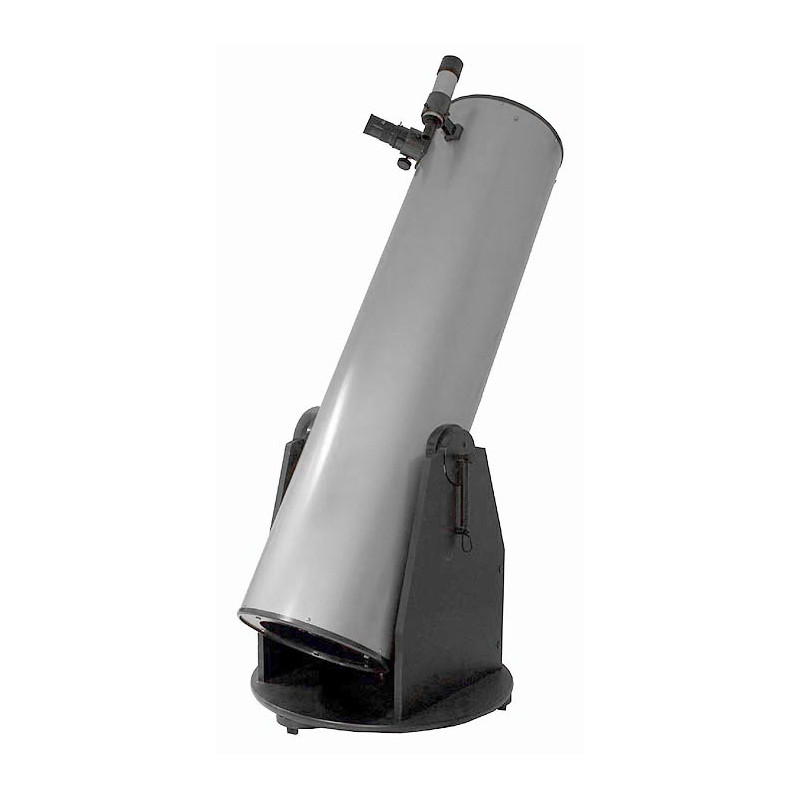
Dobson telescopes are reflector telescopes on a special mount (rocker box). This mount is very inexpensive, so a lot of optical performance can be bought for a given budget. However, the comfort of observing near the horizon or at the zenith can be limited as a result. Dobson telescopes are primarily suited to observing under the open sky and cannot readily be used for astrophotography. For observing under the open sky with maximum optical performance, Dobson telescopes are the first choice. A popular brand is Skywatcher telescopes.
You will find detailed information in the telescope guide and in the guide Telescope for beginners.
| Price range around $700 | Price range around $950 | Price range around $1,300 |
|---|---|---|
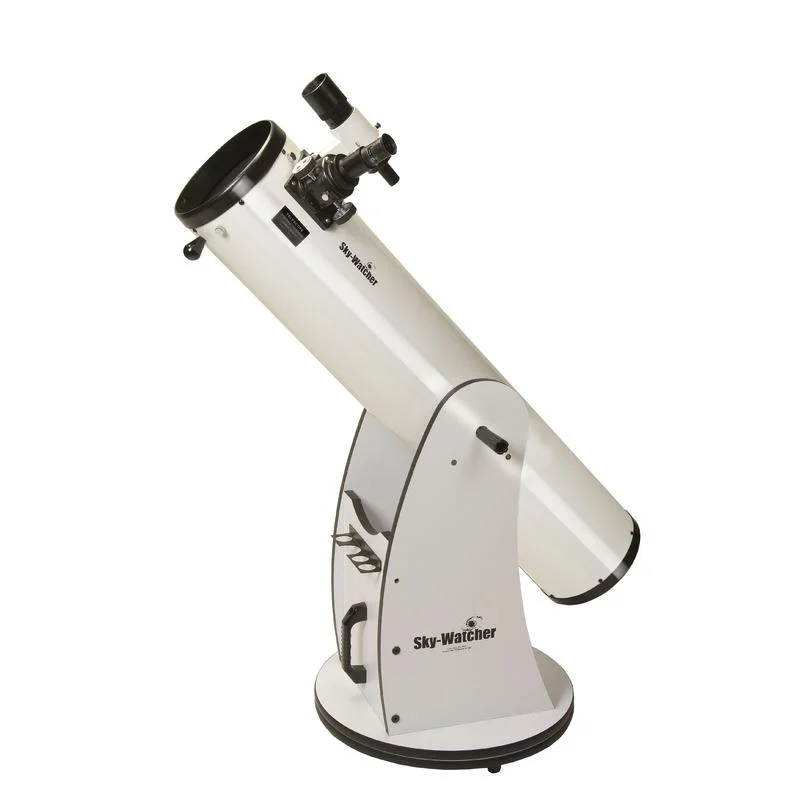
| Apertura AD8 8″ Dobsonian | Apertura AD10 10″ Dobsonian | Apertura AD12 12″ Dobsonian |
|  |  |
| Check availability*Check availability*$699.95€ 479 | Check availability*Check availability* | Check availability*Check availability* |
| Model | Aperture | Best for | Price |
|---|---|---|---|
| Apertura AD6 6" Dobsonian TelescopeSkywatcher Dobson Telescope N 150/1200 Skyliner Classic DOB | 150 mm | smallest budget, yet a real Dobsonian | $499.95€ 359 |
| Apertura AD8 Dobsonian 8" Telescope with AccessoriesOmegon Advanced X N 203/1200 Dobsonian | 203 mm | ⭐ Our pickthe best all-round start, deep sky from the first night ● In stock · ready for shipping in 24 h | $699.95€ 499 |
| Apertura AD8 8" Dobsonian TelescopeSkywatcher Dobson Telescope N 200/1200 Skyliner Classic | 200 mm | the Sky-Watcher classic in the same class ● In stock · ready for shipping in 3-7 days | $699.95€ 479 |
| Celestron StarSense Explorer 10" DobsonianSkywatcher Dobson Telescope N 254/1200 Pyrex Skyliner Classic | 254 mm | noticeably more light, still carried by one person | $1,199.00€ 695 |
| Apertura AD12 12" Dobsonian TelescopeGSO Dobson Telescope N 300/1500 Deluxe | 300 mm | maximum aperture for the money | $1,299.95€ 899 |
Prices are synced with the shop automatically every day. Which aperture suits you, what the telescopes weigh and what you will really see in your first year is covered in detail in our guide to Dobsonian telescopes.
Still undecided? Then take the shortcut.
Six short questions, an honest answer by e-mail – no pressure, and sometimes a plain “not yet”.
Buying a telescope for ambitious beginners
Anyone who wants to enter the field of amateur astronomy in an ambitious way has to ask themselves the same questions described above. The main difference usually lies in a larger budget. This makes it possible to acquire very capable telescopes. The gap between expectation and reality is smaller.
Often it is easier to expand or upgrade amateur telescopes in the mid price segment (for example for astrophotography), because the mount already has tracking and additional payload capacity.
You will find detailed information in the telescope guide and in the guide Telescopes for advanced users.
Schmidt-Cassegrain telescopes for ambitious beginners
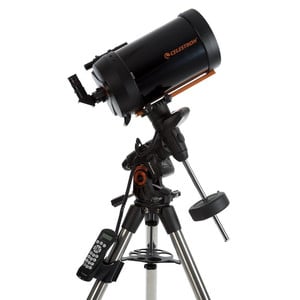
Schmidt-Cassegrain telescopes are catadioptric telescopes. These telescopes are very compact in design and therefore still easy to transport even with large apertures. A lens-mirror system like the Schmidt-Cassegrain telescope is a very versatile and expandable platform. It can be used well for visual observation across all areas.
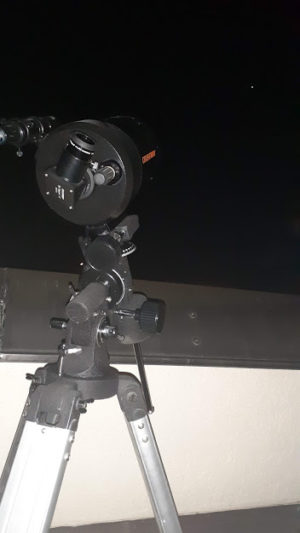
If you decide at a later point to take up astrophotography, a modern Schmidt-Cassegrain has you very well equipped. With the appropriate astrophotography accessories, you can image both at high magnification and a large focal ratio (camera at the focuser) and at low magnification and a small focal ratio (the camera replaces the secondary mirror in the sense of a Schmidt camera). This makes the telescope versatile for astrophotography too.
| Price range from $2,200 | Price range from $4,000 | Price range from $5,000 |
|---|---|---|
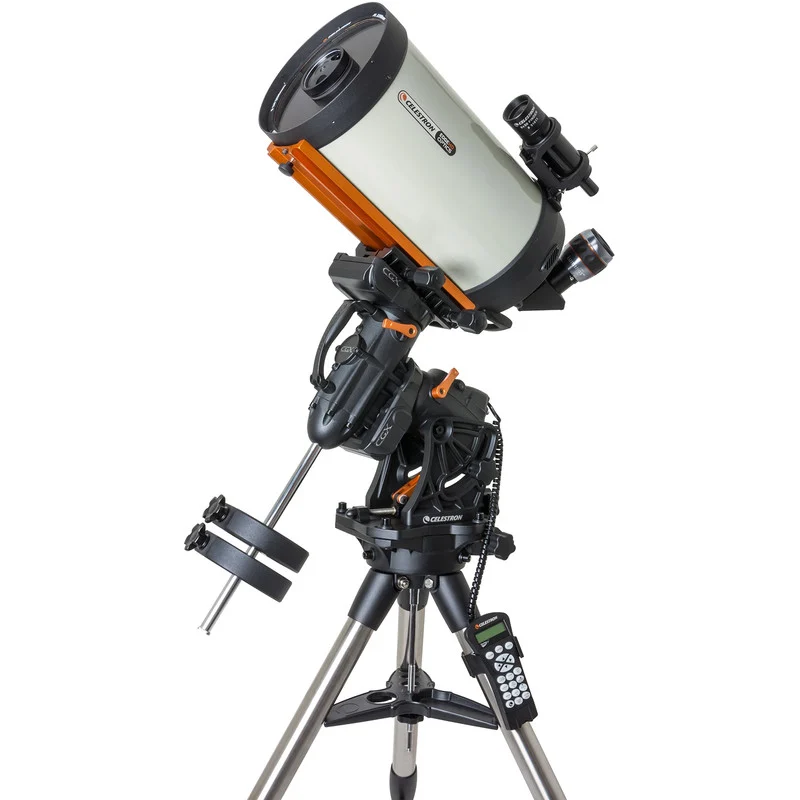
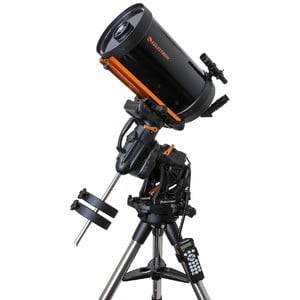
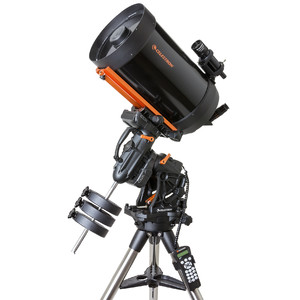
| Celestron Advanced VX 8″ SCT GoTo | Celestron CGX 925 SCT GoTo | Celestron CGX 1100 SCT GoTo |
 |  |  |
| Check availability*Check availability*$2,339.00€ 2,499 | Check availability*Check availability*$4,499.00€ 4,999 | Check availability*Check availability*$5,399.00€ 5,999 |
| Model | Aperture | Best for | Price |
|---|---|---|---|
| Celestron Advanced VX Series 8" EdgeHD Go To TelescopeCelestron Schmidt-Cassegrain Telescope SC 203/2032 AVX GoTo | 203 mm | ⭐ Our pickthe classic: compact, GoTo, for everything from planets to globular clusters | $2,339.00€ 2,499 |
| Celestron CGX 925 EdgeHD Computerized TelescopeCelestron Schmidt-Cassegrain Telescope SC 235/2350 CGX 925 GoTo | 235 mm | more aperture on the heavy CGX – a way into serious astrophotography | $4,499.00€ 4,999 |
| Celestron CGX 1100 EdgeHD Computerized TelescopeCelestron Schmidt-Cassegrain Telescope SC 279/2800 CGX 1100 GoTo | 279 mm | eleven inches: maximum planetary resolution, needs space and a transport plan | $5,399.00€ 5,999 |
Buying a refractor telescope for ambitious beginners
Fundamentally, the telescope matches the description given above. In the ambitious segment, the quality of the components, performance parameters such as aperture and focal length and the capabilities of the mount all increase. Provision is made for extending to astrophotography and the additional equipment that goes with it.
| Price range around $1,100 | Price range around $1,900 | Price range around $3,300 |
|---|---|---|
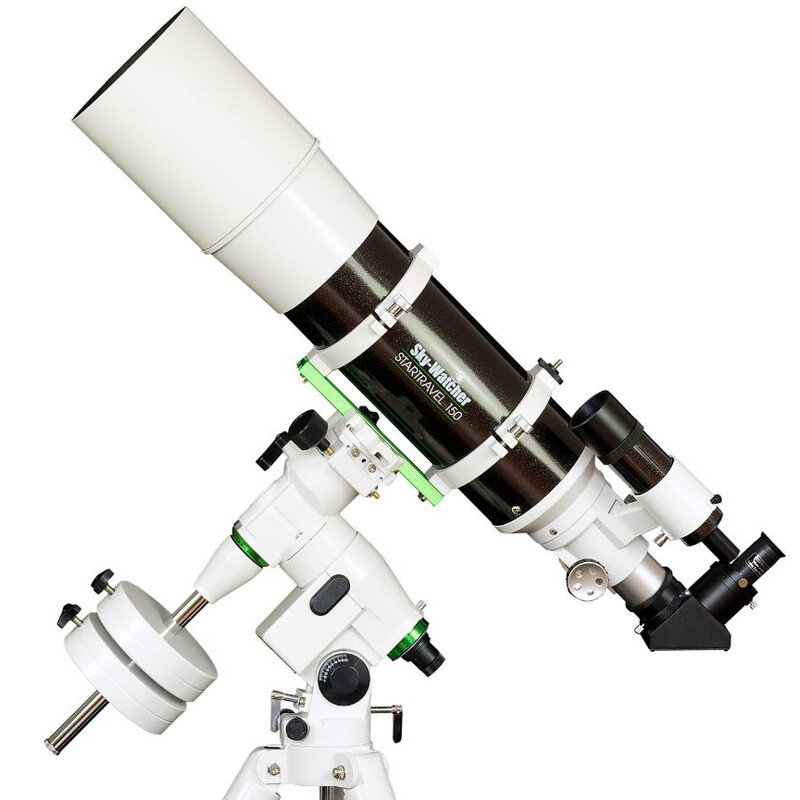
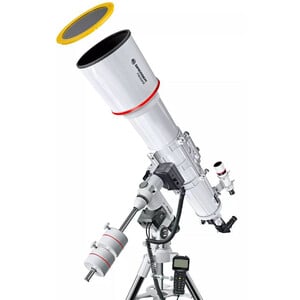
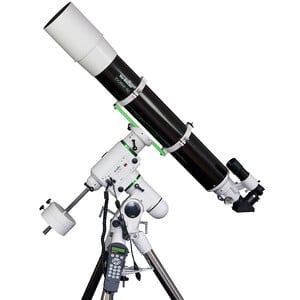
| Explore Scientific ED127 Triplet APO | Celestron Advanced VX 6″ Refractor GoTo | Sky-Watcher Esprit 120 ED Super APO Triplet |
 |  |  |
| Check availability*Check availability*$1,499.99€ 1,498 | Check availability*Check availability* | Check availability*Check availability*$3,295.00€ 2,469 |
| Model | Aperture | Best for | Price |
|---|---|---|---|
| Sky-Watcher EvoStar 150/1200 EQ5 | 150 mm | ⭐ Our picklong f/8 achromat on the EQ5: the calmest, most contrasty optics in this class, tracked by hand | € 1,290 |
| Sky-Watcher StarTravel 150/750 EQ5 | 150 mm | short f/5 tube: wide field, much handier, but more false colour | € 1,328 |
| Bresser AC 152/760 AR-152S Messier Hexafoc EXOS-2 GoTo | 152 mm | the GoTo version: short f/5 achromat on the EXOS-2 that finds objects by itself – but with clear false colour on the Moon and planets | € 1,778 |
Buying a Newtonian telescope for ambitious beginners
Fundamentally, the telescope matches the description given above. In the ambitious segment, the quality of the components, performance parameters such as aperture and focal length and the capabilities of the mount all increase. Provision is made for extending to astrophotography and the additional equipment that goes with it.
| Price range around $780 | Price range around $1,300 | Price range around $1,600 |
|---|---|---|
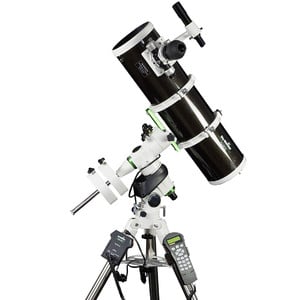
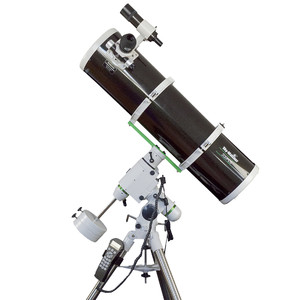
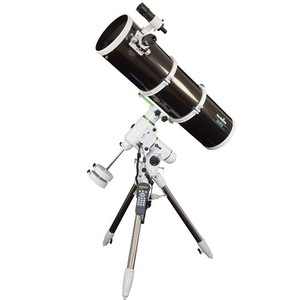
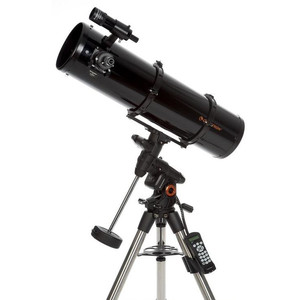
| Sky-Watcher Quattro 8″ f/4 Imaging Newtonian | Sky-Watcher Quattro 250P 10″ Imaging Newtonian | Celestron Advanced VX 8″ Newtonian GoTo |
 |  |   |
| Check availability*Check availability*$925.00€ 525 | Check availability*Check availability* | Check availability*Check availability*$1,599.00€ 1,849 |
| Model | Aperture | Best for | Price |
|---|---|---|---|
| Skywatcher 150/750 PDS + EQM-35 PRO GoTo | 150 mm | ⭐ Our pickGoTo Newtonian with PDS focuser on a tracking mount – the most affordable set that is ready for photography right away | € 1,190 |
| Celestron Advanced VX Series 8" Newtonian Go To TelescopeCelestron N 200/1000 Advanced VX AVX GoTo | 200 mm | the classic eight-inch GoTo on the AVX mount – much more light than the 150, without the weight of the EQ6 class | $1,599.00€ 1,849 |
| Sky-Watcher Explorer 250/1200 PDS EQ6-R Pro SynScan GoTo | 250 mm | ten inches on the EQ6-R – payload for long exposures, no longer a casual grab-and-go | € 2,590 |
Buying a Dobson telescope for ambitious beginners
Fundamentally, the telescope matches the description given above. In the ambitious segment, the quality of the components, performance parameters such as aperture and focal length and the capabilities of the mount all increase.
The size of the Dobson telescopes in these ranges no longer allows for easy transport.
| Price range around $1,900 | Price range around $2,850 | Price range around $5,200 |
|---|---|---|
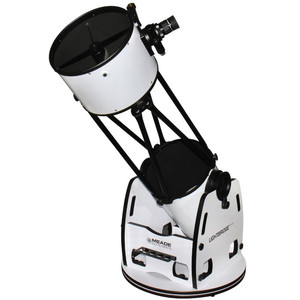
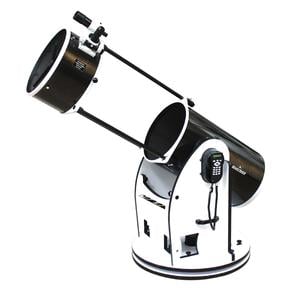
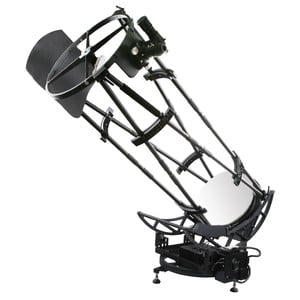
| Sky-Watcher 10″ Flextube SynScan GoTo Dobsonian | Sky-Watcher 12″ Flextube 300P SynScan GoTo Dobsonian | Sky-Watcher 16″ Flextube 400Pi SynScan GoTo Dobsonian |
 |  |  |
| Check availability*Check availability*$1,895.00€ 1,709 | Check availability*Check availability*$2,850.00€ 2,469 | Check availability*Check availability* |
| Model | Aperture | Best for | Price |
|---|---|---|---|
| Apertura AD12 Dobsonian 12" Telescope with AccessoriesSkywatcher Dobson Telescope N 305/1500 Skyliner FlexTube | 305 mm | ⭐ Our picktruss tube – twelve inches that fit in a car boot when taken apart | $1,299.95€ 1,299 |
| Apertura AD16 16" Truss DobsonianGSO Dobson Telescope N 406/1829 Truss | 406 mm | truss design, much more light than twelve inches | $2,499.95€ 2,175 |
| Sky-Watcher 12" Flextube SynScan GoTo Collapsible DobsonianSky-Watcher Dobsonian N 305/1500 Skyliner FlexTube GoTo | 305 mm | if you want objects to be found automatically | $2,850.00€ 2,469 |
| Skywatcher Dobson Telescope N 508/2000 Stargate-500P SynScan GoTo | 508 mm | the extreme class – needs space, a ladder and a transport plan | € 7,529 |
Prices are synced with the shop automatically every day. Which aperture you can really carry in everyday use is worked out in our guide to Dobsonian telescopes.
Buying a telescope for astrophotography
If you are toying with the idea of buying a telescope that you also want to use for imaging planets, nebulae and the like, you should first get to grips with the theory of astrophotography. You will find a very good introduction to the topic under astrophotography and the further articles linked there.
- Astrophotography
- Getting started in astrophotography [on a budget]
- Pixel size and sampling
- Photographing the Moon
- Pixel size and sampling
- Planetary photography – guide and tutorial
- Deep-sky astrophotography – an introduction
There, the basics and challenges of astrophotography are discussed in more detail, as well as technical aspects of cameras, telescopes and much more.
Smart telescope: overwhelming images to get started
A smart telescope is a fully automatic device that uses the latest technologies to make observing the sky easier than ever before. With a built-in camera, automatic alignment and a user-friendly smartphone app, it simplifies imaging so much that you no longer have to process anything yourself.
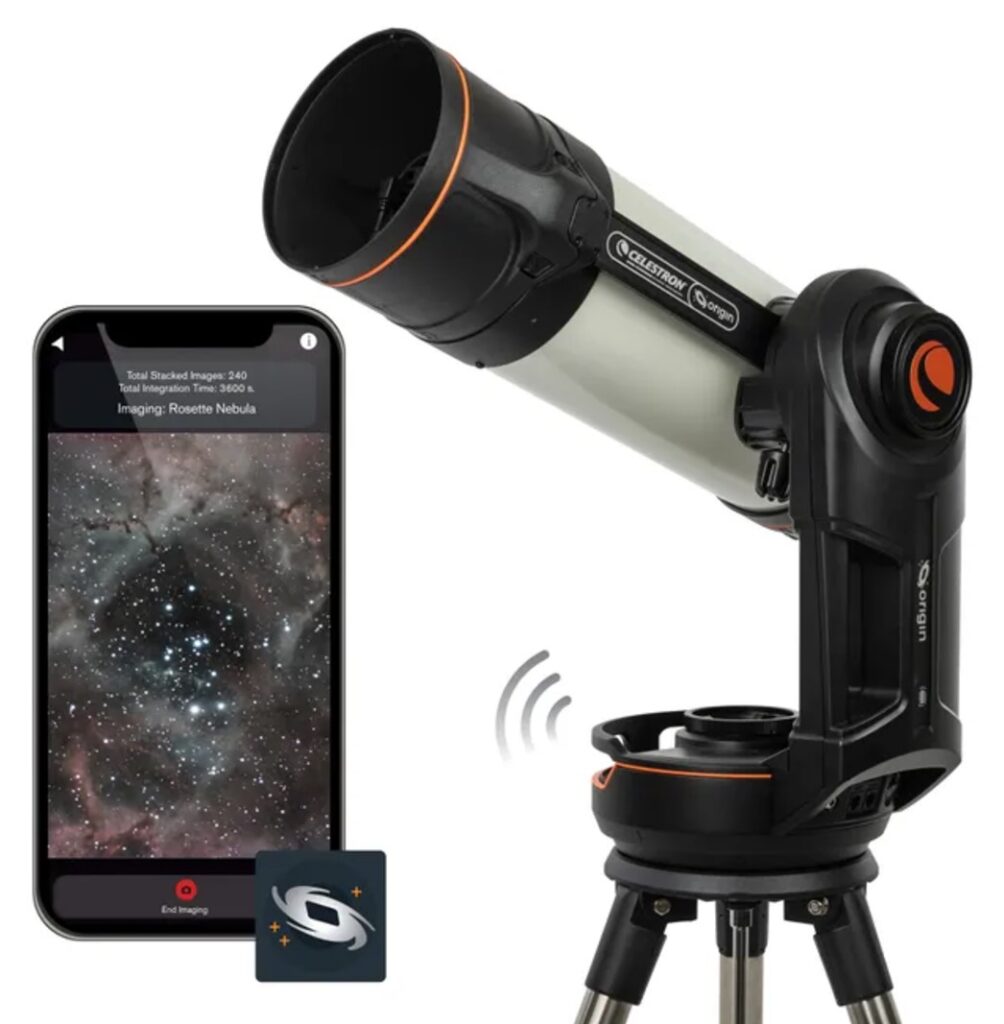
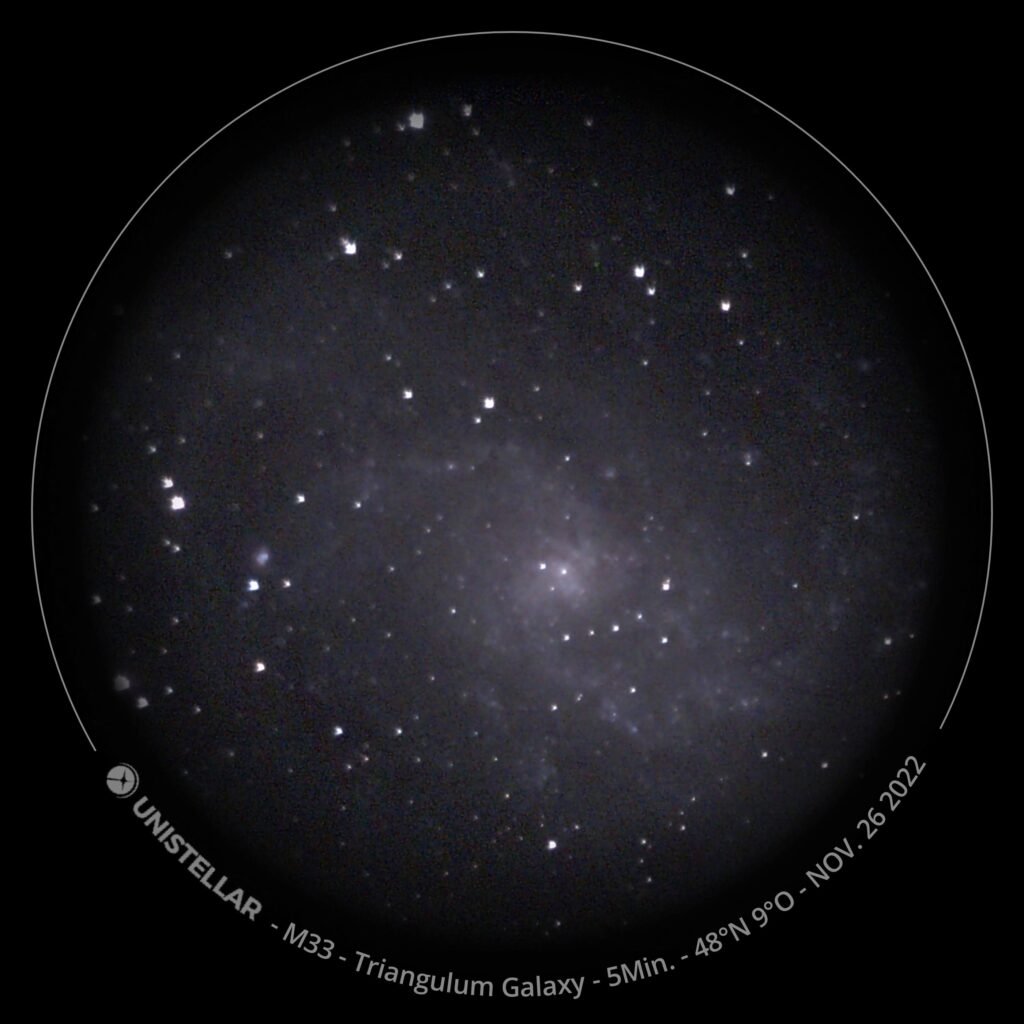
The images are impressive and far surpass what you can see with the naked eye through a telescope. Especially with faint objects such as galaxies and nebulae.
My recommendation is the Celestron Origin Smart TelescopeCelestron Origin Smart Telescope*. For the money, it offers a wide range of innovative features and even makes it possible to use the telescope for semi-professional astrophotography
The best observing dates, explained in plain language, plus honest buying advice without the marketing noise. Free, unsubscribe any time.
You will get a confirmation email in a moment. Your address stays with us – no sharing, no third-party ads.
Hands off: how to spot a “department-store telescope”
Every year at Christmas, telescopes land under the tree that make children’s eyes light up – and then make them cry. The warning signs: huge magnification numbers on the box (see above), wobbly aluminium tripods, no-name manufacturers with no spare parts, and plastic eyepieces. Our rule of thumb: better a small instrument from an astronomy manufacturer (Skywatcher, Omegon, Celestron, Bresser) than a “big” one from the discounter. All the basics are explained further down in what to look out for.
Frequently asked questions about the best telescopes
A sensible start begins at a low three-digit price; below that, hardly any telescope stays fun for long. Used telescopes cost noticeably less than new ones. First you should familiarise yourself with the basics of telescopes (telescope guide) before making a decision.
Dobson telescopes are regarded in the astronomy community as excellent telescopes for beginners because of their outstanding value for money.
If you want to buy a telescope, you can do so at a specialised store. Since these are very few and far between, it is good that most of them have an excellent online presence. A multiple award-winning retailer is High Point ScientificAstroshop.
Is there a telescope test from an independent consumer organisation?
No – to date, no independent consumer testing organisation has published a genuine telescope test. Anyone searching for a “consumer-tested telescope winner” ends up at comparison portals with no real hands-on experience. Rely instead on specialist-retailer advice and the practical experience of the astronomy community – which is exactly what goes into this guide.
Which telescope is best for beginners in 2026?
Our recommendation: the Skywatcher Heritage 130/650 (approx. $305.00€ 265) – plenty of aperture, set up in a minute, compact. With a little more budget, the Skyliner 200/1200 Dobson is a buy for life. In detail: telescope for beginners.
What does a good telescope cost?
A sensible entry point: from around $120120 €. Genuinely long-lasting enjoyment begins at 250–$350350 € (Heritage class), and the best value for money is the 8-inch Dobsonian, currently at $699.95€ 479. More in the guide What does a telescope cost?
Which telescope is best suited for planets?
Planets need aperture and steady optics: from 130 mm you’ll clearly see Jupiter’s cloud bands and Saturn’s ring, and a 200 mm Dobsonian reveals impressive detail. On top of that, a short-focal-length eyepiece for high magnification is essential.
Classic telescope or smart telescope – which should I buy?
If you want to look through the eyepiece with your own eyes and experience the “wow, that’s real!” moment → classic telescope. If you want impressive photos of nebulae and galaxies without learning the technical side → smart telescope. Many stargazers end up with both.
When is the best time to buy a telescope?
Before the Christmas shopping rush: from late November, popular models are repeatedly sold out in our experience, and the long, dark winter nights are the best observing season of the year. Order in autumn and you’re on the safe side.
Fundamentals first? How a telescope works, which components it has and which key figures really matter is explained in our article Telescope design & how it works. The world’s most famous large telescopes are shown in this overview.
Read more
Sources
- NASA/JPL/University of Arizona, Jupiter by Cassini-Huygens, marked as public domain, details on Wikimedia Commons, retrieved 26.02.2020
- Lapos71 (https://commons.wikimedia.org/wiki/File:PLANET_JUPITER.jpg), „PLANET JUPITER“, https://creativecommons.org/licenses/by-sa/4.0/legalcode, retrieved 26.02.2020
- Long-exposure image, taken in Siegenburg in 2020, photographer: Sascha Weiss
- courtesy of Felix Schleicher. Eyepiece projection on a Dobson 200/1200.
- private photo