By Alexander Merz · Updated on
This page explains how sterngucker.de reviews telescopes: which scopes we use ourselves, how we count owner reports, where specs and prices come from, and how we earn money. It applies to every buying guide on our site, including our best telescopes overview.
⭐ In short: every review rests on up to three sources, and we name them on the page: our own use, a count of real owner reports, and verified specs. We only call something tested when we have used it ourselves.
Three sources, clearly labelled
Each review states at the top which of these sources it uses. That way you know whether you are reading hands-on experience or a careful analysis.
| Source | What it means | How we label it |
|---|---|---|
| Own use | We have set up and observed with the scope ourselves | Named in the text, with our own photos |
| Owner reports | We counted what real owners report in forums | Number of owners, threads and period |
| Verified specs | Manufacturer and dealer data, checked against each other | Source and month in the spec table |
The telescopes we use ourselves
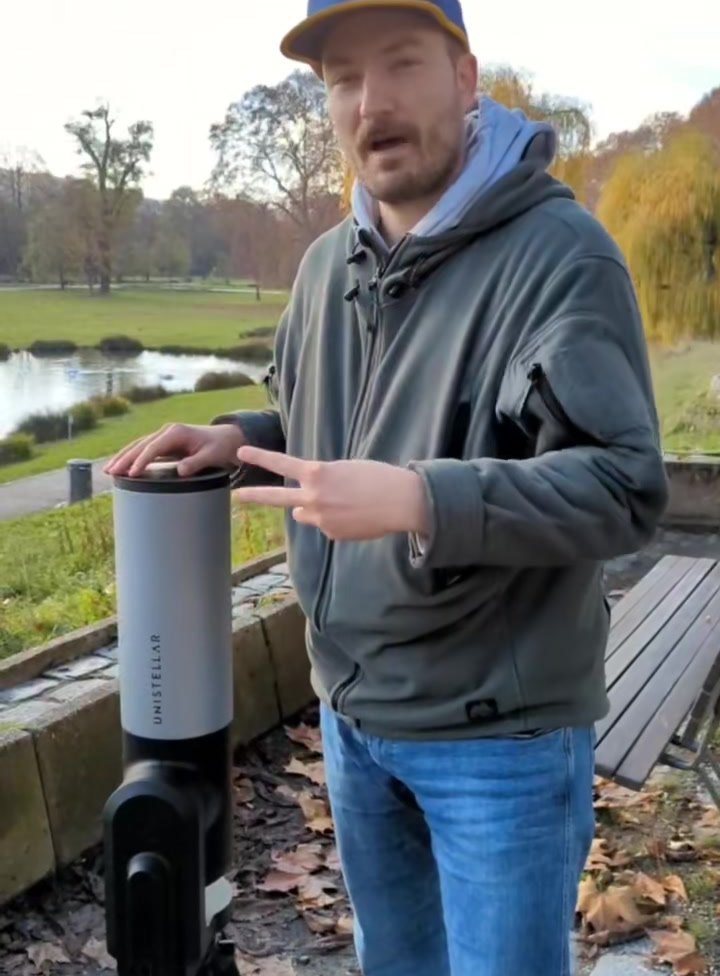
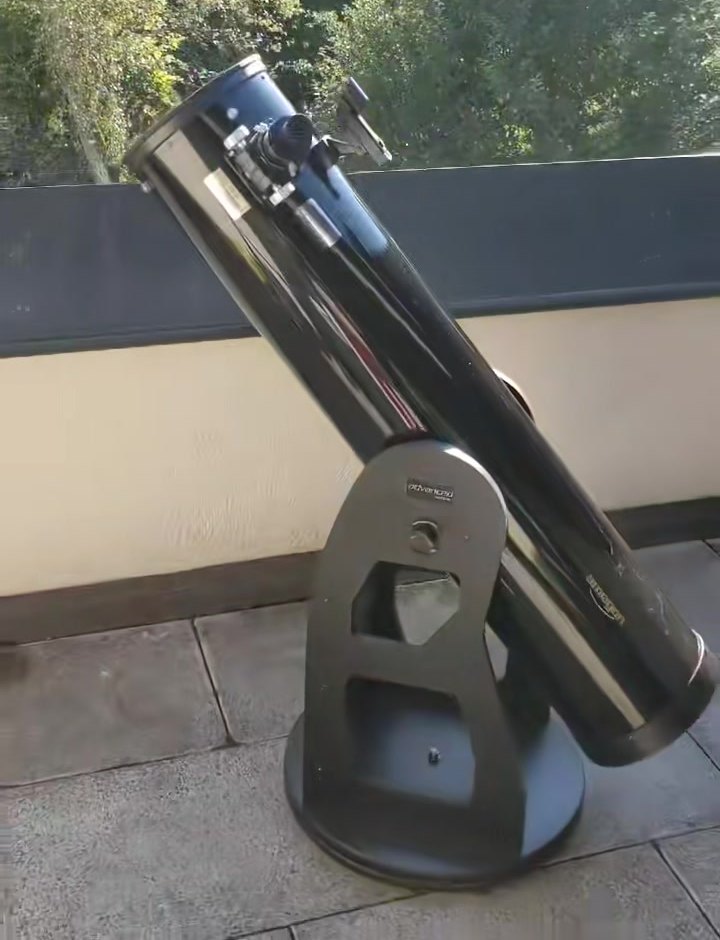
We observe with an 8-inch Dobsonian (Omegon Advanced 203) and a Unistellar eVscope 2 smart telescope. Both appear in our own videos, for example focusing the eVscope with a Bahtinov mask and observing the globular cluster M13.
For every other scope we say plainly that we do not own it.
How we count owner reports
One tester has one unit and a few nights; hundreds of owners have hundreds of units over years. Where we lack hands-on experience, we therefore count what owners report instead of paraphrasing a single review.
- Sources: Reddit (via a public archive), Cloudy Nights, and for German pages forum.astronomie.de and Astrotreff
- Only owners count: we read every candidate post and drop people who are only asking or still waiting for delivery
- Once per topic: each owner counts once for each topic, however often they repeat it
- Numbers are minimums: we give the number of threads, posts and the period
Bias, named every time: people post when something goes wrong, so problems are over-represented. We never turn forum voices into star ratings, because they are our reading of other people’s reports, not a survey.
Specs and prices
Specs come from the manufacturer and at least one dealer, and we note where they disagree. If a figure is not published, such as battery life or mirror glass, we say so instead of guessing.
Prices update automatically from the retailer. On our English pages, readers in the US see US dealers and dollar prices, readers in Europe see European shops.
Data we calculate ourselves
Astronomical data on our site is calculated, not copied: Moon phases, rise and set times and distances come from the JPL ephemeris DE421 and are cross-checked. Object data is compared with databases such as SIMBAD.
Where sources disagree, we show it on the page instead of picking the convenient number.
How we make money
Links marked with an asterisk are affiliate links: if you buy through them, we earn a commission, and your price stays the same. Advertising is always labelled as such.
Which telescope we recommend does not depend on the commission rate. Our PowerSeeker 127EQ guide, for example, advises against the scope and links no shop for it.
Corrections
When we find an error, we fix it and update the date at the top of the page. If you spot one, write to us at info@sterngucker.de.
Guides built on this method
- Apertura AD8: what 170 owners report
- Celestron NexStar 4SE: what 71 owners report
- Celestron PowerSeeker 127EQ: honest verdict
- Celestron StarSense Explorer series

Who wrote this guide
Alexander Merz writes our telescope guides and answers the reader questions in our free telescope advice. He observes with his own 8-inch Dobsonian (Omegon Advanced 203) and a Unistellar eVscope 2 smart telescope.
Where we have not used a scope ourselves, we say so and show our sources: how we review telescopes.