By Alexander Merz · Updated on · Details checked on 9 October 2026
Astronomy books are the gift to give when you don’t know which telescope fits – and often the better one. Someone who reads a good book for a year then buys the right instrument instead of the first one they see.
More in our overview: Astronomy Gifts.
Here you’ll find our recommendations, sorted by category: getting started, first telescope, star atlases, astrophotography, yearbooks, children and reading for pleasure. Most of the titles are German editions; we mark them accordingly.
To get started without any equipment, “Astronomie für Einsteiger” from Kosmos (German edition) is the safe pick – it’s the best-selling book among our readers. If you already own a telescope, you need the “Fernrohr-Führerschein” (German edition). For astrophotography, Thierry Legault’s “Astrophotography” is the standard reference, and the Kosmos Himmelsjahr 2027 (German edition) belongs under the Christmas tree.
The best astronomy books by category
The overview for readers in a hurry: one pick per category, with the reasoning and alternatives further down.
| Category | Our pick | For whom | Price |
|---|---|---|---|
| Getting started | Astronomie für Einsteiger (Kosmos, German edition) | ⭐ Our recommendationAnyone with no prior knowledge and no equipment | about $20€ 20 |
| First telescope | Fernrohr-Führerschein in 4 Schritten (German edition) | Anyone who has a telescope and is stuck | about $19.90€ 19.90 |
| Star atlas | Atlas für Himmelsbeobachter (German edition) | Anyone who wants to find objects on their own | about $26€ 26 |
| Astrophotography | Legault: Astrofotografie (German edition)* | Anyone who wants to understand the fundamentals | about $39.9039.90 € |
| Yearbook | Kosmos Himmelsjahr 2027 (German edition) | Anyone who wants to know when what happens | about $22€ 22 |
| Children | Mein großer Weltraumatlas (German edition) | Children aged 8 and up | about $26€ 26 |
| For reading | Hubble & Webb (illustrated book, German edition) | For marvelling and giving | about $55€ 55 |
Three kinds of book – and what each is good for
Before you choose, you should know which kind you’re holding. The three are not interchangeable, and the most common disappointment comes from mixing them up.
| Kind | What for | How to spot it | Price |
|---|---|---|---|
| Introduction | Understanding what’s going on up there – without equipment | Lots of text, few charts, broad range of topics | 15–$3535 € |
| Practical book | Finding things and setting up properly | Finder charts, tables, often a handy format | 15–$3030 € |
| Yearbook | Looking up when to see what | Monthly chapters, year in the title | 9–$2222 € |
Astronomy books for beginners with no prior knowledge
Our recommendation for starting out: Kosmos Astronomie für Einsteiger (German)
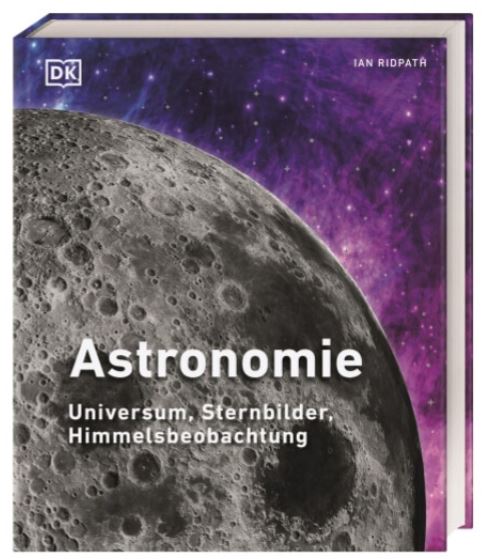
The classic starter guide: sky basics, observing and equipment explained so the first night out succeeds.
Price: € 20
This book is by far the best-selling one among our readers. It assumes nothing, explains in digestible portions and still gets you outside early on. It’s written in German.
If you prefer something more compact, go for “Hobby-Astronom in 4 Schritten” (German edition): same destination, fewer detours.
Short and straight to the point: Oculum „Hobby-Astronom in 4 Schritten“ (German)
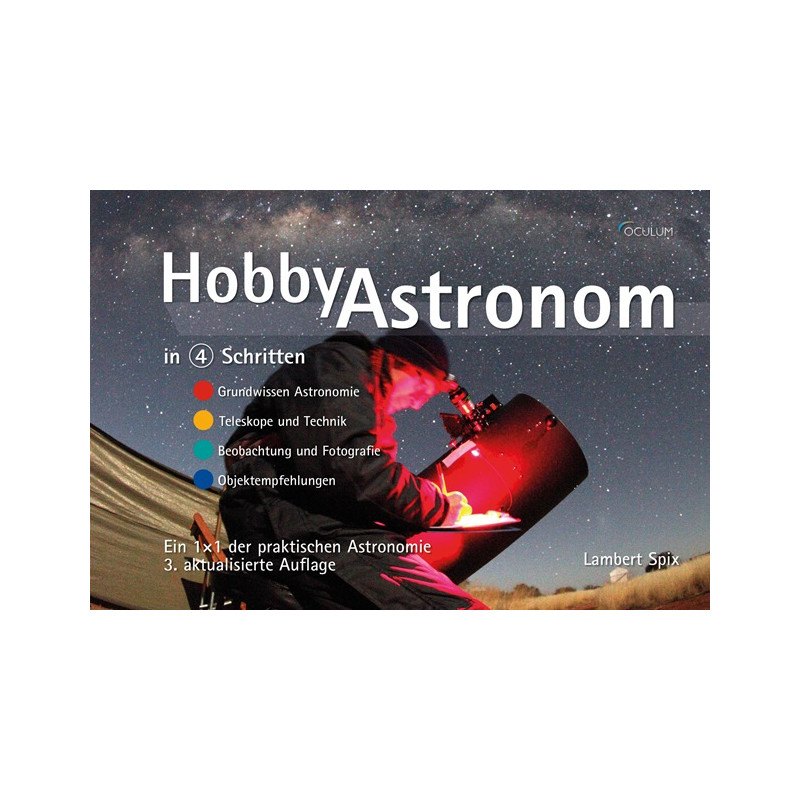
German-language reference book.
Price: € 14.90
Newer and more detailed is the “Praxisguide für die Himmelsbeobachtung” by Frank Sackenheim (Rheinwerk, 435 pages, German edition). It takes you from your first look to your first photos and is the right book for anyone who wants to dive deeper straight away.
Up to date and thorough: Rheinwerk „Astronomie – Der Praxisguide“ (German)
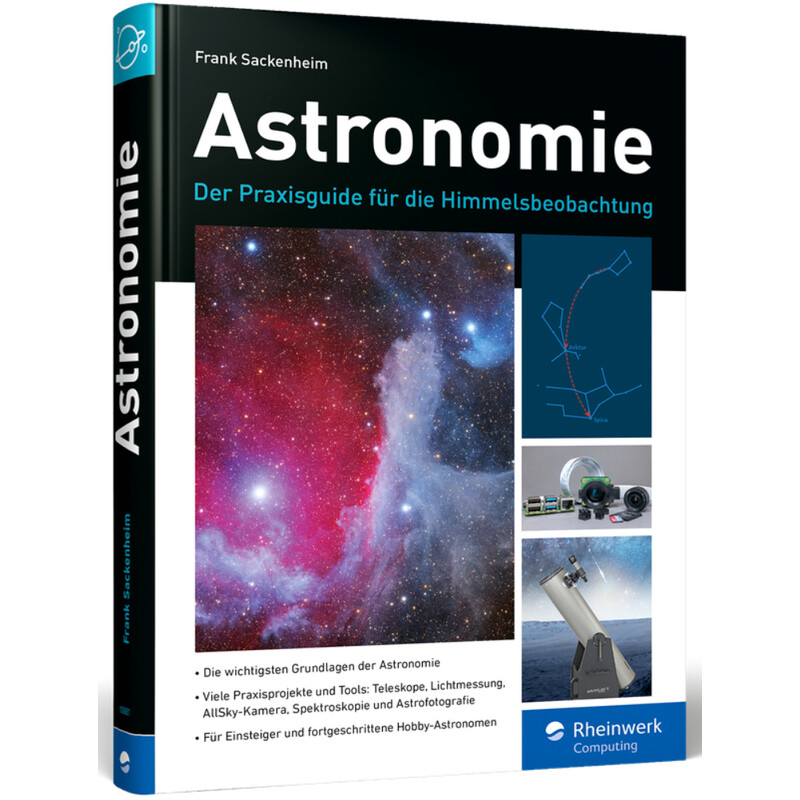
German-language reference book.
Price: € 34.90
When there’s already a telescope
This is the case most books miss. People who have been given a telescope rarely fail on knowledge and almost always on operating it.
For everyone with an unused telescope: Oculum „Fernrohr-Führerschein in 4 Schritten“ (German)
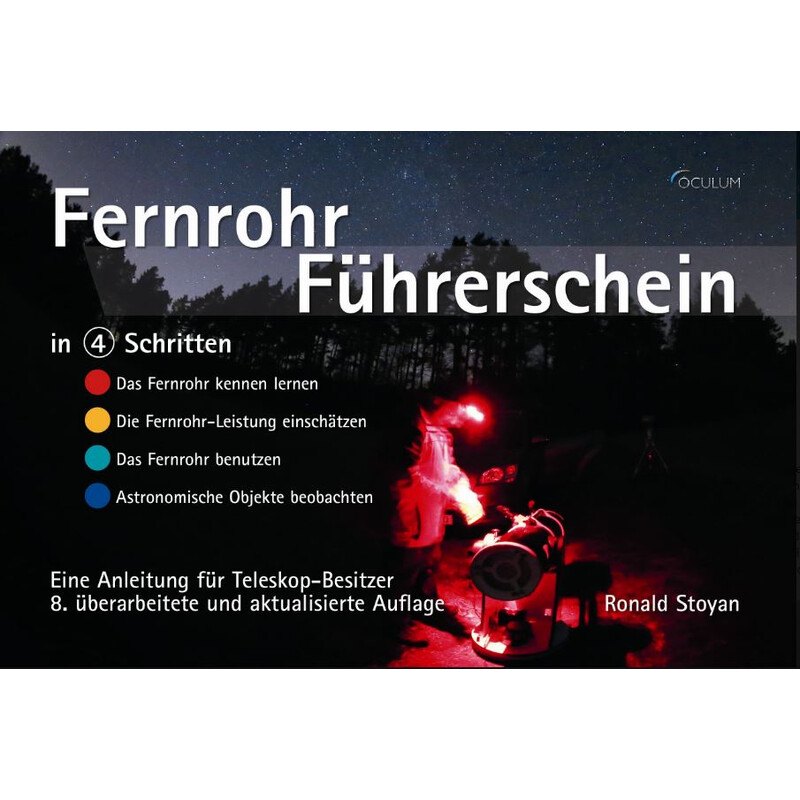
German-language reference book.
Price: € 19.90
Then comes the second hurdle: you can work the instrument but you can’t find anything. The classic with the finder charts helps there (German edition).
Finding objects: Oculum „Deep-Sky-Reiseführer“ (German)
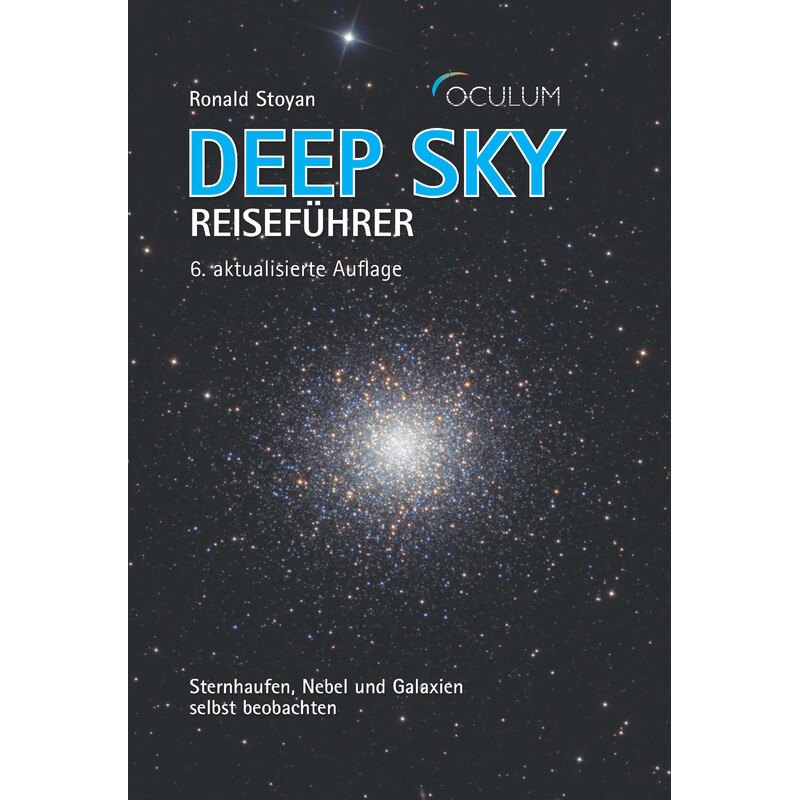
German-language reference book.
Price: € 19.95
And if you want a year-long project: working through the 110 Messier objects one by one is the classic that generations of amateur astronomers have grown up with.
The year-long project: Kosmos „Die Messier-Objekte“ (German)
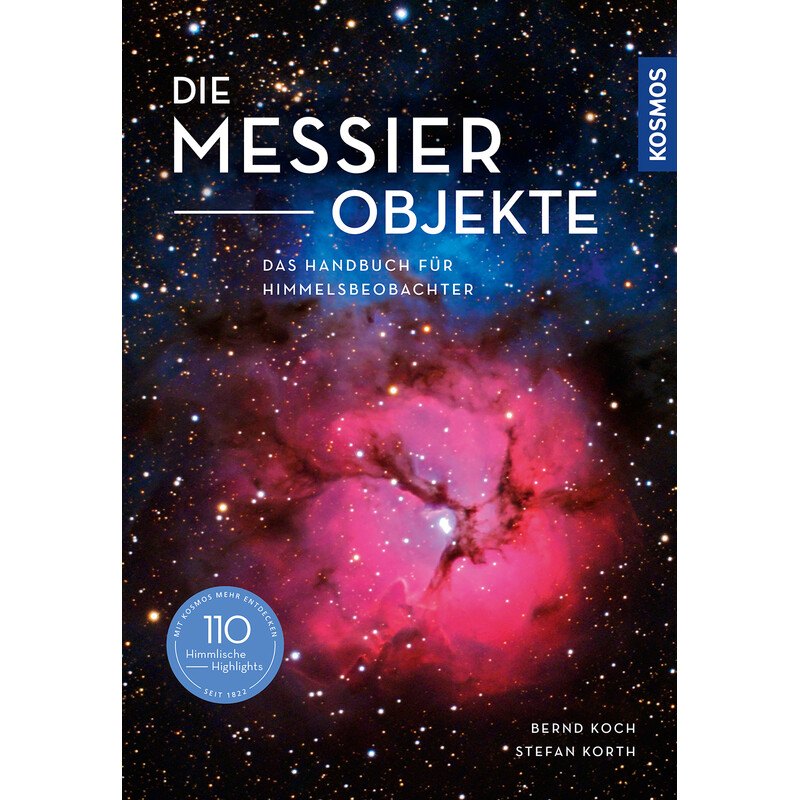
German-language reference book.
Price: € 30
Star atlases and star guides
A star guide shows you the constellations, an atlas shows you the objects in between. For your first evenings a star guide is enough; at the telescope you need the atlas.
Finding constellations: Kosmos „Welcher Stern ist das?“ (German)

German-language reference book.
Price: € 20
The “Atlas für Himmelsbeobachter” by Erich Karkoschka (German edition) has been the standard for more than 30 years: 500 objects on clear charts, compact enough for your observing site.
The standard atlas: Kosmos „Atlas für Himmelsbeobachter“ (German)

German-language reference book.
Price: € 26
Books on astrophotography
In astrophotography you need to keep two things apart. The fundamentals – exposure, noise, image scale – don’t change, whereas the software changes every few months.
So a book is worth it above all for understanding. For programs such as Siril or N.I.N.A., the official manuals are more up to date than any printed work – that’s also the consensus among experienced astrophotographers in the forums.
| Level | Book | Why | Price |
|---|---|---|---|
| Just a camera and tripod | Astrofotografie ganz einfach (Seip, German edition) | Milky Way, Moon and star trails without a telescope | about $20€ 20 |
| No special equipment | Seidel: Astrofotografie (Rheinwerk, German edition)* | 424 pages of hands-on practice with camera and lens | about $39.9039.90 € |
| First setup | Astrofotografie für Einsteiger (dpunkt, German edition) | From the first shot to image processing | about $29.90€ 29.90 |
| Understanding the fundamentals | Legault: Astrofotografie (dpunkt, German edition)* | ⭐ Our recommendationThe standard reference that will still hold true in years to come | about $39.9039.90 € |
| Broad overview | Faszination Astrofotografie (Rheinwerk, German edition) | Several photographers, every type of subject | about $39.90€ 39.90 |
| Image processing | PixInsight lieb gewinnen (German edition) | For anyone working with PixInsight | about $29.90€ 29.90 |
⭐ Our recommendation for astrophotography
Thierry Legault: “Astrophotography”
Legault is one of the best-known astrophotographers in the world; the German edition of his book is published by dpunkt (new edition 2023, 238 pages). It explains sampling, exposure and noise in a way that lets you understand any software afterwards – instead of just clicking buttons by rote. The book is also available in English as “Astrophotography” (Rocky Nook).
The catch: when it comes to specific programs, it’s naturally no longer fully up to date. That’s true of every printed book.
View on Amazon* → approx. $39.9039.90 € (German edition)
If you’re still photographing without a telescope, you’re better off starting with Stefan Seip (German edition). With a camera and tripod, you can capture the Milky Way on your very first holiday.
Start without a telescope: Kosmos „Astrofotografie ganz einfach“ (German)
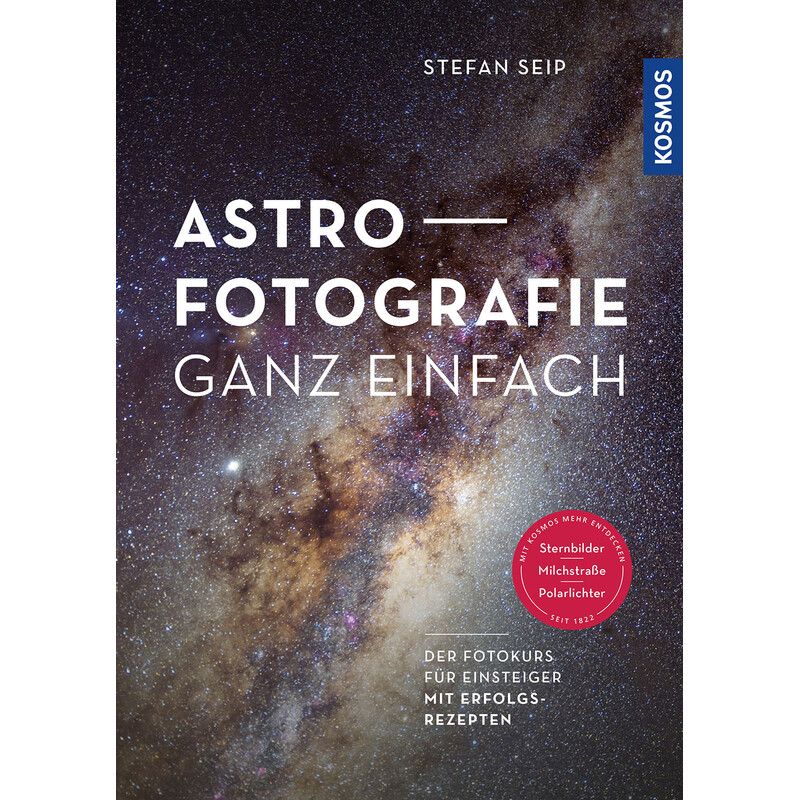
German-language reference book.
Price: € 20
If you want more: “Astrofotografie für Einsteiger” by Alexander Kerste (German edition)
As soon as your first telescope sits on a mount, the hobby turns into a second one: tracking, exposure series, stacking, image processing. A general astronomy book no longer covers that.
The extra cost over an introductory book is worth it for anyone who already owns a camera and has taken their first shot of the Milky Way. For everyone else it’s too early.
The next step up: dpunkt „Astrofotografie für Einsteiger“ (German)
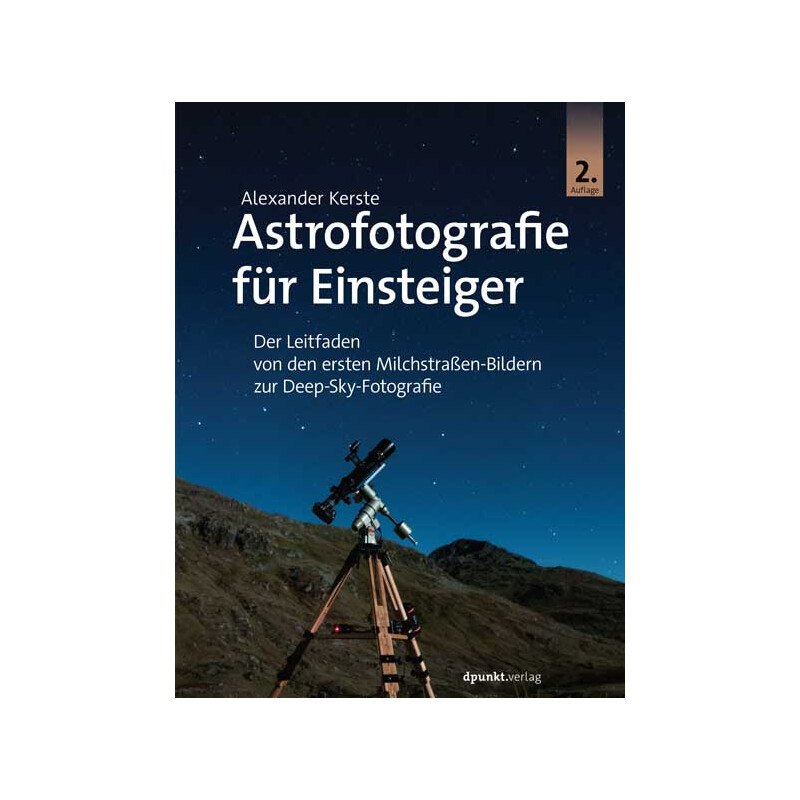
German-language reference book.
Price: € 29.90
More on the topic: our guide Astrophotography: getting started, gear and practice.
Yearbooks: Kosmos Himmelsjahr 2027 and more
Yearbooks have an unbeatable advantage as a gift: they’re new every year and still always right. Month by month they list what’s happening in the sky.
One note on timing: if you’re giving in December, take the edition for the coming year. Both yearbooks for 2027 (German editions) are already out.
The classic for 2027: Kosmos „Himmelsjahr 2027“ (German)

German-language reference book.
Price: € 22
The compact alternative: Kosmos Yearbook "Was tut sich am Himmel 2027" (German)

The compact German-language almanac for 2027: eclipses, planet positions and meteor-shower nights, month by month.
Price: € 12
Astronomy books for children
With children’s books one simple rule applies: the younger the child, the bigger the pictures. Text comes along by itself later.
| Age | Book | Why | Price |
|---|---|---|---|
| from 2 | Guck mal tief ins Weltall (German edition) | Board book for touching and discovering | about $16€ 16 |
| 4–6 | tiptoi: Wir erkunden den Weltraum (German edition)* | For discovering on their own; the tiptoi pen is not included | about $19.9919.99 € |
| from 6 | Kinder-Weltraumatlas (DK, German edition) | Clearly organised, well illustrated, for reading aloud and for browsing alone | about $19.95€ 19.95 |
| from 8 | Mein großer Weltraumatlas (German edition) | ⭐ Our recommendationLarge format with pictures that stop adults in their tracks too | about $26€ 26 |
| from 8 | WAS IST WAS Weltraumatlas (German edition) | More text, more facts – for children who want to know everything | about $34€ 34 |
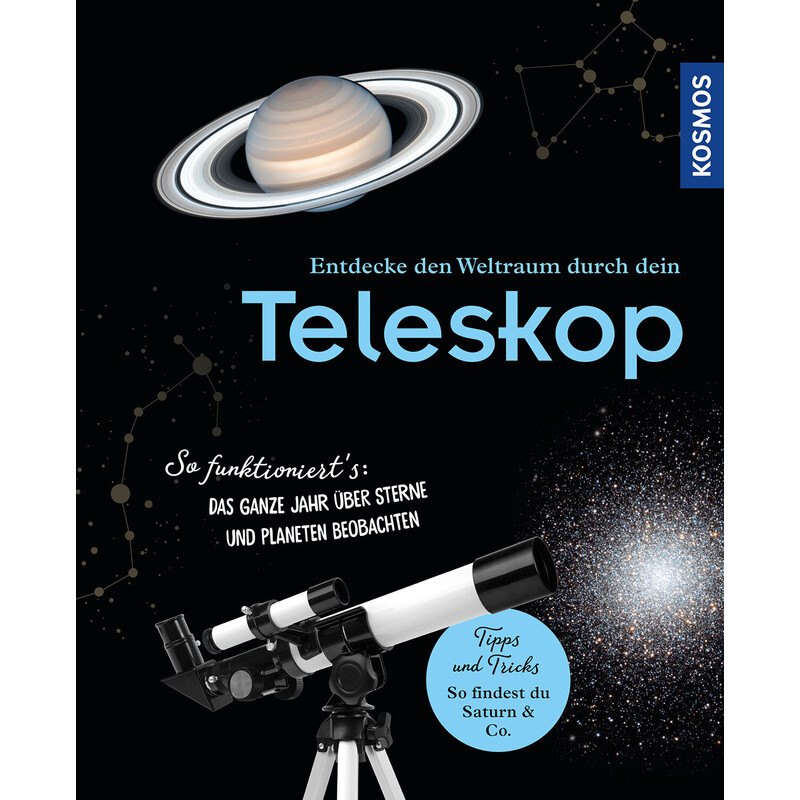
| from 10 | Entdecke den Weltraum durch dein Teleskop (German edition) | The bridge from book to instrument | about $16€ 16 |
| from 10 | Entdecke die Sternbilder (German edition) | Constellation cards with a glow-in-the-dark star chart | about $9.99€ 9.99 |
To go with them: our buying guides for a telescope for kids and a microscope for kids.
For reading and marvelling: illustrated books and popular science
Not every astronomy book has to go outside. For long winter evenings, illustrated books and well-told popular science are often the nicer gift – especially for people who have no wish to observe at all.
The illustrated book: Kosmos Hubble & Webb (German)

Large-format German-language coffee-table book with the best images from the Hubble and James Webb space telescopes.
Price: € 55
| Book | What it’s about | Price |
|---|---|---|
| 100 Sensationen im Universum (German edition) | A hundred moments of wonder from space, briefly explained | about $25€ 25 |
| Expedition in die Raumzeit (German edition) | The current state of cosmology, told in plain language | about $24.90€ 24.90 |
| Heino Falcke: Licht im Dunkeln (German edition)* | How the first image of a black hole came about – told by the researcher himself. English edition: “Light in the Darkness” | about $1616 € |
Frequently asked questions about astronomy books
Which book goes with a telescope given as a present?
A practical book that explains how to operate it – not a general introduction to astronomy. The “Fernrohr-Führerschein” (German edition) is made exactly for that and heads off the most common outcome: a telescope that stands in a cupboard after two attempts.
Book or YouTube for astrophotography?
Both, but for different things. A book like Legault’s explains the fundamentals, which never change. For operating specific programs, videos and the official manuals are more up to date.
Is a yearbook worth it when there are apps?
As a gift, yes. Apps show you the sky right now; a yearbook shows what there is to look forward to – and it lies around in plain sight, which is worth more than any notification for a hobby that’s easy to forget.
From what age are astronomy books suitable for children?
Board books are available from the age of two, and illustrated books work for reading aloud from about four. From eight, atlases with more text pay off, and from around ten, practical books that let children look for things at the telescope themselves.
Are there good astronomy books as PDFs or e-books?
Many current titles are also available as e-books. That’s handy for reading, but not at the telescope: a bright display disrupts your dark adaptation, and atlases and finder charts are much better on paper.
What’s the difference between the Deep-Sky-Reiseführer and the Messier catalogue?
The Messier catalogue covers 110 bright objects, which makes it a list you can finish – ideal as a year-long project. The Deep-Sky-Reiseführer (German edition) goes far beyond that and is meant as a reference work, not a checklist.
Read on
- Astronomy gifts: ideas from 15 to $500500 euros
- Telescopes for beginners: the honest buying guide
- Exploring the sky with a star chart
- Astrophotography: getting started, gear and practice
Links marked with * are affiliate links. If you buy through them, we earn a small commission – the price stays the same for you. As an Amazon Associate we earn from qualifying purchases.