By Alexander Merz · Published on · Details checked on 6 November 2026
Sonneberg Observatory (Sternwarte Sonneberg) is a historic observatory on the Erbisbühl hill near Sonneberg in southern Thuringia, Germany, at an altitude of 638 m, founded in 1925 by Cuno Hoffmeister. Its plate archive of more than 270,000 photographs of the sky is considered the second largest in the world (Wikipedia, in German).
More in our overview: Observatories in Germany.
⭐ In short: A trip is worthwhile for anyone who wants hands-on astronomy history: a museum, a guided tour to the first telescope and the plate collection, and stargazing on Saturdays with advance registration. If you expect modern large telescopes, nearby Tautenburg is the better choice.
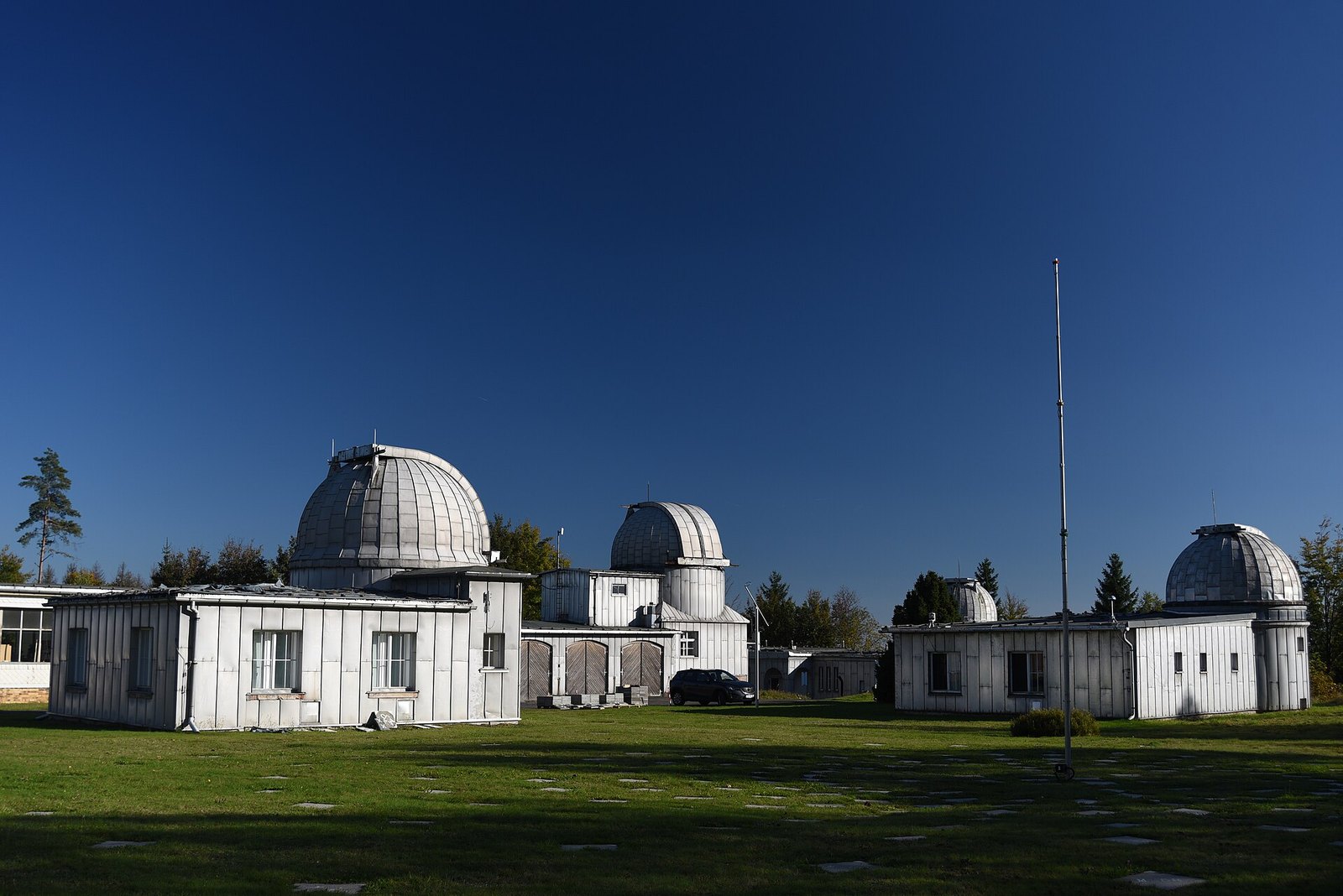
Visiting Sonneberg Observatory: opening hours, prices, getting there
The astronomy museum on the grounds is open Tuesday to Sunday from 1 pm to 5 pm, last admission at 4:30 pm. Since 2016 it has been run by the association Astronomiemuseum e. V. (operator’s website, in German, Wikipedia).
| Ticket | Adults | Pupils, students | Family |
|---|---|---|---|
| Museum | EUR 6.00 | EUR 4.50 | EUR 15.00 |
| Guided tour of the observatory | EUR 6.00 | EUR 4.50 | EUR 15.00 |
| Combined ticket museum + tour | ⭐ Our tipEUR 10.00 | EUR 8.00 | EUR 22.00 |
| Night observing | EUR 6.00 | EUR 4.50 | – |
The address is Sternwartestraße 32, 96515 Sonneberg, Germany. There is parking on the grounds; from the railway station, city bus line C runs to the terminus “Sternwarte” (directions from the operator, in German).
Caution: According to the operator, the last city bus leaves as early as late afternoon. If you come for an observing evening, you need a car or another way back.
What you see on a guided tour
The tour, which lasts about an hour, starts outdoors with the history of the buildings. Then it moves into Building 6 to the observatory’s first telescope, with a view of the Sun in good weather (tour programme, in German).
Further stops are the plate collection and the Schmidt dome with the observatory’s largest telescope. Visitors who have been there name the photo archive as the highlight in a German-language forum, because its filing system dates from before the computer age (forum.astronomie.de, 2020/21, in German).
Tip: Get the combined ticket and plan the museum and the tour for the same afternoon. The association also offers themed tours, for example in the meteorite room, where you may touch real meteorites at the end (operator).
Observing evening: look through the telescope yourself
The association usually opens the dome every Saturday evening as soon as it is dark enough, for about two hours. Observing only takes place under clear skies, and registration is required (observing evening, in German).
The operator’s website does not say which instruments are used. To see in advance what will be in the sky on the evening of your visit, use one of the planetarium apps from our guide to the best astronomy apps.
History: from Hoffmeister’s private project to an academy observatory
Cuno Hoffmeister (1892–1968) was a native of Sonneberg and built the observatory with support from the Carl Zeiss Foundation. The first dome tower was inaugurated on 28 December 1925, and from 1926 Hoffmeister ran the observatory (Wikipedia: Hoffmeister, in German).
| Year | Event |
|---|---|
| 1925 | First dome tower inaugurated (28 December) |
| 1928 | Expansion; at the time the “highest observatory in Germany” |
| 1930 | Leased to Prussia, effectively an outstation of Berlin-Babelsberg Observatory |
| 1938 | Paul Ahnert begins his decades of work in Sonneberg |
| 1945 | The 40 cm astrograph is dismantled by the Soviet occupying power |
| 1946 | Research institute of the German Academy of Sciences |
| 1960 | A planned 2 m Schmidt telescope goes to Tautenburg instead |
| 1961 | With the building of the Berlin Wall, the observatory lies in the border zone |
| 1991–1994 | Closure decided, postponed to the end of 1994 |
| 1995 | Reopened on 9 November, municipal until 2003 |
| 1998 | Astronomy museum opens in the oldest building |
| 2004 | Taken over by the Zweckverband Sternwarte Sonneberg (a municipal association) and 4pi Systeme |
Its location close to the inner-German border shaped the post-war years. The large 2 m telescope originally planned for Sonneberg therefore stands today at the Thuringian State Observatory Tautenburg (Wikipedia).
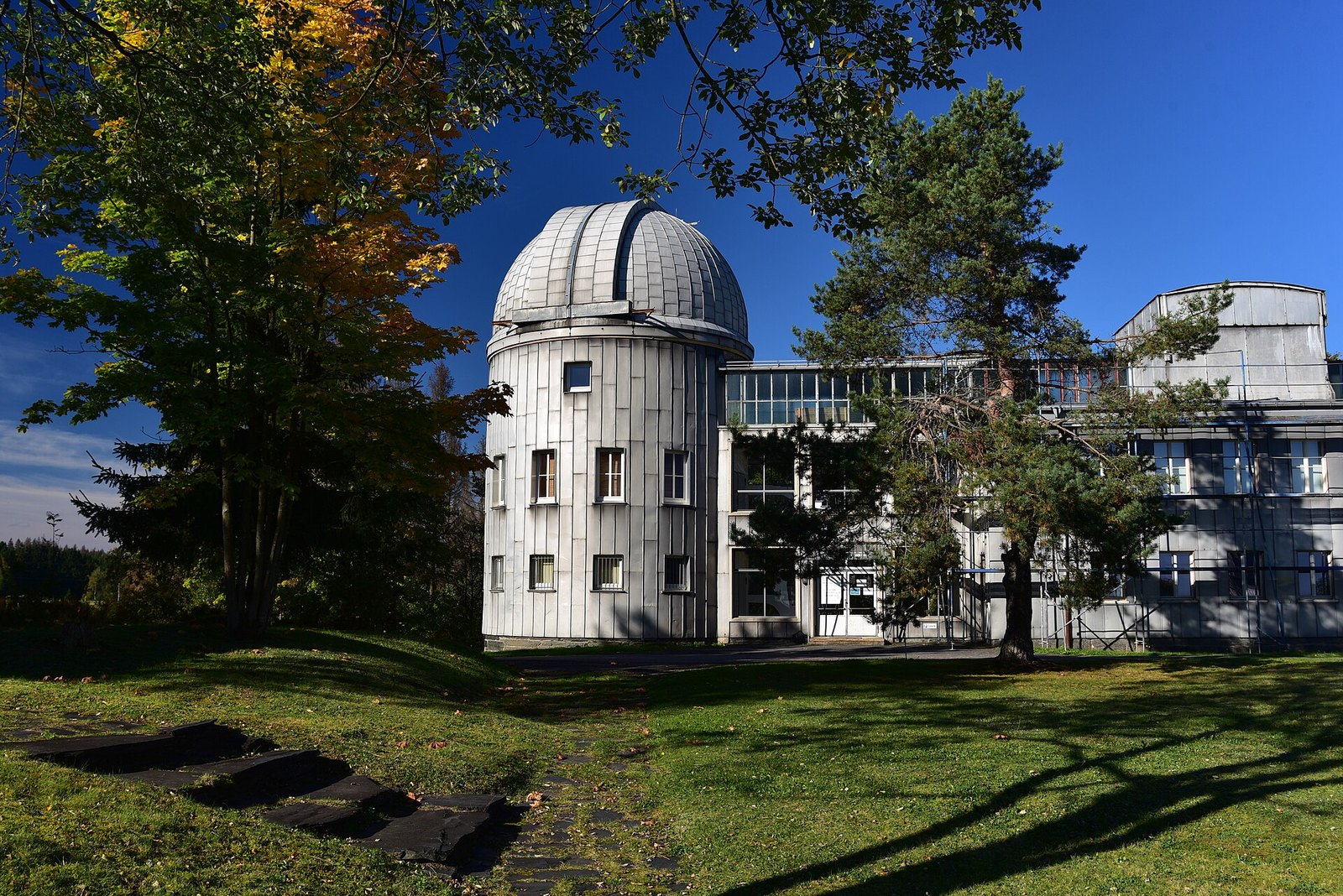
The plate archive: 270,000 glimpses of the sky
Sonneberg’s real treasure is not in the domes but in the archive. More than 270,000 photographic plates show the northern sky over more than 70 years, plus around 5,000 plates of the southern sky from expeditions to Bolivia and South Africa between 1926 and 1959 (Wikipedia).
Two long-term programmes filled it: the “Sonneberg Field Patrol” (Sonneberger Felderplan, 1924 to 1995) and the “Sonneberg Sky Patrol” (Sonneberger Himmelsüberwachung), which has been running since 1926. Because the same fields of sky were photographed again and again, you can check afterwards whether a star has become brighter or fainter. The plates have been digitised since 1992.
A number that sticks: Cuno Hoffmeister discovered around 10,000 variable stars – as of 2010, almost a quarter of all known ones (Wikipedia). A lunar crater and the asteroid (1726) Hoffmeister are named after him.
Telescopes of Sonneberg Observatory
For an observatory of this size, the equipment is classically photographic. The core consists of two 60 cm Cassegrain reflectors, a 50 cm Schmidt telescope and two 40 cm astrographs, supplemented since 2002 by a large-format CCD camera (Wikipedia).
| Instrument | Specification | Since |
|---|---|---|
| Refractor with sky cameras | 135 mm aperture | 1926 |
| Cassegrain reflecting telescopes | 2 × 60 cm | – |
| Schmidt telescope | 50 cm | – |
| Astrographs | 2 × 40 cm | 1960/1961 |
| CCD camera “MultiMega” | 7k × 4k pixels, 84 × 48 mm chip | 2002 |
Sonneberg or Tautenburg: which observatory in Thuringia?
Thuringia has two observatories with a history, and they complement each other. Sonneberg is the museum with an archive and visitor programme; Tautenburg is the research institute with the largest telescope in Germany.
| Feature | Sonneberg Observatory | Tautenburg State Observatory |
|---|---|---|
| Founded | 1925 | 1960 (first light) |
| Largest instrument | 60 cm reflector, 50 cm Schmidt | 2 m Alfred Jensch Telescope |
| Special feature | Plate archive, astronomy museum | Largest telescope in Germany |
| For visitors | Museum Tue–Sun, guided tours, Saturday observing | see our overview of observatories in Germany |
Honestly: the condition of the buildings
If you expect a glossy venue, you may be surprised. In a German-language forum, visitors in 2020 described many buildings as badly in need of renovation, saying the supporting association struggles to maintain everything (forum.astronomie.de, in German).
The same visitors, however, praise the tours as thorough and warm-hearted. We could not verify the current state of the renovation – if in doubt, ask the association before your visit.
Sonneberg Observatory FAQ
When is Sonneberg Observatory open?
The astronomy museum is open Tuesday to Sunday from 1 pm to 5 pm, last admission 4:30 pm. Observing evenings usually take place on Saturdays under clear skies and only with registration (operator).
Who founded Sonneberg Observatory?
The Sonneberg astronomer Cuno Hoffmeister, with support from the Carl Zeiss Foundation. The first dome tower was inaugurated on 28 December 1925.
How high is the observatory?
At 638 m above sea level, on the Erbisbühl in Neufang, a district of Sonneberg. After its expansion in 1928 it was considered the highest observatory in Germany.
Is the observatory suitable for children?
Yes – children of kindergarten age and younger usually get in free, and the association offers its own tours for children and kindergarten groups. For Saturday observing, bear in mind that it only starts after dark.
Sources: Wikipedia: Sternwarte Sonneberg (in German) · Wikipedia: Cuno Hoffmeister (in German) · Astronomiemuseum e. V. (in German) · forum.astronomie.de (in German) – all accessed on 28 October 2026.
Read more on Sterngucker
- Observatories in Germany – the overview
- Tautenburg and more – Germany’s largest telescope in our observatory overview
- Light pollution – why the sky is still dark in some places
- Garden observatory – your own dome in the garden