By Alexander Merz · Updated on · Details checked on 14 September 2026
⚡ The short answer: A home planetarium projects a real star field onto your ceiling – not random dots of light, but the actual constellations in their correct positions. The benchmark is still the Sega Toys Homestar Flux (60,000 stars, € 189). If you want to spend less, the Homestar Pro Original (€ 129) uses the same discs and is simply dimmer. For children, the National Geographic Astro Planetarium (€ 97.90) with its spoken explanations is enough.
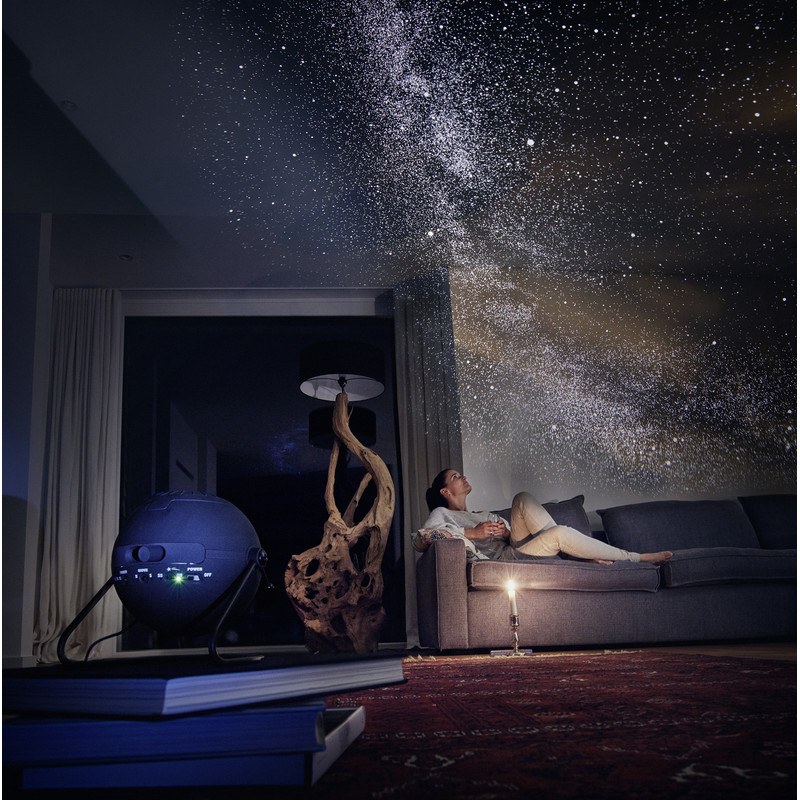
A home planetarium – also sold as a room planetarium or star projector – brings the night sky indoors. Unlike a telescope it does not care about the weather, and unlike the colourful ceiling lamps sold in electronics shops it shows you the real constellations where they actually belong. That difference decides whether the device still delights you after three evenings, so it comes first on this page.
Real star field or coloured lights? The difference that decides everything
Search for “star projector” and you get two completely different kinds of device. They cost about the same and look similar in product photos – but what they put on your ceiling has nothing in common.
| Real home planetarium | LED star projector | |
|---|---|---|
| What you see | The real night sky: constellations in their correct places, the Milky Way, genuine brightness differences between stars | Randomly scattered dots, usually with green lasers and coloured nebula swirls |
| Technology | A photographic glass or film disc projected through a lens | Laser diodes and rotating colour foils |
| Focusable | Yes, through an objective lens | Usually not |
| Learning value | High – you recognise the same patterns outdoors afterwards | None |
| Price | from around €100 | €15 to €60 |
| Good for | Anyone interested in astronomy, children from about six, learning the sky | Mood lighting, party decoration, falling asleep |
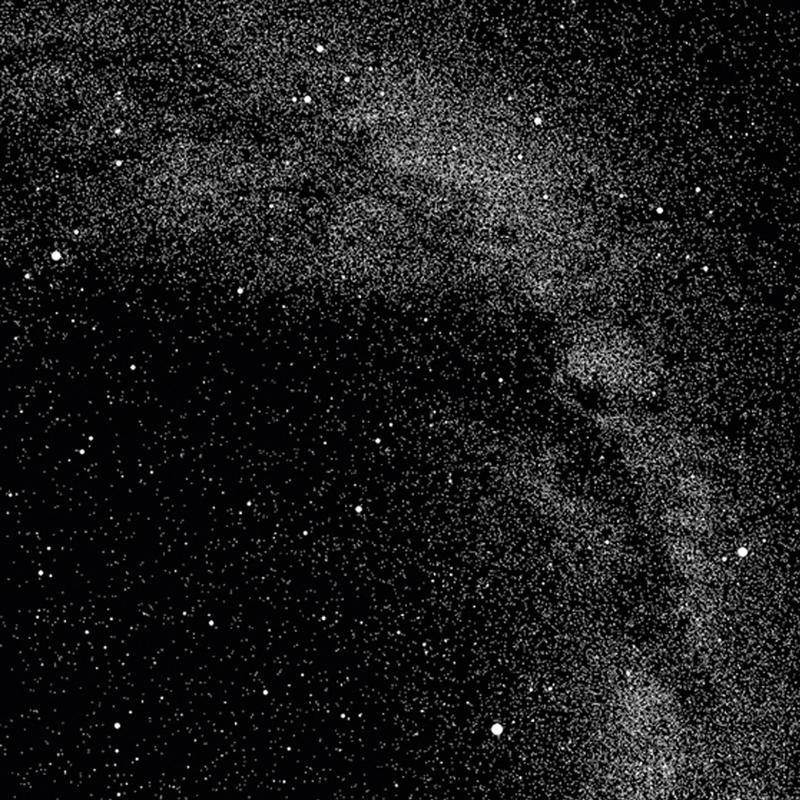
The rule of thumb: if the product description talks about “nebula”, “aurora”, “galaxy” or “RGB” and never mentions constellations, it is a mood light. A real home planetarium always states a number of stars and comes with interchangeable projection discs.
Home planetarium comparison 2026
The market for real home planetariums is small. Almost everything that deserves the name comes from Sega Toys in Japan, who have been building these devices since 2005 together with planetarium designer Takayuki Ohira. Add one entry level model from National Geographic and that is the entire field – which makes the decision easier than it first looks.
| Model | Stars | Lamp | What sets it apart | Price |
|---|---|---|---|---|
| Sega Homestar Flux | 60,000 | 5 watt | ⭐ Our pickShooting-star function, brightest projection, focusable | € 189 |
| Sega Homestar Matataki | 60,000 + twinkle disc | 3 watt | The only model whose stars actually twinkle | € 179 |
| Sega Homestar Pro Original | 60,000 | 3 watt | The affordable classic, same discs as the Flux | € 129 |
| National Geographic Astro Planetarium | approx. 8,000 | LED | Spoken explanations, battery powered, sturdy | € 97.90 |
The recommendations in detail
Sega Homestar Flux – if it should be the best
The Flux is the brightest of the four, and with a projector brightness is everything: it decides how many of those 60,000 stars you actually see and how large the room may be.
The 5-watt LED produces an image roughly 2.7 metres across from about two metres away. Focus the lens, set the angle, choose 15, 30 or 60 minutes on the timer – then the sky turns almost silently and the occasional shooting star crosses it.
Two discs for the northern and southern sky are included. Around two dozen more are sold separately, from the lunar surface to comets.
Our pick: Sega Toys Homestar Flux
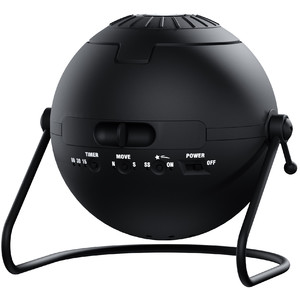
The benchmark among home planetariums: 60,000 real stars, adjustable focus, shooting-star function and sleep timer.
Price: € 189
Sega Homestar Matataki – if a static sky bothers you
The most common complaint about home planetariums: the sky just sits there. Real stars twinkle because their light passes through moving air.
The Matataki imitates exactly that with a second disc rotating slightly out of step, so the stars flicker. It is the most convincing version of that effect currently available under €200.
The price you pay: 3 watts instead of 5, so the image stays noticeably darker than the Flux, and the housing feels like plastic rather than instrument. The built-in sound effects can be switched off – and should be.
For the twinkle effect: Sega Toys Homestar Matataki
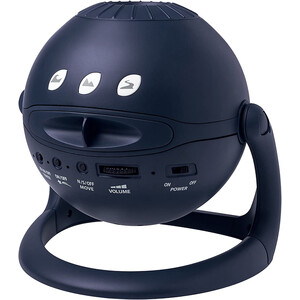
The only model with a twinkle effect: a second disc makes the stars flicker like real air turbulence. But only 3 watts instead of 5.
Price: € 179
Sega Homestar Pro Original – the affordable way in
The Pro Original is the predecessor of the Flux and takes the same projection discs, so you see the same sky – just dimmer, and without the shooting-star function. In a small, genuinely dark bedroom you will barely notice. In a large living room with a light ceiling you will. If you are not sure a home planetarium will hold your interest, this is the sensible starting point.
Best value: Sega Toys Homestar Pro Original
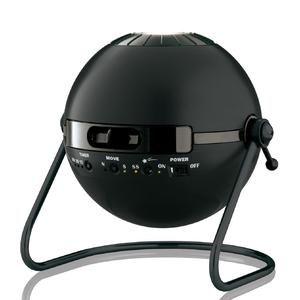
The cheaper classic with the same disc technology. A little dimmer than the Flux, otherwise the same real star field.
Price: € 129
National Geographic Astro Planetarium – for children
Around 8,000 stars instead of 60,000, but battery powered, sturdily built and with spoken explanations of the constellations. For an adult who wants a realistic sky it is too little. For a six to ten year old hearing for the first time why the Big Dipper is not a constellation but part of Ursa Major, it is exactly right – and it survives the fall from the bedside table.
For children: National Geographic Astro Planetarium
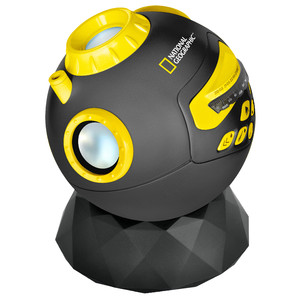
The entry point for children: star field plus audio explanations, sturdily built, battery powered.
Price: € 97.90
Homestar Flux, Matataki or Pro Original? The direct comparison
All three Sega models show the same sky and differ in brightness, features and price. Three questions get you to the answer:
- How large and how dark is the room? Big room, light ceiling or street light leaking in: take the Flux. Small, fully blacked-out bedroom: the Pro Original is enough.
- Does a motionless sky bother you? Then the Matataki is settled – no other model offers the twinkle effect.
- Do you want to buy extra discs? All three take the same ones, so you are not locking yourself in.
In short: the Flux is the safe choice and will still be good in five years. The Matataki is the more interesting device but the weaker image. The Pro Original is how you start small without regret.
What a home planetarium cannot do
So your expectations are right before the parcel arrives:
- It is no substitute for a telescope. You see stars as points on a ceiling – no craters, no planetary discs, no detail.
- The edges are softer than the centre. Projecting a curved sky onto a flat ceiling cannot work without a compromise, and the shallower the angle, the more it shows.
- It needs real darkness. A street lamp outside the window or a standby LED is enough to wash the image out.
- Rotation runs at a fixed speed. Setting a particular date is only possible by choosing the matching disc, not at the push of a button.
What to look for when buying
Brightness before star count
“60,000 stars” sounds impressive but means nothing if the lamp is too weak to show them. The wattage of the LED tells you more about the result than any number in the specification. Between 3 and 5 watts lies a visible world.
A focusable lens
Without focus the image stays a blur. Any device calling itself a home planetarium without a focus ring is a mood light.
Interchangeable discs
The discs are the actual content. A system with accessory discs grows with you; a closed device shows the same picture in ten years.
Room size and ceiling height
Expect an image roughly 1.3 times the projection distance. Two metres away gives you about 2.6 metres of sky. A light, smooth, ideally white ceiling is the best screen – textured wallpaper eats contrast.
A timer
It sounds minor but it is the most used button: almost everyone falls asleep under these things. Every model recommended here switches itself off.
Mini planetariums and cheap star projectors
Below about €80 there is no device that projects a realistic star field – the optics and the photographic disc simply cost more than that. What is sold in that price bracket are LED projectors with laser dots and nebula effects. As a night light or mood lighting they are perfectly fine, and for a toddler they are the better choice than a delicate planetarium. You just want to know what you are buying.
Home planetarium for children: from what age?
As a sleep aid a projected sky works from toddler age. For a child to make real sense of the constellations it should be able to read and have a feel for shapes – in practice from about six years old. From then on a device with a real sky pays off, because the child finds the same patterns outdoors. That is the moment decoration turns into astronomy.
One practical tip: do not put the device on the bedside table but in the middle of the room or on a wardrobe. Then the child lies under the sky rather than beside it.
If the child then wants to see the real sky, the planetarium is the start and not a substitute. Which instrument suits which age – and why a telescope that is too big is the wrong present for a child – is in our telescope for kids buying guide.
Getting the most out of it
- Black the room out properly. Blinds down, cover standby LEDs. The difference between “completely dark” and “nearly dark” is bigger than the difference between two models.
- Wait ten minutes. Your eyes need that long to adapt. After that you see far more stars than in the first minute.
- Stand it level and use the tilt. A tilted device pushes the image to one side and turns the circle into an ellipse.
- Focus until it hurts. Pick a bright star and turn the lens until it is really a point, not a small smudge.
- Use the northern disc. From Europe you see the northern sky. The southern disc is more spectacular but shows constellations you will never find outside.
Giving a home planetarium as a present
Home planetariums are a classic Christmas present – which is exactly why they sell out in November and December every year. Sega Toys produces in modest numbers and restocks are often only made in January. If you plan to give one, October is the month to order.
For someone who already owns one, an extra projection disc makes a good present – they cost around €30 each and range from the solar system and the lunar phases to comets.
Frequently asked questions about home planetariums
What does a good home planetarium cost?
A device with a real star field costs between €100 and €200. Below that you get LED projectors with light effects but no realistic sky. Above roughly €200 there is simply nothing on the domestic market.
What is the difference between the Homestar Flux and the Homestar Pro Original?
Both show the same sky and use the same discs. The Flux has a 5-watt LED instead of 3 watts, so it is considerably brighter, and it adds a shooting-star function. The Pro Original is cheaper.
From what age does a home planetarium make sense?
As a sleep aid from toddler age, for learning from about six. That is when a child can recognise the constellations again and look for them in the real sky.
Does a home planetarium replace a telescope?
No. A home planetarium shows you where the stars are. A telescope shows you what they look like. They complement each other: learn the constellations indoors and you find your way around outdoors much faster.
How big does the room need to be?
From about three by three metres it gets enjoyable. Ceiling height and colour matter more than floor area: a white, smooth ceiling at 2.5 metres is ideal.
Does a home planetarium work during the day?
Only in a completely blacked-out room. Even dim daylight washes the image out – projected stars are naturally very faint.
Can you set your own constellations or a specific date?
Not at the push of a button. The sky lives on the projection disc. There are, however, a good dozen accessory discs, from the southern sky and the lunar surface to comets.
How loud is a home planetarium?
You hear the disc motor as a quiet hum. In a silent bedroom you notice it, but it is not disturbing. The Matataki adds sound effects, which can be switched off.