By Alexander Merz · Updated on · Details checked on 27 September 2026
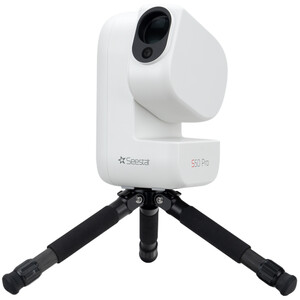
The DWARFLAB Draco and the Seestar S50 Pro are the two most discussed smart telescopes of autumn 2026. The Draco has 90 mm catadioptric optics, a cooled and rotatable sensor and built-in guiding; the S50 Pro is a 50 mm apochromat, half the weight, cheaper and already shipping.
⭐ In short: Today the Seestar S50 Pro ($999.00€ 999) is the safe choice – proven optics, independently tested, 2.8 kg. On paper the Draco ($1,399.00€ 1,499) is the stronger instrument, but there are still no independent tests and there is a waiting time. If you are experienced, observe from a fixed spot and can wait, reserve the Draco; everyone else buys the S50 Pro.
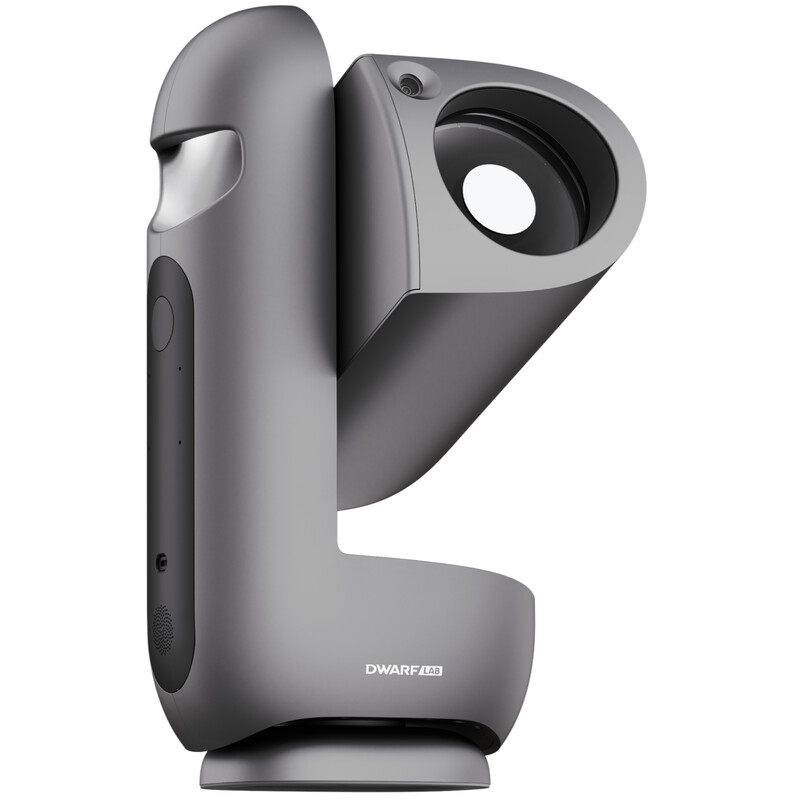
● Currently unavailable (Product can be shipped as of 05.11.2026) – DWARFLAB Draco
● Available to order – Seestar S50 Pro
*Affiliate links: if you buy through them we receive a small commission – the price does not change for you. Prices are updated automatically every day.
Transparency: neither instrument has been in our lab, and as of 24.09.2026 there are no independent test images of the Draco anywhere in the world. This comparison rests on the data sheets from DWARFLAB, ZWO and Astroshop, on our own calculations and on three large forum discussions.
Price, delivery time and variants of the Draco are covered in detail on our page DWARFLAB Draco: price, specs, delivery date, and everything about the S50 Pro is in Buying the Seestar S50 Pro.
Draco vs. Seestar S50 Pro: the specs side by side
| Feature | DWARFLAB Draco | Seestar S50 Pro |
|---|---|---|
| Optics | catadioptric (mirror and lens), 90 mm / 340 mm, f/3.8 | apochromat, 4 elements with ED glass, 50 mm / 260 mm, f/5.2 |
| Secondary mirror (obstruction) | 40 mm | none |
| Main camera | OmniVision OV50Q40, 1/1.3 inch, cooled, physically rotatable | OmniVision OS08B10, 1/1.2 inch, 8.3 MP |
| Pixel size (output) | 2.4 µm (binned 2×2) | 2.9 µm |
| Sampling (calculated) | 1.45″ per pixel | 2.3″ per pixel |
| Main field of view (diagonal) | 2.06° | 2.8° |
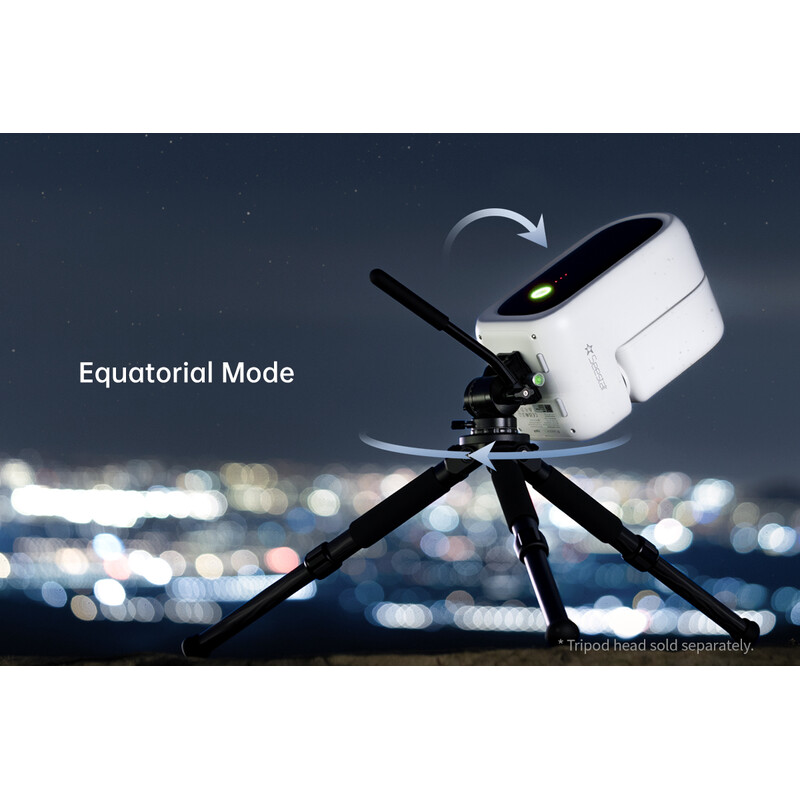
| Tracking | built-in guide camera, alt-az and equatorial | alt-az, plus an equatorial mode |
| Maximum single exposure | 300 s | 60 s (equatorial mode) |
| Filters | astro, dark frame, ND solar, dual narrowband Hα/OIII; the SHO version adds SII/OIII | dual band Hα/OIII, UV/IR cut filter, dark frame; clip-on solar filter |
| Dew protection | waste heat from the cooling warms the front lens | dew heater |
| Battery | 10,000 mAh (7.7 V), about 5 h | 10,000 mAh (3.6 V), up to 9 h |
| Storage | 128 GB | 128 GB |
| Ingress rating / temperature | IP56 / −20 to +45 °C | not specified / −10 to +40 °C |
| Weight | 5.5 kg | 2.8 kg |
| Tripod included | yes, aluminium | yes, carbon |
| Price | $1,399.00€ 1,499 (SHO $1,599.00€ 1,669) | $999.00€ 999 |
| Buy | DWARFLAB DracoDWARFLAB Draco | Seestar S50 ProSeestar S50 Pro |
Aperture: how much more light does the Draco really collect?
The data sheet says 90 against 50 mm. That would be a good three times the light-collecting area. But the Draco is a mirror-lens system with a 40 mm secondary mirror right in the light path, and that shades part of the aperture.
Subtract only the shaded area and about 80 mm of effective aperture remain on paper – roughly 2.6 times the S50 Pro. A member of forum.astronomie.de additionally factored in the light lost at the mirror surfaces and arrives at only about 69 mm, so around 1.9 times.
A noticeable advantage remains, but it is smaller than the 90 mm promise. On top of that comes the finer sampling of 1.45 instead of 2.3 arcseconds per pixel: the Draco shows small galaxies larger. The S50 Pro in turn has the wider field for extended nebulae.
Important: mirror-lens systems can lose collimation; a refractor like the S50 Pro practically cannot. Nobody knows today whether the Draco optics stay stable after transport – that is the reservation raised most often on the forums.
Cooling, guiding, rotator: what the Draco can do on top
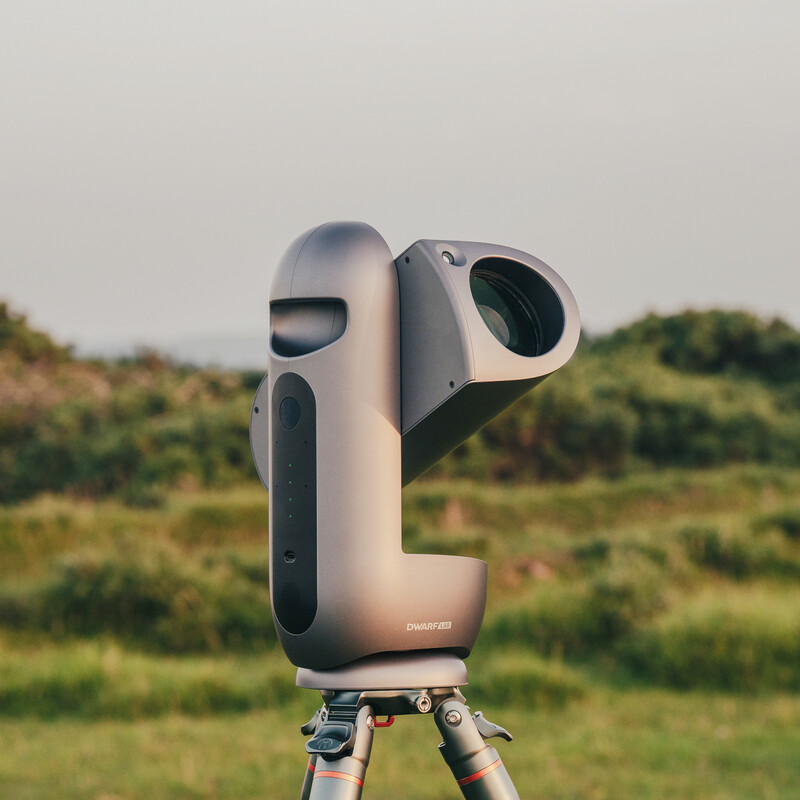
- Sensor cooling: a cooled sensor produces less noise on long exposures. That is an advantage above all in summer. DWARFLAB does not state how much cooling there is.
- Guide camera: a second small camera corrects the tracking continuously. That is what makes single exposures of up to 300 seconds possible instead of 60 on the S50 Pro.
- Rotatable sensor: on an alt-azimuth mount the field rotates during the exposure. The Draco turns the sensor along with it; the S50 Pro crops the edge away instead, or needs its equatorial mode.
- SHO version: with an additional filter for sulphur and oxygen, false-colour images in the “Hubble style” become possible. That is a topic for advanced users.
All of these are features from classic astrophotography that have not been available in an all-in-one instrument at this price before. That is exactly why interest is so high – and exactly why the practical proof that it all works together reliably is still missing.
What the Seestar S50 Pro does better
The S50 Pro is proven. The Seestar range has been running since 2023, the app is mature, and the Pro has been shipping since September 2026 and is reported on by many owners. You know what it can do and what it cannot.
Add to that some very tangible everyday advantages: half the weight, almost twice the battery life and a lens objective that never needs collimating. The wide-angle camera for Milky Way landscapes and the dew heater are on board as well.
Owners on forum.astronomie.de name the limits openly: too little resolution for small planetary nebulae and for planets, and without the equatorial mode you lose field edge on long sessions. What more than 80 owners report is collected in our Seestar S50 Pro experiences.
What the forums say
| Source | Tenor |
|---|---|
| Cloudy Nights: “S50 Pro vs. Draco – which would you buy?” | The Draco attracts with aperture, cooling and rotator; the S50 Pro convinces as a proven, light instrument. The most frequent advice: wait for real tests first. |
| forum.astronomie.de: DWARF Draco (in German) | Recalculation of the obstruction: more like 69 mm effective. Their conclusion: the S50 Pro with about 30 % more field, the Draco with about 30 % finer resolution. |
| forum.astronomie.de: pros and cons of the S50 Pro (in German) | Praised: compact, simple, dew protection, two cameras. Criticised: resolution on small objects, field rotation in alt-azimuth operation. |
| Cloudy Nights: main Draco thread | DWARFLAB did not give test units to independent reviewers before launch; the images published so far come from the manufacturer. Some posts report that the version without the SHO filter is hard to get – that is not officially confirmed. |
Our reading: the scepticism is not aimed at the idea behind the Draco but at the absence of independent evidence. As soon as the first buyers show images, we will update this comparison.
Wait or buy now?
DWARFLAB currently quotes a delivery time of about three months from the order date. So if you order today, you will be observing with the Draco in December at the earliest – the current status at the retailer is shown above in the summary box.
When you buy in an online shop within the EU you have 14 days to withdraw after receiving the instrument. A pre-order is therefore not a blind purchase: if you do not like the instrument after the first few nights, you can send it back. The long wait remains all the same.Return windows differ from retailer to retailer in the US, so check the return policy before you pre-order. A pre-order ties up your money for months, and the long wait remains in any case.
| Your situation | Recommendation | Why |
|---|---|---|
| Your first smart telescope | Seestar S50 ProSeestar S50 Pro | ⭐ Our pickProven, simple, usable straight away. |
| You want to photograph this winter | Seestar S50 ProSeestar S50 Pro | ● Available to order – the Draco arrives in December at the earliest. If you would rather not wait, compare the Seestar S30 ProSeestar S30 Pro (● In stock · ready for shipping in 24 h). |
| Travel, holidays, dark sites you drive to | Seestar S50 ProSeestar S50 Pro | 2.8 instead of 5.5 kg, twice the battery life. |
| Garden or balcony, small galaxies, some experience | DWARFLAB DracoDWARFLAB Draco | More aperture, finer sampling, 300-second exposures. |
| Narrowband and “Hubble” colours | DwarfLab Draco Smart Telescope - SHO VersionDWARFLAB Draco SHO | Additional SII/OIII filter built in. |
Our pick: proven and independently tested: ZWO Seestar S50 Pro Smart Telescope
The direct successor to the Seestar S50: a 50/260 apochromatic quadruplet, two cameras and a built-in dual-band filter that pulls nebulae out of a city sky.
Price: € 999
The stronger data sheet – still untested in practice: DWARFLAB Draco Smart Telescope
90 mm aperture, cooled sensor and autoguiding with exposures up to 300 s: the first premium-class smart telescope at this price.
Price: € 1,499
If you want more: Celestron Origin Mark II
The Origin is a smart telescope with 152 mm of aperture – three times the S50 Pro, with no arithmetic tricks. It shows small galaxies and globular clusters at a depth neither instrument here can reach. In return it weighs many times as much and costs several times as much; it makes sense for a fixed observing spot.
Celestron Origin Mark IICelestron Origin Mark II · about $4,299.00€ 5,499
Frequently asked questions about the Draco and the S50 Pro
Which is better, the DWARFLAB Draco or the Seestar S50 Pro?
On the data sheet the Draco, in practice today the S50 Pro. The Draco has more effective aperture, cooling, guiding and a rotatable sensor. The S50 Pro is independently tested, half the weight and cheaper.
Is the Draco’s 90 mm comparable to a 90 mm refractor?
No. The 40 mm secondary mirror shades part of the aperture. On paper about 80 mm remain, and more like 70 mm once mirror losses are counted.
Are there real test images of the Draco yet?
As of 24.09.2026, no. Every published Draco image comes from the manufacturer or from videos it supplied. We expect independent shots only once the first units are delivered.
What is the difference between the Draco and the Draco SHO?
The SHO version has an additional narrowband filter for sulphur and oxygen light built in. It lets you render emission nebulae in false colour. For getting started the normal version is enough.
Can I photograph planets with either instrument?
Only to a limited extent. Jupiter and Saturn stay small discs at 260 to 340 mm of focal length. For planets a classic telescope with a long focal length is better – see Telescope for planets.
Can I observe the Sun with the S50 Pro?
Yes, with the supplied solar filter, which must sit firmly in front of the objective. The Draco has an ND solar filter built in. Never point either at the Sun without a certified filter – it destroys the sensor.
Conclusion: the S50 Pro for today, the Draco for the patient
The Seestar S50 Pro is the better buying decision today for almost every beginner and for anyone who wants to stay mobile. It is proven, light and usable without a learning curve.
The Draco is the more exciting instrument – for experienced observers with a fixed spot who want small galaxies and long exposures and who can wait for the first independent tests. All the other models are compared in our smart telescope overview.
Links marked with an asterisk (*) are affiliate links. If you buy through them we receive a small commission – the price does not change for you.