By Alexander Merz · Updated on · Details checked on 25 September 2026
Seestar S30 Pro or DWARF 3? In 2026 that is the question for anyone getting into astrophotography for under $1,000€1,000.
Both smart telescopes deliver impressive images with no prior knowledge – but they set very different priorities. Here is the head-to-head.
Quick Verdict
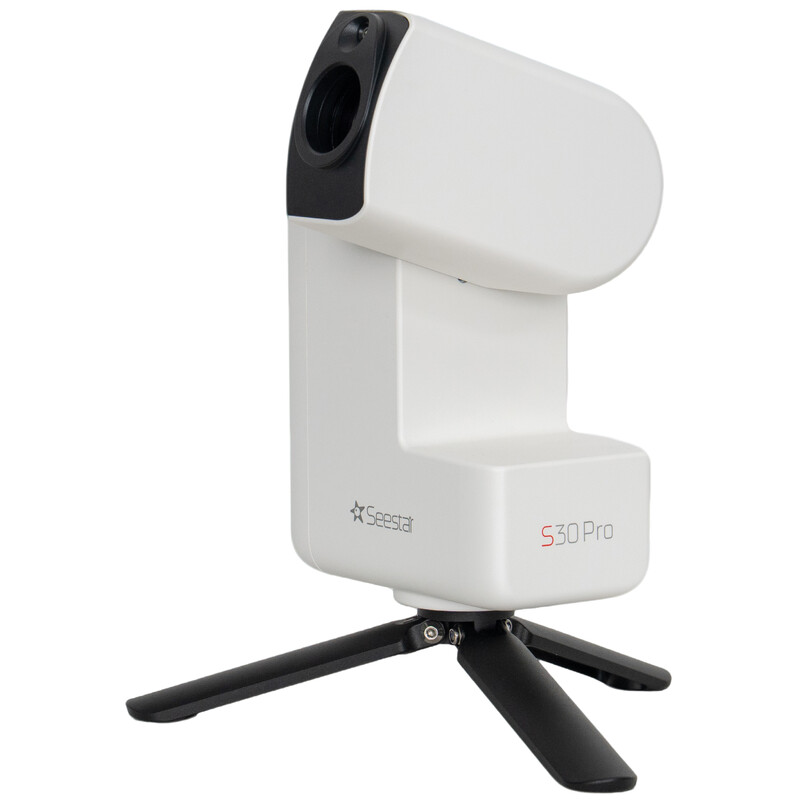
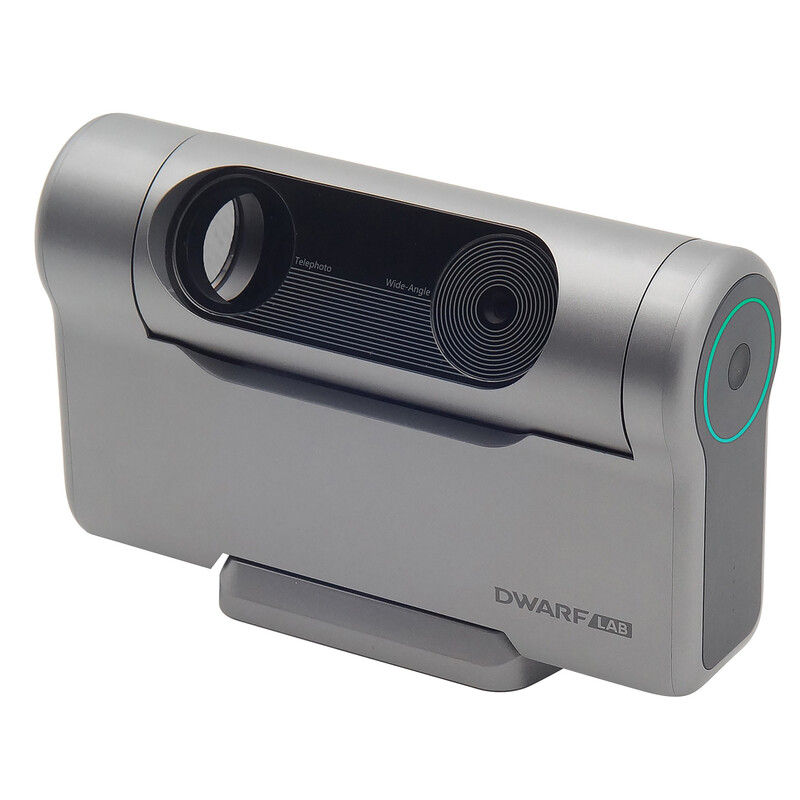
For home use and the most well-rounded package: Seestar S30 Pro ($699.00€ 699). For travel, nature and a smaller budget: DWARF 3 ($549.00€ 529). You can’t go wrong with either one – the differences are in the details.
The Specs Head-to-Head
The most important difference appears in no marketing copy: the field of view. The S30 Pro captures 4.0° × 2.25° of sky at once, the DWARF 3 2.93° × 1.65° – a little over half the area.
That decides whether a large target fits in one frame or has to be stitched from several. For the classic beginner targets – Andromeda, the Orion Nebula, the Pleiades – this is exactly the sticking point.
| Seestar S30 ProSeestar S30 Pro | DWARF 3DWARF 3 | |
|---|---|---|
| Price | $699.00€ 699 | $549.00€ 529 ✓ |
| Field of view (telephoto) | 4.0° × 2.25° ✓ | 2.93° × 1.65° |
| Aperture / focal length | 30 mm / 160 mm (f/5.3) | 35 mm / 150 mm (f/4.3) ✓ |
| Optical design | Quadruplet apochromat ✓ | Apochromat, multi-element |
| Telephoto resolution | 3840 × 2160 | 3840 × 2160 |
| Longest single exposure | 60 s (EQ mode) | 60 s (EQ mode) |
| Second camera | 63° wide-angle | Wide-angle, approx. 45° × 26° |
| Filters | UV/IR cut, dual-band, dark ✓ | built in, incl. dual-band |
| Battery | up to 6 h per manufacturer (6,000 mAh) ✓ | up to 5.5 h per manufacturer (10,000 mAh) |
| Storage | 128 GB internal | 128 GB internal |
| Weight | 1.65 kg (3.6 lb) | 1.35 kg (3.0 lb) ✓ |
| Tripod | included ✓ | not included |
| Dew heater | built in ✓ | none – owners report the device's own warmth keeps the optics clear |
| Solar filter | magnetic, included ✓ | included ✓ |
| Standout feature | 8K mosaic, photometry | AI bird tracking, EQ mode on a photo tripod |
| Where to buy | ZWO Seestar S30 Pro All-In-One Smart TelescopeZWO Seestar S30 Pro Smart Telescope | DwarfLab DWARF 3 Smart TelescopeDWARFLAB DWARF 3 Smart Telescope |
Figures per manufacturer and retailer. The check mark flags the advantage in each row – they roughly cancel out, which is why the use case decides.
Optics & Image Quality
On paper the DWARF 3DWARF 3 leads: 35 instead of 30 millimetres of aperture – the diameter of the front lens – and the faster f/4.3 against f/5.3. It gathers light a little quicker.
The S30 Pro answers with the better optical design. Its four-element apochromat corrects colour fringing more thoroughly and renders finer stars, which shows at the edge of the frame.
In the end the two sit closer together than the spec sheets suggest. Anyone who processes the raw data themselves gets comparable results out of either one.
Features & Everyday Use
This is where the Seestar scores: a tripod already in the box and an active dew heater. On battery life the two are close according to the manufacturers (up to 6 versus up to 5.5 hours) – although DWARF 3 owners tend to report 2 to 4 hours in deep-sky use.
The dew heater keeps the optics from fogging up on humid nights – an underrated problem that can end an evening before it properly starts.
The DWARF 3 manages without a heater: owners report that the device's own warmth keeps the optics clear even on cold nights. It hits back with the guided EQ setup on an ordinary photo tripod with a ball head, plus AI tracking of birds and wildlife during the day. That said, the Seestar S30 Pro now has a daytime mode too.
Portability
3.0 against 3.6 pounds sounds like little. What matters is the flat form factor of the DWARF 3.
It disappears into a daypack, while the Seestar needs its case. Anyone who regularly drives or hikes to a dark site will notice immediately.
And the dark site is the single biggest lever on image quality – bigger than any difference between these two instruments.
Value for Money
The price gap matters in this class: DWARF 3DWARF 3 $549.00€ 529 against Seestar S30 ProSeestar S30 Pro $699.00€ 699.
For that money the DWARF 3 gives you the core functions of a smart telescope in full – without the comfort extras, but with the nature mode.
Add a sturdy tripod and a power bank, though, and the gap shrinks noticeably. The sample calculation below puts numbers on it.
App & Software Compared
The Seestar app is the benchmark in this category: a large user base, frequent updates and mature touches like the suggested targets for tonight.
The DWARFLAB app has caught up considerably, gives experienced users more manual control and, in nature mode, offers AI tracking of birds and wildlife. Occasional translation quirks included.
Both export FITS raw data. Whichever you pick, you are not locked out of processing your own images later.
Sample Calculation: What Does Getting Started Really Cost?
- Seestar S30 Pro: $699.00€ 699 – tripod, solar filter, case and 6-hour battery are included. Sensible extras: power bank (~$50€50). Realistic: the device price + around $50€50
- DWARF 3: $549.00€ 529 + photo tripod (~$70€70) + power bank (~$50€50). Realistic: the device price + around $120€120
Once the accessories are counted, the real gap shrinks by roughly half. In return, the Seestar gives you the tripod in the box, the dew heater and the more mature app – the DWARF, more portability and the nature mode.
Alternatives: Is There Something Better?
The most common follow-up question is not “which of the two” but “is there something better?” Three answers.
One step up: the Seestar S50 ProSeestar S50 Pro ($999.00€ 999) has 50 instead of 30 millimetres of aperture and a zero-backlash drive. If you are already unsure whether the small aperture is enough, this is the wrong place to save.
One step down: the DWARF MiniDWARF Mini ($419.00€ 429) and the plain Seestar S30 cost less but give up field of view, filters or battery life. Fine for a first try – rarely enough for a second season.
Wait for the successor? Both makers release on a yearly rhythm, so there is never a clean window. Waiting mostly means missing the clear nights in between.
Is a Used Unit Worth It?
Both instruments now show up regularly on the used market. That is worth considering – with two caveats.
First, compare the used price against today's new price. With smart telescopes the two are often only $50 to $100€50 to €100 apart, and then buying new wins.
Second, ask about firmware support. These devices live through their app, and a model without updates loses value faster than a classical telescope ever would.
For a used Seestar S50 there is one more thing: it was replaced by the S50 Pro in August 2026. That pushes used prices down – and makes it an honest alternative to both instruments here.
Frequently Asked Questions
Which one delivers the better images?
With careful processing of the raw data: practically equivalent. Out of the box, the Seestar JPEGs often look a touch more “finished,” while the DWARF 3 gathers signal a bit faster thanks to f/4.3.
Are there alternatives in this price range?
The Seestar S50 is no longer regularly available; since August 2026 the ZWO Seestar S50 Pro All-In-One Smart TelescopeZWO Seestar S50 Pro Smart Telescope ($999.00€ 999) has taken its place – the step above, compared in our S50 Pro guide. Below that, it only gets cheaper with compromises. Above it, the premium class begins with Vespera & co. – details in our 2026 best-of list.
What about used Seestar S50 units?
A valid budget option: the S50 remains a good device with a large community. Watch out for firmware support and compare prices – used prices are sometimes close to the DWARF 3’s new price, in which case buying new is the better choice.
Should I buy the DWARF 3 now or wait for the next model?
Buy. Both makers release on a yearly cycle, so a clean waiting window never arrives. These instruments age slowly because most of the development happens in the app – and you get that later anyway.
Is 30 mm of aperture even enough?
For bright deep-sky targets yes, and those are most of what beginners photograph. The S30 Pro makes up for the small aperture with long exposure stacks. If faint galaxies are the goal, 50 mm serves you far better.
Seestar S30 Pro or DWARF Mini?
The Mini is smaller and cheaper but gives up exactly what counts: field of view and filters. If budget is the constraint, the DWARF 3 is the better compromise than the Mini.
Verdict: Which Should You Buy?
- Buy the Seestar S30 Pro if you mainly shoot from a balcony or garden, want long sessions without accessories, and value the most well-rounded overall package with the best app. → To the detailed S30 Pro check
- Buy the DWARF 3 if you’re often on the move, your budget is limited, or you also want to watch birds and wildlife during the day. → To the detailed DWARF 3 check
Not sure whether a smart telescope is the right choice at all? Our 2026 best-of list classifies all device categories, and the beginner’s guide compares smart telescopes with classic optics.
Seestar S30 Pro at High Point Scientific →ZWO Seestar S30 Pro Smart Telescope at Astroshop →
DWARF 3 at High Point Scientific →DWARFLAB DWARF 3 Smart Telescope at Astroshop →