By Alexander Merz · Updated on · Details checked on 25 September 2026
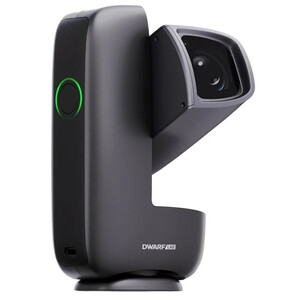
The Seestar S30 Pro and the DWARF mini are the two smallest smart telescopes with 30 mm of aperture: camera, mount and app in one housing, controlled from your phone. Same aperture, same pixel size – the difference lies in the sensor area, the weight and the price.
⭐ In short: The Seestar S30 Pro ($699.00€ 699) is the better telescope: 4K sensor, a field of view about three and a half times as large, tripod and dew heater included. The DWARF mini ($419.00€ 429) is the better travel companion: half the weight, cheaper and with longer single exposures in EQ mode – but only Full HD and a shorter battery life.

● In stock · ready for shipping in 24 h – Seestar S30 Pro
● In stock · ready for shipping in 24 h – DWARF mini
*Affiliate links: if you buy through them we receive a small commission – the price does not change for you. Prices are updated automatically every day.
Transparency: we have not measured either device ourselves in a lab. Our basis is the spec sheets from ZWO, DWARFLAB and Astroshop, our own calculation of field of view and sampling, and a comparison with user reports from Cloudy Nights, the German-language forum.astronomie.de and two English-language comparison reviews.
Seestar S30 Pro vs. DWARF mini: the specs side by side
| Feature | Seestar S30 Pro | DWARF mini |
|---|---|---|
| Aperture / focal length | 30 mm / 160 mm (f/5.3) | 30 mm / 150 mm (f/5) |
| Optics | Apochromat, 4 elements with ED glass | Apochromat (3 elements according to reviews) |
| Tele camera | Sony IMX585, 1/1.2 inch, 8.3 MP (4K) | Sony IMX662, 1/2.8 inch, 2.1 MP (Full HD) |
| Pixel size | 2.9 µm | 2.9 µm |
| Field of view, tele (calculated) | 3.99° × 2.24° (diagonal 4.6°) | 2.13° × 1.20° (diagonal 2.4°) |
| Sampling (calculated) | 3.7″ per pixel | 4.0″ per pixel |
| Wide-angle camera | Sony IMX586, 63°, 8 MP | OmniVision OS02K10, 2 MP |
| Filters | UV/IR cut filter, dual band (Hα/OIII), dark frame | Astro filter, dual narrowband (Hα/OIII), dark frame |
| Max. single exposure (EQ mode) | 60 s | 90 s |
| Battery | 6,000 mAh, approx. 6 h (manufacturer) | 7,000 mAh, approx. 4 h (manufacturer) |
| Storage | 128 GB | 64 GB |
| Dew heater | yes | not specified |
| Weight | 1.65 kg (3.6 lb) | 840 g (1.9 lb) |
| Tripod in the box (Astroshop) | yes, table tripod + bag | no, available separately |
| Solar filter in the box | yes (magnetic) | yes |
| Price | $699.00€ 699 | $419.00€ 429 |
| Buy | Seestar S30 ProSeestar S30 Pro | DWARF miniDWARF mini |
Worth remembering: both devices gather the same amount of light and resolve equally fine detail. The S30 Pro simply has four times the sensor area – so it sees a larger piece of sky at once, in 4K.
The real difference: sensor area and field of view
The pixels measure 2.9 micrometres on both devices, and the focal lengths are only ten millimetres apart. That is why a nebula appears almost exactly the same size in both. The Sony sensor in the S30 Pro, however, is far wider and taller than the one in the DWARF mini.
The result: the S30 Pro captures around 9 square degrees of sky, the DWARF mini a good 2.5. The Andromeda Galaxy, a good three degrees long, fits into the S30 Pro frame completely. With the mini you need a mosaic of several frames for it.
For small objects the picture turns around. The Ring Nebula M 57 and the Crab Nebula are tiny in both devices, because 150 to 160 mm of focal length is simply too short for them. The larger field does not help here either – anyone who mainly wants small galaxies needs more focal length.
Image quality: what users report
In the user reports on Cloudy Nights the S30 Pro usually comes out ahead on image quality. What gets mentioned above all are cleaner stars towards the edge of the frame and less noise, which fits the larger and more modern Sony sensor. On top of that, the images already look presentable straight out of the app.
The DWARF mini has one genuine advantage: 90 instead of 60 seconds per frame in EQ mode. On faint emission nebulae such as the Horsehead that produces calmer backgrounds. Several owners get visibly more out of their data afterwards with DWARFLAB’s online tools (Stellar Studio, MegaStack).
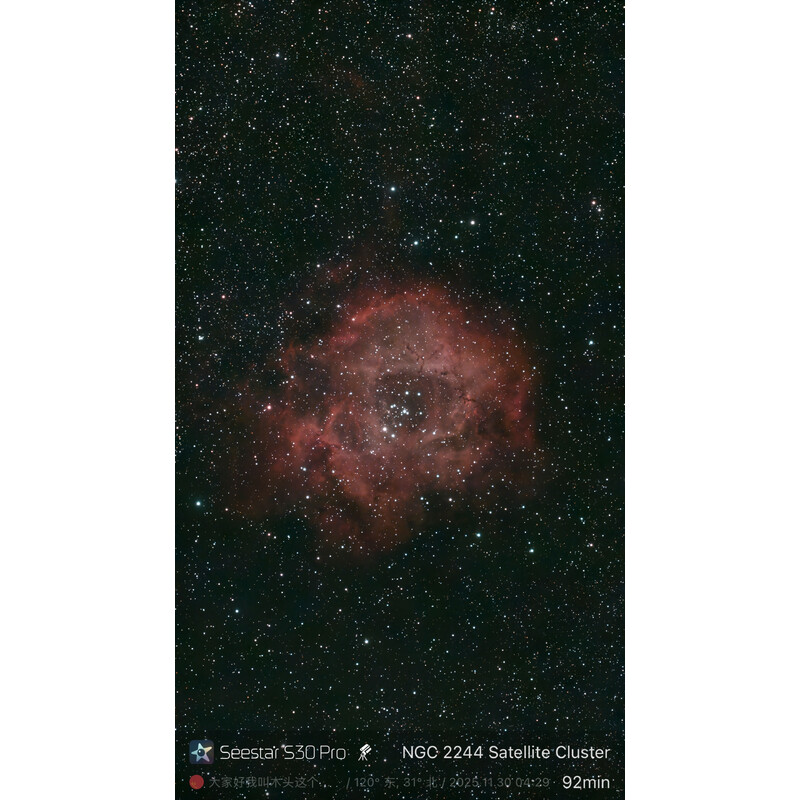
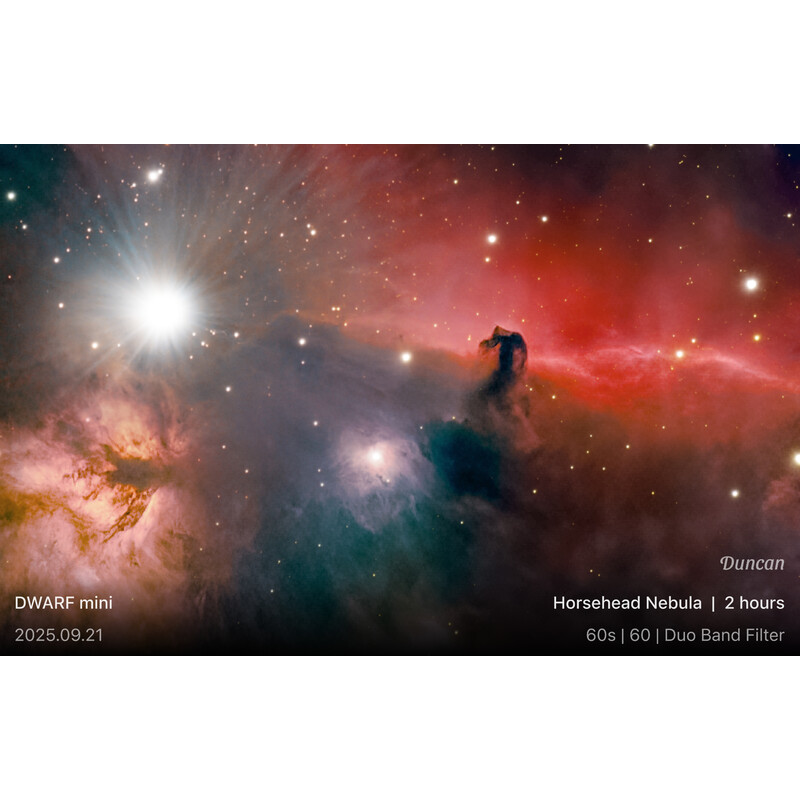
An honest word on this: manufacturer images are taken under a dark sky, with plenty of exposure time and good post-processing. From a city and after 20 minutes your image will look plainer – with either device.
Two reviews (skiesandscopes.com, telescopicwatch.com) describe more thermal noise on the DWARF mini as soon as it gets warmer than about 20 degrees Celsius (68 °F) outside. In summer that puts the S30 Pro ahead; in autumn and winter it hardly matters.
Everyday use: weight, battery, tripod and app
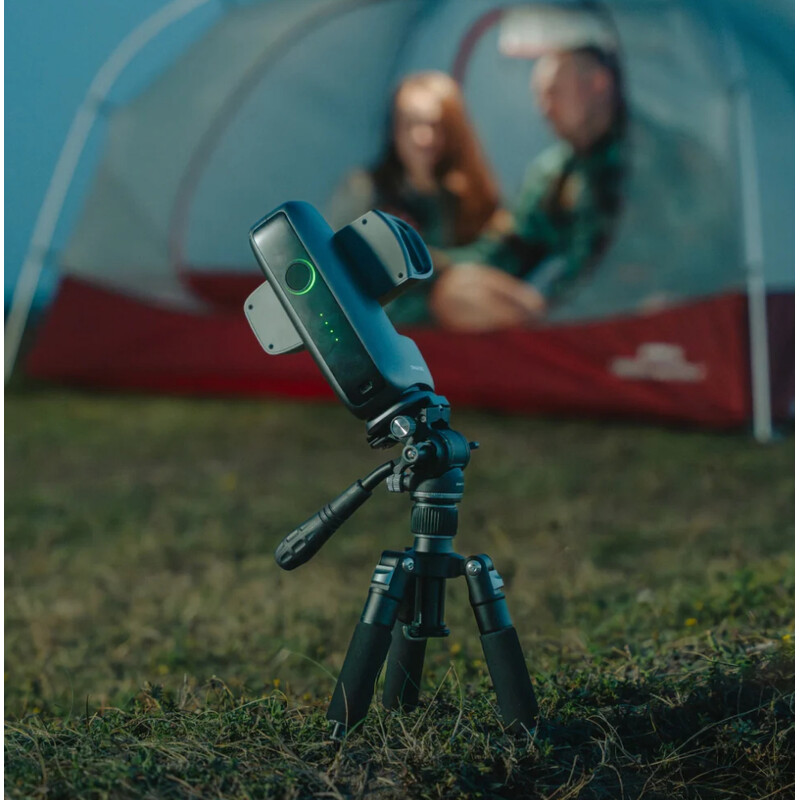
- Weight: 840 g against 1.65 kg. If you hike or travel by bike, you will notice it. The S30 Pro is still small, though – it weighs about as much as a large water bottle.
- Battery: ZWO gives around six hours for the S30 Pro, DWARFLAB around four for the mini. Reviews report closer to two to four hours for the mini in practice. Plan on a power bank for the mini from the start.
- Tripod: with the S30 Pro, Astroshop includes a table tripod and a bag. The mini comes without a tripod; you need one with a 1/4-inch thread, or the DWARF tripod.
- Dew: the S30 Pro heats its front lens by itself. DWARFLAB does not specify a heater for the mini – on damp nights a dew shield helps.
- App: Seestar app against DWARFLAB app. The Seestar app is considered simpler and more guided, the DWARF app offers more adjustments. Forum members recommend a phone or tablet with at least 6 GB of RAM.
A tip from the customer reviews: for long nights with the DWARF mini, strap a USB-C power bank to the tripod. One buyer reports that a loose power bank otherwise turns along with the device.
Sun, Moon and planets
Both devices photograph the Sun with the filter supplied. The filter must always sit firmly in front of the objective – without it, the concentrated sunlight destroys the sensor in seconds. Sunspots and partial solar eclipses work well this way.
The Moon is a fine subject in both devices, but it does not fill the frame. At 30 mm of aperture the planets are only small discs: Jupiter with two belts, Saturn with a recognisable ring, and no more than that. If you want to see planets, a classic telescope serves you better – more on that in our guide to the best telescope for planets.
And what about the regular Seestar S30?
Many people are really searching for „DWARF mini vs. Seestar S30“ – meaning the cheaper model without the „Pro“. The regular S30 ($299.00€ 479) has the same Sony IMX662 sensor as the DWARF mini, so Full HD as well, at 150 mm of focal length.
That makes the S30 and the DWARF mini optical near-twins. The decision then comes down to the app, the weight and what is in the box: the S30 is heavier but brings a tripod and dew protection with it; the mini is lighter and exposes longer in EQ mode. In the German-language astronomy forum, the regular S30 was explicitly recommended as sufficient for a twelve-year-old.
| Model | Sensor | Field of view (diagonal) | Price |
|---|---|---|---|
| Seestar S30 ProSeestar S30 Pro | IMX585, 4K | 4.6° | $699.00€ 699 |
| Seestar S30Seestar S30 | IMX662, Full HD | 2.4° | $299.00€ 479 |
| DWARF miniDWARF mini | IMX662, Full HD | 2.4° | $419.00€ 429 |
Value for money: is the extra cost worth it?
There are about $280€270 between the DWARF mini and the S30 Pro. For that you get the four times larger 4K sensor, a tripod, a dew heater and twice the storage. Add a suitable tripod to the mini and the gap shrinks noticeably.
For a device you intend to use for several years, the S30 Pro is the better deal. The mini is worth it when weight and price really do come first – as a travel telescope, for instance, or as a second device alongside a classic telescope.
Our recommendation: the better telescope: ZWO Seestar S30 Pro Smart Telescope
ZWO's benchmark smart telescope: a polished app, mosaic mode and stunning results in minutes.
Price: € 699
The lightest smart telescope for travelling: DWARFLAB DWARF mini Smart Telescope
Just 840 g and € 493: the lightest smart telescope. Bigger pixels, 90-second exposures – but Full HD instead of 4K.
Price: € 429
Which one suits you?
| Your situation | Recommendation | Why |
|---|---|---|
| You want the best image for under $700€700 | Seestar S30 ProSeestar S30 Pro | ⭐ Our recommendation4K sensor, large field of view, tripod and dew protection included. |
| Hiking, cycling, travelling with hand luggage | DWARF miniDWARF mini | 840 g and about the size of a thick paperback. |
| A child or a family, tight budget | Seestar S30Seestar S30 or DWARF miniDWARF mini | Same sensor; the S30 brings the tripod along with it. |
| Large nebulae and Andromeda in a single frame | Seestar S30 ProSeestar S30 Pro | Almost four times as much sky per exposure. |
| Faint nebulae, images built over several nights | DWARF miniDWARF mini | 90-second exposures and MegaStack. |
| Mainly planets | no smart telescope | 30 mm is too small for that – see telescope for planets. |
If you want more: the Seestar S50 Pro
The next step up has 50 instead of 30 mm of aperture and 260 mm of focal length. It gathers almost three times as much light and shows galaxies and small nebulae considerably larger. The extra cost pays off if, after the large nebulae, you also want to photograph galaxies such as M 81 or M 51 – at 2.8 kg it is less suited to travelling.
Seestar S50 ProSeestar S50 Pro · $999.00€ 999 · Overview: smart telescope comparison
Frequently asked questions about the Seestar S30 Pro and the DWARF mini
Which is better, the DWARF mini or the Seestar S30?
Against the regular Seestar S30 it is almost a draw, because both use the same sensor. The S30 brings a tripod and dew protection with it, the mini is lighter and exposes longer in EQ mode. Against the S30 Pro, the mini clearly loses on image quality and field of view.
Does the DWARF mini need a tripod?
Yes. No tripod is included, and you need one with a 1/4-inch photo thread. For EQ mode the tripod head has to tilt to your latitude – roughly 25 to 49 degrees across the contiguous United States, and roughly 50 to 59 degrees in the United Kingdom.
How long does the battery really last?
ZWO gives around six hours for the S30 Pro, DWARFLAB around four for the mini. Reviews roughly confirm the S30 Pro; for the mini they come out closer to two to four hours. Both can be kept running from a power bank over USB-C.
Is a solar filter included?
With both of them yes, according to the scope of delivery at Astroshop. Only observe the Sun with the filter firmly attached, and check it for scratches and holes beforehand.
Can I also watch birds with these devices during the day?
Yes, both have a photo and video mode for landscapes and wildlife. Converted to a full-frame camera, the S30 Pro corresponds to roughly a 540 mm telephoto lens, and the DWARF mini, because of its smaller sensor, to roughly a 1,000 mm lens. For birds a few dozen metres away, either one is enough.
Which one is suitable for children?
Both, as long as an adult helps with the first setup. For the lowest price, forum members recommend the regular Seestar S30 or the DWARF mini; everything is operated from a phone or tablet. Our overview of the best telescope for kids also shows classic alternatives.
Verdict: S30 Pro for the image, DWARF mini for the backpack
The Seestar S30 Pro is the better smart telescope. It shows more sky at a higher resolution and brings everything you need on the first night. If you have the budget, take it.
The DWARF mini is the right choice when every gram counts or when it is meant to be an affordable second device. You will find every smart telescope at a glance in our smart telescope comparison; the step up is covered in Seestar S30 Pro vs. DWARF 3.
The links marked with an asterisk (*) are affiliate links. If you buy through them we receive a small commission – the price does not change for you.