By Alexander Merz · Published on · Details checked on 14 September 2026
The next full moon in August falls on Tuesday, August 17, 2027 at 09:28 CEST.
Name: Sturgeon Moon – because sturgeon were most easily caught in North America's Great Lakes in August
Still 328 days to go.
Here you will find the exact date of the full moon in August – with the time for Germany, Austria and Switzerland in Central European Summer Time (CEST), the traditional name of the month’s full moon and the dates for the coming years.
🔭 The full moon through a telescope – the honest short version
The full moon is, of all phases, the one that shows the least through a telescope: the Sun stands straight above the surface, there are no shadows, and craters look flat. If you want craters, look a few days before or after – then the day-night line runs across the disc and the crater walls throw long shadows. For the full moon itself you mainly need one thing: a moon filter against the glare, such as the Apertura 1.25" Moon FilterOmegon Premium moon filter at $14.95€ 19.90.
How aperture (the diameter of the mirror or lens) and filters work together on the Moon is covered in our guide to observing the Moon. If you do not own an instrument yet, start with the best beginner telescopes – the Moon is the most rewarding first target there is.
The full moon of 28 August 2026 is a partial lunar eclipse. That morning the Sturgeon Moon sets about 94 % eclipsed – it enters the umbra at 4:34, with the maximum at 6:13 (CEST), low above the western horizon in Central Europe.
All the times for 44 cities and what you need for observing: Lunar eclipse 2026 – the complete guide
How the August full moon sits in the sky
In August the full moon slowly gains height again, but still stays low. It rises shortly after sunset – a good moment for photographing it with some landscape in the frame.
Sturgeon Moon – where the name comes from
The Sturgeon Moon goes back to fishing in the North American Great Lakes, where particularly large numbers of sturgeon were caught in August. This is where the most common mix-up in the whole calendar lurks: the German Erntemond (harvest moon) traditionally refers to August, whereas the English Harvest Moon is the full moon closest to the autumn equinox – and that usually falls in September, sometimes even in October.
Almost all the full moon names in common use today come from North America and were popularised by US almanacs. German-speaking Europe had its own names for the months: August was called Ernting or Erntemond. Both traditions mean the same thing – an attempt to tie the course of the year to what is actually happening outdoors.
The full moon you can see with your own eyes. The rest of the August sky is a different question.
Six short questions, an honest answer by e-mail – including when binoculars would do.
Tip: Thinking about getting a telescope of your own? Our big buying guide Buying a telescope has all our recommendations with price, stock status and context.
The dates that are actually worth it are often months apart – and easily forgotten. So you do not miss one:
One short email, in good time – with the times and an honest take on whether it is worth getting up for.
You will get a confirmation email in a moment. Your address stays with us – no sharing, no third-party ads.
What else is going on in the August sky
August is the shooting star month par excellence: around the 12th and 13th the Perseids reach their maximum. A bright full moon in those nights can noticeably reduce the yield, though.
Full moon in August: the dates for the coming years
| Year | Date | Time |
|---|---|---|
| 2024 | Monday, August 19 | 20:25 CEST |
| 2025 | Saturday, August 9 | 09:55 CEST |
| 2026 | Friday, August 28 | 06:18 CEST |
| 2027 | Tuesday, August 17 | 09:28 CEST |
| 2028 | Saturday, August 5 | 10:09 CEST |
| 2029 | Friday, August 24 | 03:51 CEST |
| 2030 | Tuesday, August 13 | 12:44 CEST |
| 2031 | Sunday, August 3 | 03:45 CEST |
The interval from one full moon to the next averages 29 days, 12 hours and 44 minutes. Because our calendar months are longer, the date moves forward year by year – which is why the full moon in August never falls on the same date. All the coming dates are listed in the full moon calendar, and our page about the Moon explains how the phases come about.
Observing the full moon – an honest note
As beautiful as the full moon is to the naked eye, in a telescope it is at its least interesting in exactly this phase. Because the Sun shines straight down onto the lunar surface, the shadows are missing and craters look flat. You see considerably more a few days before or after full moon along the day-night boundary, the so-called terminator. If you do want to look at the full moon through a telescope, you should use a moon filter – without one it is uncomfortably glaring. More on this in our buying guide to moon observation.
Against the glare: the full moon is dazzling in a telescope: Omegon Premium Moon Filter 1.25″
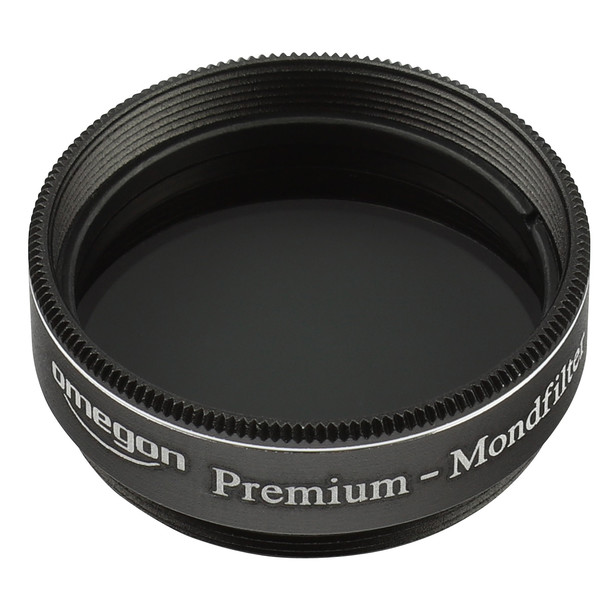
Dims the harsh moonlight, is easy on the eyes and brings out far more contrast and detail – our best-selling filter and the number-one pick to start with.
Price: € 19.90
← July · Calendar · September →