By Alexander Merz · Updated on · Details checked on 14 September 2026
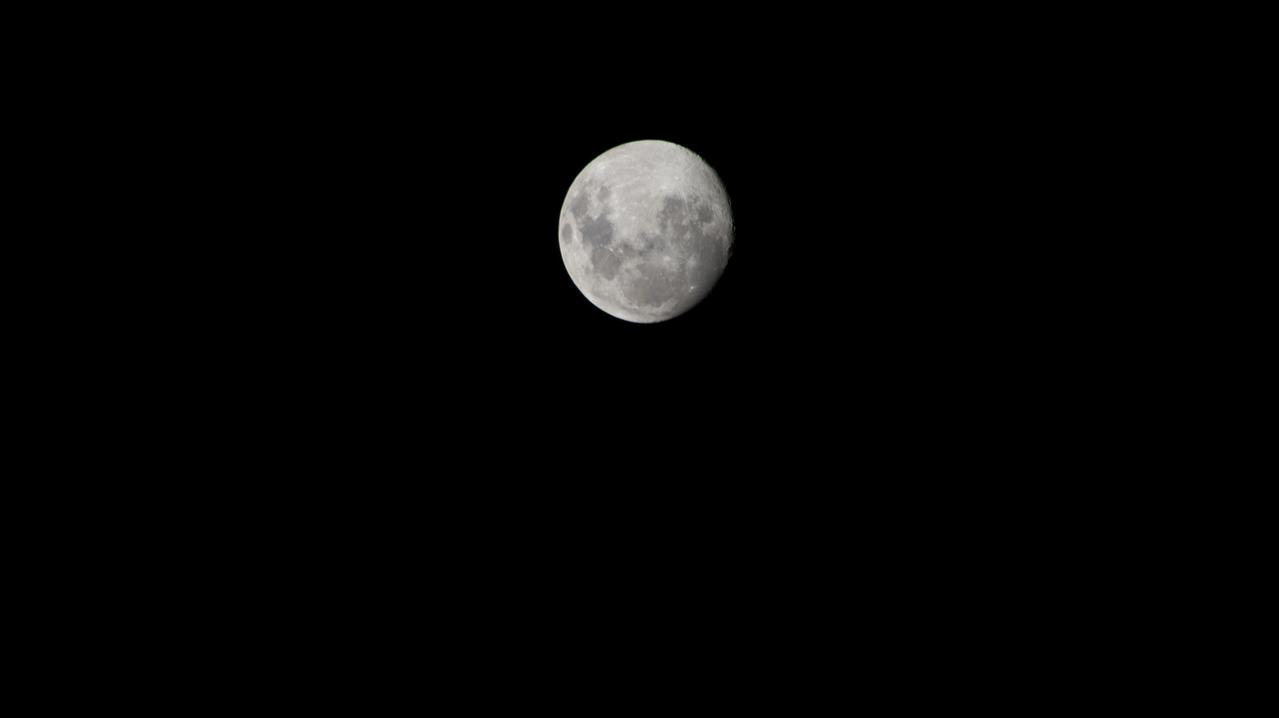
The waxing moon is the phase between new moon and full moon, when the sunlit portion of the lunar disc grows a little more every evening — from the faintest crescent, through the first-quarter half-moon, all the way to the nearly full gibbous disc. If you own a telescope, this is quite simply the best time of the whole month to observe the Moon.
⚡ The quick answer: The waxing moon is visible mainly in the afternoon and evening, low in the western sky. Its right-hand side is lit (as seen from the northern hemisphere), so it looks like a closing bracket ). It grows for roughly 14.8 days from new moon to full moon — and along the terminator, craters and mountains stand out in dramatic relief.
The stages of the waxing moon
Just after new moon comes the young crescent, sitting low in the west shortly after sunset. About a week later the Moon reaches first quarter: the waxing half-moon rises in the early afternoon and stays up until around midnight. After that it becomes a waxing gibbous moon, with more than three-quarters of the disc lit, until full moon is reached after roughly 14.8 days.
Waxing half-moon (first quarter): 2026 dates
First quarter is the high point of the waxing half-moon. Here are the dates and times (Central European Time) throughout 2026:
| Date | Time (CET/CEST) |
|---|---|
| Monday, 26 January 2026 | 05:47 |
| Tuesday, 24 February 2026 | 13:27 |
| Wednesday, 25 March 2026 | 20:17 |
| Friday, 24 April 2026 | 04:31 |
| Saturday, 23 May 2026 | 13:10 |
| Sunday, 21 June 2026 | 23:55 |
| Tuesday, 21 July 2026 | 13:05 |
| Thursday, 20 August 2026 | 04:46 |
| Friday, 18 September 2026 | 22:43 |
| Sunday, 18 October 2026 | 18:12 |
| Tuesday, 17 November 2026 | 12:47 |
| Thursday, 17 December 2026 | 06:42 |
See every phase at a glance in our 2026 lunar calendar.
Why the waxing moon is the best time for a telescope
The secret is the terminator — the line dividing lunar day from night as it sweeps across the surface. Along this boundary the low-angled Sun casts long shadows, so craters, mountain ranges and rilles leap out in vivid, three-dimensional detail. At full moon, by contrast, the Sun beats straight down on the disc and the landscape looks flat, washed-out and lacking contrast.
There is a practical bonus, too: the waxing moon rides high in the sky in the early evening — perfect for after-work stargazing and ideal for getting children involved. Even a modest beginner telescope reveals hundreds of craters along the terminator.
What telescope for observing the waxing moon?
You don’t need expensive gear: the Moon is the brightest, most detailed object in the night sky. A simple entry-level refractor is more than enough to explore craters, the Sea of Serenity or the ramparts of Copernicus on your very first night out.
Best for beginners: Omegon Telescope AC 70/700 AZ-2
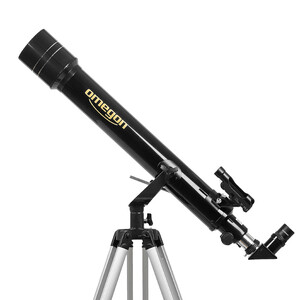
The no-pitfall starter refractor: Moon, Saturn's rings and Jupiter's moons from the very first night. No collimation.
Price: € 119
Best for advanced observers: Skywatcher Dobson Telescope N 200/1200 Skyliner Classic
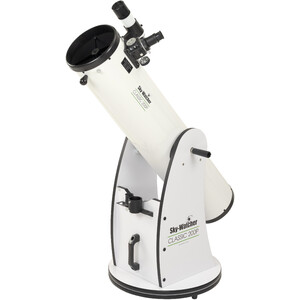
200 mm of aperture — the most sky for your money. Set it on the ground, point by hand: nebulae, clusters and galaxies for years to come.
Price: € 479
* Affiliate link: if you buy through this link we may earn a small commission from Astroshop or High Point Scientific, at no extra cost to you.
One tip: from first quarter onwards the moonlight becomes dazzlingly bright in the eyepiece. A neutral moon filter tones down the glare and makes viewing far more comfortable, while actually revealing more surface detail.
Photographing the waxing moon
This phase is also the finest time for lunar photography. The shadow contrasts along the terminator add depth to every shot — even a quick photo taken with a smartphone held to the eyepiece can look striking. Skip the full moon, which is too flat and too bright, and favour the evenings between crescent and first quarter.
Frequently asked questions
When is the waxing moon visible?
Mainly in the afternoon and evening: the young crescent appears in the west after sunset, while the waxing half-moon rises around midday and sets close to midnight.
How do I tell if the Moon is waxing or waning?
From the northern hemisphere, the waxing moon has its right-hand side lit and looks like a closing bracket ). When the left side is bright instead, the Moon is waning.
How long does it take from new moon to full moon?
About 14.8 days — half of the synodic month, which lasts 29.5 days.
What is the lunar terminator?
It is the day–night boundary on the Moon’s surface. There the shadows are longest, so craters and mountains appear in especially dramatic relief through a telescope.
Do I need a filter to observe the waxing moon?
It isn’t essential, but from first quarter onwards the Moon becomes so bright that a neutral moon filter noticeably improves comfort and contrast.