By Alexander Merz · Updated on · Details checked on 14 September 2026
🌙 The Moon today
Calculating …
All dates: Moon Calendar 2026
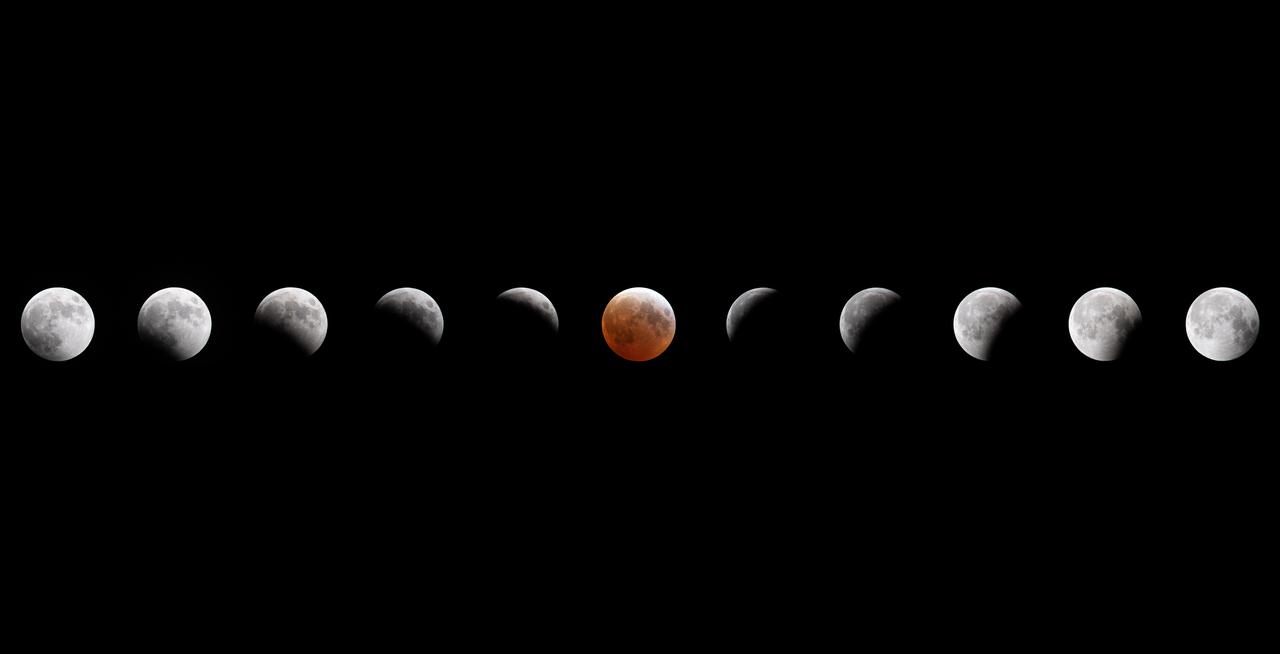
The moon calendar 2026 brings together every lunar phase of the year at a glance: each new moon, first quarter, full moon and last quarter – with the date, weekday and time in UK local time (GMT/BST). Whether you are planning a night of stargazing, an astrophotography session or simply a walk under the full moon, you’ll find all the full moon dates for 2026 and the complete lunar cycle right here.
⚡ The quick answer: 2026 has 12 new moons but 13 full moons: May carries two (on 1 and 31 May), the second being a “Blue Moon”. The highlights: the solar eclipse on 12 August (new moon) and the partial lunar eclipse on 28 August (full moon). All times below are given in UK local time.
Moon Calendar 2026: All Moon Phases at a Glance
The table below lists the four principal moon phases for every lunar cycle of 2026, from 2 January through to 30 December.
| Date | Time | Moon phase |
|---|---|---|
| Saturday, 3 January 2026 | 10:02 | Full Moon 🌕 |
| Saturday, 10 January 2026 | 15:48 | Last Quarter 🌗 |
| Sunday, 18 January 2026 | 19:52 | New Moon 🌑 |
| Monday, 26 January 2026 | 04:47 | First Quarter 🌓 |
| Sunday, 1 February 2026 | 22:09 | Full Moon 🌕 |
| Monday, 9 February 2026 | 12:43 | Last Quarter 🌗 |
| Tuesday, 17 February 2026 | 12:01 | New Moon 🌑 |
| Tuesday, 24 February 2026 | 12:27 | First Quarter 🌓 |
| Tuesday, 3 March 2026 | 11:37 | Full Moon 🌕 |
| Wednesday, 11 March 2026 | 09:38 | Last Quarter 🌗 |
| Thursday, 19 March 2026 | 01:23 | New Moon 🌑 |
| Wednesday, 25 March 2026 | 19:17 | First Quarter 🌓 |
| Thursday, 2 April 2026 | 03:11 | Full Moon 🌕 |
| Friday, 10 April 2026 | 05:51 | Last Quarter 🌗 |
| Friday, 17 April 2026 | 12:51 | New Moon 🌑 |
| Friday, 24 April 2026 | 03:31 | First Quarter 🌓 |
| Friday, 1 May 2026 | 18:23 | Full Moon 🌕 |
| Saturday, 9 May 2026 | 22:10 | Last Quarter 🌗 |
| Saturday, 16 May 2026 | 21:01 | New Moon 🌑 |
| Saturday, 23 May 2026 | 12:10 | First Quarter 🌓 |
| Sunday, 31 May 2026 | 09:45 | Full Moon 🌕 |
| Monday, 8 June 2026 | 11:00 | Last Quarter 🌗 |
| Monday, 15 June 2026 | 03:54 | New Moon 🌑 |
| Sunday, 21 June 2026 | 22:55 | First Quarter 🌓 |
| Tuesday, 30 June 2026 | 00:56 | Full Moon 🌕 |
| Tuesday, 7 July 2026 | 20:29 | Last Quarter 🌗 |
| Tuesday, 14 July 2026 | 10:43 | New Moon 🌑 |
| Tuesday, 21 July 2026 | 12:05 | First Quarter 🌓 |
| Wednesday, 29 July 2026 | 15:35 | Full Moon 🌕 |
| Thursday, 6 August 2026 | 03:21 | Last Quarter 🌗 |
| Wednesday, 12 August 2026 | 18:36 | New Moon 🌑 |
| Thursday, 20 August 2026 | 03:46 | First Quarter 🌓 |
| Friday, 28 August 2026 | 05:18 | Full Moon 🌕 |
| Friday, 4 September 2026 | 08:51 | Last Quarter 🌗 |
| Friday, 11 September 2026 | 04:27 | New Moon 🌑 |
| Friday, 18 September 2026 | 21:43 | First Quarter 🌓 |
| Saturday, 26 September 2026 | 17:49 | Full Moon 🌕 |
| Saturday, 3 October 2026 | 14:25 | Last Quarter 🌗 |
| Saturday, 10 October 2026 | 16:50 | New Moon 🌑 |
| Sunday, 18 October 2026 | 17:12 | First Quarter 🌓 |
| Monday, 26 October 2026 | 04:11 | Full Moon 🌕 |
| Sunday, 1 November 2026 | 20:28 | Last Quarter 🌗 |
| Monday, 9 November 2026 | 07:02 | New Moon 🌑 |
| Tuesday, 17 November 2026 | 11:47 | First Quarter 🌓 |
| Tuesday, 24 November 2026 | 14:53 | Full Moon 🌕 |
| Tuesday, 1 December 2026 | 06:08 | Last Quarter 🌗 |
| Wednesday, 9 December 2026 | 00:51 | New Moon 🌑 |
| Thursday, 17 December 2026 | 05:42 | First Quarter 🌓 |
| Thursday, 24 December 2026 | 01:28 | Full Moon 🌕 |
| Wednesday, 30 December 2026 | 18:59 | Last Quarter 🌗 |
Times in UK local time (GMT in winter, BST in summer); the clock change is already accounted for. A moon phase occurs at the same instant worldwide, so these times apply across the whole of the UK.
The Moon is the most rewarding first target – but which instrument suits you?
Six short questions, an honest answer by e-mail – including when binoculars would be the better buy.
The 13 Full Moons of 2026 and Their Names
For the full moons specifically — exact minute, moonrise, the 28 August lunar eclipse and where each one is visible from — see our dedicated full moon calendar 2026/2027.
By tradition – largely inherited from Native American and colonial folklore – every full moon carries a seasonal name. Because 2026 has one extra full moon, the second full moon of May is a Blue Moon, an event that happens only once every two to three years.
| Date | Traditional name |
|---|---|
| 3 January 2026 | Wolf Moon |
| 1 February 2026 | Snow Moon |
| 3 March 2026 | Worm Moon |
| 2 April 2026 | Pink Moon |
| 1 May 2026 | Flower Moon |
| 31 May 2026 | Blue Moon |
| 30 June 2026 | Strawberry Moon |
| 29 July 2026 | Buck Moon |
| 28 August 2026 | Sturgeon Moon |
| 26 September 2026 | Harvest Moon |
| 26 October 2026 | Hunter’s Moon |
| 24 November 2026 | Beaver Moon |
| 24 December 2026 | Cold Moon |
The “Harvest Moon” is the full moon closest to the autumn equinox; in 2026 that is the full moon of 26 September.
The dates worth seeing are often months apart and easily forgotten. So you do not miss one:
One short email, in good time – with the times and an honest take on whether it is worth getting up for.
You will get a confirmation email in a moment. Your address stays with us – no sharing, no third-party ads.
How to Read the Moon Calendar
A complete lunar cycle (a synodic month) lasts about 29.5 days on average, with a little over seven days between each of the four main phases. In practice: around the new moon, the nights are darkest – perfect for galaxies, the Milky Way and deep-sky photography. Around the first quarter, the Moon itself looks its best through a telescope, as the low-angle shadows throw craters and mountains into sharp relief. The full moon is glorious to the naked eye but floods the sky with light, washing out faint objects.
Observing the Moon: Which Instrument Should You Choose?
The Moon is the perfect first target: bright, packed with detail and visible even from the city. A simple pair of binoculars already reveals the great lunar seas; a small refractor lets you track craters and valleys night after night as the phases shift. The view along the terminator (the shadow line) near first quarter is unforgettable.
Great for the Moon: Omegon Telescope AC 70/700 AZ-2
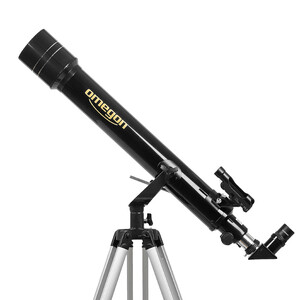
The no-pitfall starter refractor: Moon, Saturn's rings and Jupiter's moons from the very first night. No collimation.
Price: € 119
Best for advanced observers: Skywatcher Dobson Telescope N 200/1200 Skyliner Classic
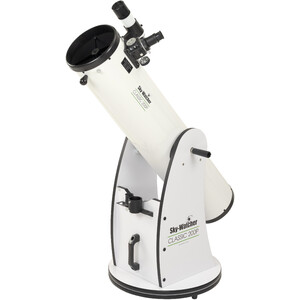
200 mm of aperture — the most sky for your money. Set it on the ground, point by hand: nebulae, clusters and galaxies for years to come.
Price: € 479
* Affiliate link: if you buy through this link we may earn a small commission from Astroshop or High Point Scientific, at no extra cost to you.
The Moon and Your Garden: Myth or Reality?
Many moon calendars offer advice on sowing, harvesting or even haircuts. Such effects are not scientifically proven: controlled studies have found no influence of the lunar phase on plant growth. What the Moon demonstrably moves are the tides – and on a huge scale. If you would rather experience the Moon directly than by superstition, our beginner telescope guide will help you get started.
Frequently Asked Questions
When is the next full moon?
All full moon dates and times are listed in the table above, and the live widget at the top of the page always shows the next upcoming full moon.
Why does 2026 have thirteen full moons?
Because twelve lunar cycles last only about 354 days – roughly eleven days short of the calendar year. That gap means that about every 2.7 years a thirteenth full moon squeezes into the year, and 2026 is one of those years.
Do the times apply across the whole UK?
Yes. A moon phase happens at the same moment everywhere on Earth, so the stated UK local time is valid throughout the United Kingdom.
What is a “Blue Moon”?
It is the second full moon within a single calendar month. In 2026 it falls on 31 May. Despite the name, the Moon does not actually turn blue.
Does the Moon affect sleep?
Some studies have found weak effects around the full moon, others none at all. There is currently no firm scientific consensus.
Read next:
🌍 Other languages: Deutsch (original) · Français · Italiano