By Alexander Merz · Updated on · Details checked on 14 September 2026
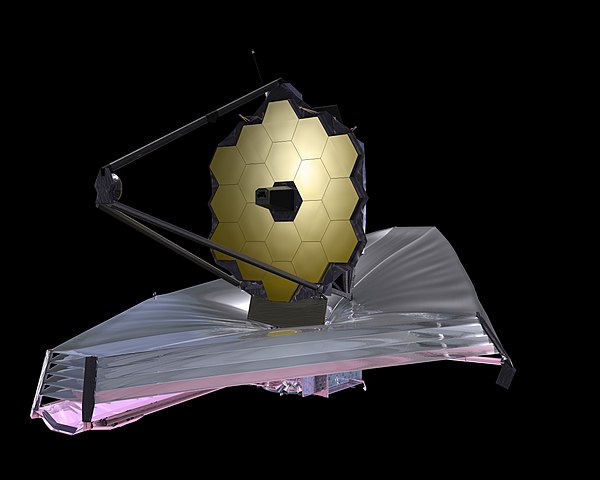
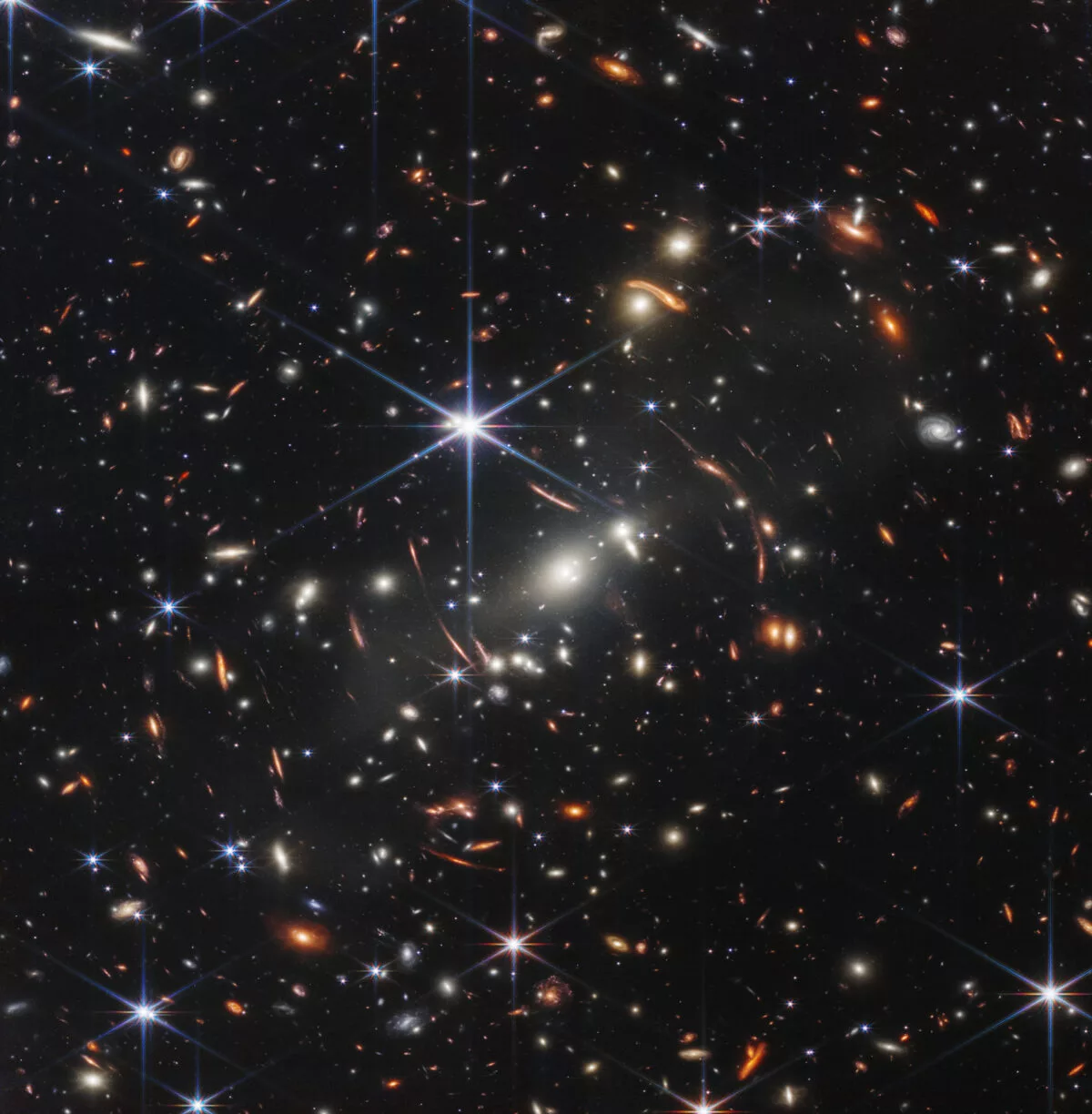
The James Webb Space Telescope (JWST) is a space telescope for infrared astronomy, regarded as the successor to the Hubble Space Telescope and the Spitzer Space Telescope. It was developed from 1996 onwards as a joint project of NASA, ESA and CSA, and launched on 25 December 2021. On 24 January 2022 it reached its orbit around the Lagrange point L2. The first images were presented to the public in July 2022.


Technical Data of the JWST
The James Webb Telescope is the largest and most powerful space telescope ever built. With a mirror diameter of 6.5 metres and a weight of about 6.5 tonnes, the telescope will be able to capture images of the most distant and oldest galaxies in the universe. The cost of the JWST amounts to roughly 10 billion US dollars.
| Cost | Distance | Mission duration | Mirror size |
|---|---|---|---|
| USD 10 bn | 1.5 M km | 10 years | 6.5 m |
Here are some technical details of the James Webb Telescope:
Mirrors and instruments:
The James Webb Telescope is made up of 18 hexagonal mirror segments assembled into a total diameter of 6.5 metres. These mirrors are made of ultra-light beryllium and will be able to collect light from space and direct it onto the telescope’s instruments.
The telescope carries four main instruments on board:
- The Near Infrared Camera (NIRCam): a camera instrument capable of capturing images in the near-infrared range. It will be the telescope’s most important instrument for studying galaxies and stars in the early universe.
- The Near Infrared Spectrograph (NIRSpec): a spectrometer instrument capable of breaking down the light from distant galaxies and stars into individual spectral lines. This will make it possible to learn more about the chemical composition and distance of these objects.
- The Mid-Infrared Instrument (MIRI): a camera and spectrometer instrument operating in the mid-infrared range. MIRI will be able to image clouds of gas and dust in our galaxy and beyond.
- The Fine Guidance Sensor/Near InfraRed Imager and Slitless Spectrograph (FGS/NIRISS): an instrument used for the precise alignment of the telescope and for studying extrasolar planets.
Operation:
The James Webb Telescope operates in an orbit around the second Lagrange point (L2) of the Earth-Sun system, located at a distance of about 1.5 million kilometres from Earth.
The telescope is able to orient and stabilise itself in order to deliver precise images. It is controlled from a ground station that communicates with the telescope via NASA’s Deep Space Network (DSN).
In summary, the James Webb Telescope is a highly complex instrument equipped with state-of-the-art technology. Its ability to capture and analyse light from the most distant objects in the universe will provide scientists with important new insights and expand our understanding of the universe.
Tasks of the James Webb Space Telescope
The James Webb Telescope (JWST) has many important tasks. Thanks to its sensitive infrared optics, it is able to detect even faint infrared rays and to see far into the distance. This allows it to observe planets after their formation, since the light from stars takes a long time to reach Earth.
The telescope thus enables us to look into the sky of the past and even to discover traces of the Big Bang, which took place 13.8 billion years ago. Although this light is very faint, the JWST can still collect it and provide us with valuable information about bygone eras.
The light waves that the JWST captures have already travelled a very long way and have been stretched by the expansion of the universe to up to twenty times their original length. That is why they are no longer visible to us humans, but the telescope can nevertheless collect them.
 Our partner shop: a trusted US astronomy retailer – telescopes, binoculars & accessories.Visit High Point Scientific* →
With the help of infrared light, the JWST can also peer into the dark dust clouds that surround new stars in space. In some cases it is even 100 times more sensitive than the Hubble telescope.
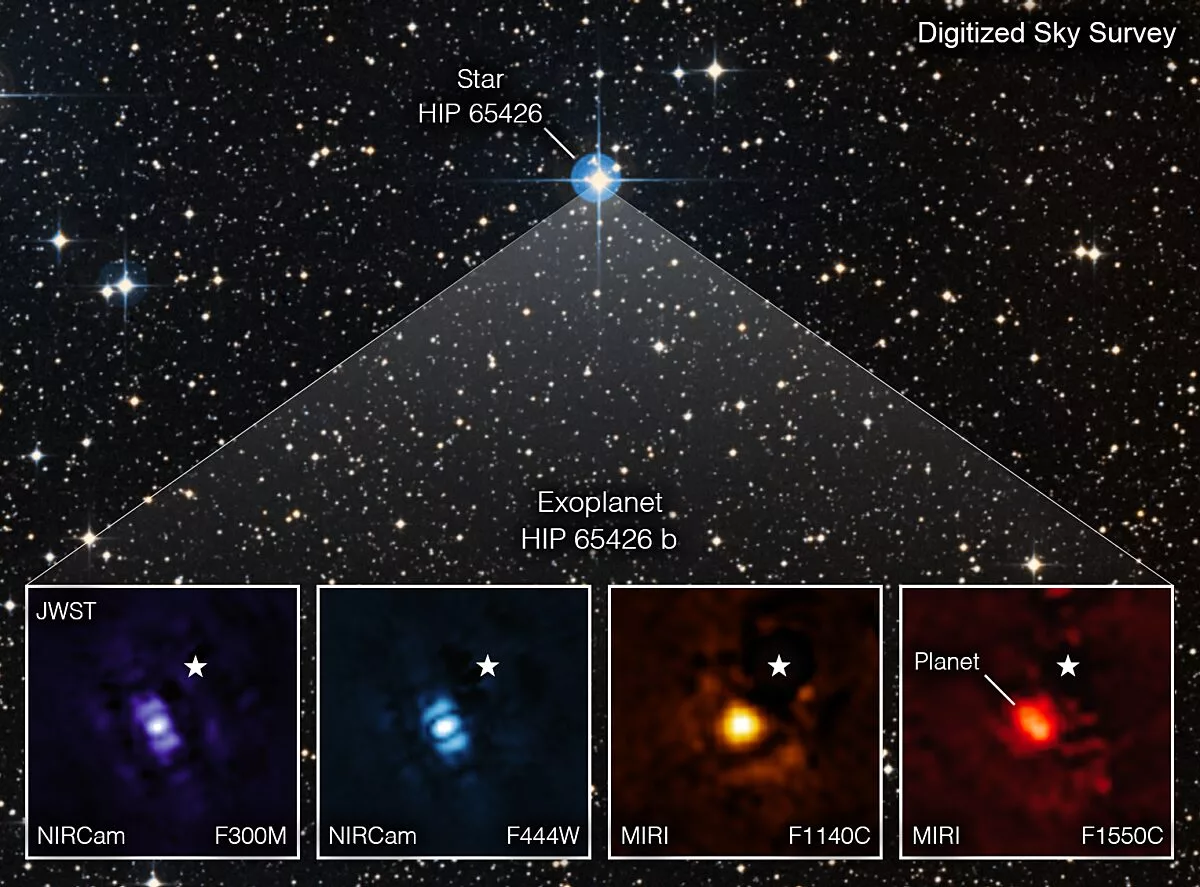
Another important task of the JWST is to search for exoplanets and to study their atmospheres. Exoplanets are planets that orbit stars other than our Sun. The telescope searches for such planets on which life might develop.
The Most Exciting Discoveries of the James Webb Telescope
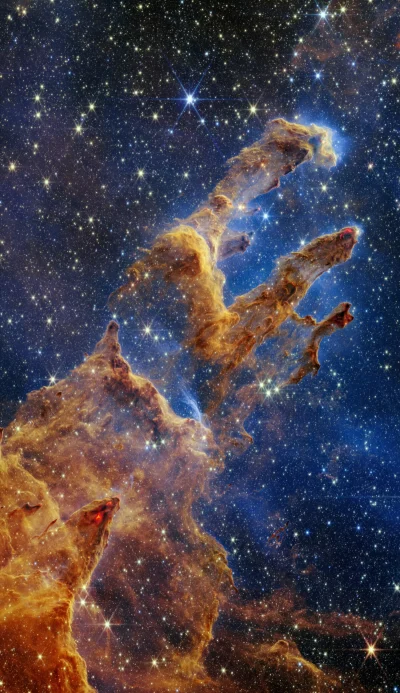
- Star births in the Pillars of Creation: In the Eagle Nebula, about 7,000 light-years from Earth, the James Webb Telescope has detected countless protostars that are not yet fully formed and whose material must condense further before they become shining stars.
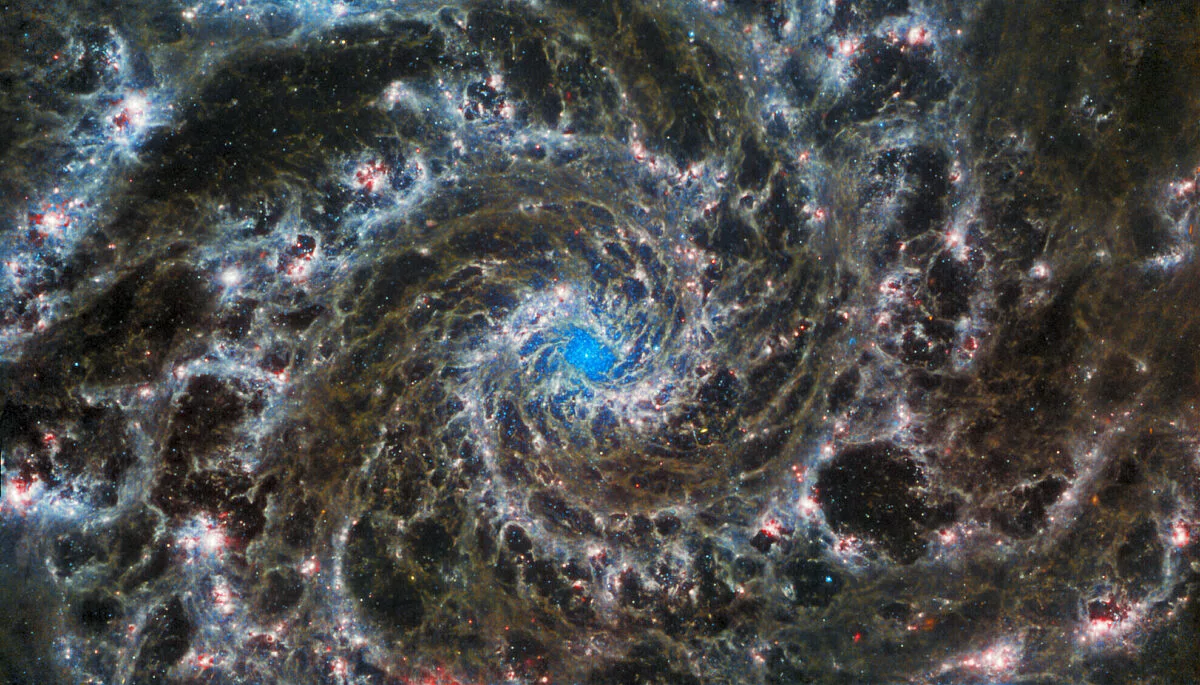
- Images of the Phantom Galaxy: The Phantom Galaxy is an impressive example of a galactic system with a perfect spiral shape, made visible thanks to the infrared measurements of the James Webb Telescope. Additional studies have revealed a bright galactic centre and a filamentary structure in the spiral arms, where researchers believe stars are also forming.
- Mysterious discovery at the Wolf-Rayet star: The James Webb Telescope has recorded wave-like patterns in the form of rings around the Wolf-Rayet star WR140, which must not be confused with the usual diffraction patterns of telescopes. This ring-shaped structure is caused by the interaction with a smaller companion star and is surrounded by a cloud of dust.
- The clouds of Titan in detail: The James Webb Telescope made it possible to reveal clouds of methane in the dense atmosphere of Saturn’s moon Titan. Researchers hope to discover new gases on Titan through further observations.
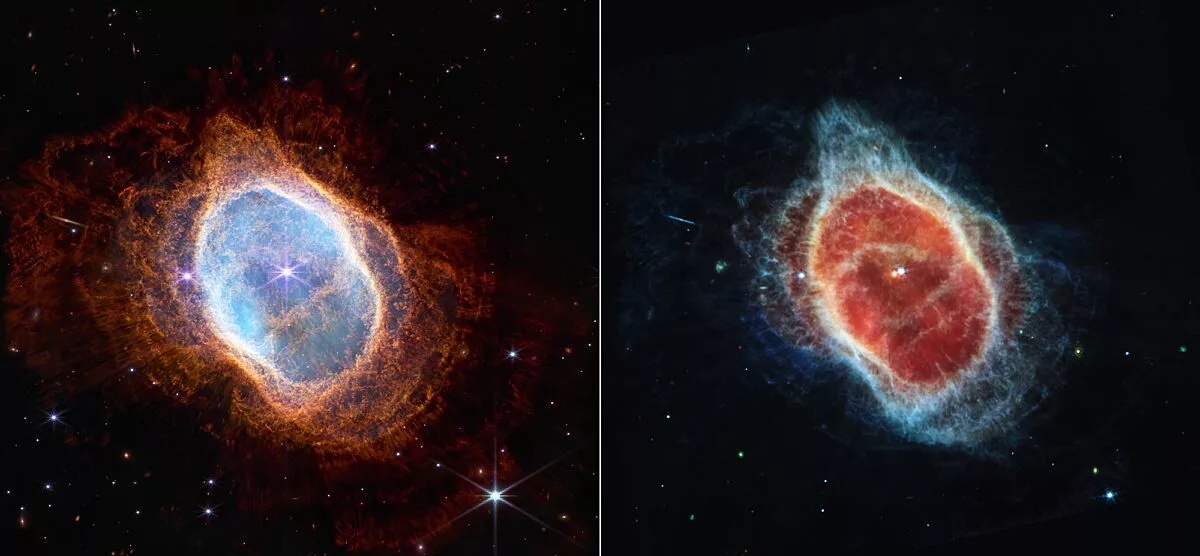
- James Webb Telescope reveals a mysterious nebula: Before the James Webb Telescope, the Southern Ring Nebula was considered less exciting for space research. A third star is now suspected, though it remains hidden from the observer for the time being.
- Brown dwarf with dusty sand clouds: Strictly speaking, VHS 1256 b is not a planet. Classified as a brown dwarf, it is larger than conventional planets but rather small for its kind, which suggests a young age. It also glows faintly with a reddish hue. The James Webb Telescope also revealed that the brown dwarf has sandy silicate clouds.
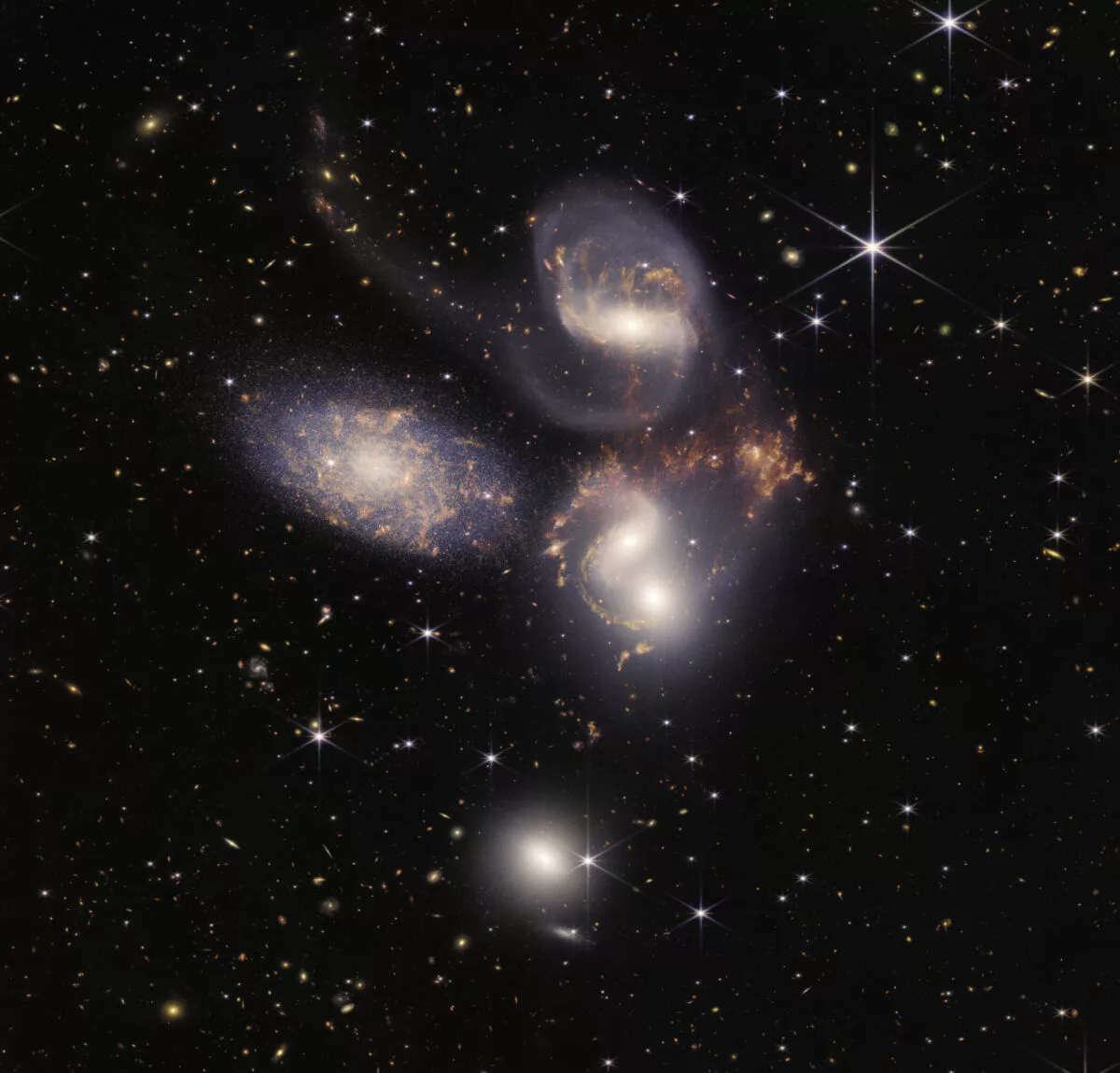
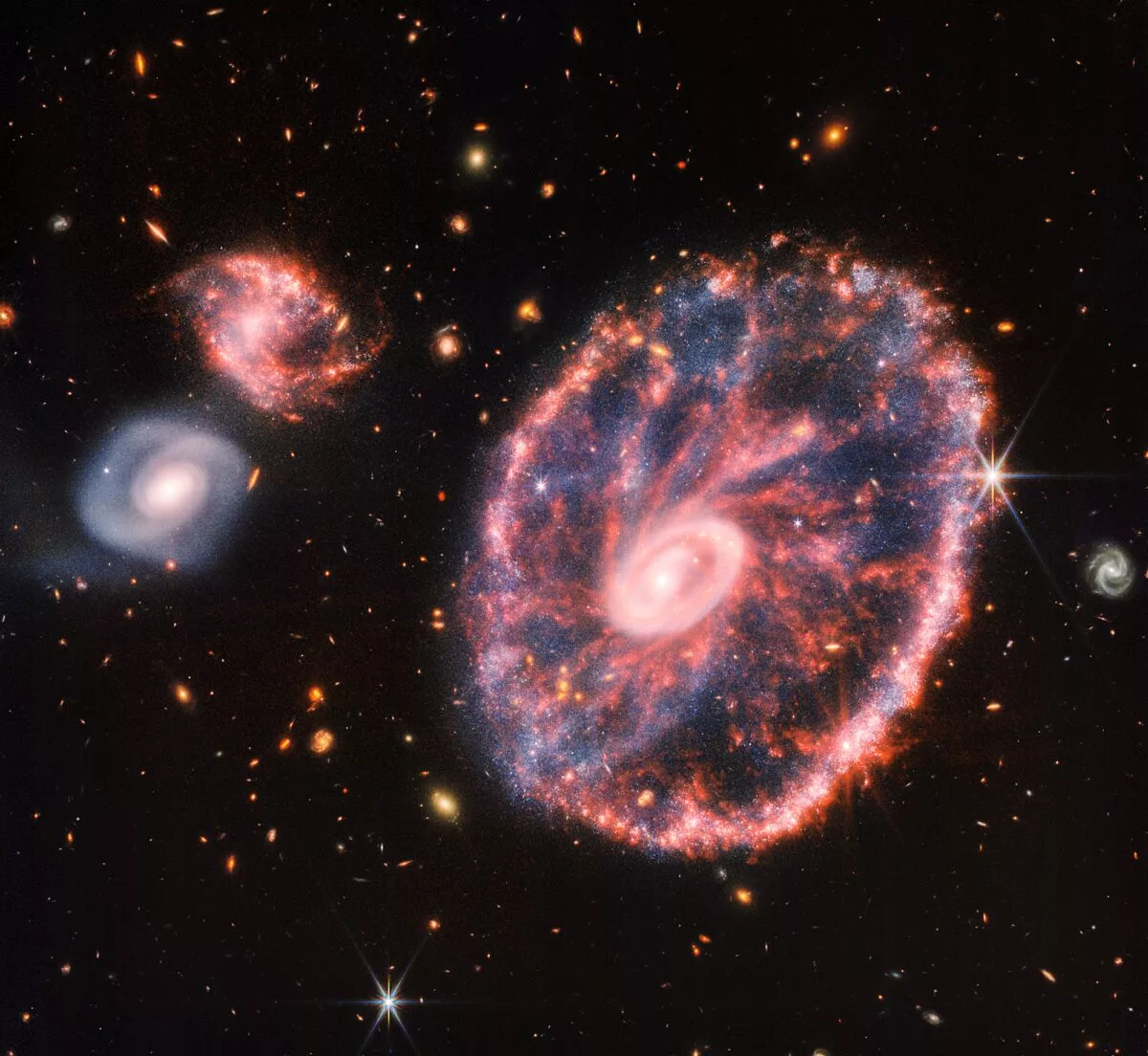
- Space telescope detects a galaxy collapse: As the galactic star clusters merge, new stars form. The process is said to take place twenty times faster than in our Milky Way, for example.
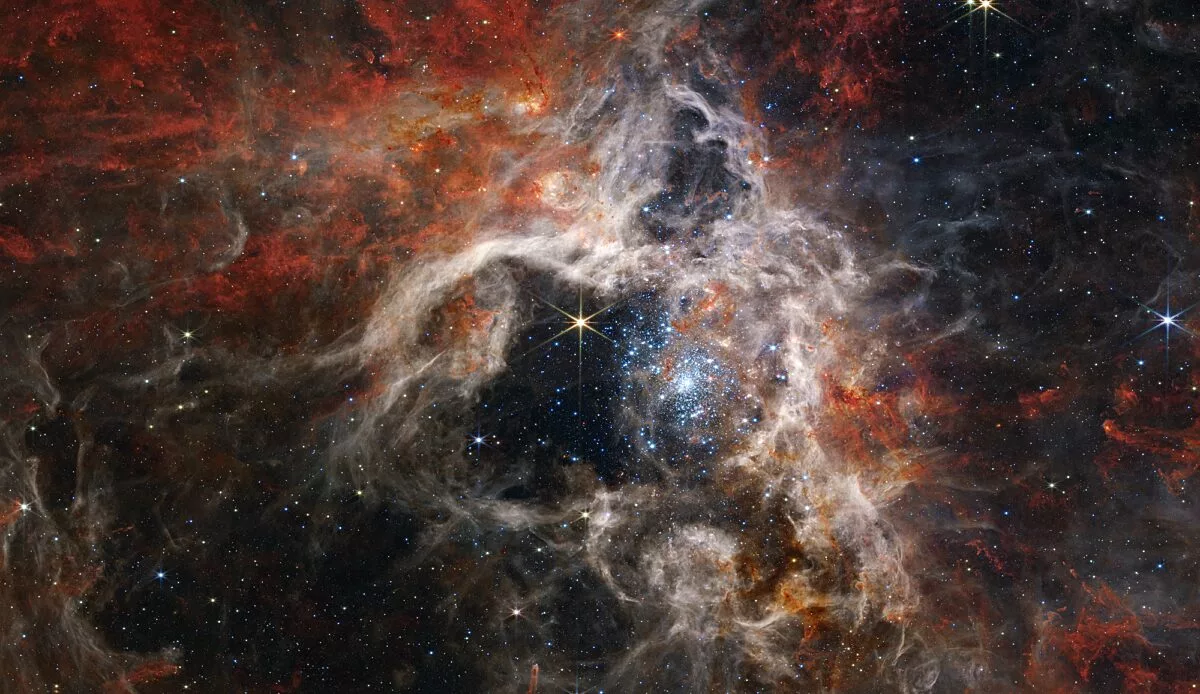
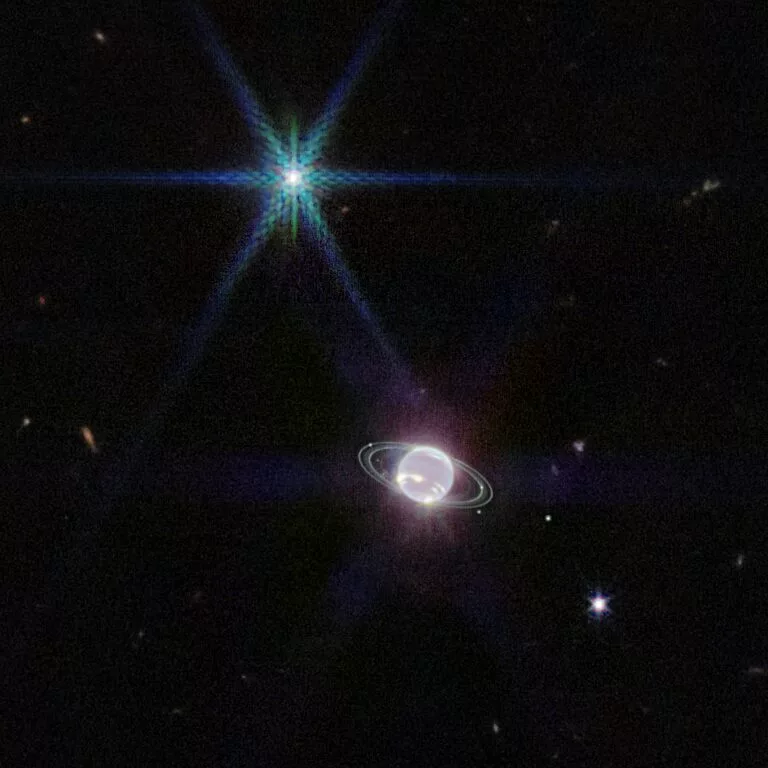
James Webb Telescope Images
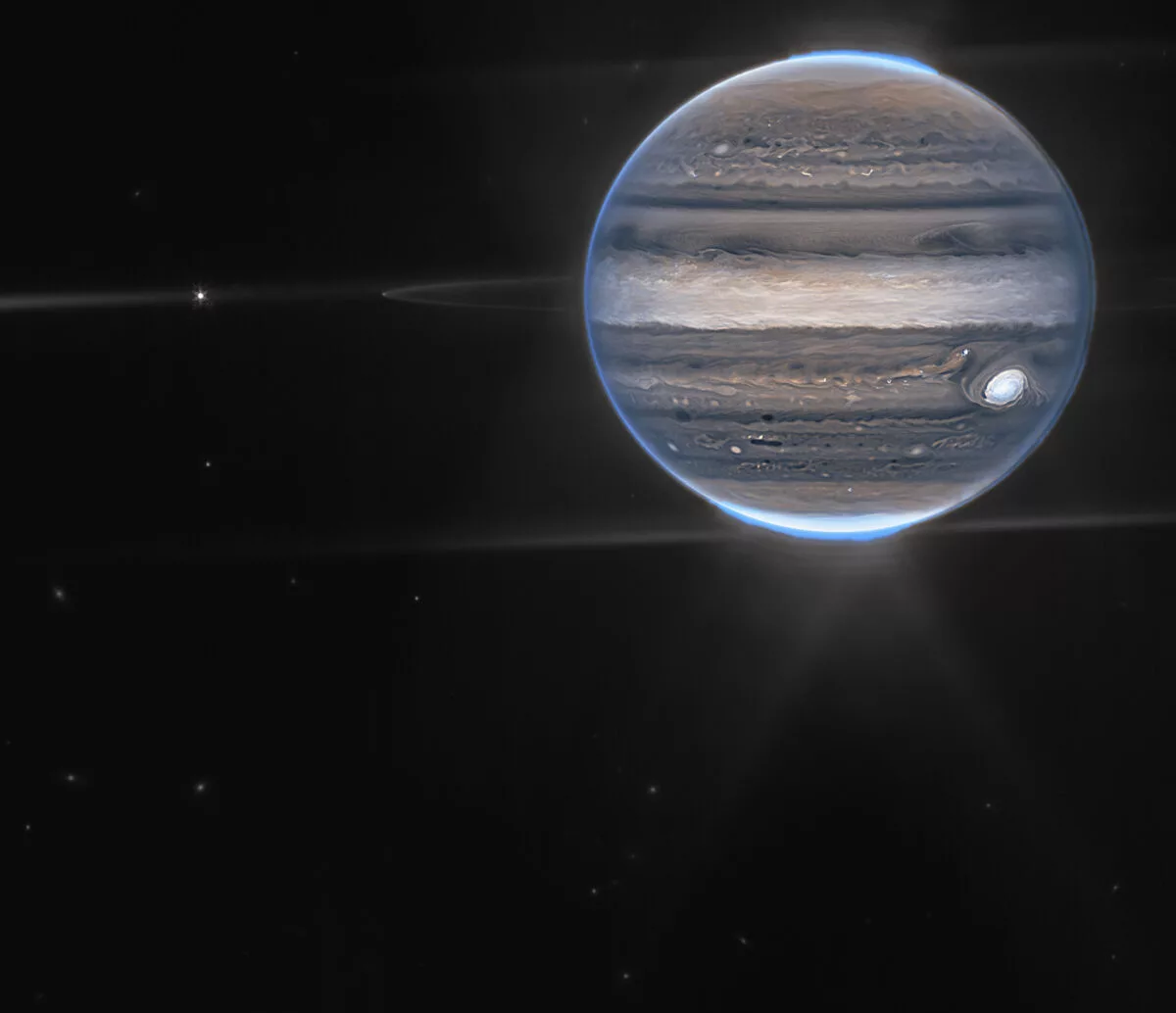
All images were taken from the NASA website.
Want to buy your first telescope? Here’s a quick check.
Frequently Asked Questions
The cost is estimated at 10 billion US dollars.
The JWST is located at a so-called Lagrange point, 1.5 million kilometres away.
With the James Webb Telescope, researchers have discovered six massive galaxies in the early universe that, according to current theories, should not exist. This is because they have more mass than they should have at that point in the early universe.