By Alexander Merz · Published on · Details checked on 14 September 2026
Every spring, observers find in the northern sky, between the prominent “Lion” and the “Herdsman”, a faint constellation made up of consistently dim main stars. Most of the stars of the constellation Coma Berenices belong to an open star cluster that is almost better known than the associated constellation itself. Some experts even believe that the Coma Star Cluster Melotte 111 once inspired the constellation describers to choose the name. Far from the Milky Way, one can observe the stars of Berenice as well as numerous galaxies, but only with good optics and in an environment as free of light pollution as possible.
The Lion myth and the peculiarities of Coma Berenices
In the time of the constellation describer Ptolemy, the faint stars and the then-unknown galaxies of today’s constellation in the northern sky belonged to the constellation Leo. The mythologists of Greek antiquity saw in it the tuft of the savannah predator’s tail, far from the Milky Way. Only in 245 BC was this part of the zodiac sign renamed by astronomers and poets after the benevolent pharaoh “Berenice II”. According to the writings, she had sacrificed her hair to plead for the safe return of her husband from war. When the braid vanished from the shrine, the priests declared that the gods had accepted the offering and created a star group of its own from it – the constellation Coma Berenices.
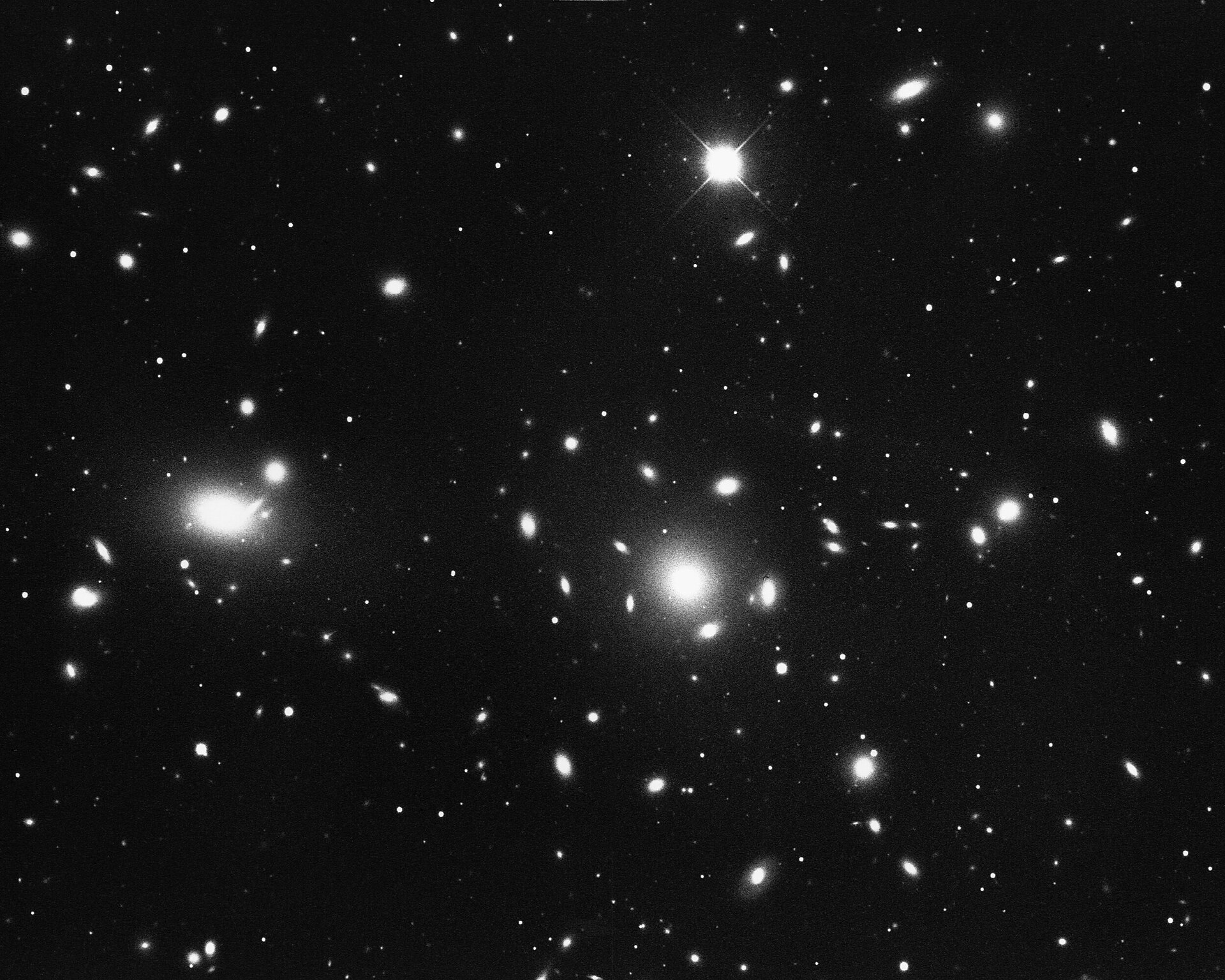
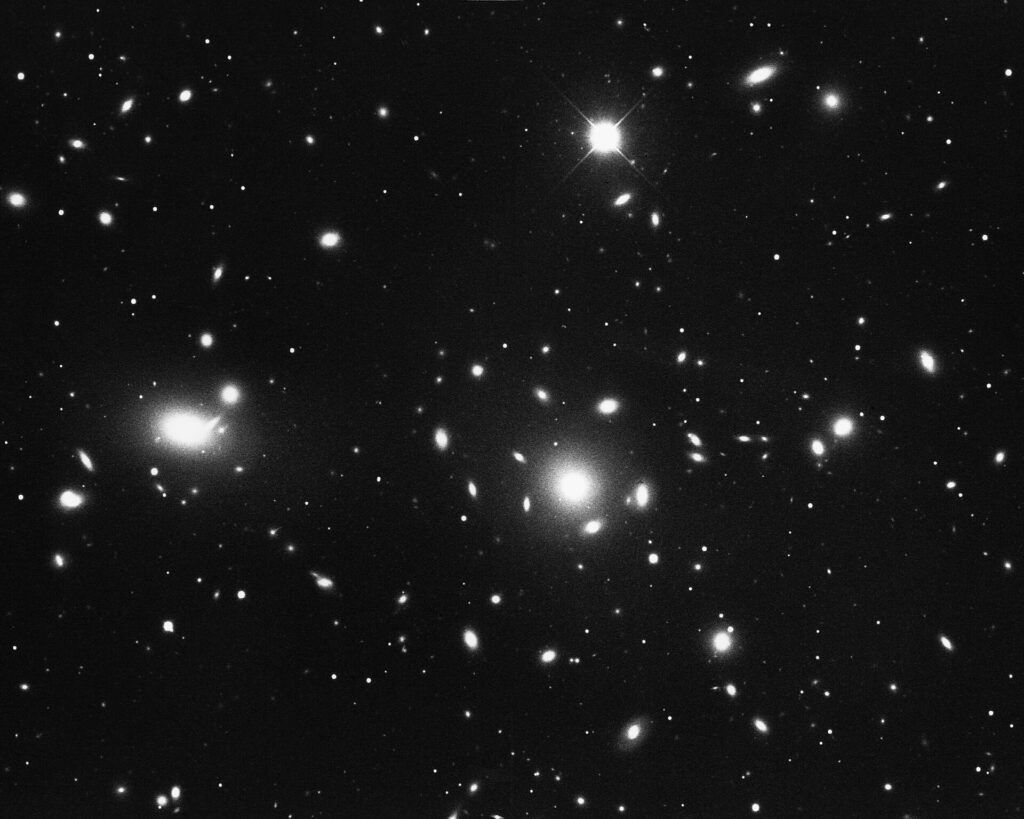
Later, references to and descriptions of the constellation appeared in numerous writings, of both astronomy and astrology, on celestial globes and star charts. The autumn/winter meteor shower of the “Coma Berenicids” (at most 3 – 5 shooting stars per hour) in December has its radiant in the constellation Coma Berenices of the northern sky. Even galaxies up to 450 million light-years away, among them very many members of the Coma galaxy cluster, can be found easily if you follow the stars of Berenice in the observing direction from the galactic north pole of the Milky Way.
The constellation Coma Berenices and its stars
Although the main and other stars of the constellation Coma Berenices shine no brighter than magnitude 4, a night of observation devoted to this part of the northern sky is worthwhile. Many double stars and multiple star systems can already be resolved into their components with prism binoculars or simple (small) telescopes. The observing region, undisturbed by gas and dust clouds, also makes it easier to see sometimes very nearby stars and star systems. Besides the Coma galaxy cluster, deep-sky observers find, in the southern part of the constellation, some galaxies of the Virgo Cluster, in one part of which, the Local Group, our Milky Way also moves.