By Alexander Merz · Published on · Details checked on 30 September 2026
Tonight, September 30, 2026, no comet is visible to the naked eye or in binoculars. The brightest comet in the US night sky is 10P/Tempel at about magnitude 10.2 – a telescope target (about 8 in (200 mm) aperture, very dark sky).
More in our overview: Comets.
Which comets are visible tonight?
The table lists every comet that climbs at least 10° above the horizon over the center of the US tonight and is brighter than magnitude 12. The brightness values are not predictions but come from current observations that amateur astronomers around the world report to the COBS comet database.
| Comet | Brightness | What you need | Best time | Where to look |
|---|---|---|---|---|
| 10P/Tempel | mag 10.2 ↘ fading | Larger telescope about 8 in (200 mm) aperture, very dark sky | 11:42 p.m. altitude 17° | Piscis Austrinus |
| 107P/Wilson-Harrington | mag 10.3 ↗ brightening | Larger telescope about 8 in (200 mm) aperture, very dark sky | 8:16 p.m. altitude 20° | Ophiuchus |
| 161P/Hartley-IRAS | mag 11.9 ↗ brightening | Larger telescope about 8 in (200 mm) aperture, very dark sky | 12:18 a.m. altitude 44° | Aquarius |
Plus 9 more comets between magnitude 12 and 15 that only a camera on a tracking mount will catch.
Night of September 30, astronomically dark from about 8:16 p.m. to 6:30 a.m. local time, for the center of the contiguous US (altitude above 10°). Local times hold within about half an hour anywhere in the lower 48 states. The Moon is 78 % illuminated and brightens the sky, so faint comets get lost. Data: COBS Comet Observation Database, updated September 30, 5:50 pm CT, checked hourly.
“Best time” is the moment the comet stands highest in a dark sky. Because US time zones follow longitude, the local time is nearly the same from Boston to Los Angeles. To find the constellation, use a planetarium app or our overview of planets visible tonight.
Is a bright comet coming soon?
This list shows the known comets expected to get brighter than magnitude 9 in the next 18 months. It is an extrapolation of the light curve so far – and comets are notorious for ignoring forecasts.
| Comet | Peak brightness (forecast) | When |
|---|---|---|
| 2P/Encke | mag 8.7 | February 10, 2027 |
| 45P/Honda-Mrkos-Pajdusakova | mag 8.5 | August 31, 2027 |
Forecast from the light curve so far (COBS), updated September 30, 2026. Peak brightness often happens close to the Sun – whether the comet is well placed for the US shows up in the table above once it is in range.
The most spectacular comets often announce themselves only months in advance. C/2023 A3 (Tsuchinshan-ATLAS), the bright comet of October 2024, was discovered less than two years before, and C/2025 A6 (Lemmon) in fall 2025 only ten months before.
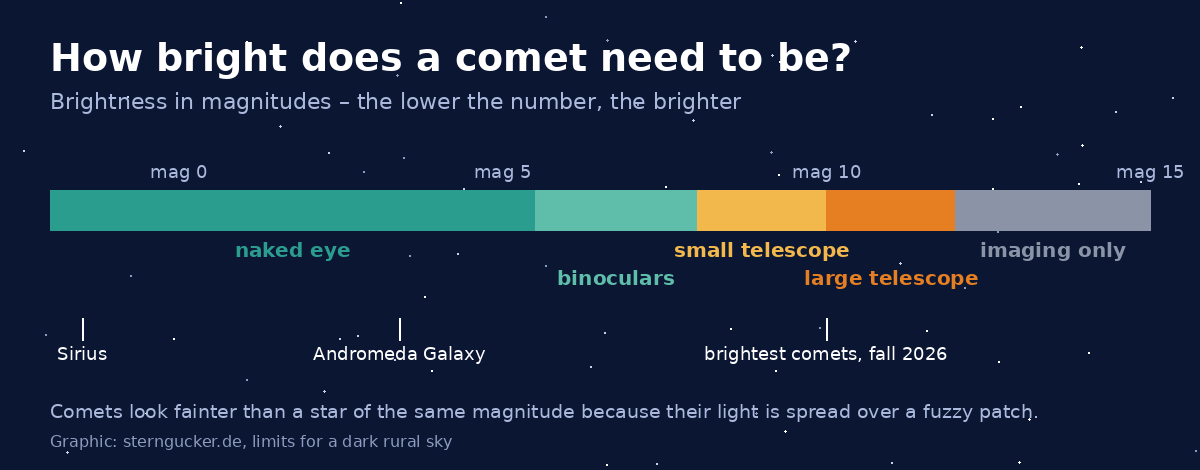
How bright does a comet need to be for you to see it?
Astronomers measure brightness in magnitudes. The lower the number, the brighter: Sirius is magnitude −1.5, and the faintest stars you can see from the countryside are about magnitude 6.
For comets you need to be one step stricter. Their light is spread over a fuzzy patch, so a magnitude 6 comet looks much fainter than a magnitude 6 star. In practice, the naked eye needs a comet around magnitude 5 and a dark sky.
| Brightness | What you need | What it looks like |
|---|---|---|
| up to mag 5.5 | naked eye | a fuzzy star, with a tail if the comet is bright |
| mag 5.5 to 8 | 10×50 binoculars | round glow with a brighter core |
| mag 8 to 10 | telescope from 4–6 in (100–150 mm) | small, diffuse patch |
| mag 10 to 12 | telescope from 8 in (200 mm) | faint haze, only under a dark sky |
| fainter than mag 12 | camera on a tracking mount | practically invisible in the eyepiece |
How to find a comet in the sky
The most important step is the location, not the equipment. Get out of town, give your eyes 20 minutes to adapt to the dark and bring only a red light. A comet that is just visible in the countryside disappears completely at the edge of a city.
Then pick the constellation from the table and a bright star in it as your starting point. Comets move, so you need a chart showing today’s position – apps like Stellarium show current comets once you load the comet catalog.
Keep an eye on the Moon, too. Around full Moon, faint comets get lost in the brightened sky, so the best nights are around new Moon.
What equipment do you need for comets?
For a bright comet, good binoculars are enough – they show the head and tail together, which often won’t fit in a telescope’s field of view. For the comets that are in the sky most of the time, though, you need plenty of aperture, meaning a large mirror that collects a lot of light.
For bright comets: Celestron UpClose G2 10x50 Porro Binoculars
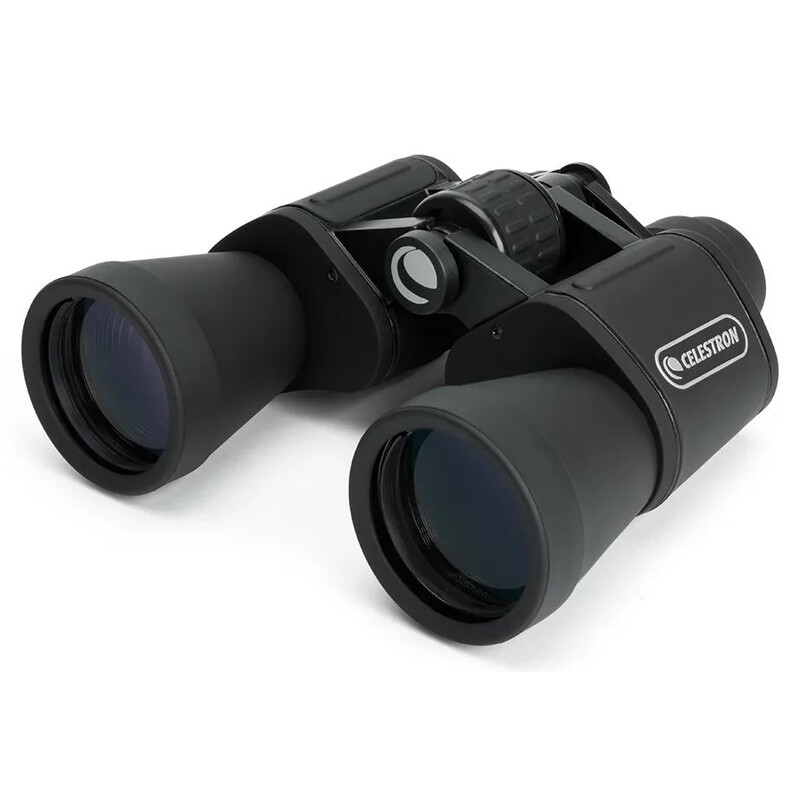
Classic 10x50 binoculars: 50 mm (2 in) aperture and a wide field that fits even a long tail. Good for comets down to about magnitude 8 – and for plenty of other targets in the sky.
Price: € 62
If you want more: an 8-inch Dobsonian
With 200 mm (8 in) of aperture, this telescope gathers 16 times as much light as 50 mm binoculars. That takes you to comets down to about magnitude 12 – almost everything in the list above. The extra cost pays off if you also want to see galaxies and nebulae and have room to set it up.
For advanced observers: Skywatcher Dobson Telescope N 200/1200 Skyliner Classic
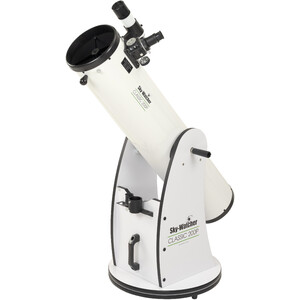
200 mm of aperture — the most sky for your money. Set it on the ground, point by hand: nebulae, clusters and galaxies for years to come.
Price: € 479
Not sure what suits you? Our free telescope advice recommends a telescope for your budget and your goals.
What a truly bright comet looks like
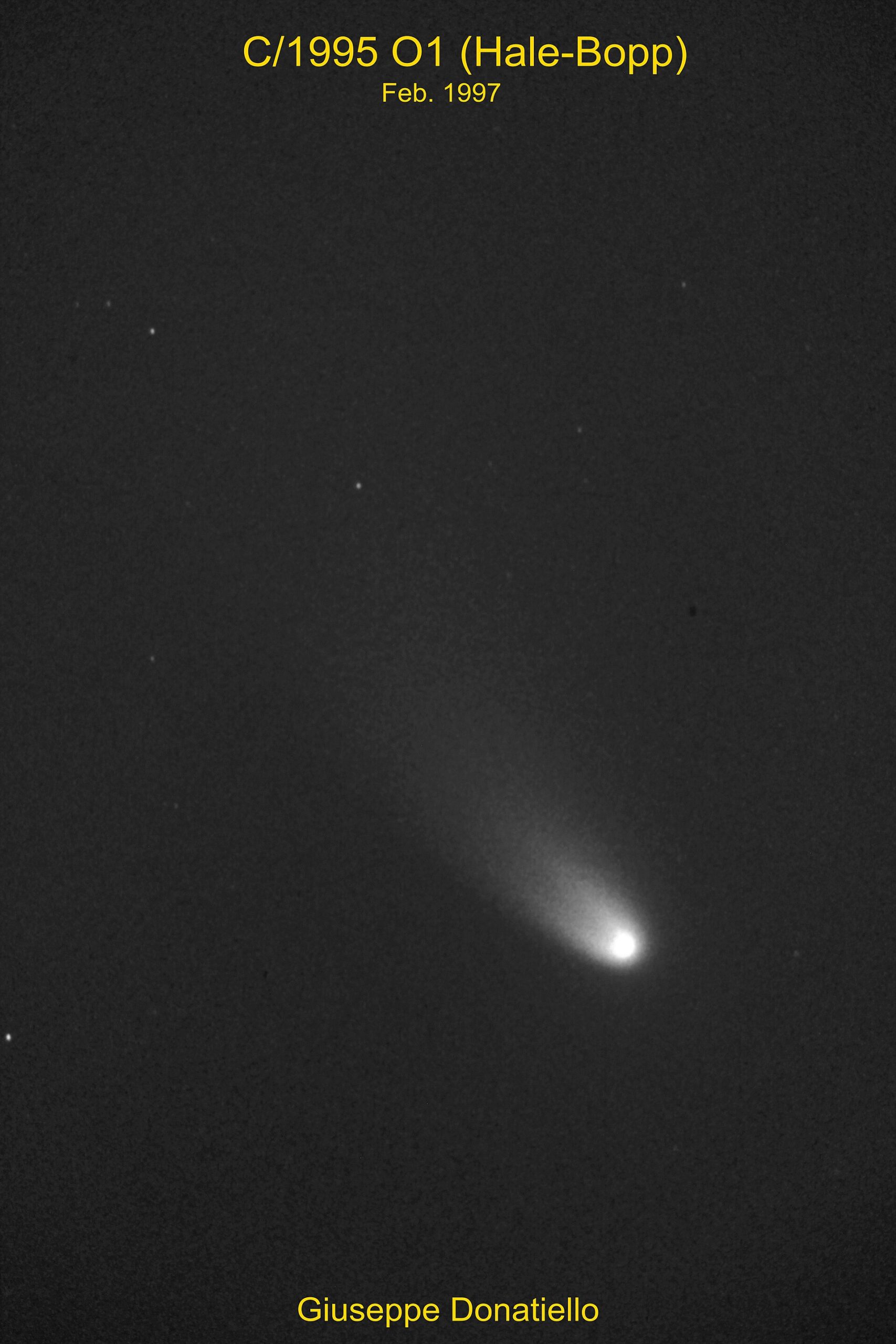
In 1997, Hale-Bopp was visible to the naked eye in the evening sky for months, even over big cities. A “great comet” like that appears only once or twice a decade and can never be planned years in advance.
The most famous comet, Halley’s, returns like clockwork: its next closest approach to the Sun is in July 2061. Everything about its orbit is on our page about Halley’s Comet.
Frequently asked questions about comets in the sky
Which comet is visible tonight?
The brightest one over the US right now is 10P/Tempel at about magnitude 10.2. The full list with the best viewing time is at the top of this page and updates every hour.
Can you see a comet with the naked eye tonight?
Only if a comet in the table above is marked “Naked eye”. On average that happens every year or two for a few weeks, most recently in fall 2025 with comet Lemmon.
When is the next bright comet?
Nobody knows exactly. Known comets expected to get brighter than magnitude 9 are in the outlook above. The brightest comets of recent years, however, were each discovered only one to two years ahead.
What does a comet look like in the sky?
Usually like a small, gray fuzzy patch with no visible tail. Only bright comets show a tail to the naked eye or in binoculars, and it is much paler than in photos.
Does a comet visibly move across the sky?
Not like a shooting star. A comet seems to stand still among the stars and only shifts a little from night to night. Anything that zips across the sky is a shooting star or a satellite.
Keep reading
- Comets – what they are made of and where they come from
- Halley’s Comet – the best-known comet and its return in 2061
- Planets visible tonight – what else is up in the night sky
- Astronomy binoculars – which binoculars work best for the sky
* Affiliate link: if you buy through this link we may earn a small commission from Astroshop or High Point Scientific, at no extra cost to you.