By Alexander Merz · Published on · Details checked on 22 September 2026
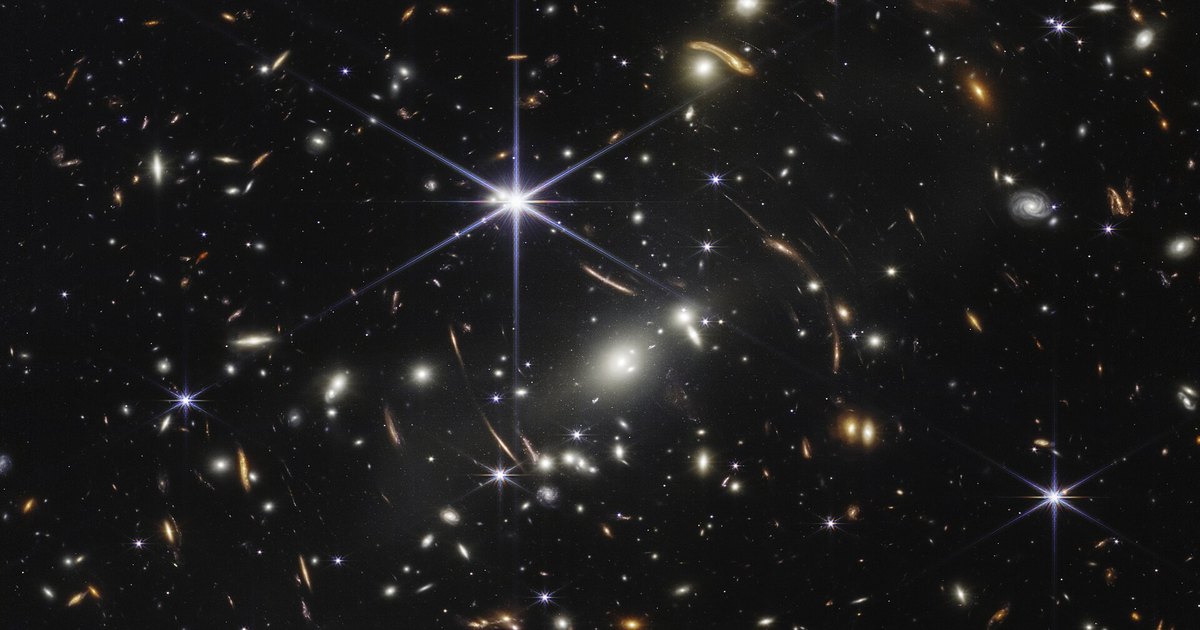
By current estimates, the observable universe contains a few hundred billion to about two trillion galaxies. Nobody has counted them: every figure is an extrapolation from tiny, extremely long-exposed patches of sky.
How many galaxies are there: estimates since 1995
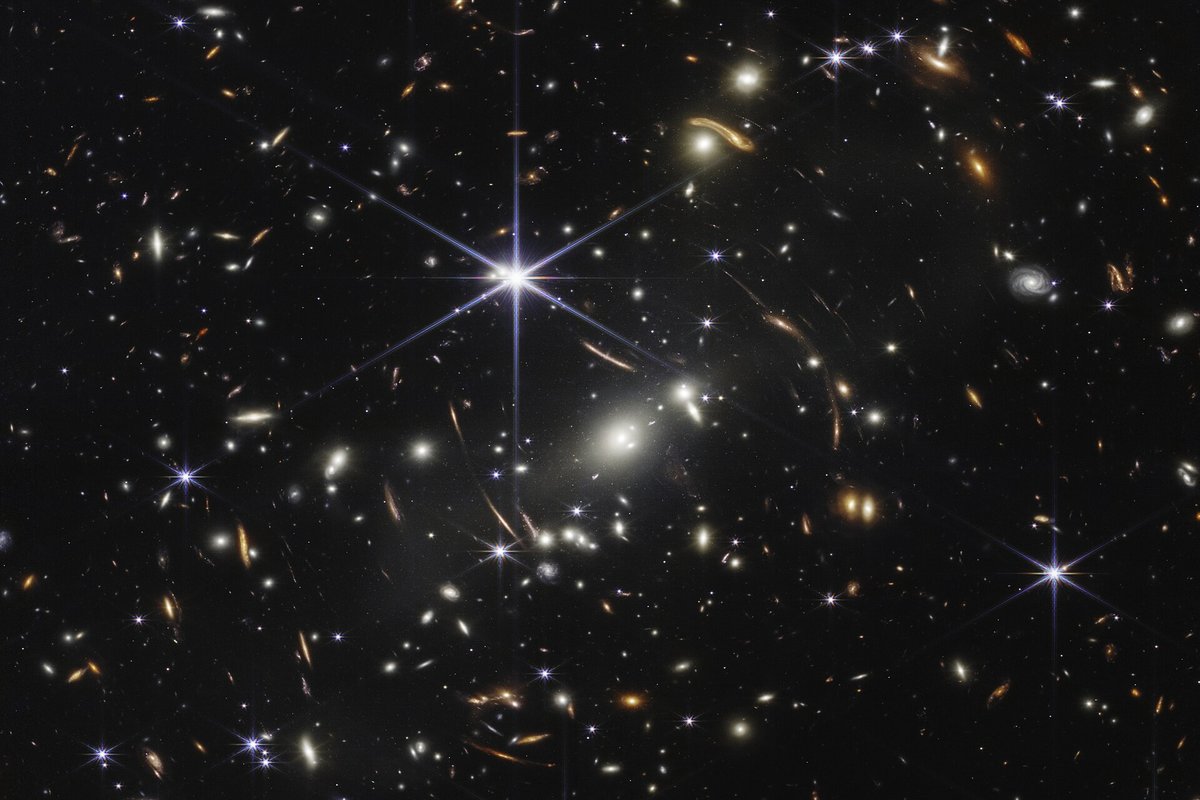
Ever since Hubble stared at a seemingly empty bit of sky for ten days in 1995, the estimate has shifted twice by a factor of ten – first up, then back down. The table shows the key milestones.
| Year and study | Method | Estimate |
|---|---|---|
| 1995/2004: Hubble Deep Fields | Galaxies counted in tiny fields and scaled up to the whole sky | 100–200 billion |
| 2016: Conselice et al. | Galaxy counts up to redshift 8 plus a model for those too faint to see | about 2 trillion |
| 2021: Lauer et al. (New Horizons) | Sky background light measured beyond Pluto: at most twice the light of all known galaxies | hundreds of billions |
| 2024: Postman et al. (New Horizons) | New, more precise measurement: background light fully explained by known galaxies | hundreds of billions |
| since 2022: James Webb | Deeper into the early universe: about ten times more bright galaxies in the first 500 million years than expected | affects the early era, barely the total |
Today the lower half of the range is the best supported. The two trillion come from a model that assumes very many very faint galaxies; their light should show up in the background glow of the sky, and that is exactly what New Horizons did not find.
Sources for the table: NASA/ESA 2016, Conselice et al. 2016, Lauer et al. 2021, Postman et al. 2024, COSMOS-Web/JWST 2025.
Scaling up a deep field: where the number comes from
The principle is simple: count the galaxies in a small field and multiply by the number of such fields across the whole sky. The 2004 Hubble Ultra Deep Field shows about 10,000 galaxies in 11 square arcminutes – roughly one fiftieth of the area of the full Moon.
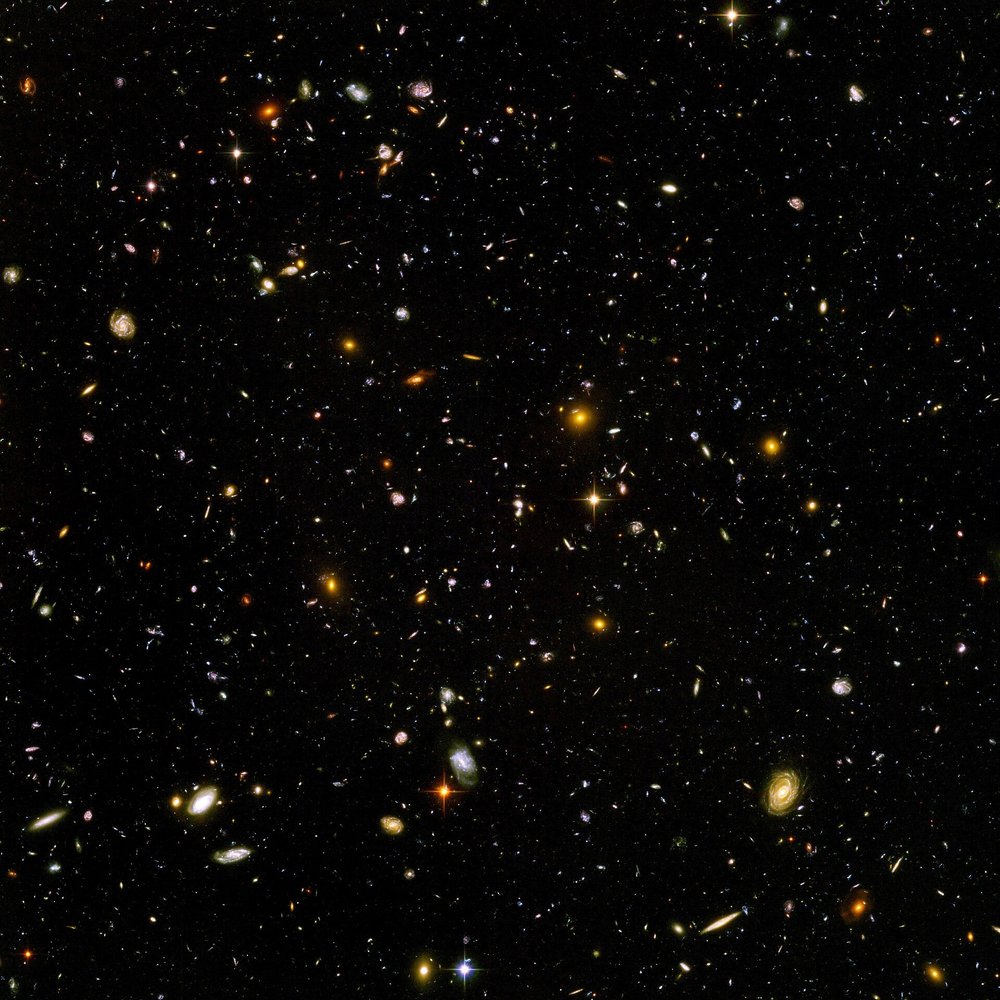
The whole sky covers about 148 million square arcminutes, so roughly 13.5 million such fields. 13.5 million times 10,000 gives a good 130 billion galaxies – exactly the figure that sat in every encyclopedia for decades.
Why the numbers differ so much: four reasons
Between 130 billion and two trillion lies a factor of 15. That is not down to sloppy work but to four basic problems with counting.
The observable universe has a limit
We only see light that has had time to reach us since the Big Bang 13.8 billion years ago. Because space has expanded in the meantime, this sphere now measures about 93 billion light-years across. Whatever lies beyond is unobservable – every number on this page applies only to this sphere.
Most galaxies are tiny dwarfs
Even in our own neighbourhood, the Local Group, only three of more than 80 galaxies are large spirals; the rest are dwarf galaxies. Many of them have only a few thousand to a few million stars and would be invisible at a distance of just a few million light-years.
How many such dwarfs exist in the distant universe has to be extrapolated from counts of brighter galaxies. That very extrapolation makes the difference between a hundred billion and two trillion.
Redshift and the detection limit
The farther away a galaxy is, the more the expansion of space shifts its light into the infrared. At the same time its surface brightness drops dramatically – with the fourth power of (1 + redshift), so by a factor of 6,500 at z = 8.
Beyond a certain distance Hubble therefore sees only the brightest examples. James Webb reaches much farther with its infrared vision, but it too has a detection limit below which galaxies simply vanish.
Counting across time: there used to be more
A deep field shows distant galaxies as they were billions of years ago. The early universe held many more, but smaller, galaxies that have since merged into large ones.
Conselice’s two trillion therefore count galaxies from every epoch along our line of sight. How many exist “right now” is a different question – and one that cannot be observed in principle, because their present-day light has not reached us yet.
Orders of magnitude: from the Milky Way to the edge
With every step of the cosmic hierarchy the number of galaxies grows a hundred- to a thousandfold. The ladder shows where we stand.
The Local Group and the Virgo Cluster are part of the Laniakea Supercluster with about 100,000 galaxies. Even its 520 million light-years are only just over half a percent of the observable universe.
Stars per galaxy: from thousands to trillions
Galaxies differ in their number of stars by about ten orders of magnitude. The table shows typical examples; all values are estimates with large uncertainties.
| Galaxy | Type | Stars (approx.) |
|---|---|---|
| Ultra-faint dwarfs (e.g. Segue 1) | dwarf galaxy | a few thousand |
| Small Magellanic Cloud | irregular dwarf galaxy | several hundred million |
| Large Magellanic Cloud | irregular dwarf galaxy | about 30 billion |
| Milky Way | barred spiral | 100–400 billion |
| Andromeda Galaxy (M31) | spiral galaxy | about 1 trillion |
| M87 in the Virgo Cluster | giant elliptical | several trillion |
Multiplied by a few hundred billion galaxies, that gives roughly 1022 to 1024 stars in the observable universe. More about stars – from the nearest to the brightest – on our page Stars.
Local Group: more than 80 galaxies next door
The Local Group is our galactic neighbourhood: about 10 million light-years across, with more than 80 known members. It is dominated by three spirals – the Milky Way, the Andromeda Galaxy and the Triangulum Galaxy M33.
Almost everything else is a dwarf galaxy, including the Large Magellanic Cloud and the Small Magellanic Cloud. The list grows almost every year as sky surveys track down ever fainter companions; dozens have been added since the standard catalogue by McConnachie (2012).
| Galaxy | Type | Distance | Visibility |
|---|---|---|---|
| Milky Way | barred spiral | – (we are inside it) | band of light, naked eye |
| Large Magellanic Cloud | irregular dwarf galaxy | 160,000 ly | naked eye, southern sky only |
| Small Magellanic Cloud | irregular dwarf galaxy | 200,000 ly | naked eye, southern sky only |
| Andromeda Galaxy (M31) | spiral galaxy | 2.5 million ly | naked eye |
| Triangulum Galaxy (M33) | spiral galaxy | 2.7 million ly | naked eye only under very dark skies |
| M32 and M110 | dwarf ellipticals | 2.5 million ly | binoculars, telescope |
Seeing galaxies yourself: eye, binoculars, telescope
Out of hundreds of billions of galaxies, from mid-northern latitudes you can see exactly two with the naked eye: the Milky Way we live in and the Andromeda Galaxy. Under a very dark rural sky the Triangulum Galaxy M33 joins them – a test for experienced eyes.
The two Magellanic Clouds are bright and large, but they lie so far south that they never rise from Europe or the US mainland. They only appear just above the horizon in the tropics and climb high in the Southern Hemisphere.
| Instrument | Galaxies | Examples |
|---|---|---|
| Naked eye | 2 to 3 | Milky Way, Andromeda, M33 under very dark skies |
| 10×50 binoculars | about 10 to 20 | Andromeda with M32, M33, M81 and M82, M51 under good skies |
| 130 mm telescope | dozens | most of the roughly 40 Messier galaxies, Leo Triplet, Virgo Cluster |
| 200–250 mm telescope | hundreds | many NGC galaxies as well, first spiral arms in M51 |
See galaxies for yourself
Let’s be honest up front: in a telescope, galaxies are grey, fuzzy smudges, not colourful spirals like in Hubble photos. The eye cannot see colour in so little light.
The appeal lies elsewhere: you are seeing light that has travelled for millions of years, and with 130 mm of aperture under a dark sky you can reach dozens of such worlds. Which aperture shows what, and how to find galaxies, is explained in our guide Telescope for galaxies.
Starter scope for galaxies: Skywatcher Dobson Telescope N 130/650 Heritage FlexTube
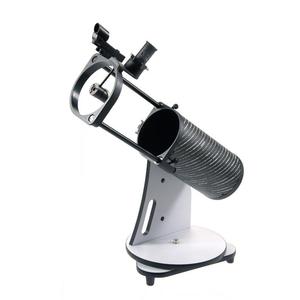
130 mm aperture on a tabletop Dobsonian mount: enough for Andromeda and its companions, M81/M82 and the bright Virgo galaxies under dark skies. Compact, quick to set up, no electronics.
Price: € 265
Galaxy types at a glance: spirals, ellipticals, dwarfs
Edwin Hubble sorted galaxies by shape in 1926, and his basic classification is still used today. More on structure and formation on our overview page Galaxy.
| Type | Feature | Example |
|---|---|---|
| Spiral galaxy | disc with spiral arms, many young stars | Andromeda, M33 |
| Barred spiral | spiral arms start from a central bar | Milky Way |
| Elliptical galaxy | round to oval, old stars, little gas | M87 |
| Lenticular galaxy | disc without spiral arms | NGC 5866 |
| Irregular galaxy | no clear shape | Magellanic Clouds |
| Dwarf galaxy | small and faint | M32, M110 |
Dwarf galaxies are by far the most common type – they just never make it into picture galleries because they are so inconspicuous.
Frequently asked questions about the number of galaxies
How many galaxies are there in the Milky Way?
None – the Milky Way is itself a galaxy. What people usually mean are its companions: more than 50 known dwarf galaxies orbit the Milky Way, including the two Magellanic Clouds.
How many galaxies have been catalogued so far?
There is no exact total, because the catalogues overlap. The Euclid space telescope alone recorded about 26 million galaxies in its first data release in 2025 and is expected to image more than 1.5 billion by the end of its mission (ESA).
Are there more galaxies than stars in the Milky Way?
Roughly as many: the Milky Way has 100 to 400 billion stars, the observable universe a few hundred billion galaxies. With these uncertainties, it is impossible to say which number is larger.
Are there galaxies beyond the observable universe?
Very probably, since nothing suggests that space ends at our light horizon. But this cannot be observed in principle, and nobody knows how large the whole universe is.
How far away is the nearest galaxy?
The nearest large galaxy is Andromeda at 2.5 million light-years. Even closer are dwarf galaxies orbiting the Milky Way: the Sagittarius Dwarf Galaxy is about 70,000 light-years away, the Large Magellanic Cloud about 160,000.
Can you see the Magellanic Clouds from Europe or the US?
No. Both lie too far south: they only become visible south of about 17 to 20 degrees north latitude, and they only stand high in the Southern Hemisphere.
Read more: Galaxy: structure and types · The Milky Way · Stars · Telescope for galaxies