By Alexander Merz · Updated on · Details checked on 14 September 2026
Hubble in numbers: launched 24 April 1990 · mirror diameter 2.4 m · altitude approx. 540 km · over 1.5 million observations · still in service after more than 35 years.
Why a Telescope in Space?
Earth’s atmosphere is the natural enemy of astronomy: it makes stars twinkle and swallows entire ranges of wavelengths. The Hubble Space Telescope orbits the Earth above this blanket of air and has therefore, since 1990, delivered images of a sharpness that was long unattainable from the ground.
A Story of Mishap with a Happy Ending
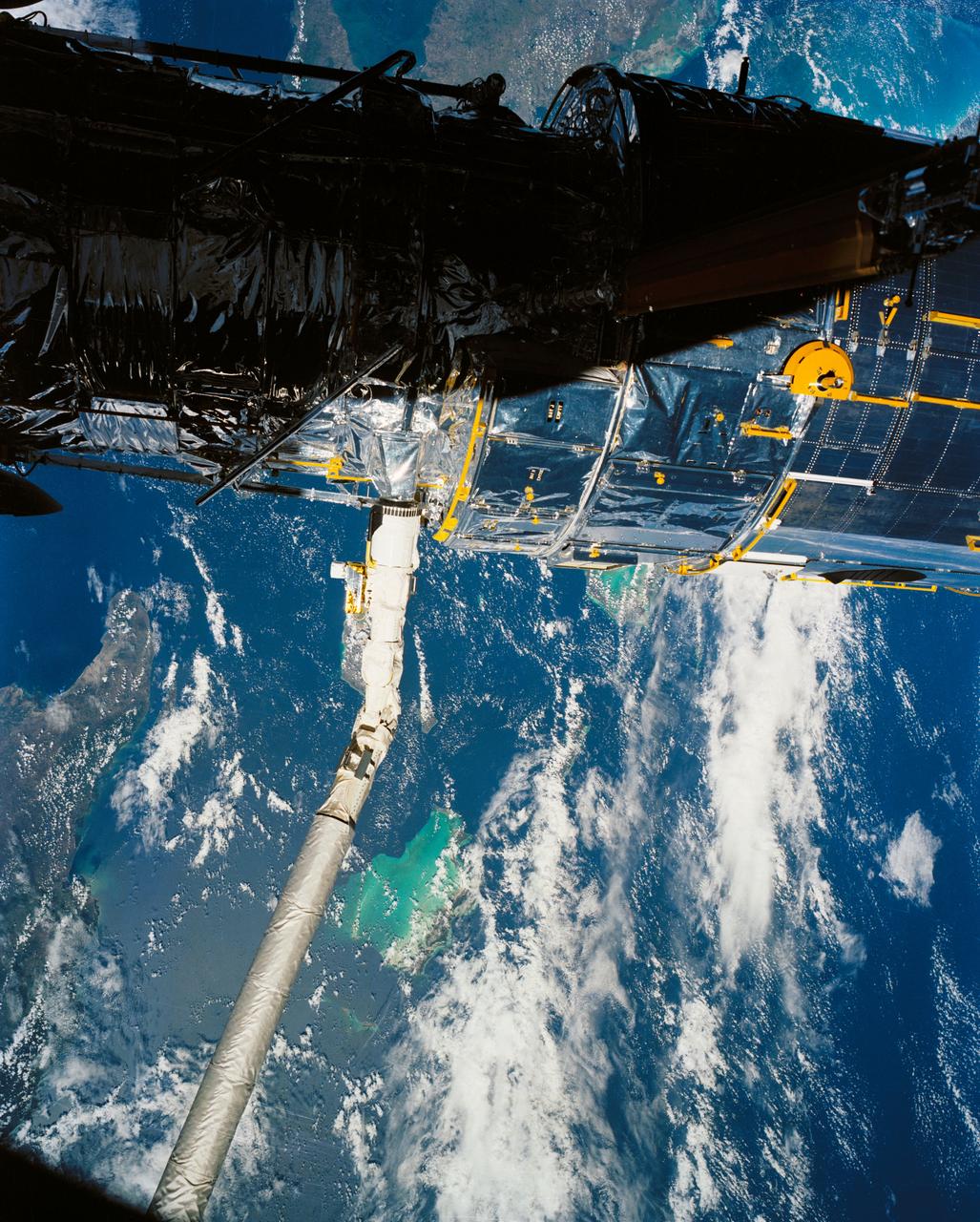
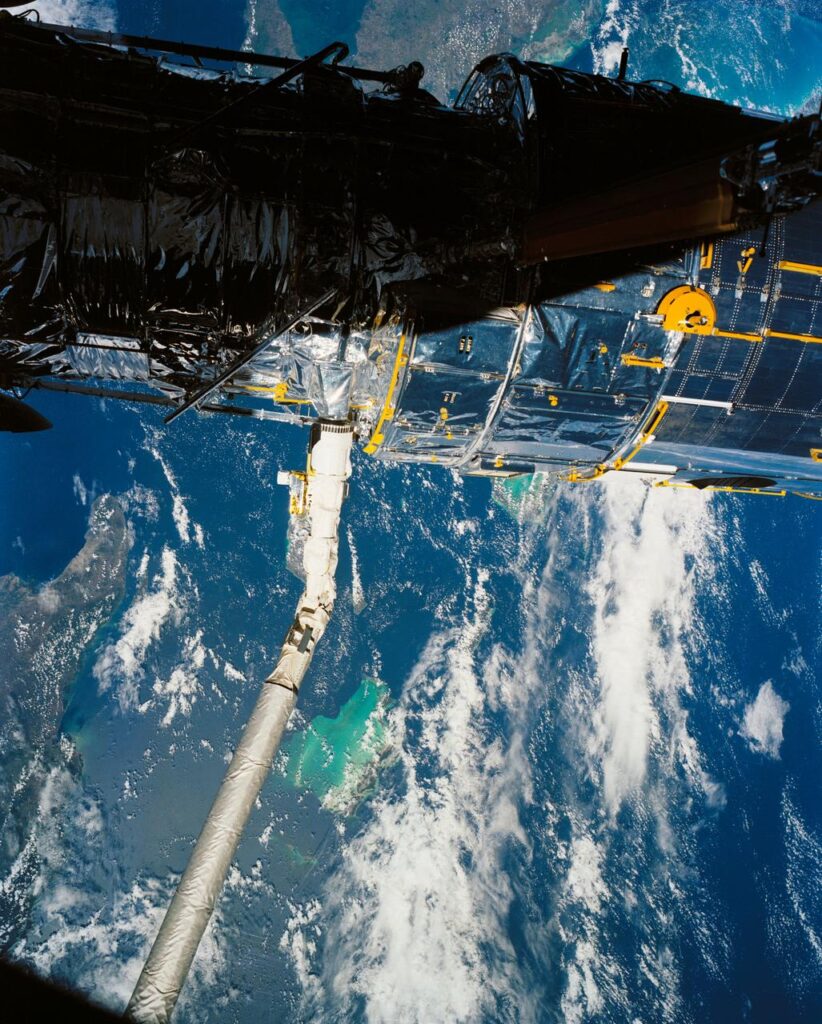
Shortly after launch came the disappointment: the main mirror had been ground wrong by two micrometres – Hubble was short-sighted. In 1993, astronauts installed corrective optics during a Space Shuttle mission, essentially a pair of glasses. Four further servicing missions (the last in 2009) kept the telescope young – Hubble is the only space telescope ever to be repaired in orbit.
What Hubble Has Discovered
Hubble helped determine the age of the Universe (13.8 billion years), provided evidence for the accelerating expansion (Nobel Prize in Physics 2011), photographed thousands of galaxies in a seemingly empty patch of sky with the Deep Fields and created icons such as the Pillars of Creation. Along the way it aided the study of exoplanet atmospheres and observed cometary impacts on Jupiter.
Hubble and James Webb: Competitors?
No – partners. The James Webb Space Telescope (since 2022) sees mainly in the infrared and thus looks deeper into the past and through clouds of dust; Hubble remains the specialist for visible and ultraviolet light. Many objects are now observed jointly by both.
Can You See Hubble – and Observe Hubble’s Targets Yourself?
Hubble itself moves across the sky as a point of light (much fainter than the ISS). More exciting: you can find many of Hubble’s subjects with your own equipment – the Orion Nebula, the Andromeda Galaxy or the Ring Nebula are real experiences even in a beginner’s telescope. Visually, you just have to do without the splendour of colours from the long exposures; for that, there is deep-sky photography.
Frequently Asked Questions
Is Hubble still active?
Yes. Despite occasional gyroscope problems, Hubble continues to deliver data – more than 35 years after launch.
How far can Hubble see?
Hubble photographed galaxies whose light had travelled for over 13 billion years – a glimpse into the infancy of the Universe.
Why are Hubble’s images so sharp?
Because no atmospheric shimmer interferes: above the atmosphere, the 2.4 m mirror reaches its full theoretical resolution.
Who owns Hubble?
It is a joint project of NASA and ESA – named after the astronomer Edwin Hubble, the discoverer of the expansion of the Universe.