By Alexander Merz · Updated on
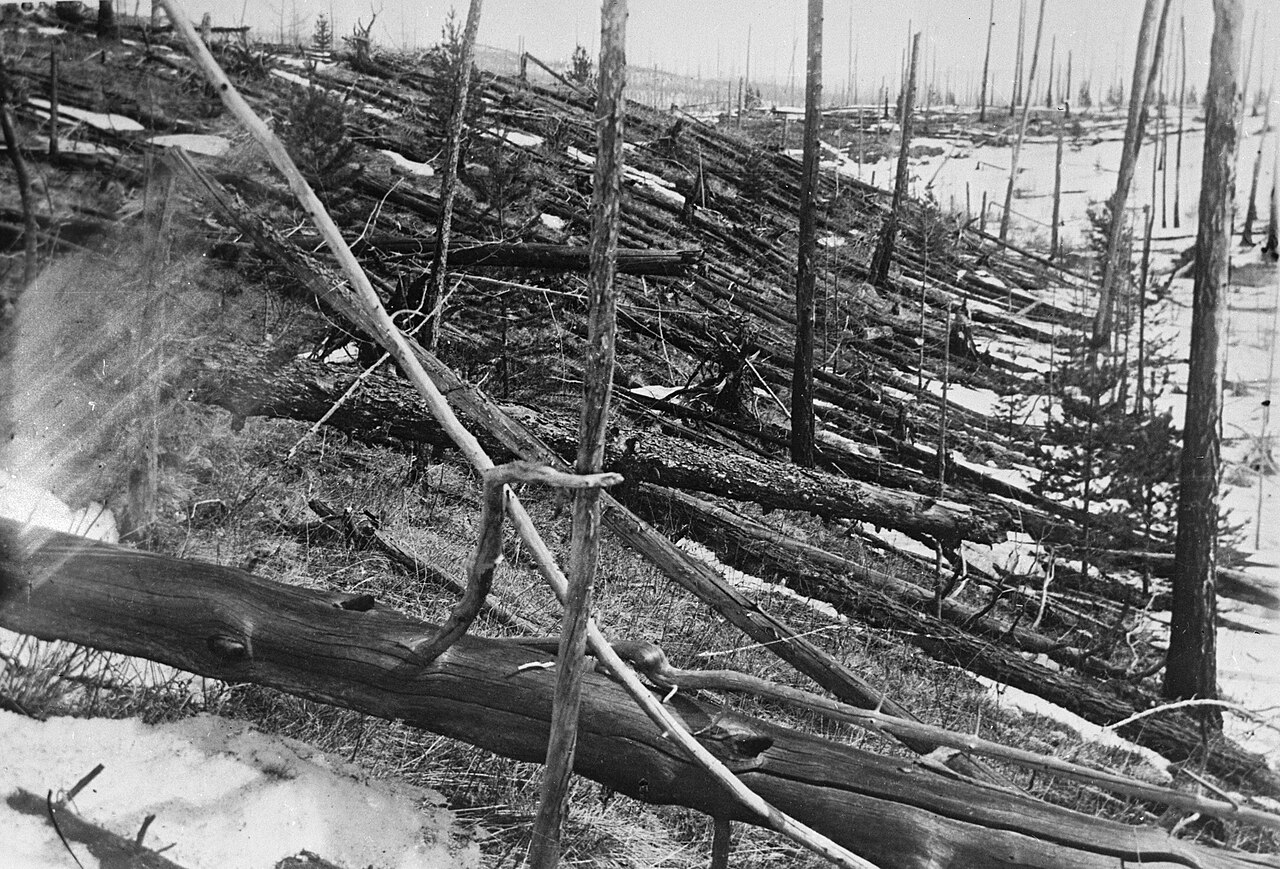
The Tunguska event was a massive explosion over the Siberian taiga on June 30, 1908, at around 7:14 a.m. local time: A space rock roughly 50 to 80 m across blew apart at an altitude of about 5 to 10 km and flattened the forest across 2,150 km² – leaving no crater and no confirmed meteorite.
What happened on June 30, 1908: a morning in the taiga
Shortly after 7 a.m., a bluish-white fireball streaked across Central Siberia, almost as bright as the Sun. Over the Stony Tunguska (Podkamennaya Tunguska), a tributary of the Yenisei, a blinding flash and a column of fire followed. Minutes later, a roar like artillery fire rolled across the land.
At the trading post of Vanavara, about 65 km to the south, the shock wave knocked people off their feet and blew in windows and doors. One resident later told Kulik’s expedition that he had been thrown from his chair and felt a heat as if his shirt were on fire. Because the region was almost uninhabited, the damage was limited to a few huts and some dead reindeer.
The explosion was recorded thousands of kilometers away. Seismographs in Irkutsk registered the tremor, and the air pressure wave reached the barographs in Potsdam, Germany – about 5,000 km away – after 4 hours and 42 minutes. It showed up there a second time after traveling all the way around the Earth.
The Tunguska explosion in numbers: energy, altitude, area
When it comes to the Tunguska event, the numbers vary widely. Nobody measured in 1908 how big the object was or how high it exploded. All values are reconstructions based on flattened trees, pressure wave recordings and computer models.
| Feature | Value | Note |
|---|---|---|
| Date and time | June 30, 1908, approx. 7:14 a.m. local time | 0:14 Universal Time; Julian calendar June 17 |
| Location | Stony Tunguska, today Krasnoyarsk Krai | 60° 53′ N, 101° 54′ E |
| Size of the object | roughly 50 to 80 m | older estimates 30 to 100 m |
| Altitude of explosion | about 5 to 10 km | models range up to 15 km |
| Energy | 3 to 30 megatons of TNT | often quoted: 10 to 15 Mt |
| Flattened forest | 2,150 km² | butterfly shape, 70 km wide, 55 km long |
| Flattened trees | often cited: 80 million | old extrapolation, probably far too high |
| Crater | none | Lake Cheko as a crater is disputed |
| Fatalities | none confirmed | up to three are considered possible |
Sources: Wikipedia (Tunguska event), NASA (2019), Sandia National Laboratories (2007), Boslough & Bruno (2025), Jenniskens (2019).
How powerful was the explosion? Three to thirty megatons
The older estimates of 10 to 15 megatons come from comparisons with nuclear weapons tests. This calculation treats the explosion as a single point in the air. One megaton equals the explosive force of one million tons of TNT.
In 2007, Sandia National Laboratories used supercomputer simulations and arrived at just 3 to 5 megatons. The reason: a fireball that keeps moving downward at high speed carries its energy closer to the ground and does more damage with less explosive force. A NASA team, on the other hand, arrived at 10 to 30 megatons and an object 50 to 80 m across in 2019.
For comparison: the Hiroshima bomb had a yield of about 15 kilotons. Depending on the estimate, Tunguska was therefore 200 to 2,000 times as powerful. Whichever number is right, the event remains the most powerful explosion from space ever recorded by humans.
How big was the area? More than twice the size of Berlin
The forest was flattened across 2,150 km² – almost two and a half times the area of Berlin. The damage zone could have leveled an entire major city including its surroundings. The graphic shows the areas to scale as squares of equal area.
The famous 80 million trees are not a count but a rough estimate from 1933. At the time, the astronomer Astapovich assumed some 8,000 km² of devastated forest – almost four times the area mapped later. A 2025 paper by Boslough and Bruno therefore considers the figure far too high; there is no reliable recount.
No Tunguska crater: why the object blew apart in the air
Strictly speaking, the Tunguska impact wasn’t an impact at all: the object exploded in the air – experts call this an airburst. Traveling at many kilometers per second, it slammed into ever denser layers of air. The ram pressure in front of it became greater than its rock could withstand, and it broke apart.
Then everything happened in fractions of a second: the smaller the fragments, the more the air slows them down. The braking energy is released over a short distance, and the debris keeps breaking up and vaporizing. This suddenly released energy is the explosion.
The shock wave hit the forest from above – that’s why the trees directly below the explosion remained standing. Kulik found a zone about 8 km across there, with charred, stripped trunks standing upright like telegraph poles. Farther out, the wave arrived at a shallower angle and knocked the trees down radially outward.
The butterfly pattern of the fallen trees reveals the object’s trajectory. In the 1960s, Soviet researchers built model forests out of matchsticks and set off small explosive charges at an angle above them. The pattern matched an object that came in at an angle of about 30 degrees from the east-southeast.
Is Lake Cheko the crater? Probably not
In 2007, Italian geologists led by Luca Gasperini proposed that Lake Cheko is an impact crater after all. The small, bowl-shaped lake lies about 8 km north-northwest of the explosion’s center. The idea: a fragment about 10 m across could have survived the explosion and struck there.
The search for the Tunguska meteorite: Kulik’s expeditions from 1927
For almost 20 years, no scientist set foot in the center of the devastation. The taiga was remote, and Russia was caught up in war, revolution and civil war. It wasn’t until 1921 that the mineralogist Leonid Kulik set out to search – but he didn’t make it to the center.
Kulik expected a giant iron meteorite – and found nothing but fallen trees. With local Evenki as guides, he reached the center of the devastation in 1927. There was no crater there, only shallow, swampy depressions.
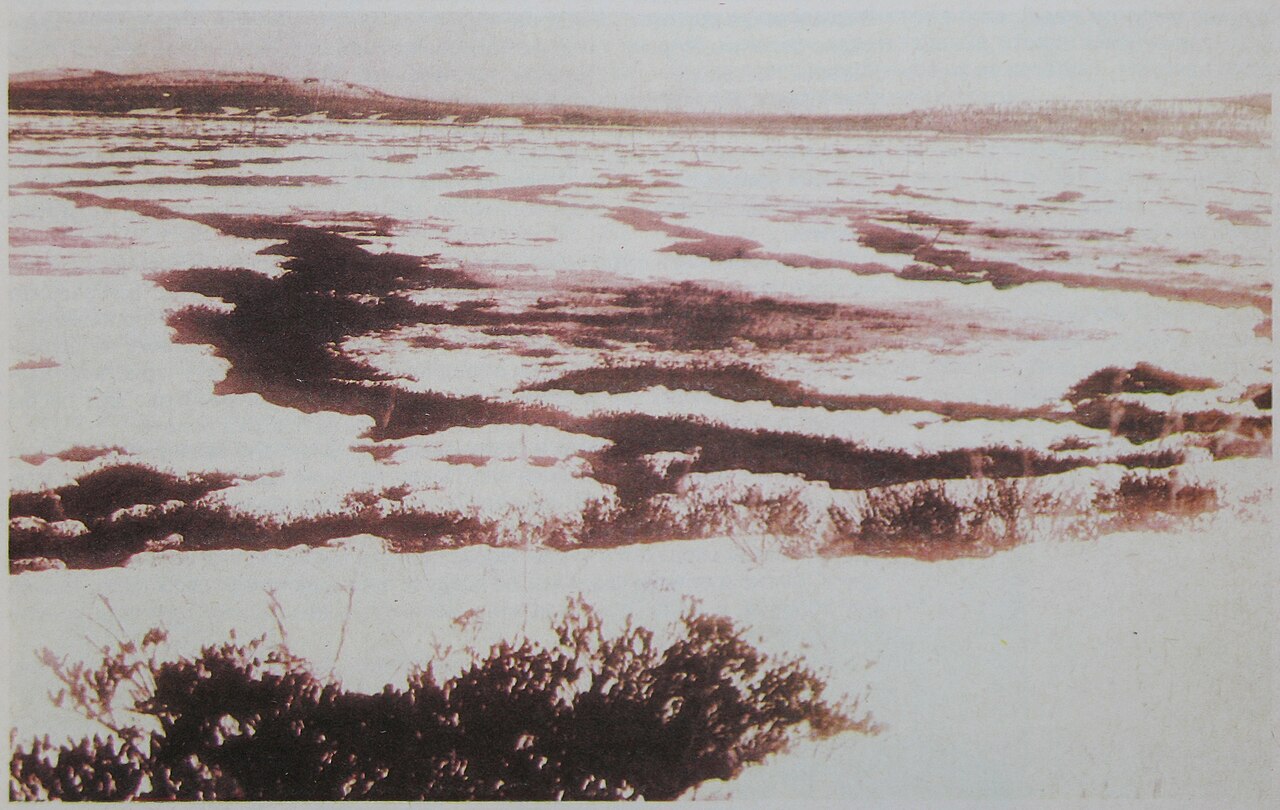
Still, the hope of finding a crater lingered for years. Kulik believed dozens of round swamp holes 10 to 50 m across were impact pits. When his team painstakingly drained one of them, the “Suslov funnel”, they found an old tree stump at the bottom – so the funnel was older than 1908.
| Year | What happened |
|---|---|
| 1908 | Explosion on June 30, reported only in regional newspapers |
| 1921 | Kulik’s first reconnaissance, he doesn’t reach the center |
| 1927 | Kulik reaches the center: flattened forest, no crater |
| 1928–1939 | Further expeditions, eyewitness interviews, draining of a swamp hole |
| 1929 | The airship “Graf Zeppelin” searches in vain for a crater during its round-the-world flight |
| 1938 | Aerial photos confirm the radial pattern of fallen trees |
| 1960s | Mapping of the damage zone: 2,150 km², butterfly shape |
| 2007 | Lake Cheko proposed as a possible crater |
| 2013 | Analysis of tiny particles from peat layers, possibly extraterrestrial |
To this day, no one has found actual meteorite fragments. In peat and soil, researchers came across only microscopic spherules and particles that might come from space. That fits an object that vaporized almost completely – but it makes it hard to pin down what kind of object it was.
Asteroid or comet: the theories about the Tunguska event
Hardly any scientist doubts that something came from space – the only open question is what exactly. The debate centers on whether it was a stony asteroid or a piece of a comet. On top of that, there’s a newer outsider theory and a handful of ideas you can safely forget.
| Theory | Core idea | Assessment |
|---|---|---|
| Stony asteroid | A rock 50 to 80 m across explodes at an altitude of 5 to 10 km | today’s majority view |
| Comet fragment | A loose chunk of ice and dust vaporizes in the air | possible, explains the missing meteorites |
| Iron asteroid grazing the atmosphere | An iron body passes through the atmosphere and flies back into space | outsider theory (2020) |
| Natural gas or volcano | Gas from deep underground ignites | doesn’t fit the fireball and trajectory |
| UFO, black hole, antimatter, Tesla | exotic causes | not tenable |
Stony asteroid: the most likely explanation
A stony asteroid best explains the altitude of the explosion. Models show that a porous rock breaks up at exactly 5 to 15 km altitude, leaving almost no debris behind. The Chelyabinsk explosion in 2013 confirmed these models with real measurement data.
Comet: ice that vaporizes without a trace
A comet fragment would explain why no meteorites were found. In 1978, the Slovak astronomer Ľubor Kresák suggested a fragment of Comet Encke. The main argument against a comet is that such loose material should have disintegrated much higher up.
An iron asteroid grazing the atmosphere: the 2020 theory
In 2020, a Russian team led by Daniil Khrennikov calculated whether an iron asteroid could merely have grazed the atmosphere. According to their models, an iron body 100 to 200 m across could have passed through at a minimum altitude of 10 to 15 km and returned to space with most of its mass. That would explain the missing crater, but it’s a minority view without direct evidence.
Gas, UFOs and co.: why they don’t fit
The natural gas theory fails on quantity: an explosive force of several megatons would require millions of tons of gas. No one has found vents for it, and hundreds of witnesses saw a fireball crossing the sky – not fire coming out of the ground. A black hole, antimatter, a spaceship or Tesla experiments are speculation without a single piece of evidence.
Glowing nights over Europe: reading the paper at midnight
In the nights after the explosion, the sky over Europe and Asia never got properly dark. In London, people are said to have read newspapers at midnight, and in Sweden and Scotland photos were taken without a flash. Over the middle latitudes of Europe, silvery glowing clouds of unusual brilliance appeared.
The most likely explanation is dust and ice at high altitude that was still lit by the Sun below the horizon. In 2009, researchers at Cornell University compared this with the clouds that formed after Space Shuttle launches: their exhaust supplied water vapor that froze at altitudes of 80 to 120 km. They saw this as a hint that a comet had brought a lot of water with it.
Tunguska and Chelyabinsk: two airbursts compared
Chelyabinsk 2013 is the key to understanding Tunguska. For the first time, an airburst over a populated area was filmed by thousands of cameras and measured by satellites. That made it possible to calibrate the models that are also used to recalculate 1908.
| Feature | Tunguska | Chelyabinsk |
|---|---|---|
| Date | June 30, 1908, approx. 7:14 a.m. | February 15, 2013, 9:20 a.m. |
| Size | roughly 50–80 m | roughly 20 m |
| Energy | 3–30 Mt (often 10–15 Mt) | roughly 0.5 Mt (440–590 kt) |
| Altitude of explosion | approx. 5–10 km | peak brightness approx. 27–30 km |
| Damage | 2,150 km² of forest, windows broken 65 km away | about 1,500 injured, shattered glass in thousands of buildings |
| Meteorites | none confirmed | an estimated 4–6 t on the ground, largest piece over 570 kg |
Sources: NASA/JPL (2013), Popova et al., Science (2013), NASA (2019), Sandia (2007).
With the frequently cited 5 to 15 megatons, Tunguska released 10 to 30 times more energy and came down much lower. That’s why the shock wave there was strong enough to flatten an entire forest. Over a city like Chelyabinsk, such an airburst would have had devastating consequences.
Most of the injuries in Chelyabinsk were caused by flying glass. Many people ran to the window after the bright flash and were standing there when the shock wave arrived with a delay. How the two events fit into the list of major impacts is covered in our article on meteorite impacts.
How often does something like this happen? Frequency by size
The bigger the object, the less often it hits the Earth. Small fireballs occur every year, while an event like Tunguska is very rare. The figures are long-term averages, not a schedule.
| Size | Result | On average | Example |
|---|---|---|---|
| Dust and grains of sand | shooting stars | over 100 t every day | every clear night |
| car-sized | bright fireball, burns up | about once a year | – |
| roughly 20 m | airburst, broken glass | about every 100 years | Chelyabinsk 2013 |
| roughly 50–80 m | regional devastation | every few thousand years | Tunguska 1908 |
| football field (roughly 100 m) | severe damage across the region | about every 2,000 years | – |
| 1–2 km and up | global consequences | every few million years | – |
Sources: NASA Asteroid Fast Facts, NASA/JPL (2013), NASA Ames (2019).
For Tunguska-sized events, the estimates have become considerably more reassuring in recent years. The astrogeologist Eugene Shoemaker still assumed about one event every 300 years. In 2019, the NASA team led by Robertson and Mathias concluded that thousands of years rather than centuries lie between two such explosions.
That the 1908 event struck uninhabited taiga of all places is not a quirk of history but statistics. About 70 percent of the Earth is ocean, plus deserts, ice and sparsely populated forests. Most impacts and airbursts therefore cause no casualties – many are noticed only by a monitoring network.
What Tunguska looks like today: forest and nature reserve
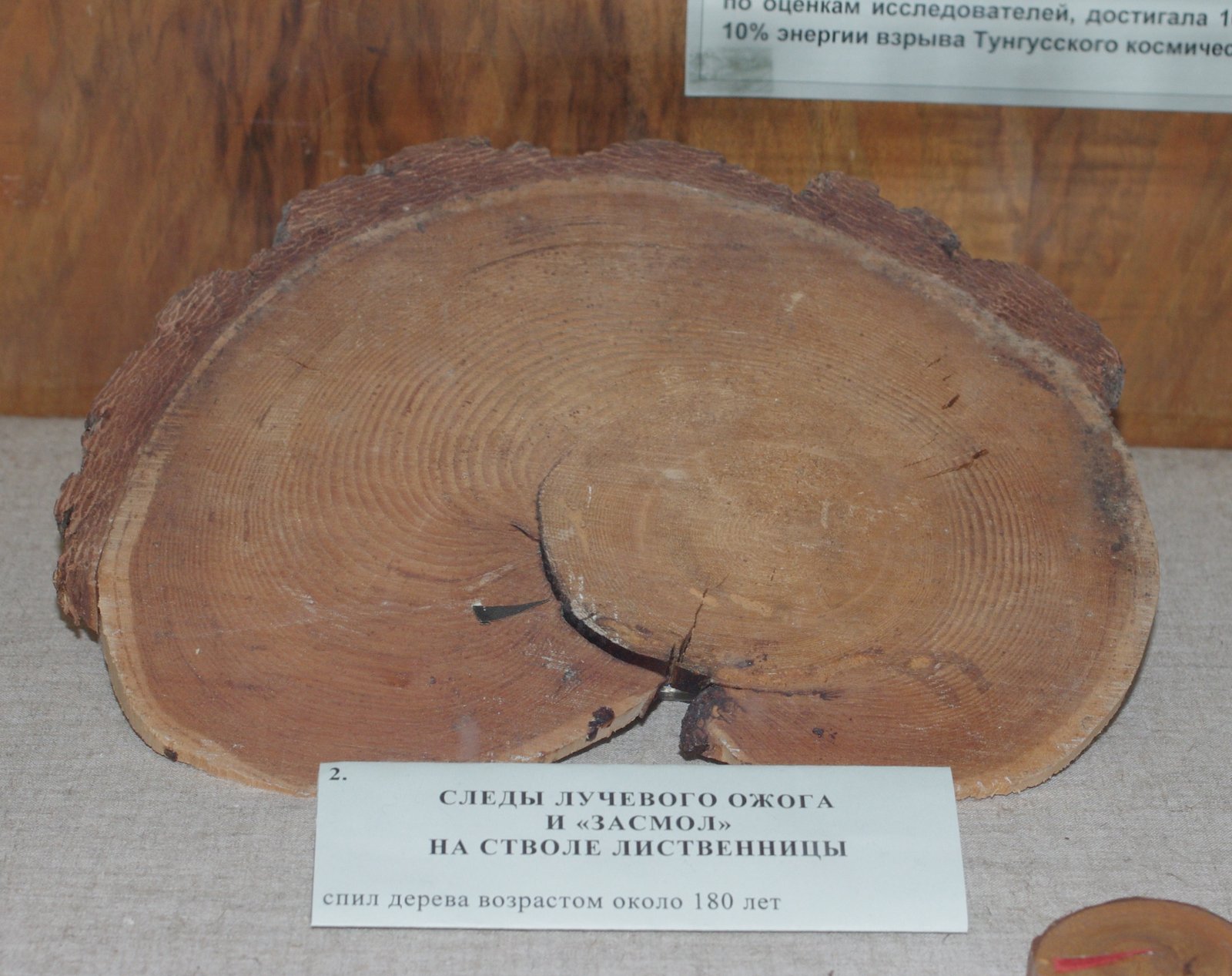
More than 100 years after the explosion, the taiga has grown back over the damage zone. Without a guide, you would hardly notice that millions of trees once lay on the ground here. There are still traces, though: growth disturbances in the annual rings of old trees and a few charred trunks.
Since 1995, the area has been strictly protected as the Tunguska Nature Reserve (a zapovednik). It covers just under 2,970 km², about 70 percent of which is forest. Its administration is based in Vanavara, the village where the most important eyewitness accounts came from in 1908.
Asteroid Day and DART: what we learned from Tunguska
Since 2016, June 30 has been the United Nations’ official International Asteroid Day. The UN General Assembly deliberately chose the anniversary of Tunguska. Asteroid Day is meant to remind us that impacts are a real but manageable risk.
The most important thing is to find an object early. According to ESA, more than 36,000 near-Earth objects are known (as of the end of 2024), about 1,700 of which are on its risk list. The Chelyabinsk object, by contrast, went undetected because it came from the direction of the Sun – where ground-based telescopes can’t search.
| Mission | When | What | Result |
|---|---|---|---|
| DART (NASA) | September 26, 2022 | Spacecraft crashes into the asteroid moon Dimorphos | Orbital period shortened by about 33 minutes |
| Hera (ESA) | Launched October 7, 2024 | surveys Didymos and Dimorphos after the impact | arrival planned for November 2026 |
DART showed that a targeted impact can nudge an asteroid off its course. Blowing one up, on the other hand, is considered a bad idea: many fragments together could cause more damage than a single chunk. A small change in orbit years before the encounter is the better approach.
How serious the topic is became clear in early 2025 with asteroid 2024 YR4, about 60 m across – a Tunguska-class candidate. Its probability of hitting Earth in 2032 temporarily rose to 3.1 percent before new measurements gave the all-clear. How such objects are found and tracked is explained in our asteroids overview.
See fireballs yourself: Tunguska’s little relatives
You won’t witness a Tunguska-sized object – but you can see its little relatives. A fireball, also called a bolide, is a shooting star that shines brighter than Venus. It’s usually caused by a tiny grain or pebble burning up at an altitude of 80 to 120 km.
Your best chances are on nights with active meteor showers and a dark sky. The Taurids in October and November are known for slow, bright fireballs, and in August the Kappa Cygnids join in. When each shower is active and whether the Moon will interfere is shown in our meteor shower calendar.
You can still hold a piece of space in your hand. Genuine meteorites, such as fragments from Chelyabinsk or desert finds, are available to buy with a certificate. What to look out for is explained in our guide Buying a meteorite.
Frequently asked questions about the Tunguska event
Was Tunguska a meteorite or an asteroid?
According to current knowledge, a small asteroid, probably made of rock, roughly 50 to 80 m across. Strictly speaking, a meteorite is only a piece that reaches the ground – and that’s exactly what was never found at Tunguska. A comet fragment can’t be ruled out, but it’s considered less likely.
Why is there no crater at Tunguska?
Because the object exploded at an altitude of about 5 to 10 km and vaporized almost completely. The shock wave flattened the forest but didn’t blast a hole in the ground. Lake Cheko is discussed as a possible crater, but that’s disputed.
How powerful was Tunguska compared to an atomic bomb?
Estimates range from 3 to 30 megatons of TNT, with 10 to 15 megatons often cited. The Hiroshima bomb had a yield of about 15 kilotons. Depending on the estimate, Tunguska was therefore 200 to 2,000 times as powerful.
Did anyone die in the Tunguska event?
No deaths are confirmed. The area was almost uninhabited; dead reindeer and destroyed huts were reported. Meteor scientist Peter Jenniskens considers up to three deaths possible.
Can you buy a Tunguska meteorite?
No, at least not a genuine one. No confirmed meteorite fragment of the Tunguska object has ever been found, so offers under that name should be treated with the utmost caution. Genuine meteorites from other falls, on the other hand, are available with proof of origin.
Could something like this happen again today?
Yes, but rarely: according to newer NASA models, thousands of years rather than centuries lie between two events of this size. Most would happen over the ocean or uninhabited land. Unlike in 1908, telescopes now search specifically for such objects, and DART has successfully tested a method of defense.