By Alexander Merz · Published on · Details checked on 14 September 2026
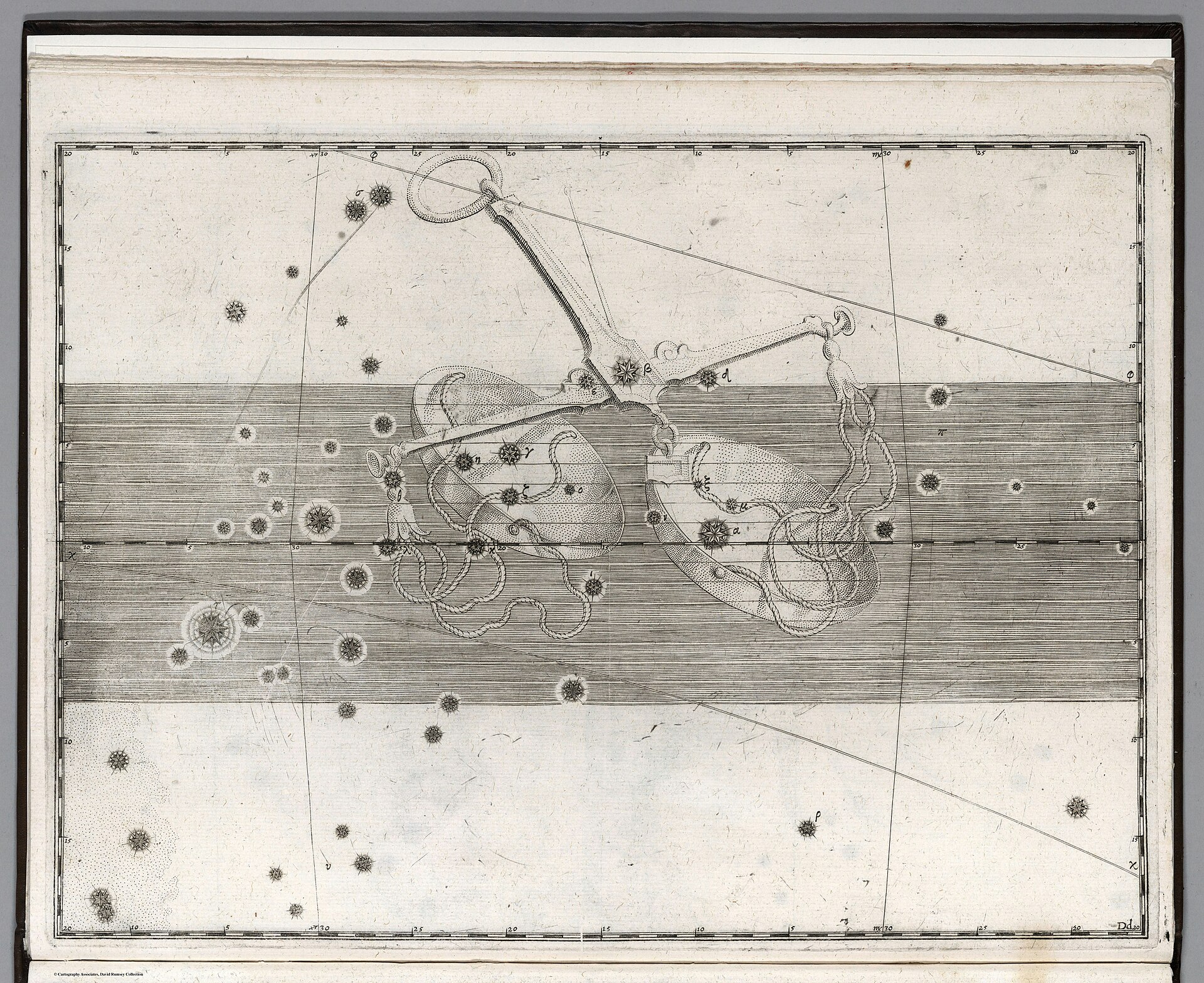
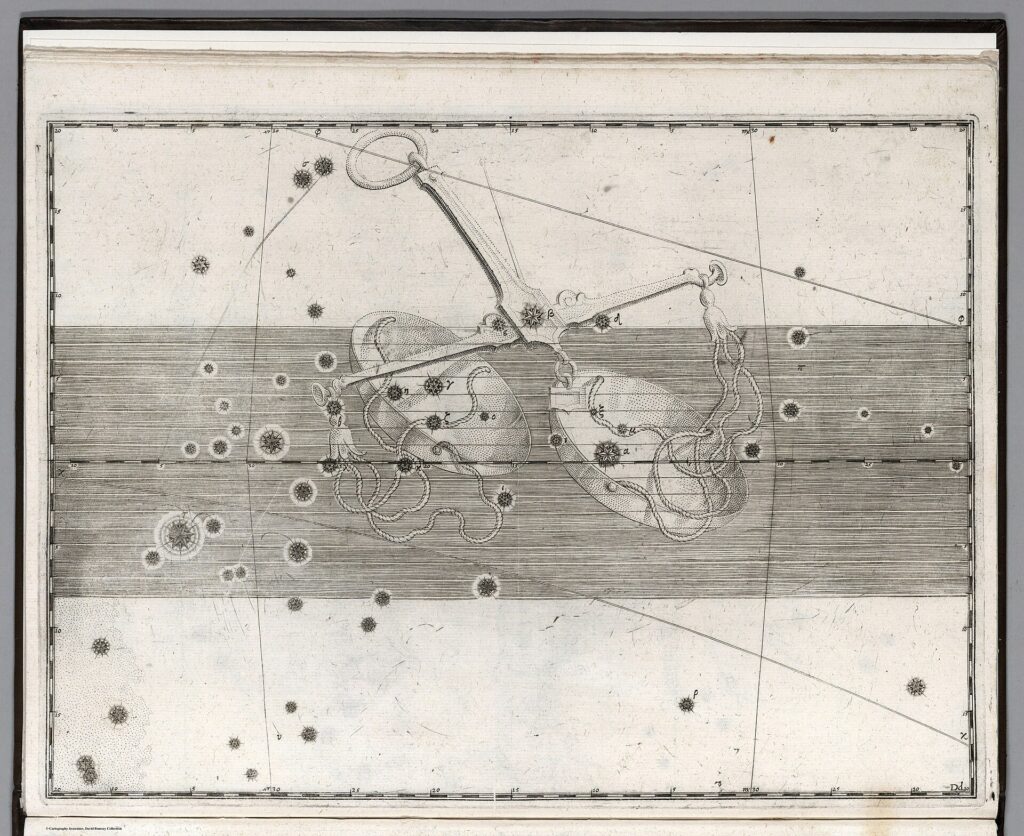
The constellation Libra is clearly recognizable on the ecliptic, between its neighbouring constellations »Virgo« and »Scorpius«. In the time of Ptolemy, the constellation held great significance as a symbol of balance. During the equinoxes 4,000 years ago, for instance, the constellation appeared on the ecliptic. Among the stars, double stars and the only deep-sky object in the constellation Libra, the best known is Gliese 581. It is a red dwarf with 4 confirmed exoplanets to date.
Many names for the constellation Libra
In the times of Babylon and ancient Greece, the stars of this constellation on the ecliptic belonged to Scorpius. They were regarded as the »Chelae«, the claws or pincers of the Scorpion. The ancient Arabs, too, assigned part of what is now the constellation Libra to the neighbouring constellation, one part as the northern claw, the other as the southern claw. It was not until 100 AD that the ancient Romans developed, from the Sumerian name »Gis-rin«, the concept of the constellation Libra — though not yet the present-day arrangement of its stars.
According to Roman belief, the constellation Libra symbolizes justice and fairness in all matters. Much later, the »southern claw« of the Arabs joined the current view: in 1930 the IAU (International Astronomical Union) fixed the boundaries of the constellation Libra on its present-day stars. Several double stars are sought-after observation targets among observers. However, because of its low position on the ecliptic, occultations by the Moon or the planets occasionally prevent a good view.
The only deep-sky object in the constellation Libra
NGC 5897 is the only deep-sky object within the coordinates of the constellation Libra. It is a globular cluster of medium extent. At 8.6 mag, its stars can only be seen in detail through a telescope. Here too, its position on the ecliptic creates the problem that observation fails during occultation periods.
The shape of the star cluster on the ecliptic is evenly round, with the typically high stellar density at its centre. In the outer regions, the globular cluster in the constellation Libra thins out uniformly. Good telescopes reveal a grainy structure with a few especially bright stars and a multitude of fainter specimens.