By Alexander Merz · Published on · Details checked on 14 September 2026
Few constellations live up to their name as well as Scorpius: a curved hook of bright stars, at whose end two stars stand close together like a venomous sting, preceded by a red giant as its heart and three stars forming the claws. Anyone who has seen it once recognises it again instantly – something rare among constellations.
The problem for us in Central Europe: Scorpius is a southern-sky constellation. On mild summer nights it barely rises above the southern horizon, and a good part of it stays permanently invisible for observers north of the Alps. This article therefore shows not only which stars and deep-sky objects belong to Scorpius, but works out concretely how high every important object actually rises from nine cities in the German-speaking region – and which of them is really worth your while.
⚡ The quick answer: Scorpius (lat. Scorpius, abbreviation Sco) is a constellation of the southern summer sky and, at 497 square degrees, the 33rd-largest of the 88 constellations. Its brightest star is Antares, a red supergiant of magnitude 0.9 mag at about 550 light-years distance. In Central Europe, Scorpius is visible from May to August, best in June and July around midnight – but very low: in Berlin, Antares reaches only 11° in altitude, in Munich 15°. The sting star Shaula stays entirely below the horizon north of Berlin, and Sargas never rises anywhere in the German-speaking region. So you absolutely need a clear view to the south. And beware, a frequent mix-up: as an astrological sign, Scorpio runs from 24 October to 22 November – but astronomically, the Sun is in the constellation only from 23 to 28 November, a mere six days.
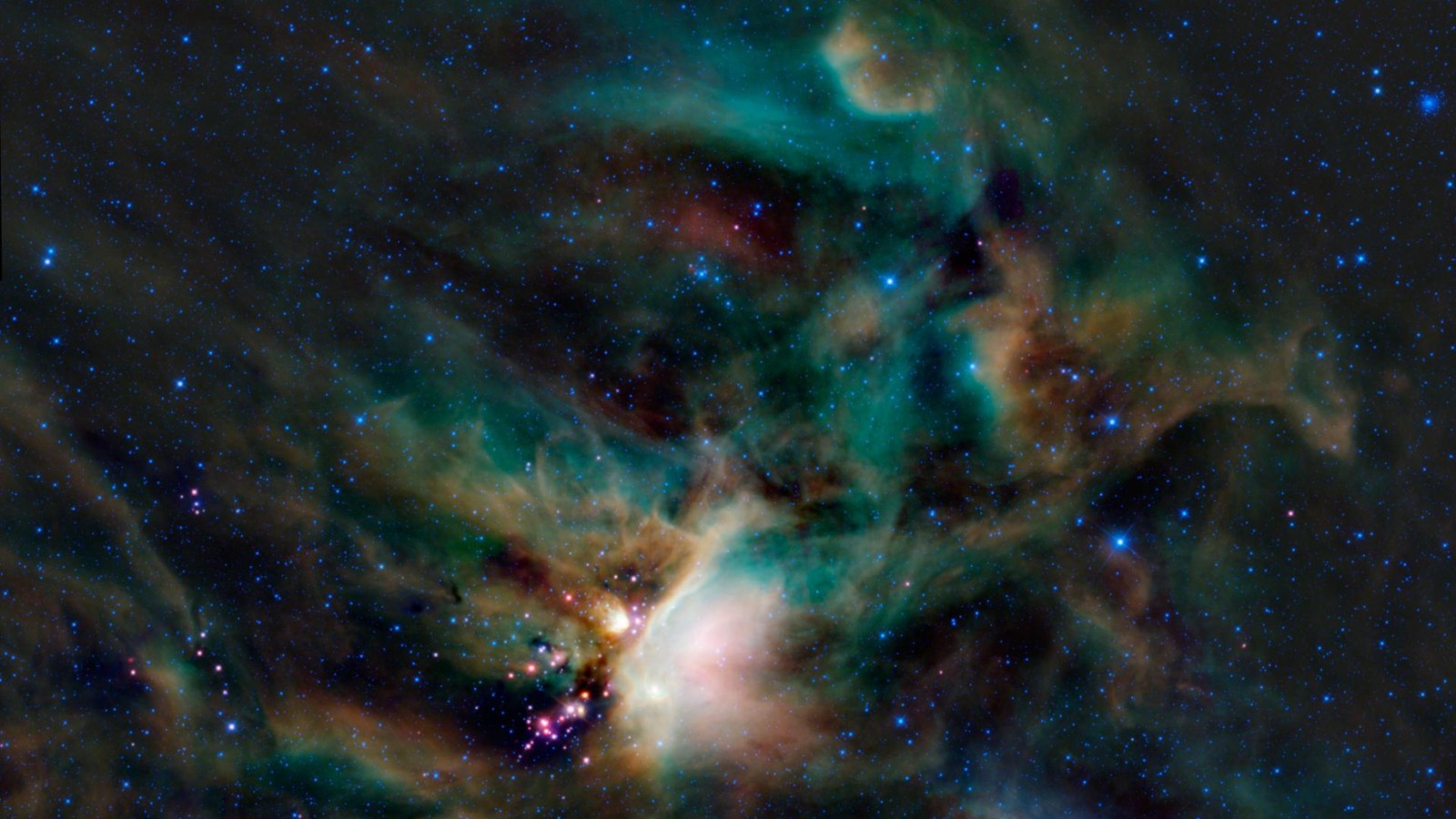
Scorpius profile: area, rank and neighbours
Scorpius is one of the 48 classical constellations that Claudius Ptolemy described in the 2nd century in his Almagest – and it is one of the few whose figure you can recognise without any imagination. Its stars really do form a hook with a sting. The International Astronomical Union fixed today’s boundaries in 1930; since then it has been one of 88 constellations in the sky.
| Feature | Value |
|---|---|
| Latin name | Scorpius |
| Genitive (for star names) | Scorpii |
| Official abbreviation | Sco |
| Area | 497 square degrees |
| Size rank | 33rd of 88 |
| Brightest star | Antares (α Sco), 0.9 mag |
| Stars brighter than 3 mag | 11 to 13 (depending on how the variables are counted) |
| Right ascension | approx. 15h 45m to 17h 55m |
| Declination | approx. −8° to −45° |
| Visible between | +40° and −90° geographic latitude |
| Best observing time (Central Europe) | June and July, around midnight |
| Neighbouring constellations | Libra, Sagittarius, Ophiuchus, Ara, Norma, Lupus, Corona Australis |
| Meteor showers | Alpha Scorpiids, Omega Scorpiids |
The line “visible between +40° and −90°” is the decisive catch. Germany lies between 47° and 55° north latitude, so above this limit. That does not mean Scorpius is invisible – the upper part with Antares and the claws rises everywhere. But the pincer at the lower end, that is, the actual sting, stays partly or completely below the horizon depending on your location. Exactly how much, we work out further down city by city.
The brightest stars in Scorpius: from Antares to Fang
Scorpius is exceptionally rich in stars, because it lies right in the Milky Way – our line of sight here goes almost directly towards the Galactic Centre. Most of its bright stars belong to the Scorpius-Centaurus association, the group of massive young stars nearest to us. They formed together about 10 to 15 million years ago and to this day drift through space together.
| Name | Bayer | Magnitude (mag) | Distance (ly) | Type | Position in the figure |
|---|---|---|---|---|---|
| Antares | α Sco | 0.6–1.6 (variable) | ≈ 550 | Red supergiant M1.5 | Heart of the Scorpion |
| Shaula | λ Sco | 1.62 | ≈ 700 | Blue giant B2 | Sting (“the raised one”) |
| Sargas | θ Sco | 1.87 | ≈ 300 | Yellow giant F1 | Bend in the tail |
| Dschubba | δ Sco | 2.3 (variable) | ≈ 440 | Blue subgiant B0 | Middle claw |
| Larawag | ε Sco | 2.31 | ≈ 64 | Orange giant K1 | Body |
| Acrab | β Sco | 2.6 | ≈ 400 | Multiple system B0/B2 | Northern claw |
| Lesath | υ Sco | 2.70 | ≈ 580 | Blue subgiant B2 | Second sting star |
| Paikauhale | τ Sco | 2.82 | ≈ 470 | Blue dwarf B0 | Next to Antares |
| Fang | π Sco | 2.9 | ≈ 590 | Eclipsing variable B1 | Southern claw |
Two things stand out in this table. First: almost all of these stars are blue – hot, massive, short-lived giants. Antares is the great exception and therefore glows so strikingly red among them. Second: Larawag is completely out of line at only 64 light-years. It does not belong to the association at all, but is a chance foreground star – a good example of the fact that a constellation is a projection and not a physical group. How far a light-year actually reaches, this contrast makes vivid: Larawag’s light has been travelling since 1962, that of Shaula from around the year 1330.
Shaula and Lesath in the sting: the tightest star pair
At the end of the scorpion’s tail, Shaula and Lesath stand only half a degree apart – a finger’s width at arm’s length. In the Arab world they are together called the “cat’s eyes”. Despite the optical pair, they have nothing to do with each other: Shaula is about 700 light-years away, Lesath about 580. For observers in Germany this pair is the real test – anyone who sees it has a truly clear southern horizon.
Antares, the red supergiant: rival of Mars
Antares is the star of this constellation, and its very name tells you why: it comes from the Greek and means roughly “anti-Ares” – rival of Mars. The planet Mars regularly wanders through this region of the sky, and when it does, two almost equally bright red points stand side by side there. The risk of confusion was so great for ancient observers that they gave the star this name.
| Parameter | Value |
|---|---|
| Apparent magnitude | 0.6 to 1.6 mag (irregularly variable, usually around 1.0) |
| Distance | around 550 light-years (≈ 170 parsecs) |
| Spectral type | M1.5 Iab-Ib (red supergiant) |
| Radius | about 680 solar radii |
| Mass | around 12 solar masses |
| Luminosity | approx. 100,000 solar luminosities (bolometric, mostly in the infrared) |
| Surface temperature | approx. 3,600 kelvin |
| Companion | Antares B, 5.5 mag, blue star at approx. 529 AU distance |
| Predicted end | supernova in about 1 to 1.4 million years |
How big Antares really is: a comparison with our solar system
680 solar radii is a number nobody can do anything with. So put differently: if you placed Antares where our Sun is, its surface would lie beyond the orbit of Mars. Mercury, Venus, Earth and Mars would have completely vanished inside the star; the asteroid belt would sit roughly at its edge. A ray of light would take almost an hour to travel once around it – for the Sun it is 14 seconds.
Yet Antares is not even especially massive: twelve solar masses are spread across this enormous volume, so its average density is far below that of air. Red supergiants are bloated envelopes around an extremely dense core – and they are unstable. Antares pulsates, its radius varies by up to 19 per cent, and with it the brightness. That is why you find values between 0.6 and 1.6 mag in books.
Observing Antares B: the green companion in the telescope
Antares has a companion star, and it is one of the most alluring – and most difficult – challenges that Scorpius holds for amateur telescopes. Antares B is a hot blue star of magnitude 5.5 mag at about 2.7 arcseconds distance. The separation angle would be no problem; the problem is the contrast: Antares A is about a hundred times brighter and outshines it.
Many observers describe the companion as greenish. That is a contrast effect of the eye next to the red primary star; physically it is blue-white. Realistically you need for this at least 100 mm of aperture, high magnification (150× and more) and above all steady air. And that is exactly where it gets difficult in Germany: at 11° horizon altitude you look through five times the air mass that lies above you at the zenith. The image boils. Honestly, Antares B is barely achievable from northern Germany – from the Alps or on holiday by the Mediterranean, on the other hand, quite doable.
The end of Antares: supernova in a good million years
Yes – and with certainty. A star with twelve solar masses inevitably ends as a core-collapse supernova. The moment lies, according to current models, in about 1 to 1.4 million years. That is astronomically soon and, in human terms, infinitely far away.
If it happens, Antares will for a few weeks become about as bright as the half moon and be visible in the daytime sky. It will not be dangerous: at 550 light-years distance it lies well outside the critical zone of around 50 light-years, within which a supernova could seriously affect Earth’s atmosphere. The better-known candidate for such a spectacle is, incidentally, Betelgeuse in Orion – of all things the star in the constellation that Scorpius, according to legend, put to flight.
How high Scorpius stands: visibility table for nine cities
This is the question that is missing from most constellation articles – and the one that decides everything in practice. The maximum altitude of an object above the horizon follows from a simple formula: altitude = 90° − geographic latitude + declination. We have worked it out for the most important objects of Scorpius and nine cities in the German-speaking region. All values in degrees, measured at the moment of culmination (highest point):
| Location | Latitude | Antares | Dschubba | Shaula | Sargas | M4 | M6 | M7 |
|---|---|---|---|---|---|---|---|---|
| Flensburg | 54.8° N | 8.8° | 12.6° | never | never | 8.7° | 3.0° | 0.4° |
| Hamburg | 53.6° N | 10.0° | 13.8° | never | never | 9.9° | 4.2° | 1.7° |
| Berlin | 52.5° N | 11.0° | 14.9° | 0.4° | never | 10.9° | 5.3° | 2.7° |
| Cologne | 50.9° N | 12.6° | 16.4° | 2.0° | never | 12.5° | 6.8° | 4.3° |
| Frankfurt am Main | 50.1° N | 13.5° | 17.3° | 2.8° | never | 13.4° | 7.7° | 5.1° |
| Vienna | 48.2° N | 15.4° | 19.2° | 4.7° | never | 15.3° | 9.6° | 7.0° |
| Munich | 48.1° N | 15.4° | 19.2° | 4.8° | never | 15.3° | 9.6° | 7.1° |
| Zurich | 47.4° N | 16.2° | 20.0° | 5.5° | never | 16.1° | 10.4° | 7.8° |
| Innsbruck | 47.3° N | 16.3° | 20.1° | 5.6° | never | 16.2° | 10.5° | 7.9° |
What these numbers mean in practice:
- Sargas never rises anywhere in the German-speaking region. The third-brightest star of the constellation is fundamentally invisible from Flensburg to Innsbruck – you would have to travel to around Rome to get it above the horizon at all.
- Shaula is the Alpine bonus. North of Berlin the sting star stays below the horizon. In Berlin it grazes along the horizon at 0.4° – theoretically visible, in practice never. Only from Munich, Zurich or Innsbruck (around 5°) does it become a realistic target.
- Antares stands low everywhere, but visible everywhere. 8.8° in Flensburg, 16.3° in Innsbruck – that is always the horizon-haze zone. Expect it to appear a whole magnitude class fainter and noticeably redder than it really is. That is the same effect that makes the setting Sun red.
- M7 is effectively lost north of the Main line. At 0.4° in Flensburg and 2.7° in Berlin, this magnificent star cluster sits in the densest haze. From Munich (7.1°) it becomes a real binocular object, from South Tyrol a delight.
These values are theoretical maxima with an ideal horizon. In reality, trees, houses and hills come into play – along with the blanket of air. As a rule of thumb: below about 10° altitude the atmosphere swallows so much light that a star appears a whole magnitude class fainter. Anyone who really wants to see Scorpius needs a location with a clear view to the south: a rise, a lake, a field – and as little light pollution as possible in that direction.
When is Scorpius visible: culmination times
Because Scorpius stands so low, you have only a narrow window each night: the one to two hours around culmination, when it is exactly in the south and at its highest. Before and after, it stands even lower. The following table gives the culmination time of Antares for Berlin – for Vienna and Munich subtract about 25 minutes, for Cologne and Zurich add about 25 minutes.
| Date | Culmination of Antares (CEST, Berlin) | Observing situation |
|---|---|---|
| 1 May | 03:00 | only at dawn, very brief |
| 1 June | 00:54 | good – twilight still interferes slightly |
| 15 June | 23:59 | good, but the shortest nights of the year |
| 1 July | 22:56 | very good – the sky is just getting dark |
| 15 July | 22:01 | ideal – dark and still high enough |
| 1 August | 20:54 | still too bright, better to look 1–2 hours later |
| 15 August | 19:59 | culmination at twilight, only Antares remains |
| 1 September | 18:52 | practically over – Antares stands low in the SW in the evening |
The times repeat almost to the minute every year – the table is valid for every season, not just one particular year.
So the best time is not high summer, as is often claimed, but the window from mid-June to the end of July. In June, Scorpius does culminate at the best time, but the nights around the solstice are so short that it does not really get dark in northern Germany. In July, both fit together: real darkness and a Scorpius that stands in the south at 10 p.m. From mid-August on, it then quickly tips towards the southwest and disappears.
Finding Scorpius in the sky: a three-step guide
- Wait for real darkness and face south. Around midnight (summer time) Scorpius stands low above the southern horizon. An open field, a lakeshore or a rise is almost obligatory – from within the city it won’t work.
- Look for the red point. Antares is unmistakable: the only strikingly reddish bright star low in the south. The only risk of confusion is with the planet Mars – but that shines with a steady light, while Antares, because of its low altitude, twinkles and flickers noticeably.
- Follow the arc down to the left. From Antares the stars run in an elegant curve to the east and then downwards – that is the tail. Up and to the right of Antares stand three stars in a short, almost vertical row: the claws (Acrab, Dschubba, Fang).
Two orientation aids from the neighbourhood: To the left of Scorpius lies Sagittarius with its distinctive “teapot” pattern – behind it stands the centre of our Milky Way. Noticeably higher, from south to southeast, stretches the Summer Triangle made up of Vega, Deneb and Altair. Once you have found the Summer Triangle, simply go straight down from there: right at the bottom on the horizon, Scorpius awaits you. A rotating star chart or an app helps enormously the first time.
Mythology of Scorpius: Orion, Artemis and Phaethon
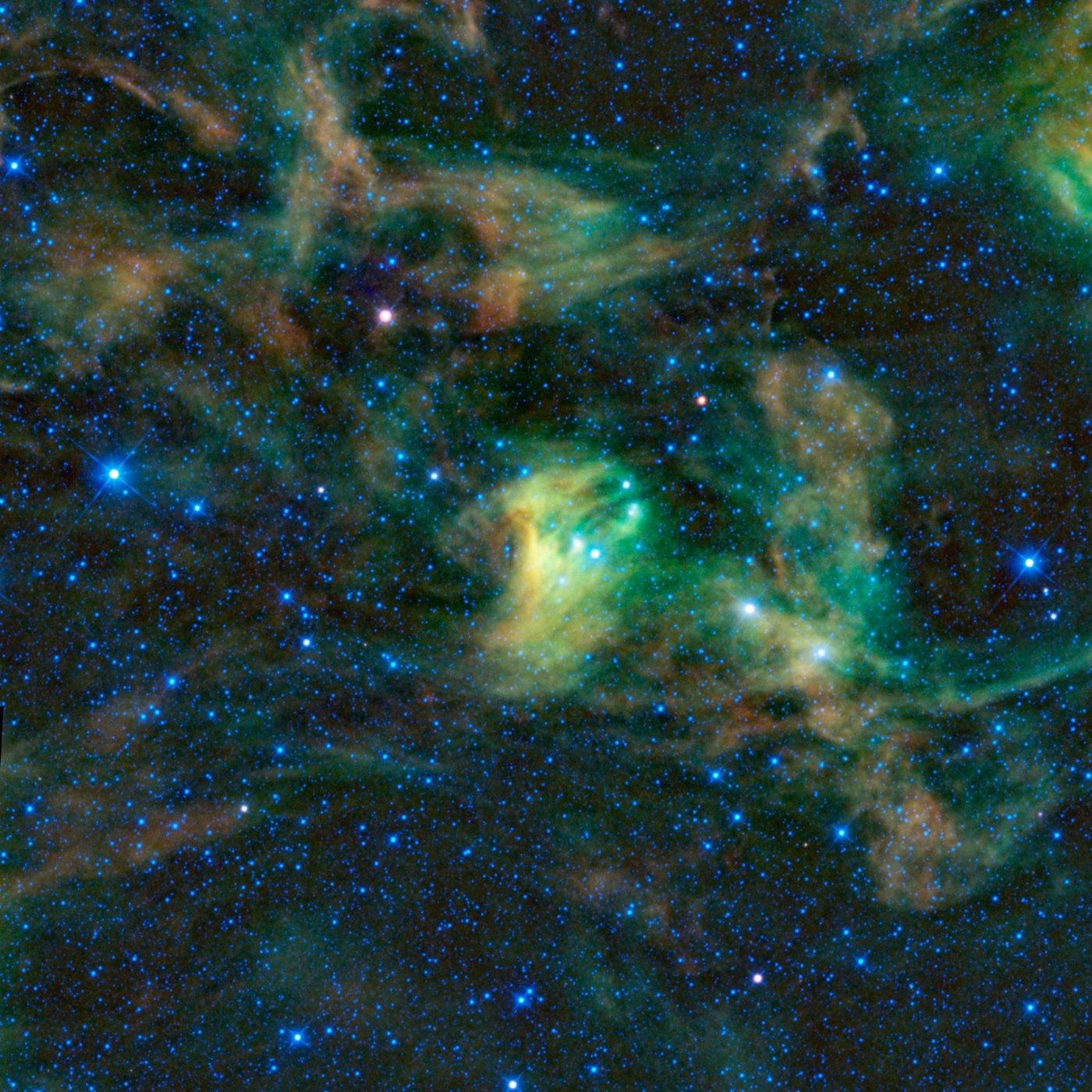
Scorpius is among the oldest recorded constellations of all. The Sumerians already knew it more than 5,000 years ago as GIR.TAB – a name that has survived in today’s star name Girtab for κ Scorpii. That such different cultures saw the same animal in this chain of stars is simply because the figure really does look like it.
The hunter and the venomous creature: why Orion flees from Scorpius
The best-known Greek version goes like this: Orion, the great hunter, boasted that he could kill any animal on Earth. The goddess Artemis – or, depending on the source, Gaia, the Earth goddess – then sent a single small scorpion. It stung, and the invincible hunter died. Both were placed in the sky, but as a precaution on opposite sides.
And this is exactly what you can verify: Scorpius and Orion are never in the sky at the same time. When Scorpius rises in the east, Orion has already set in the west – the hunter is still fleeing to this day. Between the two lie about six hours of right ascension, that is, half a year in the calendar of the constellations. Orion is our winter figure, Scorpius our summer figure.
Phaethon and the Sun chariot: the second legend
Less well known, but documented earlier, is the story of Phaethon, the son of the sun god Helios. He was allowed to drive the Sun chariot for a day, but lost control when the horses, passing by the scorpion, shied at its raised sting. The chariot veered off course, scorched the Earth – so, according to legend, the deserts arose – and Zeus had to stop Phaethon with a bolt of lightning. Here too the scorpion is not the hero, but the trigger.
The stolen claws: how Libra emerged from Scorpius
A historical detail that surprises many: Scorpius was formerly considerably larger. The stars of today’s constellation Libra were called by the Greeks Chelae Scorpionis – “the claws of the scorpion”. It was the Romans who turned them into a separate Libra (scales), fitting the image of justice. But the old names stuck: the two brightest stars of Libra are to this day called Zubenelgenubi and Zubeneschamali, Arabic for “southern claw” and “northern claw”.
Deep-sky in Scorpius: M4, M6, M7 and more
Because Scorpius lies towards the Galactic Centre, it is one of the object-richest regions of the entire sky. For us, however, the altitude restriction from the table above still applies – the following deep-sky objects are sorted by feasibility from Central Europe:
| Object | Type | Magnitude (mag) | Distance (ly) | Feasibility from Central Europe |
|---|---|---|---|---|
| M4 | Globular cluster | 5.9 | ≈ 7,200 | Right next to Antares. Very doable, the most rewarding target. |
| M7 (Ptolemy Cluster) | Open cluster | 3.3 | ≈ 980 | Huge and bright – but it stands the lowest. Only really beautiful from the Alpine region onwards. |
| M6 (Butterfly Cluster) | Open cluster | 4.2 | ≈ 1,600 | Binocular object. Good from southern Germany, a borderline case in the north. |
| M80 | Globular cluster | 7.9 | ≈ 32,600 | Small and compact, needs a telescope. Altitude like M4, so doable. |
| NGC 6231 | Open cluster | 2.6 | ≈ 5,900 | Magnificent – but practically never rises in DE/AT/CH. Only on a southern holiday. |
| NGC 6302 (Butterfly Nebula) | Planetary nebula | 7.1 | ≈ 3,400 | Demanding, stands very low. Something for large apertures in the south. |
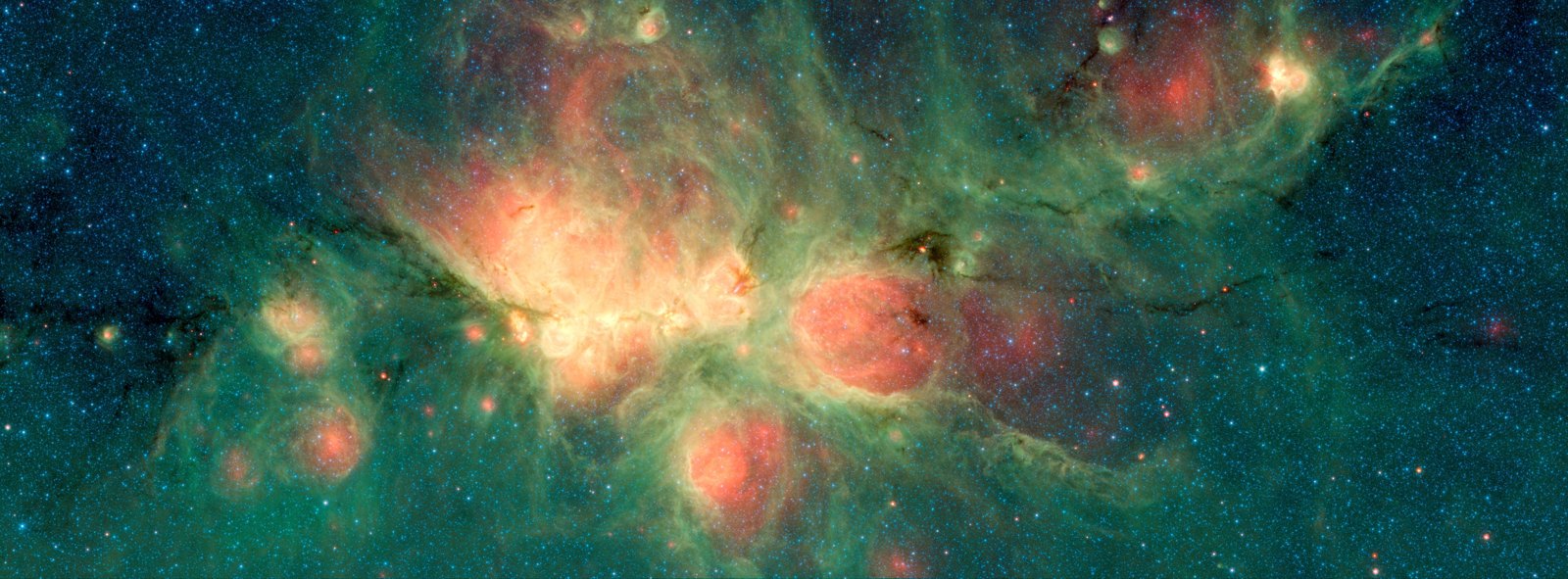
| NGC 6334 (Cat’s Paw Nebula) | Emission nebula | — | ≈ 5,500 | Photographically spectacular, visually hopeless in Central Europe. |
| NGC 6357 (War and Peace Nebula) | Emission nebula | — | ≈ 8,000 | Pure astrophotography object of the southern hemisphere. |
| IC 4592 (Blue Horsehead Nebula) | Reflection nebula | — | ≈ 440 | Very extensive and faint, only with wide-angle astrophotography. |
M4 right next to Antares: the easiest globular cluster
M4 is the object you should start with in Scorpius. It stands just 1.3 degrees west of Antares – so you simply centre Antares and look beside it. At around 7,200 light-years it is one of the globular clusters nearest to us of all, and appears correspondingly large: about two-thirds of the full moon’s diameter.
In binoculars it is a distinct nebulous patch. From about 100 mm aperture it begins to break up into individual stars – with us, however, mostly only partly, because of its nearness to the horizon. A special feature: M4 has a striking “bar of stars” across the middle, a chain of brighter stars that you can make out from about 150 mm. In its centre one of the oldest known exoplanets was discovered, a gas giant with an age of around 13 billion years.
M6 and M7 in binoculars: the two open clusters
M7, the Ptolemy Cluster, is at 3.3 mag bright enough to catch the eye with the naked eye as a resolved nebulous patch – Ptolemy described it as early as around AD 130. It measures over one and a half full-moon diameters and is thus clearly a binocular object: in the telescope it no longer even fits in the field. The same goes for M6, the Butterfly Cluster, whose chain of stars really does resemble spread wings.
The catch is familiar: M7 stands 2.7° high in Berlin, M6 just over 5°. In practice that is not enough. Anyone who wants to experience these two clusters travels to the Alpine region or takes them on during a summer holiday by the Mediterranean – there they stand at 20 degrees and higher and are among the finest things the summer sky has to offer.
Which telescope for Scorpius: recommendation by object
Scorpius is a two-part constellation as far as equipment goes – and that is why the usual blanket recommendation does not apply here. In short: for the wide open clusters M6 and M7, binoculars are actually the better instrument. For everything else – M4, M80, Antares B, the Butterfly Nebula – there is no way around the telescope.
Anyone who can buy only one instrument and really wants to explore the sky reaches for the telescope; the binoculars are the supplement, not the substitute. A globular cluster like M4 stays a grey ball of cotton in binoculars and only becomes what makes it special from about 100 mm aperture onwards: a sphere of tens of thousands of individual stars.
Telescope recommendation: the entry point for globular clusters and double stars
Our beginner pick: Skywatcher Dobson Telescope N 130/650 Heritage FlexTube
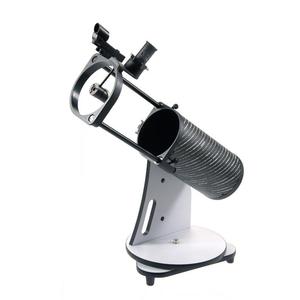
A compact tabletop Dobson with a true parabolic mirror. Folds down, fits in a bag: the Moon, planets and the bright deep-sky classics.
Price: € 265
For advanced observers: Skywatcher Dobson Telescope N 200/1200 Skyliner Classic
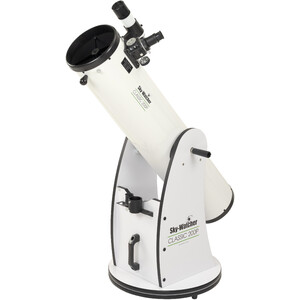
200 mm of aperture — the most sky for your money. Set it on the ground, point by hand: nebulae, clusters and galaxies for years to come.
Price: € 479
130 mm of aperture is exactly right for M4 and M80 and is also enough for a first attempt at Antares B. The FlexTube mechanism makes the instrument small enough for the car – handy, because for Scorpius you have to travel to a place with a clear southern horizon anyway. Anyone who wants more aperture and does not shy away from the transport will find the larger Dobsonians compared in our guide to telescopes for beginners – from 200 mm, M4 is fully resolved into individual stars even at low altitude.
Binocular add-on: for M6, M7 and the Milky Way fields
Add-on for wide fields: Celestron Cometron 7x50 Binoculars
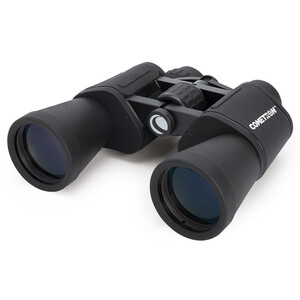
The astronomy classic among affordable binoculars: 7×50 with a large exit pupil for bright handheld views of the Moon and Milky Way – the ideal first step before a telescope.
Price: € 65
Honestly: for M6 and M7, binoculars are superior to the telescope, because both clusters are larger than the field of view of most telescopes. The same goes for the Milky Way clouds between Scorpius and Sagittarius. But – and this is part of the truth too – at 2.7° horizon altitude in Berlin, even the best binoculars are of little use. Buy them for the Milky Way, for comets and for the summer sky in general, not specifically for Scorpius. More on that in our binocular guide.
The most important equipment tip costs nothing: With Scorpius, the location matters more than the aperture. An 80 mm telescope on a clear rise beats a 200 mm instrument in the garden with a hedge to the south – every time. Look ahead in daylight for a spot with a really clear view to the south, ideally over water or a field, and plan the trip for mid-July. How to prepare such an observing night is set out in our tips for beginners.
* Affiliate link: if you buy through this link we may earn a small commission from Astroshop or High Point Scientific, at no extra cost to you.
Zodiac sign or constellation: why the Sun stays only six days
Anyone searching for Scorpius often means two completely different things. The astrological zodiac sign Scorpio covers 24 October to 22 November – a fixed segment of 30 degrees on the ecliptic, defined around 2,000 years ago. The constellation Scorpius, by contrast, is a real, irregularly shaped region of the sky with boundaries fixed by the IAU.
The two no longer coincide today, and for two reasons. First, Earth’s axis has shifted by a good 27 degrees in 2,000 years (precession) – the zodiac signs have slipped relative to the constellations. Second, the constellations are of different sizes: Scorpius occupies only a narrow strip on the ecliptic, while its neighbour Ophiuchus occupies a wide one – even though the latter is not a zodiac sign at all.
The result is astonishing: Astronomically, the Sun lies within the constellation boundaries of Scorpius only from 23 to 28 November – six days. After that it moves into Ophiuchus and stays there until 17 December, that is, almost three weeks. Anyone born on 5 November has, astrologically, the sign of Scorpio, but had the Sun standing in the constellation Libra. We explain the whole system behind it in the article Zodiac signs and constellations.
Meteor showers from Scorpius: Alpha and Omega Scorpiids
Two small meteor showers are assigned to Scorpius. The Alpha Scorpiids run roughly from 20 April to 19 May with a flat maximum around 3 May; the Omega Scorpiids are active in early June. Both are weak – you reckon on a few meteors per hour, not dozens as with the Perseids.
On top of this comes the familiar problem: the radiant stands very low from Central Europe, so that a large part of the meteors stays below the horizon. Realistically, the Scorpiids are more a footnote for statisticians than an observing event. The advantage, if you try it anyway: for meteors you need no instrument, only a deck chair, dark-adapted eyes and patience – any pair of binoculars and any telescope would here only narrow the field of view.
Frequently asked questions about the constellation Scorpius
When is the best time to see Scorpius in Germany?
From mid-June to the end of July, each time in the hour before and after midnight. On 15 July, Antares culminates in Berlin at 22:01 CEST (the times repeat almost to the minute every year) – that is the best compromise between real darkness and maximum altitude. From mid-August, Scorpius already stands low in the southwest in the evening and disappears rapidly.
Which star is the brightest in Scorpius?
Antares (α Scorpii), a red supergiant with an average magnitude of about 1.0 mag – fluctuating between 0.6 and 1.6 mag. It is around 550 light-years away, about 680 times as large as the Sun and the 15th-brightest star of the entire night sky.
How many stars of Scorpius are brighter than 3 mag?
Depending on the count, 11 to 13. The uncertainty comes from the fact that several of these stars are variable and hover around the 3 mag limit – above all Girtab (κ Sco) and μ¹ Scorpii. Certainly brighter than 3 mag are Antares, Shaula, Sargas, Dschubba, Larawag, Acrab, Lesath, Paikauhale, Alniyat and Fang.
What does the name Antares mean?
It comes from the Greek and means roughly “anti-Ares” or “rival of Mars”. Ares is the Greek god of war, Mars to the Romans. Because the planet Mars regularly crosses this part of the sky and then shines almost as brightly and red as Antares, the risk of confusion was proverbial in antiquity.
What does the symbol of the zodiac sign Scorpio look like?
The astrological symbol is a stylised “M” with an arrow pointing up and to the right on the last arc (♏) – the arrow stands for the sting. It resembles the sign of Virgo (♍), which instead of the arrow carries an inward-turned loop. For tattoos and jewellery, the constellation figure itself is often used instead, that is, the chain of dots with Antares as the largest dot.
Why can you never see Orion and Scorpius at the same time?
Because they lie almost exactly opposite each other in the sky: between them lie about six hours of right ascension. When Scorpius rises in the southeast, Orion has long since set in the west. The Greek legend interprets this as the eternal flight of the hunter from the scorpion that killed him – an explanation that can be verified on any summer evening.
Will Antares explode as a supernova?
Yes. With around twelve solar masses, Antares will inevitably end as a core-collapse supernova, according to current models in about 1 to 1.4 million years. It would then be as bright as the half moon for a few weeks and visible in the daytime sky too. That is not dangerous: at 550 light-years distance it lies well outside the critical zone of around 50 light-years.
Do you need a telescope to see Scorpius?
No – the figure itself is a naked-eye object, provided the southern horizon is clear. You need a telescope for the deep-sky objects: M4 and M80 (globular clusters) as well as the companion of Antares. For the large open clusters M6 and M7, on the other hand, binoculars are the more suitable instrument.
Read on at Sterngucker
- All constellations at a glance – the entry point into our constellation catalogue
- Constellation Sagittarius – the direct neighbour with the Galactic Centre
- Constellation Libra – the former claws of Scorpius
- Constellation Orion – the eternal adversary in the winter sky
- The Summer Triangle – the orientation aid above Scorpius
- Zodiac signs and constellations – why the two are not the same
- Circumpolar constellations – the opposite: what never sets