By Alexander Merz · Published on · Details checked on 22 September 2026
Buying a star means this: a private company enters a name of your choice next to the catalog number of a real star in its own register and sends you a certificate and a star chart.
The star isn’t renamed, and it doesn’t belong to you either. As a gift, the idea can still work – as long as both of you know what you’re actually holding.
Naming a star is a symbolic gift that costs anywhere from the price of a nice dinner to several times that – not an official name and not ownership. If you love the romance, a star sponsorship at an observatory or planetarium is the better choice: same feeling, honest certificate, and the money supports education. If you really want to give someone the sky, go for a star chart, binoculars or a first telescope.
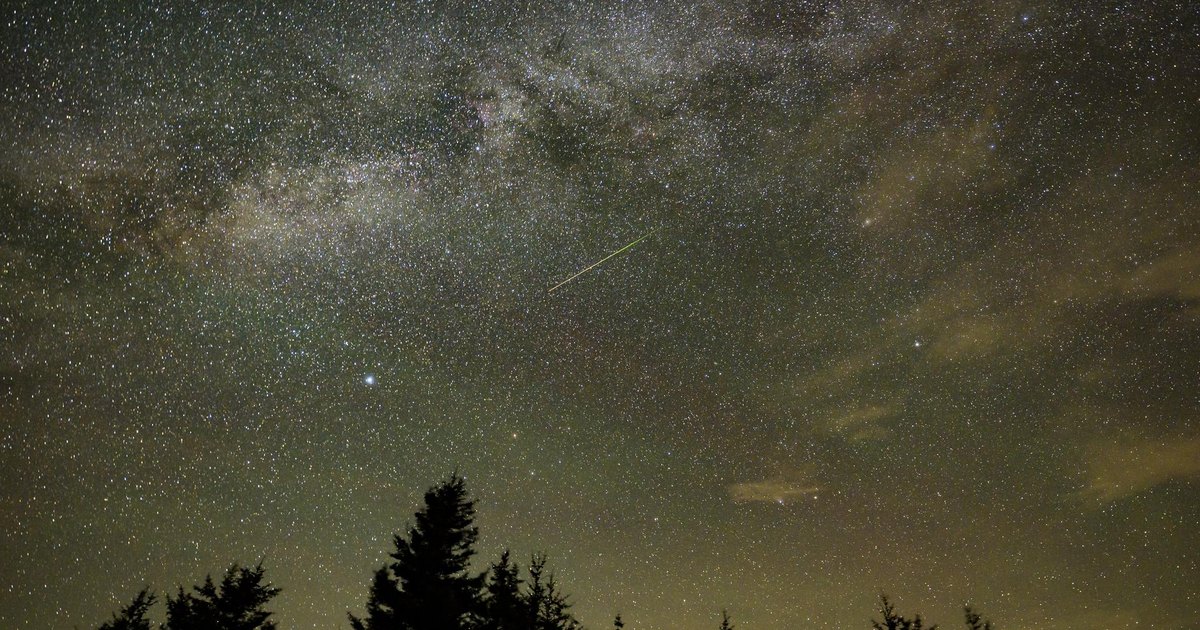
Can you buy a star? What’s really behind it, astronomically and legally
The honest answer: No, you can’t buy a star – neither the object itself nor its official name. What’s being sold is an entry in a private list that nobody outside the company uses.
Stars belong to no one, and there is no authority that hands out property in space. The Outer Space Treaty of 1967 even rules out nations claiming celestial bodies – so a private company certainly can’t pass on any ownership rights.
What the International Astronomical Union says
Official star names are assigned only by the International Astronomical Union (IAU), the worldwide umbrella organization of professional astronomers. Since 2016 a dedicated working group there has handled proper names such as Vega or Betelgeuse; all other stars carry catalog numbers like HIP 91262 or HD 32518.
On sold star names the IAU is unambiguous: they have “no formal or official validity whatsoever”, and the IAU explicitly dissociates itself from the practice. It calls claims that it works with such companies false (statement “Buying Stars and Star Names” by the IAU, archived version).
Buy a star from NASA? Why that isn’t possible
Hardly any question on the topic comes up as often as “can I buy a star from NASA”. NASA doesn’t sell stars and doesn’t hand out names – it is the US space agency and isn’t responsible for naming stars at all.
The rumor persists because some offers advertise with space images, satellite photos or “international registries” that sound official. If NASA or the IAU appears as a partner on a sales page, that’s a clear red flag.
Naming a star: what you get for your money
Whether it’s called “buy and name a star” or “buy a star with a name”: it almost always means a star-naming package, the kind that various companies in the US sell.
With a star-naming package you pick a name and a date, and the company assigns it to a not-yet-named star from its stock. A typical package includes:
- Star certificate with your chosen name, the date and the catalog number (usually a HIP or HD number)
- Star chart with the star marked in its constellation
- Celestial coordinates (right ascension and declination) and the star’s brightness
- an entry in the company’s star register, often with an online lookup
- depending on the package, a folder, frame, glow-in-the-dark decor, app access or a planisphere
The star itself is real, and the coordinates are usually correct too. The only new thing is the name – and it only counts in that one company’s register. A second company knows nothing about it and can assign the same star all over again.
Buying a star: price and costs at a glance
The prices of the big star-naming companies are surprisingly close to one another. The basic package costs roughly as much as a nice dinner out, premium packages several times that, and shipping usually comes on top.
| Offer | Price | What’s included | Where the money goes |
|---|---|---|---|
| Star naming, basic package | entry level, roughly a dinner out | Certificate, star chart, register entry | Private company |
| Star naming, premium package | about 2–4× the basic package | Plus your choice of constellation, a brighter star, a double star, a frame or a star chart | Private company |
| Star sponsorship, observatory/planetarium | from a small donation | ⭐ Our recommendationCertificate with an honest “symbolic” note, sometimes a showing in the planetarium | Education and outreach, often tax-deductible |
| Planisphere | € 19.90 | The whole sky for every night of the year | Stays with the recipient |
With star naming, more expensive almost always means: a brighter star or more paper. A premium package usually guarantees a star you can see with the naked eye, or adds a star chart. It makes the name no more official than the basic package does.
Where observatories and planetariums offer sponsorships, the price often depends on how bright the star is, or on the donation tier. The Shiras Planetarium in Marquette, Michigan, for example, runs an “Adopt a Shiras Star” program with tiers from a small donation up to large patron levels, and says plainly that no real star is bought or owned (as of 09/21/2026).
Star naming: legit or a scam? How to spot a good provider
Naming a star isn’t illegal and isn’t automatically a rip-off. It becomes dubious when the company promises more than it can deliver – such as an “official” or “internationally recognized” name.
Whether a star-naming company is legit, you can check with these seven points:
Checklist: a legit star-naming service
- ✅ A clear note that the name is symbolic and not recognized by the IAU
- ✅ Catalog number and coordinates on the certificate, so you can check the star yourself
- ✅ Brightness in magnitudes stated – and whether the star rises from where you live at all
- ✅ Final price including shipping visible, no countdown discount that never expires
- ✅ Full company details and reachable customer service
- ⚠️ Advertising with “official”, “government”, NASA or the IAU – stay away
- ⚠️ The promise that the name will appear in scientific catalogs or is assigned “forever”
So is naming a star real? The star, the certificate and the entry with the company are real – the name in the sky is not. A fair company says so itself, and so does the IAU in its statement quoted above.
Buying a star as a gift: when it’s still a lovely idea
Nothing against romance: a star with a child’s name, for a wedding or in memory of someone who is missed – that touches many people, and it’s perfectly fine. It’s a symbol, just like a love lock on a bridge.
A purchased star becomes a lovely gift when nobody is misled. Say that it’s a symbolic dedication, and make something of it: an evening outside when you look for the star together.
It gets disappointing when the recipient believes the name is now “officially” in the sky, or when the star can never be seen. So choose a star that’s visible from where the recipient lives – or go straight for one of the alternatives below.
Finding your star in the sky: how it really works
This is the part almost every company leaves out. Whether you ever see “your” star depends on two numbers on the certificate: its brightness and its declination.
Step 1: enter the catalog number in a planetarium app
Open the free program Stellarium (also available right in your browser as Stellarium Web) and type the number from the certificate into the search box, for example “HIP 12345”. The app jumps to the star and shows its constellation, brightness, and rising and setting times for your location.
Step 2: check whether the star rises where you live at all
From most of the continental US (around 40° north latitude), stars with a declination south of about −50° never rise above the horizon; from southern Florida or Texas you see a little further south. If the certificate says, for example, “Dec. −70°”, the star is simply invisible from the continental US.
Step 3: star-hop from a bright constellation
In the sky you don’t look for the star itself, but first for the constellation it’s in. From its bright stars you hop your way to the target – we explain the method step by step in Identifying constellations.
If your star is fainter than magnitude 6, binoculars are the key: a 7×50 shows stars down to about magnitude 9 and fits in any jacket pocket. What makes good astronomy binoculars is covered in our guide Binoculars for astronomy.
Finds any star: Omegon Universe2go+ Handheld Planetarium
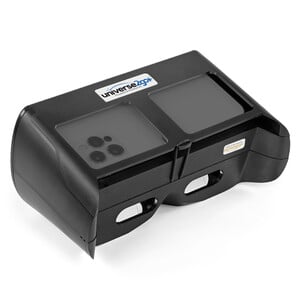
A handheld planetarium for your smartphone: you look at the sky through the viewer, and it shows names and constellations exactly where you’re looking. Helps with finding your star the first time, without having to read a chart.
Price: € 79
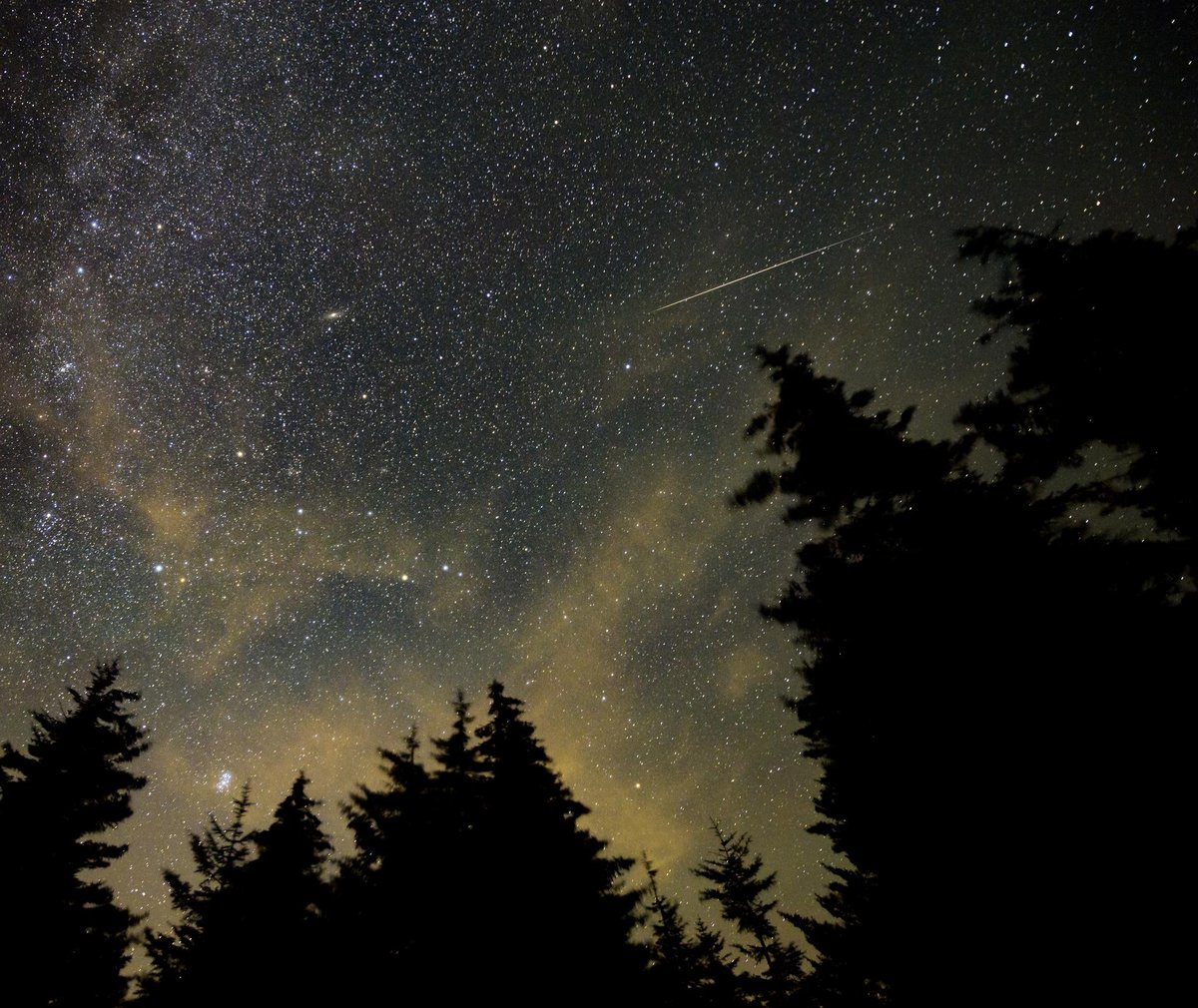
Better alternatives to naming a star as a gift
Anyone searching for “buy a star gift” really wants to give something else: a piece of the sky that lasts. That can be done more honestly, and often for less money.
| Gift | For whom | Why it goes down well | Price |
|---|---|---|---|
| Star sponsorship | Romantics | ⭐ Our recommendationA certificate like with star naming, but honest and for a good cause. | from a small donation |
| Oculum Swivelling Sky Map 29 cm | Everyone, kids too | Shows the real sky for any date – including the sky on their birthday. | € 19.90 |
| Planet Poster Editions Poster „Der Sternenhimmel“ | For the bedroom | All constellations on one sheet, learned along the way. | € 9.50 |
| Sega Toys Homestar Flux | Families, couples | 60,000 stars on the ceiling, even when it rains. | € 189 |
| Celestron Cometron 7x50 Binoculars | The curious | Shows stars down to about magnitude 9, lunar craters and the Milky Way. | € 65 |
| Sky-Watcher Heritage 130 Tabletop DobsonianSkywatcher Dobson Telescope N 130/650 Heritage FlexTube | Those who stick with it | The first real telescope: Saturn’s rings, Jupiter’s moons, star clusters. | $305.00€ 265 |
Star sponsorship at an observatory or planetarium
Star sponsorship is the honest sister of star naming. You get a certificate with your star, and the money goes into tours, school programs and equipment instead of a register.
In the US, the Shiras Planetarium in Marquette, Michigan, is one example: you choose a star from your donation tier, receive a personalized certificate and support the planetarium’s renovation – the program states openly that it’s symbolic. Such offers come and go, so ask at the observatory, planetarium or astronomy club near you; many accept donations and are happy to thank you with a certificate.
A star map of a birthday or wedding day
The sky above a particular place on a particular night is truly unique – and without a made-up name. You set a planisphere to the date and time and use it to show which constellations were above the house at a birth.
The real birthday sky: Oculum Swivelling Sky Map 29 cm

Set date and time, hold it up, find the constellations: the swivelling star chart shows exactly the sky above you at that moment. No battery, no signal, no screen glare.
Price: € 19.90
Personalized posters showing the night sky on a given date exist too, and they look very nice on a wall. For learning the constellations, we’d rather recommend a classic sky poster – you’ll find our selection among our astronomy posters.
Home planetarium: the night sky in the bedroom
If you want to see the night sky every evening, even when it’s cloudy, a home planetarium is a good choice. Good devices project real star positions, not fantasy patterns – the difference is big, as our comparison Home planetarium shows.
A starry sky for indoors: Sega Toys Homestar Flux
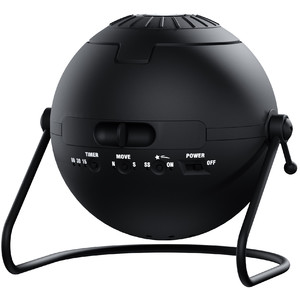
The benchmark among home planetariums: 60,000 real stars, adjustable focus, shooting-star function and sleep timer.
Price: € 189
Binoculars or a first telescope: discover the sky yourself
The most lasting gift is the one you look through yourself. Binoculars immediately show ten times more stars than the naked eye, and a telescope (an instrument that gathers a lot of light with its large aperture – the diameter of its lens or mirror) shows the rings of Saturn.
If you can only buy one instrument and really want to explore the sky, go for the telescope; binoculars are the complement, not the replacement. Our starter tip is a small Dobsonian – a reflecting telescope on a simple rotating base that works without any setup fuss.
Our starter tip: Skywatcher Dobson Telescope N 130/650 Heritage FlexTube
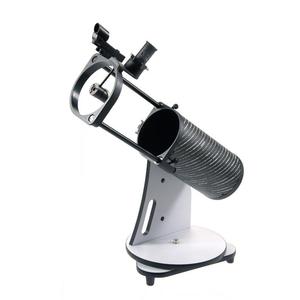
A compact tabletop Dobson with a true parabolic mirror. Folds down, fits in a bag: the Moon, planets and the bright deep-sky classics.
Price: € 265
For advanced observers: a Dobsonian with 200 mm aperture
The Skyliner 200P gathers more than twice as much light as the 130 mm starter scope. Galaxies and nebulae become objects with shape instead of faint smudges, and stars down to about magnitude 14 come within reach.
The price for that: the instrument is heavy and takes up space in the car. The extra cost is worth it for anyone who already knows they’ll head out regularly – as a surprise gift for beginners it’s too much.
The next step up: Skywatcher Dobson Telescope N 200/1200 Skyliner Classic
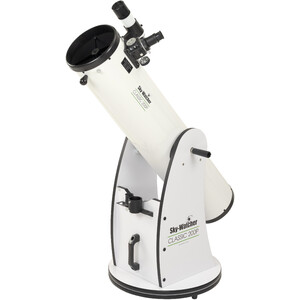
200 mm of aperture — the most sky for your money. Set it on the ground, point by hand: nebulae, clusters and galaxies for years to come.
Price: € 479
An evening at an observatory
A joint visit to a public observatory or an astronomy club’s star party is often free or costs just a few dollars – and stays in the memory longer than any certificate. You look through big telescopes and can ask the volunteers any question, including about “your” star.
You’ll find even more ideas sorted by budget in our astronomy gifts. A little trick for the undecided: a gift voucher lets the recipient choose for themselves – combined with a printed star map, it still feels personal.
Frequently asked questions about buying a star
Is naming a star legally valid?
No. You’re buying a service – a certificate and an entry in a private directory – but no rights to the star and no name that counts outside that directory. The purchase contract for the certificate itself is, of course, valid.
Can I have a star officially named?
Not for money. But the IAU has let the public vote several times: in the NameExoWorlds 2019 contest, every participating country was allowed to name a star with a planet. The United States named the star HD 17156 in Cassiopeia “Nushagak” and its planet “Mulchatna”, after rivers in Alaska – officially and free of charge.
Can the same star be sold more than once?
Yes. Every company keeps its own register, and none of them is cross-checked with the others. Within one register a reputable company assigns a star only once, but it can’t guarantee that with respect to other companies.
Where is the star name recorded in a register?
Only in the directory of the company in question, usually searchable online by certificate number. Scientific catalogs such as Hipparcos or Henry Draper don’t include such names, and planetarium apps don’t show them either.
Can you see a purchased star with the naked eye?
Only if it’s brighter than about magnitude 6 and rises where you live. Many cheaper packages assign fainter stars that you can only find with binoculars or a telescope. Ask about the brightness and declination before you buy.
What about land on the Moon?
Same principle: the Outer Space Treaty of 1967 doesn’t allow anyone to appropriate celestial bodies, so a Moon deed gives you no ownership. If you want to give real lunar rock, go for a lunar meteorite – it really is from the Moon.
Further reading
- Astronomy gifts: ideas by budget
- Home planetarium: which devices show the real sky
- Identifying constellations: the method that works
- Stars: profiles of the best-known stars
Links marked with * are affiliate links. If you buy through them, we receive a small commission – the price stays the same for you. We deliberately don’t link to star-naming companies.