By Alexander Merz · Published on · Details checked on 14 September 2026
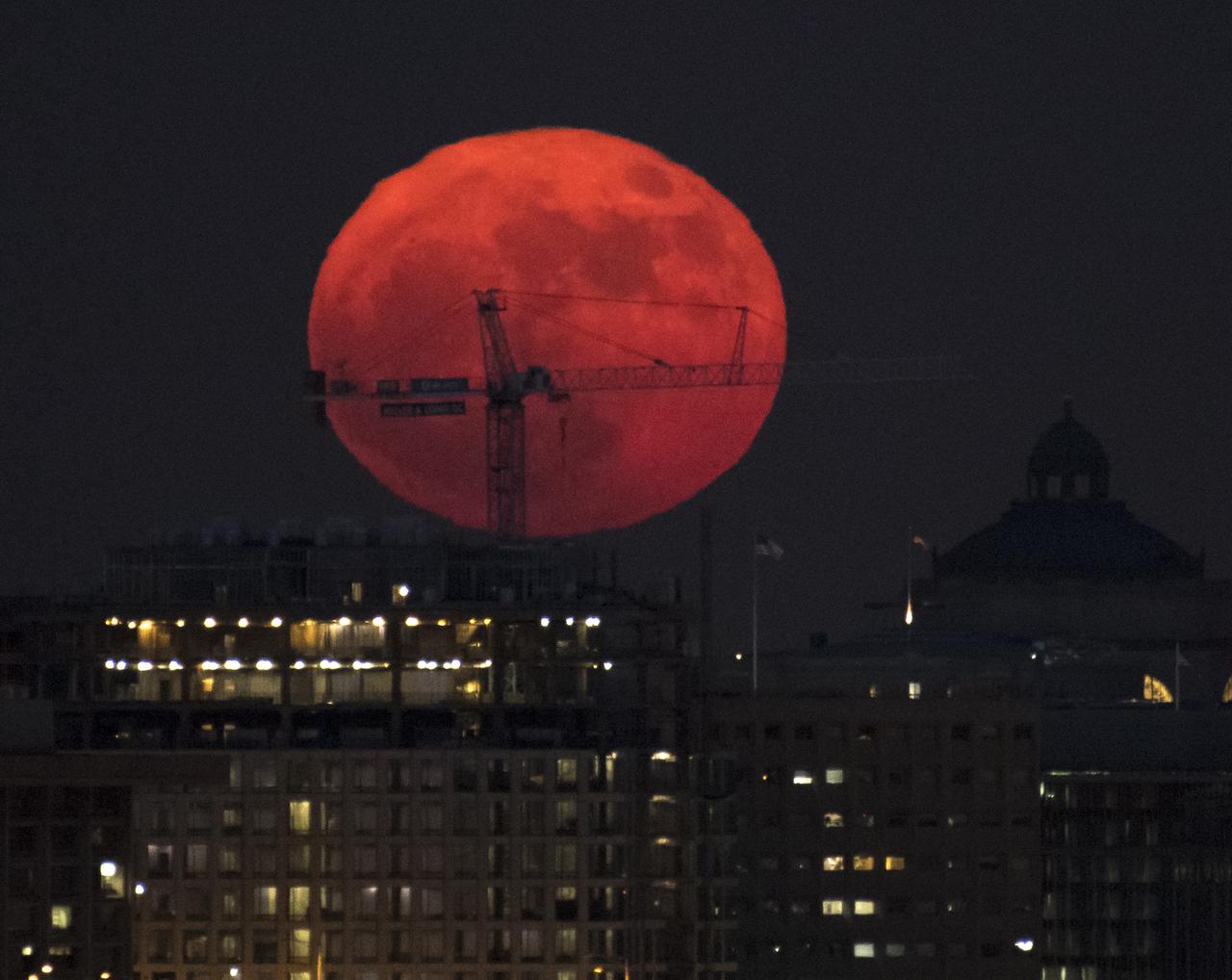
“Tonight: SUPERMOON!” – few celestial events make the headlines so reliably. But what exactly is a supermoon, how much bigger is it really – and when will the next one appear in the sky? The short answer to the last question is exciting: in 2026, the brightest full moon of the year will shine on Christmas Eve of all nights. Here are all the dates, facts and observing tips.
⚡ The quick answer: A supermoon is a full moon near perigee: because the Moon’s orbit is not a perfect circle, its distance varies between roughly 356,500 and 406,700 kilometres. When the full moon coincides with the closest point to Earth (perigee), it appears up to 14 % larger and about 30 % brighter than a full moon at apogee. The next supermoon is on 24 November 2026, when the Moon is 360,800 km from Earth. It is followed by 24 December (356,758 km) and 22 January (357,661 km). The closest full moon of the coming twelve months falls on 24 December 2026 at 356,758 km.
Supermoon 2026: the dates
| Date | Full moon | Distance (approx.) | Highlight |
|---|---|---|---|
| 3 January 2026 | “Wolf Moon” | 362,300 km | already past |
| 24 November 2026 | “Beaver Moon” | 360,800 km | First supermoon of the winter |
| 24 December 2026 | “Cold Moon” | 356,700 km | ⭐ Closest and brightest full moon of 2026 – on Christmas Eve! |
You will find all full moon dates with times in the full moon calendar – broken down year by year in the 2026 calendar and the 2027 calendar.
What makes a full moon a supermoon?
The term does not come from astronomy but from the astrologer Richard Nolle (1979): according to him, a supermoon is a full moon that occurs within the closest 10 % of its orbit to Earth. Because this 90 % rule is interpreted differently, some sources count two supermoons per year, others four – the dates above follow the common interpretation. Astronomers speak more soberly of the “perigee full moon”. Its counterpart, by the way, is the “micromoon”: a full moon at apogee, noticeably smaller and paler.
How much bigger does a supermoon really look?
Honest answer: with the naked eye you will barely notice the difference. 14 % more diameter sounds like a lot, but it is imperceptible without a direct comparison – only in photos taken at the same focal length does the difference between supermoon and micromoon become clear. The “wow effect”, when the huge golden moon rises over the rooftops, is a different phenomenon anyway: the moon illusion – an optical illusion that works at every full moon. The combination of the two does, however, make supermoon evenings the most photogenic moonrises of the year.
💡 What is really noticeable is the brightness: around 30 % more light than a full moon at apogee makes supermoon nights noticeably brighter – December snowscapes then look almost as bright as day. For deep-sky observers, on the other hand, supermoon nights are the worst of the month: the moonlight outshines everything.
Does the supermoon trigger disasters?
Persistent myths surround the supermoon – from earthquakes to sleep problems. The fact is: tidal forces are indeed slightly stronger near perigee, and spring tides run a few centimetres higher than usual. There is, however, no scientific evidence for any solid link with earthquakes or volcanic eruptions – the supermoon is a beautiful but entirely harmless spectacle.
Observing and photographing the supermoon: how to get the most out of it
- The moment: head out at moonrise (on the full moon day, shortly after sunset) – low moon + twilight + moon illusion = the big show. Times in the full moon calendar.
- The location: a clear view to the east/northeast, ideally with a striking foreground (church spire, tree, mountain ridge).
- The photo: a telephoto lens from 200 mm makes the moon appear huge behind the foreground; smartphone tips in the guide Photographing the Moon.
- The details: at the bright full moon you can see ray craters such as Tycho especially well – the lunar maria and the craters at the edge (the “terminator” is missing at full moon) are low in contrast, by contrast.
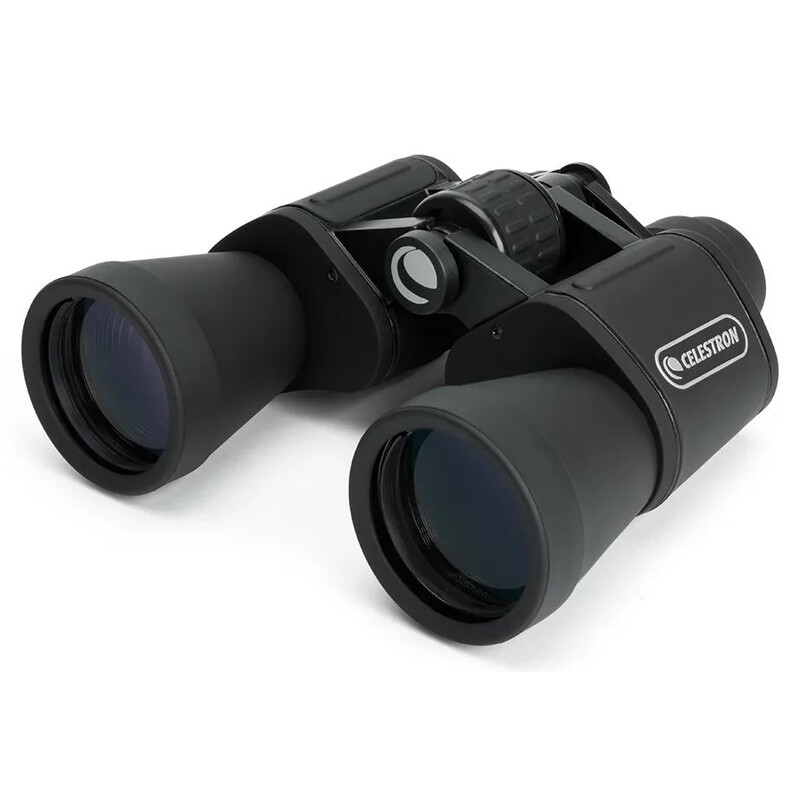 🌕 Experience the supermoon in detail: even the Celestron UpClose G2 10x50 Porro Binoculars turn the bright disc into a cratered landscape – and the dazzlingly bright supermoon is the perfect occasion for a moon filter (included in the eyepiece starter kit for $89.95€ 89).
View binoculars* → View starter kit* →
*Affiliate link: if you buy through it, we receive a small commission – the price does not change for you.
Frequently asked questions about the supermoon
When is the next supermoon?
The next supermoon is on 24 November 2026, when the Moon is 360,800 km from Earth. It is followed by 24 December (356,758 km) and 22 January (357,661 km). The closest full moon of the coming twelve months falls on 24 December 2026 at 356,758 km.
Is there a supermoon today?
Supermoons are rare, isolated dates – two to four per year depending on the interpretation; the next dates are given in the quick answer at the very top. On all other full moon evenings you see a “normal” full moon (which, thanks to the moon illusion, still looks huge on the horizon).
Can the supermoon be seen everywhere?
Yes – the Moon appears in practically the same place in the sky for an entire country. All that matters is clear weather and an unobstructed view towards moonrise in the east.
When is the next supermoon after 2026?
Supermoon series shift back from year to year. After the two dates in November and December 2026, 2027 has just a single supermoon: on 22 January at 357,600 km – after that the year has no more. 2028 makes up for it and brings three at once, on 12 January, 10 February and 11 March. All dates with distance and apparent diameter are in the full moon calendar 2027 and the full moon calendar 2028.
What is a micromoon?
The opposite: a full moon at apogee (over 405,000 km). It appears up to 14 % smaller and noticeably paler than a supermoon.
🌙 More about the Moon: Full moon calendar 2026/27 · The moon illusion · Blood moon · Lunar eclipse dates · All about the Moon