By Alexander Merz · Updated on · Details checked on 14 September 2026
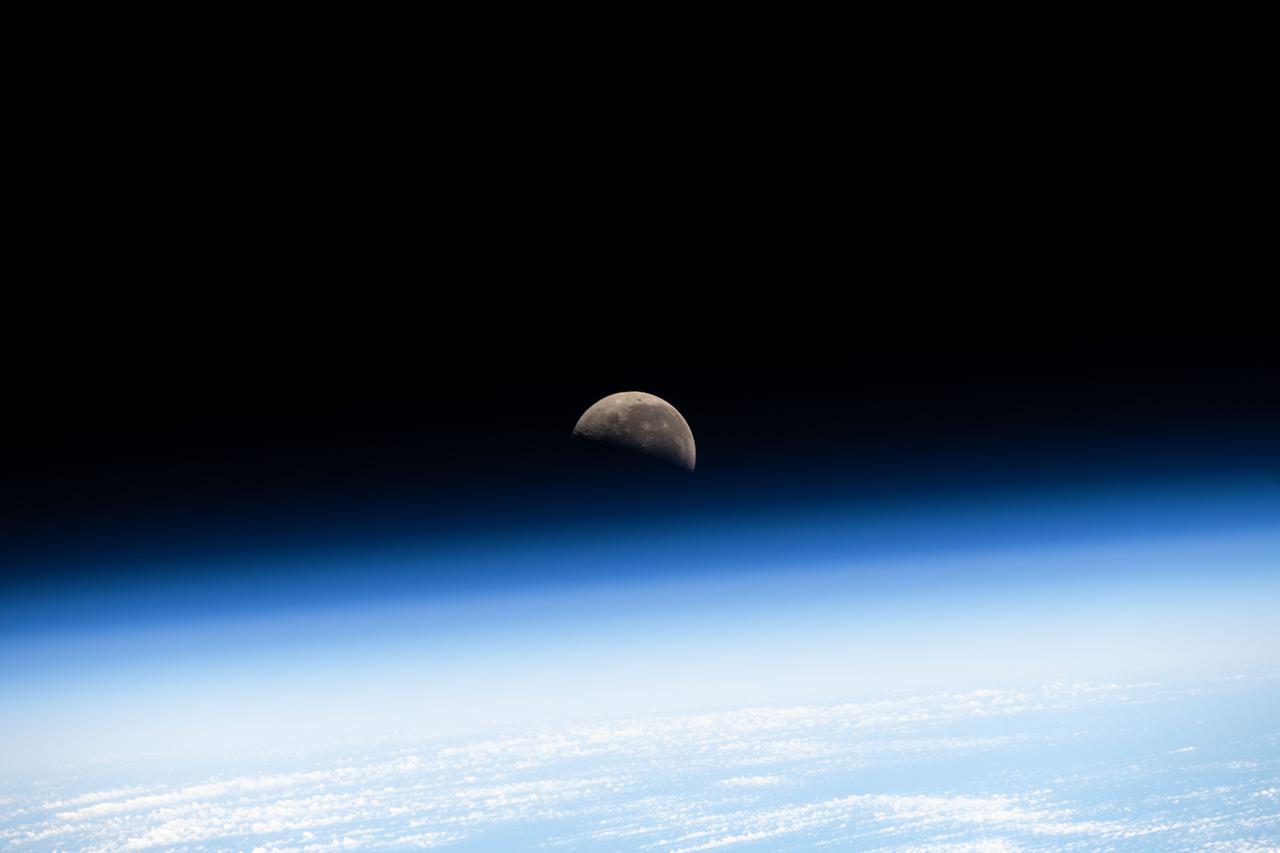
After the full moon comes the waning moon phase: night after night, the lit portion shrinks – from the waning gibbous through the last quarter down to a slender crescent at dawn. If you want to catch the waning moon, you’ll need to rise early (or stay up late): it belongs to the second half of the night.
⚡ The quick answer: The waning moon is visible late at night and in the morning. The last quarter rises around midnight and stands high in the sky well into the late morning – often still visible against the blue daytime sky. From there the crescent thins until it fades into the dawn just before new moon. Memory aid: in the northern hemisphere the waning moon looks like a backwards “C” – the left side stays lit.
The stages of the waning moon
In the nights following the full moon, the Moon rises about 50 minutes later each evening. Roughly a week after full moon it reaches the last quarter (waning half moon): it rises around midnight and stands high in the south at sunrise – which is why you often still see it in the blue morning sky. The crescent then keeps thinning until it disappears into the dawn twilight just before new moon.
Waning half moon (last quarter): 2026 dates
| Date | Time (CET/CEST) |
|---|---|
| Saturday, 10 January 2026 | 4:48 pm |
| Monday, 9 February 2026 | 1:43 pm |
| Wednesday, 11 March 2026 | 10:38 am |
| Friday, 10 April 2026 | 6:51 am |
| Saturday, 9 May 2026 | 11:10 pm |
| Monday, 8 June 2026 | 12:00 pm |
| Tuesday, 7 July 2026 | 9:29 pm |
| Thursday, 6 August 2026 | 4:21 am |
| Friday, 4 September 2026 | 9:51 am |
| Saturday, 3 October 2026 | 3:25 pm |
| Sunday, 1 November 2026 | 9:28 pm |
| Tuesday, 1 December 2026 | 7:08 am |
| Wednesday, 30 December 2026 | 7:59 pm |
Why can you sometimes see the Moon in daylight?
Around the last quarter, the waning moon sits high in the sky during the late morning while the Sun is already up. It stays bright enough to stand out against the blue daytime sky – a perfect moment to point it out to kids, with no equipment at all. It’s a completely normal effect, yet it surprises many people who only expect to find the Moon at night.
Observing tips for early risers
As with the waxing moon, the relief looks its most dramatic along the terminator (the shadow line) – except it now falls on the opposite side of the disc. You’ll see the same craters under “reversed” lighting, so familiar formations like Copernicus or Mare Imbrium (the Sea of Rains) can look surprisingly fresh. A beginner telescope is more than enough; a moon filter cuts the glare during the brightest phases.
For getting started on the Moon and planets, a compact achromatic refractor offers excellent value and is ready to observe within seconds:
Best for beginners: Omegon Telescope AC 70/700 AZ-2
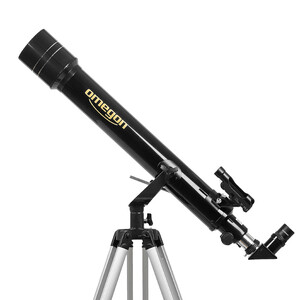
The no-pitfall starter refractor: Moon, Saturn's rings and Jupiter's moons from the very first night. No collimation.
Price: € 119
Best for advanced observers: Skywatcher Dobson Telescope N 200/1200 Skyliner Classic
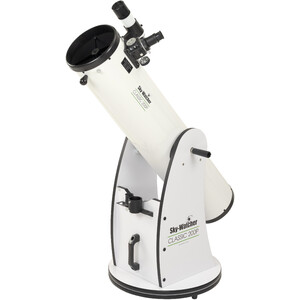
200 mm of aperture — the most sky for your money. Set it on the ground, point by hand: nebulae, clusters and galaxies for years to come.
Price: € 479
* Affiliate link: if you buy through this link we may earn a small commission from Astroshop or High Point Scientific, at no extra cost to you.
A dark sky for deep-sky targets
A handy side effect for deep-sky fans: during the early evening the sky is now dark and moon-free. The days of the waning moon are therefore ideal in the evening for hunting galaxies and nebulae – before the Moon rises. To find out what’s shining right now, check our guide to which planets are visible tonight.
Frequently asked questions
When can you see the waning moon?
In the second half of the night and in the morning. The waning half moon rises around midnight and stays visible into the late morning, including against the daytime sky.
Waning vs waxing moon: how do you tell them apart?
In the northern hemisphere, the waning moon forms a backwards “C” (left side lit), while the waxing moon looks like a “D” (right side lit).
What is earthshine?
On the thin morning crescent you can sometimes make out the Moon’s night side glowing faintly grey. That’s earthshine – sunlight reflected off the Earth and back onto the Moon.
How long does it take from full moon to new moon?
About 14.8 days – then the cycle begins again with the new moon.
📚 Read next: