By Alexander Merz · Published on · Details checked on 8 October 2026
One month, two oppositions: in February 2027 Jupiter (11 February) and Mars (19 February) reach opposition just eight days apart – both of them in the constellation Leo. Two bright planets, visible all night, side by side in the sky: this is the best planet show for years.
More in our overview: Astronomical Events.
The key facts in brief
- 11 February: Jupiter at opposition – the brightest planet of the night, showing cloud belts and the four Galilean moons in the telescope
- 19 February: Mars at opposition – the Red Planet in its best position until 2029
- Venus remains a brilliant morning star
- 20/21 February: full moon (the “Snow Moon”) with an inconspicuous penumbral lunar eclipse
- Winter sky: Orion & co. are still in top form in the evening – high in the south the constellation Cancer with the star cluster Praesepe (M 44) reaches its best time
The moon phases in February 2027
| Date | Moon phase | What that means for you |
|---|---|---|
| 6 February | New moon | Dark nights – the ideal stage for the approaching Jupiter opposition |
| 14 February | First quarter | Half moon for Valentine’s Day – a romantic look at the moon through the telescope |
| 20/21 February | Full moon | “Snow Moon” (00:23 Central European Time (CET) on 21 February) with a penumbral lunar eclipse – barely noticeable |
| 28 February | Last quarter | Evenings free of moonlight again |
The dates that are actually worth it are often months apart – and easily forgotten. So you do not miss one:
One short email, in good time – with the times and an honest take on whether it is worth getting up for.
You will get a confirmation email in a moment. Your address stays with us – no sharing, no third-party ads.
The double opposition: Jupiter and Mars in Leo
Jupiter reaches its opposition on 11 February 2027: it rises at sunset, stands highest around midnight and is by far the brightest “star” of the night (after the moon). Even in binoculars you can see its four large moons lined up as pinpricks of light – in the telescope the cloud belts and the Great Red Spot join in. Still looking for an instrument? Our list of the best telescopes for planets, by budget is a good place to start.
Mars follows on 19 February 2027 – its closest approach to Earth until 2029. Because this opposition happens while Mars is near the far point of its orbit from the Sun, the little disc stays moderate in size at just under 14 arcseconds; even so, in steady winter air telescopes from about 130 mm aperture will show dark surface markings and the polar cap. All the background in the Mars guide.
On top of that: Venus as the morning star (now a thinning but ever larger crescent in the telescope), Uranus in Taurus in the evening, and Saturn taking its leave in the evening twilight.
Best choice for beginners: Omegon Telescope AC 70/700 AZ-2
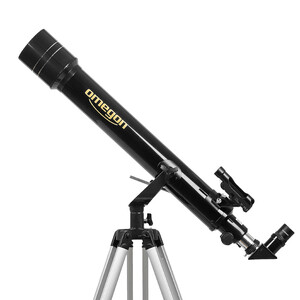
The no-pitfall starter refractor: Moon, Saturn's rings and Jupiter's moons from the very first night. No collimation.
Price: € 129
For more experienced observers: Skywatcher Dobson Telescope N 200/1200 Skyliner Classic
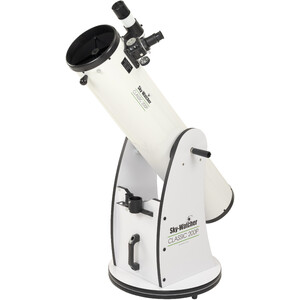
200 mm of aperture — the most sky for your money. Set it on the ground, point by hand: nebulae, clusters and galaxies for years to come.
Price: € 479
* Affiliate link: if you buy through this link we may earn a small commission from Astroshop, High Point Scientific or another linked retailer, at no extra cost to you.
February is the last good month for Orion and the winter sky.
Six short questions, an honest answer by email – even when binoculars are the better choice.
Frequently asked questions about the February sky
When is the Jupiter opposition in 2027?
On 11 February 2027. Jupiter is then visible all night and brighter than any star.
When is the Mars opposition in 2027?
On 19 February 2027 in the constellation Leo – just eight days after Jupiter. The next Mars opposition does not follow until 2029.
What is an opposition?
The moment when Earth stands exactly between the Sun and the planet: the planet rises at sunset, stands highest around midnight and is particularly close to Earth – the best time to observe it.