By Alexander Merz · Published on · Details checked on 14 September 2026
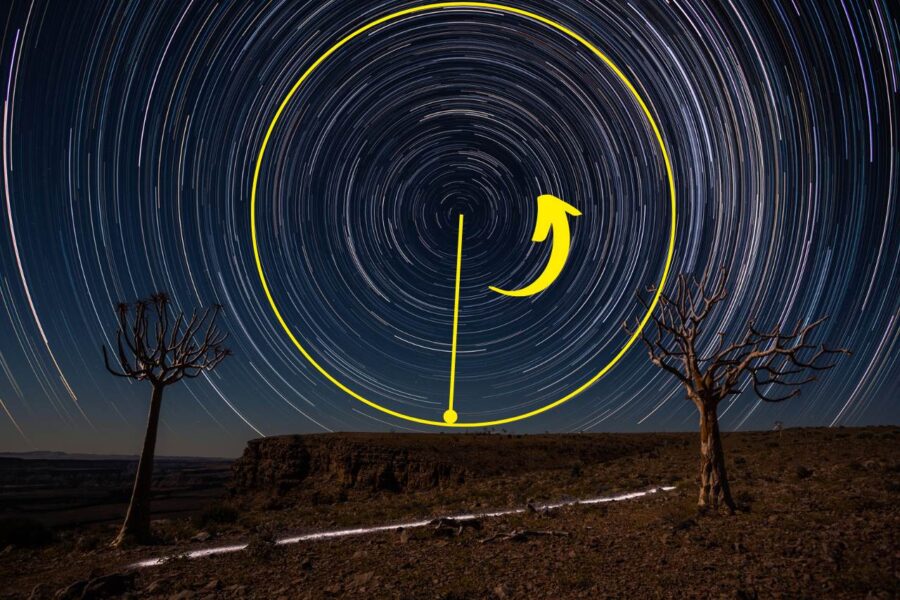
The circumpolar constellations are star constellations that are located near the north celestial pole and perform a circular motion around the Pole Star.
These constellations always stay above the horizon and are therefore always visible, regardless of the time of day.
The circumpolar constellations include the Ursa Major, Ursa Minor, Cassiopeia, Cepheus, Draco, Camelopardalis and Perseus. In contrast, all other constellations rise and set, just like the Sun and the Moon.
Key facts at a glance
- Circumpolar constellations are located near the north celestial pole.
- They perform a circular motion around the Pole Star.
- Circumpolar constellations never sink below the horizon and are therefore visible at all times.
- The circumpolar constellations include Ursa Major, Ursa Minor, Cassiopeia, Cepheus, Draco, Camelopardalis and Perseus.
- In contrast, all other constellations rise and set, just like the Sun and the Moon.
What are circumpolar constellations?
Circumpolar constellations are stars that are located near the north celestial pole and never sink below the horizon.
They perform a circular motion around the Pole Star and are therefore always visible, regardless of the time of day.
However, they are actually visible only at night, because during the day the Sun outshines everything with its brightness.
Among the best-known circumpolar constellations are Ursa Major, Ursa Minor, Cassiopeia, Cepheus, Draco, Camelopardalis and Perseus.
Why are these circumpolar constellations always visible?
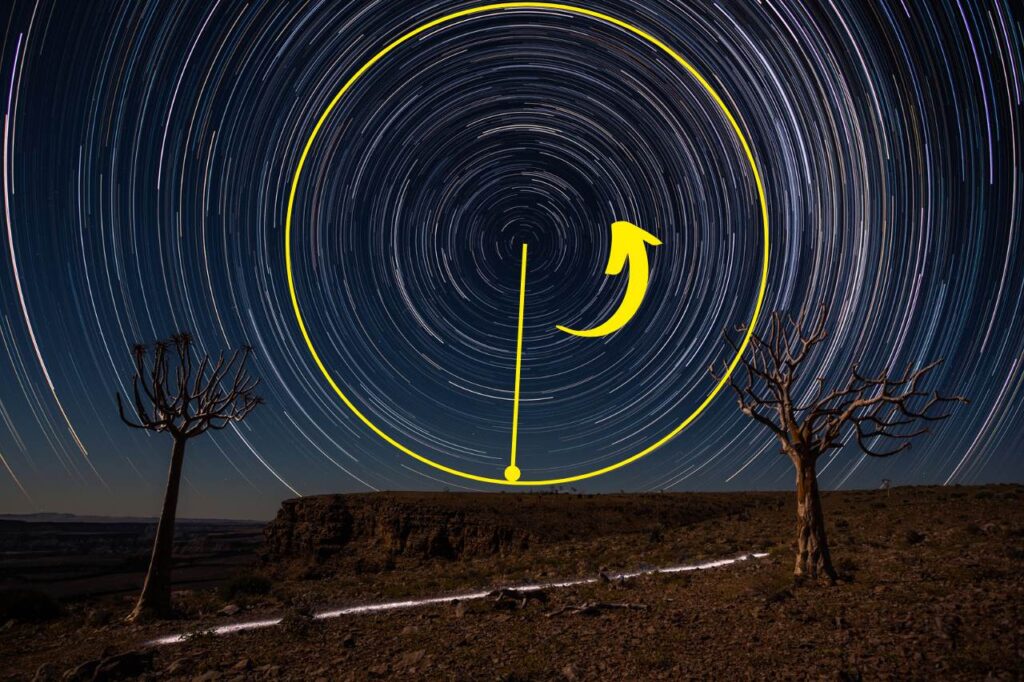
The circumpolar constellations never go below the horizon. They are therefore always visible at different positions around the Pole Star. The graphic explains it:
Creator: Martin Junius
Copyright: (C) 2018 Martin Junius
How do I find these constellations?
To find the circumpolar constellations, it is helpful to locate the Pole Star, which approximately marks the north celestial pole around which the firmament rotates.
To find the Pole Star, you first need to find the Big Dipper. The Big Dipper is a well-known constellation that looks like a dipper or a bowl. The Pole Star is located at the end of the “handle” of the Big Dipper.
Simply follow the line of the two outermost stars of the “bowl” of the Big Dipper to reach a bright star. This bright star is the Pole Star. It is located near the celestial pole and remains relatively stationary throughout the year.
If you have trouble finding the Big Dipper, look for a clear sky and search for a striking constellation made up of seven stars arranged in the shape of a dipper.
Once you have found the Big Dipper, you can easily find the Pole Star by connecting the two outer stars of the “bowl” and extending the line toward the celestial pole.
List of circumpolar constellations and their characteristics
- Ursa Minor (Ursa Minor): Ursa Minor contains Polaris, also known as the North Star, which is referred to as the celestial pole. Polaris is the brightest star near the celestial pole and remains visible throughout the year.
- Ursa Major (Ursa Major): Ursa Major contains the Big Dipper, which consists of seven stars and is easy to recognize. The two stars at the end of the “bowl” of the Big Dipper point directly at Polaris, the North Star.
- Draco (Draco): Draco is a long, winding constellation that stretches between Ursa Major and Ursa Minor. An interesting feature of Draco is that it crosses the celestial equator and is therefore visible in both the northern and southern hemispheres.
- Cassiopeia (Cassiopeia): Cassiopeia is a W-shaped constellation located north of Ursa Major. It is known for its bright star Gamma Cassiopeia and its position near the northern celestial pole.
- Cepheus: Cepheus is a constellation located near Cassiopeia and is known for its bright star, Cephei. Cepheus is also known for its distinctive house-roof-shaped pattern.