By Alexander Merz · Published on · Details checked on 14 September 2026
A perfect chain of dozens of lights glides silently across the night sky – no blinking, no engine noise, all exactly in a line. Anyone seeing it for the first time thinks of UFOs. The explanation is more down to earth: you have just seen a freshly launched train of Starlink satellites. Here you will learn what is behind it, when and where you can see the “string of lights” yourself, how to tell it apart from the ISS, aircraft and shooting stars – and why the phenomenon gives astronomers a headache.
⚡ The quick answer: The “string of lights in the sky” is a batch of Starlink internet satellites from SpaceX, still flying tightly packed one behind the other shortly after their rocket launch. They are only visible in the 1–2 hours after sunset or before sunrise, when they are still lit by the Sun high above. After a few days the satellites spread out and the chain “disappears”. Tracking sites such as findstarlink.com tell you whether a pass is due today – free and to the minute.
What is the string of lights in the sky?
Since 2019, SpaceX has been building the largest satellite network in history: Starlink is designed to deliver satellite internet worldwide and now comprises more than 8,000 active satellites – with over 40,000 planned. As a result, more than half of all active satellites in Earth orbit now belong to this single project.
Launches come thick and fast: almost every week a Falcon 9 rocket carries 20 to 60 new satellites into space at once. And it is precisely these fresh “batches” that create the spectacle: right after deployment, all the satellites fly tightly packed one behind the other on the same orbit – from the ground it looks like a glowing string of pearls sweeping across the sky in just a few minutes.
Why does the chain disappear after a few days?
The string of pearls is just a snapshot. After deployment, the satellites raise their orbit from around 300 to about 550 kilometres using their own ion thrusters and spread out along their orbit in the process. The tight chain turns into individual, much fainter points of light. In addition, once in their target orbit the satellites angle their reflective surfaces so that they reflect less sunlight back to Earth. That is why: you only see the spectacular chains in the first few days after a launch.
When and where can you see Starlink?
Three conditions have to come together – and they apply the same way across the UK, Ireland and Central Europe:
- Twilight window: the satellite must be lit by the Sun while it is already dark where you are. This works about 1–2 hours after sunset and before sunrise. In the middle of the night the satellites fly through Earth’s shadow – invisible. (Midsummer exception: on the bright nights of June, satellites can stay lit almost all night long.)
- Recent launch: for the impressive chain, the launch must be only a few days old. Individual older Starlinks do dart across the view all the time, but hardly stand out.
- Clear sky: cloud-free towards the pass trajectory – the satellites usually travel from west to east.
📱 How to find the next pass: Enter your town on findstarlink.com – the site lists all visible passes with time, sky direction and a brightness rating. Heavens-Above (web/app) also shows Starlink orbits to the minute. Tip: after reports of a fresh Falcon 9 launch, it is almost always worth a look at the evening sky over the following days.
String of lights, ISS, aircraft or shooting star? The comparison table
| Appearance | What it looks like | Speed | Distinctive feature |
|---|---|---|---|
| Starlink chain | Many identical lights exactly in a line | Crosses the sky in a few minutes | Silent, no blinking, all equally bright |
| ISS | ONE very bright, steady light | A few minutes per pass | Brighter than any star, never blinking |
| Aircraft | Blinking red/white lights | Slower, often changes course | Blinks! Often audible in the quiet, too |
| Shooting star | A short, bright streak | Under a second | Lightning-fast, appears out of nowhere |
Do you need binoculars for it?
No – the fresh chains are clearly visible to the naked eye. Binoculars do make the observation far more impressive, though: you can clearly see the individual satellites of the chain separated from one another and can also track down older, fainter Starlinks. A bright 10×50 pair has proven its worth:
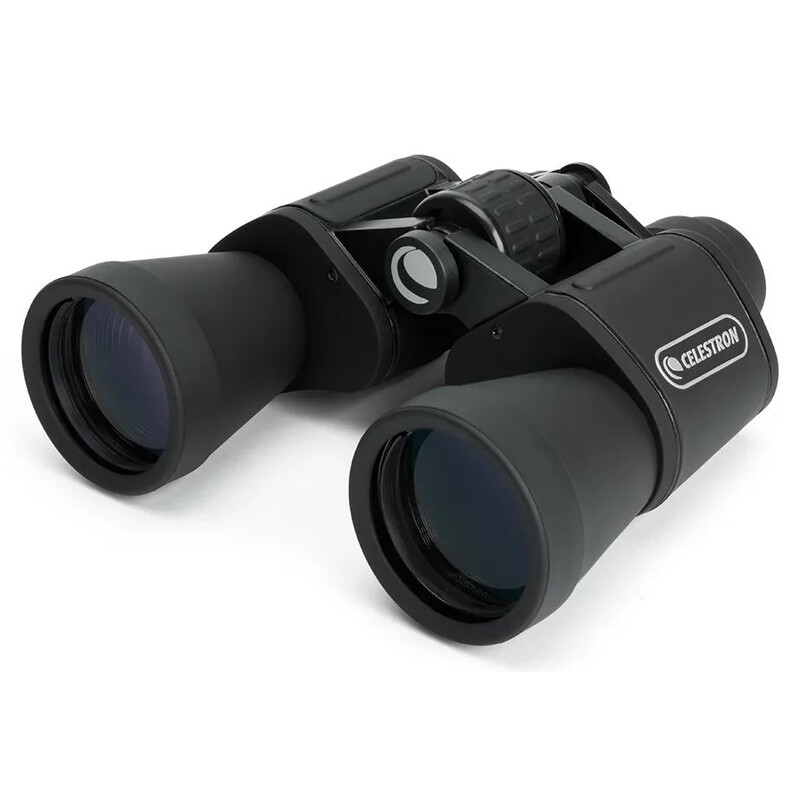 🔭 Celestron UpClose G2 10x50 Porro Binoculars (€ 62) – bright and handy, ideal for satellite hunting, ISS passes and the Milky Way.
Check availability* →
*Affiliate link: if you buy through it, we earn a small commission – the price stays the same for you.
The downside: what Starlink means for astronomy
As fascinating as the chains are, tens of thousands of reflective satellites are a problem for astronomy: they draw bright streaks through long exposures, disturb large telescopes and permanently change the night sky. SpaceX is trying to counteract this (darker coatings, adjusted flight orientation), but with every launch the number of points of light grows. Anyone photographing the Milky Way today almost always has satellite trails in the shot – in our astrophotography guide we show how to remove them during stacking. The growing light pollution thus takes on a new dimension too – from the ground AND from orbit.
Frequently asked questions about the string of lights in the sky
I saw a string of lights today/yesterday – what was it?
Almost certainly a freshly launched Starlink train. On findstarlink.com you can check retroactively whether a pass took place over your region at the time of your observation.
Does the string of lights have anything to do with Elon Musk?
Yes – Starlink is the satellite internet project of SpaceX, the space company owned by Elon Musk. The satellites deliver internet to remote regions worldwide.
How fast do the lights move?
At around 27,000 km/h, Starlink satellites orbit the Earth in about 90 minutes. In the sky they cross your field of view in two to five minutes – far faster than any aircraft.
Can you see Starlink from the UK and Ireland too?
Yes, visibility is practically identical across Western and Central Europe – the same rules (twilight, recent launch, clear sky) apply everywhere. The tracking tools work for any location.
How often can you see the chains?
SpaceX launches new satellites almost every week – so there are chances all the time. Whether a visible pass takes place over your region depends on the orbit and the twilight window: the tracking check takes 30 seconds.
Are the satellites dangerous?
Not for you on the ground. Decommissioned Starlinks burn up in a controlled way in the atmosphere. What is mainly debated are the consequences for astronomy and for an increasingly crowded Earth orbit.
🛰️ More in the night sky: Noctilucent clouds · Observing the ISS · Northern lights · The night sky in August 2026