By Alexander Merz · Published on · Details checked on 6 November 2026
A planetary nebula is the cast-off gas shell of a dying, Sun-like star, made to glow by the hot stellar remnant. It has nothing to do with planets, and it only shines for a few tens of thousands of years (Wikipedia: Planetarischer Nebel, in German).
About 1,500 are known in the Milky Way. For an overview of all types of nebula, see our page Nebulae in space.
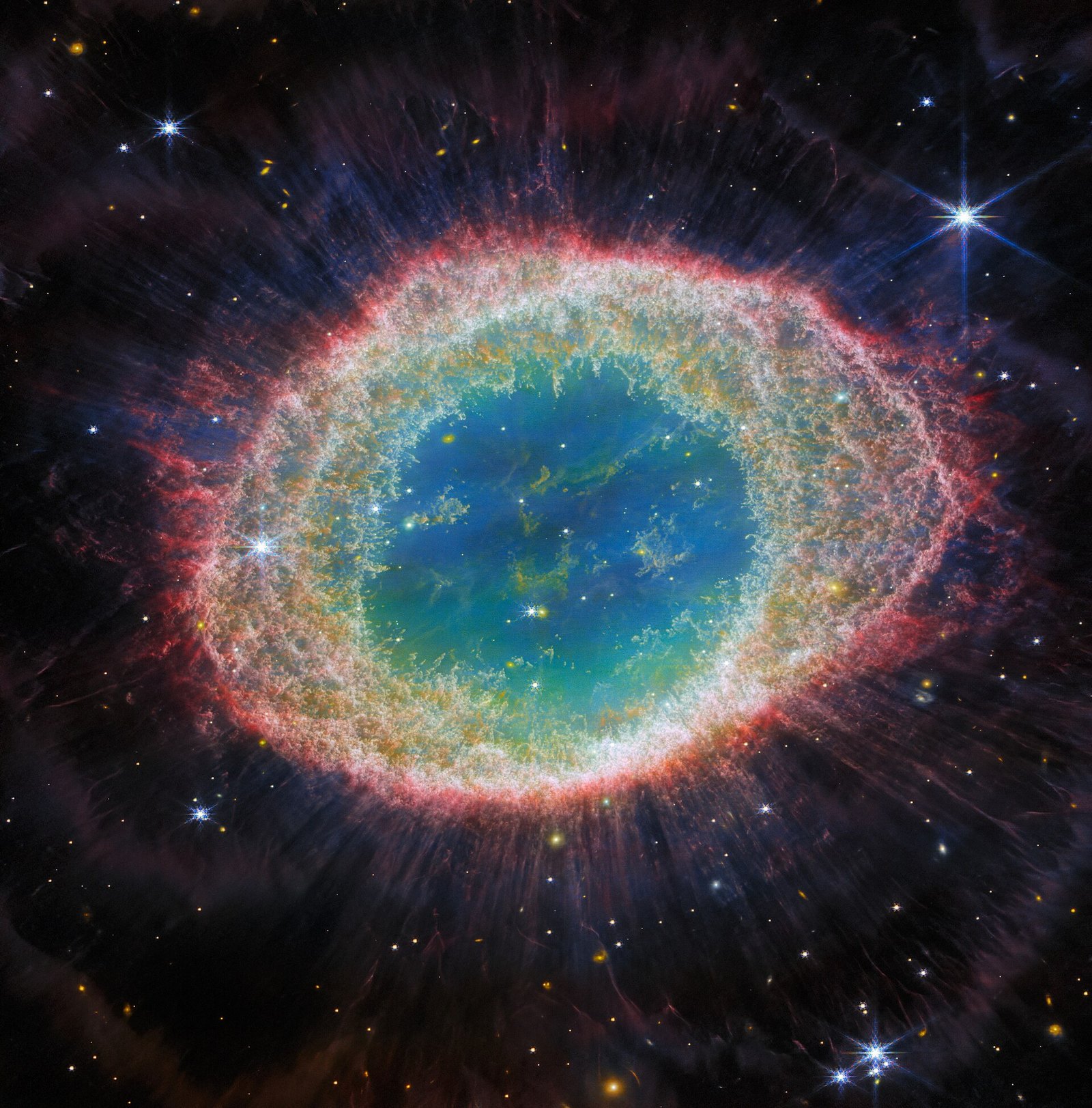
What is a planetary nebula?
At the end of its life, a star like the Sun swells into a red giant and sheds its outer layers. At first the gas streams into space at 20 to 40 km/s. What remains is the hot core, which later becomes a white dwarf (Wikipedia, in German).
The shell can only glow once the core is hot enough. From about 30,000 kelvin it emits so much ultraviolet light that the gas is ionised and radiates by itself. That makes a planetary nebula a special form of emission nebula.
This fate awaits stars with less than about twice the mass of the Sun – including our Sun. More massive stars, by contrast, end as a supernova. What lies ahead for the Sun is described on our page about the Sun.
burns hydrogen for billions of years
swells up, loses gas
hot core makes the shell glow, a few 10,000 years
nebula fades, stellar remnant cools down
Where does the name “planetary nebula” come from?
From William Herschel, who introduced the term in 1785. In his telescopes the round, sharply bounded little discs resembled the planet Uranus, discovered shortly before (Wikipedia, in German). The name stuck, even though it has been considered misleading for more than a hundred years.
Why do planetary nebulae glow green?
The green comes from doubly ionised oxygen, OIII for short, at 500.7 nanometres. The line was so puzzling that astronomers first suspected an unknown element, “nebulium”. It only arises in extremely thin gas and is therefore called a “forbidden line” (Wikipedia, in German).
For observers this is a stroke of luck. The dark-adapted eye is most sensitive in the blue-green range around 500 nm – exactly where planetary nebulae shine brightest (Wikipedia: Purkinje effect, in German). That is why some bright examples even show a hint of colour in the telescope.
The finest planetary nebulae in the northern sky
Planetary nebulae are spread across the whole year – there is a rewarding target for every season. Small does not mean difficult: because the light is concentrated in a small area, many are brighter than large gas nebulae. The brightness figures come from the Wikipedia articles linked in each case.
| Nebula | Constellation | Brightness, size | Best time | With what? |
|---|---|---|---|---|
| ⭐ Best first targetDumbbell Nebula M 27 | Vulpecula | 7.5 mag, 8′ × 6′ | Jul–Oct | binoculars show a smudge, a telescope shows the dumbbell |
| Ring Nebula M 57 | Lyra | 8.8 mag, approx. 2′ | Jun–Sep | telescope from 70 mm |
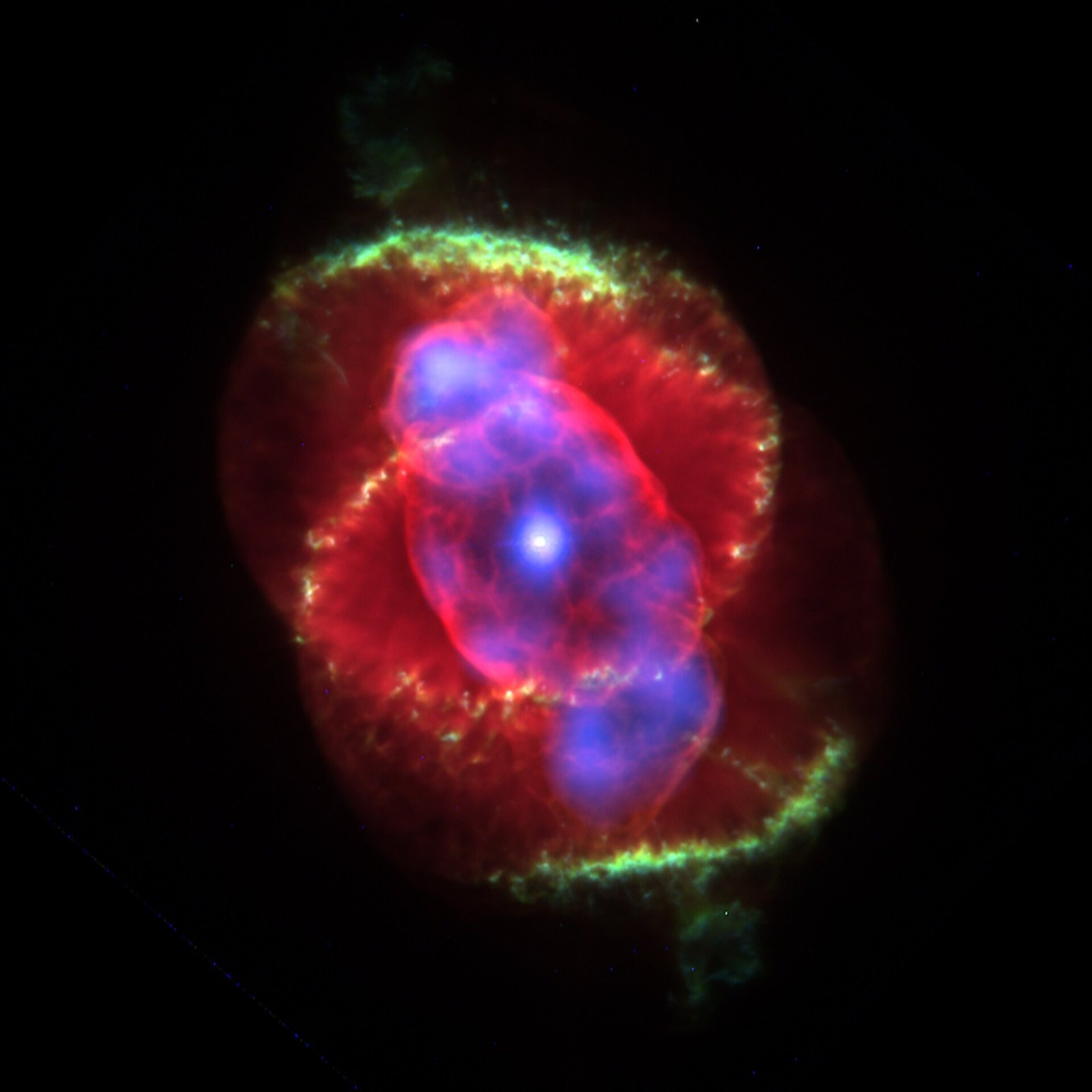
| Cat’s Eye Nebula NGC 6543 | Draco | 8.1 mag, very small | May–Oct | telescope, high magnification |
| Blue Snowball NGC 7662 | Andromeda | 8.3 mag, approx. 1′ | Sep–Dec | telescope, high magnification |
| Eskimo Nebula NGC 2392 | Gemini | 9.1 mag, approx. 0.8′ | Dec–Mar | small telescope |
| Owl Nebula M 97 | Ursa Major | 9.9 mag, 3.4′ | Feb–May | telescope, dark sky, OIII helps |
| Helix Nebula NGC 7293 | Aquarius | very large, 16′ × 28′, low surface brightness | Sep–Oct, low in the south | telescope + OIII, dark southern horizon |
The Dumbbell Nebula is the best first planetary nebula. At about 8 × 6 arcminutes it is roughly a quarter of the full Moon in size and shines at magnitude 7.5 (Wikipedia: Hantelnebel, in German). It lies in the small constellation of Vulpecula, the Fox, close to the Summer Triangle.
The Ring Nebula is the best known – and a delight even from the city. An observer in a German-language forum describes it through a 102 mm refractor from his balcony under Bortle 5 skies as “very bright and distinct”, with a sharply defined ring; in the same report he already enjoyed the Dumbbell Nebula in his wide-field eyepiece (forum.astronomie.de, October 2026, in German). You find it between the two lower stars of the parallelogram of Lyra.
The Helix Nebula is bright on paper but difficult in the eyepiece. It is one of the nearest planetary nebulae, about 650 light years away, and about half the size of the full Moon in the sky (Wikipedia: Helixnebel, in German). Its light is spread so thinly that it barely stands out without an OIII filter and a dark southern horizon.
Observing planetary nebulae: telescope, magnification, filters
Planetary nebulae are the most rewarding nebulae for the city. Their high surface brightness makes them stand out even under a brightened sky, where large, delicate gas nebulae sink into the background.
Unlike almost all other nebulae, you can use high magnification here. Find the nebula with your wide-field eyepiece, then step up to 100× to 200× – the stars stay points, while the nebula becomes a little disc. That is exactly how Herschel recognised them.
OIII or UHC: which nebula filter for planetary nebulae?
The OIII filter is the most effective filter for planetary nebulae. It passes only the two green oxygen lines at 495.9 and 500.7 nm and darkens the sky strongly. Experienced observers in a German-language forum call it decisive for whether such an object becomes visible at all (forum.astronomie.de, January 2022, in German).
The UHC filter is broader and often the better start for smaller telescopes. In the same forum, one observer reports that a UHC gave his 150/750 Newtonian clearly more contrast on the Ring and Dumbbell Nebulae. In a 10-inch Dobsonian, switching from the UHC to the OIII showed the dumbbell shape of M 27 even more clearly (forum.astronomie.de, August 2026, in German).
| Filter | What it lets through | Strong on | For whom |
|---|---|---|---|
| OIII | only the green oxygen lines | Helix, Owl Nebula, Veil Nebula | reported in the forum to work from 114 mm, stronger with more aperture |
| UHC | oxygen and hydrogen lines | Dumbbell and Ring Nebulae, gas nebulae in general | beginners, smaller telescopes |
| no filter | everything | small, bright nebulae such as the Cat’s Eye or Eskimo | high magnification, any telescope |
Filter for gas nebulae: Omegon Pro 1.25" UHC Filter
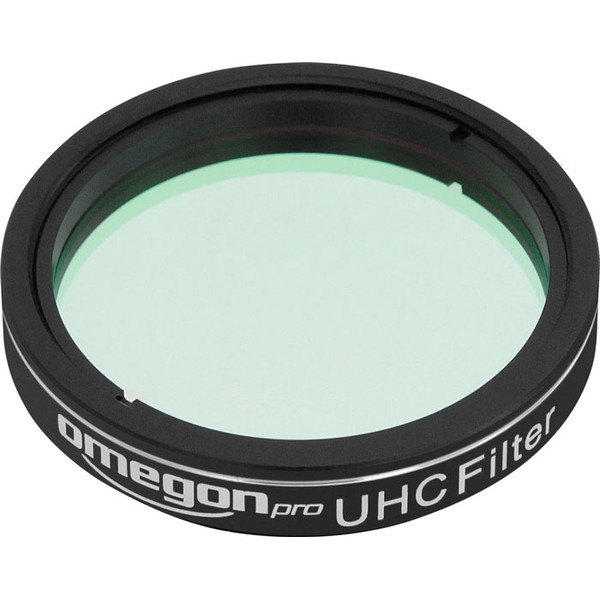
Affordable UHC filter in 1.25-inch format: visibly lifts the Ring and Dumbbell Nebulae off the sky background. Not intended for galaxies and star clusters.
Price: € 59
Which telescope for planetary nebulae?
For the bright classics a beginner’s telescope with a stable mount is enough. More important than huge aperture is that the instrument holds high magnifications steadily. For faint nebulae such as M 97 or the Helix, every centimetre of aperture helps.
First telescope: Skywatcher Dobson Telescope N 130/650 Heritage FlexTube
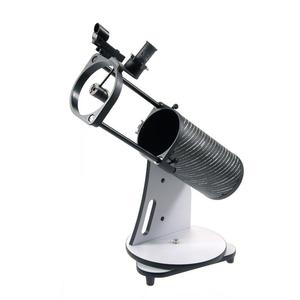
130 mm aperture on a compact tabletop Dobsonian: shows the Ring and Dumbbell Nebulae and, with a short-focal-length eyepiece, also holds higher magnifications. Needs a table or stool.
Price: € 265
Our recommendation: Skywatcher Dobson Telescope N 200/1200 Skyliner Classic
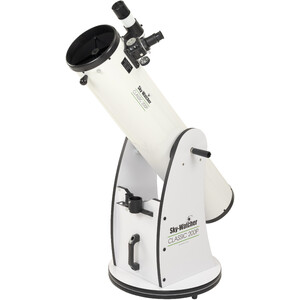
200 mm aperture: enough light for the Owl Nebula, the Blue Snowball and, with an OIII filter, the Helix Nebula too. The simple rocker-box mount is quick to set up.
Price: € 479
For advanced observers: Omegon Dobson Telescope Advanced X N 254/1250
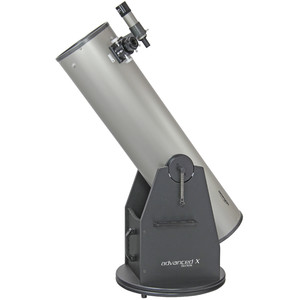
254 mm aperture for hunters of the small, faint NGC planetaries beyond the Messier list. Worth it above all with an OIII filter and a dark site.
Price: € 699
Photographing planetary nebulae
Photographically, most planetary nebulae above all need focal length. The Ring Nebula measures only about two arcminutes – at short focal length it remains a small ring covering just a few pixels. Large examples such as the Dumbbell and Helix Nebulae are therefore the better first targets.
Because they glow in individual emission lines, they benefit from narrowband and dual-band filters. These filters pass H-alpha and OIII and largely block out light pollution. On the Seestar, the built-in LP filter is meant for this (Seestar guide to the LP filter).
Details in the outer shells take hours. A member of a German-language forum exposed the Snowglobe Nebula NGC 6781 with a self-built 12-inch telescope for a total of 7 hours, 3 hours each of them in H-alpha and OIII (forum.astronomie.de, September 2026, in German). A first image of M 27 needs far less.
First nebula photo, no experience needed: ZWO Seestar S50 Pro Smart Telescope
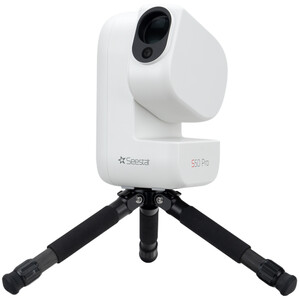
Smart telescope with 50 mm aperture and a built-in dual-band filter: shows the Dumbbell Nebula in colour after a few minutes. The Ring Nebula stays small at this short focal length.
Price: € 999
If you start out with your own camera, you need a tracking mount and a telescope with a fairly long focal length. Which instruments are suitable is covered in our guide to deep-sky astrophotography equipment. The whole workflow from capture to finished image is explained in Deep-sky astrophotography.
FAQ about planetary nebulae
How does a planetary nebula form?
At the end of its life a Sun-like star, as a red giant, sheds its outer layers of gas. The remaining, very hot core makes the gas glow with ultraviolet light. After a few tens of thousands of years the shell has spread out so far that it fades.
Does a planetary nebula contain planets?
No. The name comes from William Herschel, to whom the round little discs looked like the planet Uranus in 1785. It is the gas shell of a dying star.
How many planetary nebulae are there?
About 1,500 are known in the Milky Way. Because they only shine for a short time and many are hidden behind dust, the real number is probably higher.
Will the Sun become a planetary nebula?
Yes. Stars with less than about twice the mass of the Sun end this way, and the Sun is one of them. But that is still billions of years away.
Which planetary nebula is easiest for beginners?
The Dumbbell Nebula M 27 in Vulpecula: large, bright and already findable as a smudge in binoculars. Next comes the Ring Nebula M 57, which needs a telescope but is easy to see even from the city.
Is a planetary nebula the same as a supernova?
No. A planetary nebula forms gently from a Sun-like star. A supernova is the explosion of a much more massive star; its debris is called a supernova remnant – the Crab Nebula M 1, for example.
* Affiliate link: if you buy through this link we may earn a small commission from Astroshop, High Point Scientific or another linked retailer, at no extra cost to you.