By Alexander Merz · Published on · Details checked on 14 September 2026
January 2027 belongs to the giant planets: Jupiter and Mars stand side by side in Leo and are both heading for their February oppositions – they have not been this bright and this prominent for a long time. On top of that the Quadrantids open the meteor year, and in the long nights the winter sky around Orion shows itself at its very best.
The key facts in brief
- 3/4 January: Quadrantids maximum – up to 80 meteors per hour, with only a narrow crescent moon in the way. Details in the meteor shower calendar
- Jupiter & Mars in Leo: both rise in the evening and dominate the second half of the night – the countdown to their oppositions in February is running
- Venus shines as a bright morning star in the south-east
- Winter sky: Orion, Sirius, the Pleiades and the Winter Hexagon are perfectly placed in the evening
The moon phases in January 2027
| Date | Moon phase | What that means for you |
|---|---|---|
| 7 January | New moon | Darkest nights – ideal for the Orion Nebula & deep sky |
| 15 January | First quarter | Half moon in the evening sky – good moon watching |
| 22 January | Full moon | The “Wolf Moon” stands high in the winter sky |
| 29 January | Last quarter | Evenings free of moonlight again |
All the dates: Full moon calendar
The planets in January 2027
Jupiter becomes the object of the month: the giant planet in Leo rises as early as the evening and is closing in on its opposition on 11 February – the moment when Earth passes between the Sun and the planet. In the telescope it shows cloud belts and the ballet of its four large moons.
Mars follows Jupiter in Leo and grows noticeably in the telescope – its opposition on 19 February is casting its shadow ahead. Two bright opposition candidates in a single constellation: a rare sight!
Venus is a brilliant morning star in the south-east – on 3 January it reaches its greatest western elongation, its largest apparent distance from the Sun (47° from the Sun), and in the telescope shows exactly half a disc. Saturn sinks slowly towards the west in the evening sky – the last good telescope weeks of the season. Uranus stands high in Taurus in the evening, and Neptune takes its leave in the early evening.
The dates that are actually worth it are often months apart – and easily forgotten. So you do not miss one:
One short email, in good time – with the times and an honest take on whether it is worth getting up for.
You will get a confirmation email in a moment. Your address stays with us – no sharing, no third-party ads.
Deep sky in January: the winter sky in top form
- Orion Nebula (M42): the star-forming region below Orion’s belt – misty in binoculars, breathtaking in a telescope.
- Pleiades & Hyades in Taurus – the loveliest open star clusters in the sky.
- Sirius sparkles low in the south as the brightest star in the night sky.
- h & χ Persei and the winter Milky Way from Cassiopeia across to Auriga.
Best choice for beginners: Omegon Telescope AC 70/700 AZ-2
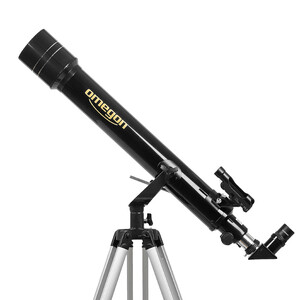
The no-pitfall starter refractor: Moon, Saturn's rings and Jupiter's moons from the very first night. No collimation.
Price: € 119
For more experienced observers: Skywatcher Dobson Telescope N 200/1200 Skyliner Classic
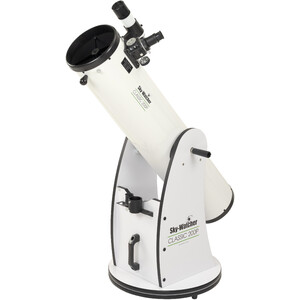
200 mm of aperture — the most sky for your money. Set it on the ground, point by hand: nebulae, clusters and galaxies for years to come.
Price: € 479
* Affiliate link: if you buy through this link we may earn a small commission from Astroshop or High Point Scientific, at no extra cost to you.
Frequently asked questions about the January sky
When are the Quadrantids in 2027?
The maximum falls in the night of 3/4 January 2027 – with up to 80 meteors per hour and only a narrow crescent moon.
Which planets can you see in January 2027?
Jupiter and Mars almost all night in Leo, Saturn and Uranus in the evening, Neptune in the early evening – and Venus as a bright morning star.
When is new moon in January 2027?
On 7 January 2027 – perfect for dark winter nights with the Orion Nebula.
➡️ What comes next: The night sky in February 2027 – with the double opposition of Jupiter and Mars.