By Alexander Merz · Published on · Details checked on 10 October 2026
March 2027 is the month in which the winter sky departs and spring arrives – and in between, two bright planets shine like floodlights in the evening sky. Mars and Jupiter passed opposition in February and stay visible all evening, and by the end of March they are only a little more than 4° apart.
On top of that you get the Moon right next to the Pleiades, the astronomical start of spring on 20 March and a curiosity: in 2027, Easter Sunday and the clock change fall on the same day.
If you missed the double opposition in February, you can catch up now. What you need for it is explained in our buying guide to telescopes for the planets.
More in our overview: Astronomical Events.
The highlights at a glance
- Mars and Jupiter in the evening sky: both high in the south-east, Jupiter at −2.4 mag the brightest object after the Moon. On 31 March they are only a little more than 4° apart
- 13 March, evening: The slender crescent Moon closes in on the Pleiades – shortly before midnight to less than one degree
- 19 March, evening: The almost full Moon stands between Mars, Jupiter and Regulus
- 20 March, 21:24: spring begins – day and night are the same length
- 22 March, 11:43: full moon, the “Worm Moon” and at the same time the Paschal (Easter) full moon
- 28 March: clock change and Easter Sunday – the clocks jump forward from 2:00 to 3:00
- Looking ahead: In the night sky in April 2027 the Moon stands exactly between Mars and Jupiter
Sky events in March 2027: the calendar
All times up to 27 March in CET, from 28 March in CEST, calculated for central Germany. Further west, rise and set times shift up to 20 minutes later, further east they come earlier.
| Date | Event | What you get out of it |
|---|---|---|
| 8 March, 10:29 | New moon | The darkest evenings of the month – the best time for the galaxies in Ursa Major |
| 13 March, 19:00–23:00 | Crescent Moon at the Pleiades | The 30% crescent approaches the Seven Sisters from 2.4° at 20:00 to under 1° around 23:00 – a lovely sight in binoculars |
| 15 March, 17:25 | First quarter | Half moon in the evening – the craters along the terminator (the line between day and night on the Moon) stand out in sharp relief in the low-angled light |
| 18 March, 20:00 | Moon at the Beehive Cluster | The Moon stands 2° from the star cluster Praesepe; the bright Moon does, however, swallow many of its stars |
| 19 March, 20:00 | Moon between Mars and Jupiter | Mars 5°, Jupiter 6.5° and Regulus 6° from the Moon, all around 45° high in the south-east |
| 20 March, 21:24 | Start of spring | The Sun crosses the celestial equator – from now on the days are longer than the nights |
| 22 March, 11:43 | Full moon, “Worm Moon” | First full moon after the start of spring, and therefore the Paschal full moon |
| 28 March, 2:00 | Summer time begins | The clock jumps to 3:00 – in the evening it gets dark an hour later. The same day is Easter Sunday |
| 30 March, 02:53 | Last quarter | From now on the evenings are moon-free again |
| 31 March | Mars and Jupiter 4.3° apart | The closest the two get this spring – after that they drift apart again |
When does it get properly dark in March?
In March the end of twilight moves almost two minutes later every day. On 1 March it is astronomically dark from 19:48, in the middle of the month from 20:13.
With the clock change the clock takes a leap: on 28 March twilight does not end until 21:39. It is the same Sun, just a different clock time – if you want to observe with children, make the most of the evenings before Easter.
Twilight comes in three stages – civil, nautical and astronomical – and only after the last one is the sky truly dark. All the sky dates of the year are collected in our overview of astronomical events.
Mars and Jupiter: the planets after opposition
In March, Jupiter is the brightest object in the evening sky after the Moon. It starts the month in Leo, moves into Cancer around 20 March and shines at −2.5 to −2.3 mag. Even a small telescope shows the two dark cloud belts and the four large moons.
Mars fades over the course of the month but stays eye-catching. It drops from −1.1 to −0.4 mag, and its little disc shrinks from 13.6 to 11.3 arcseconds. For surface detail every steady night now counts – a look at the beginning of March is far more rewarding than at the end.
Mars and Jupiter on 31 March: 4.3° apart
At the end of the month the two move closer together in the sky than they will at any other point this spring: a little more than 4°, about eight full-moon widths. They will not fit into a telescope’s field of view together, and only just into binoculars. To the naked eye, the pairing of orange Mars and white Jupiter makes a beautiful contrast.
The phases of the Moon in March 2027
| Phase | Date and time | In the sky |
|---|---|---|
| New moon | 8 March, 10:29 CET | Invisible – dark evenings until about 12 March |
| First quarter | 15 March, 17:25 CET | Half moon in the evening in the south |
| Full moon | 22 March, 11:43 CET | Visible all night, “Worm Moon” |
| Last quarter | 30 March, 02:53 CEST | Half moon in the morning sky |
The full moon of 22 March is the Paschal full moon. Easter falls on the first Sunday after the first full moon of spring – which is why Easter Sunday 2027 is as early as 28 March. The story behind the name “Worm Moon” and the other full moon names is in our full moon calendar, and all the dates are in the full moon calendar for March.
The crescent Moon at the Pleiades on 13 March
On the evening of 13 March the waxing crescent heads straight for the Seven Sisters. At 20:00 they are still 2.4° apart, around 23:00 less than one degree, and shortly before moonset low in the north-west the edge of the Moon edges right up to the stars of the cluster.
Because the crescent is only 30 per cent lit, it barely outshines the Pleiades. In binoculars the Moon and the cluster fit into the same view – and the unlit part of the Moon glows faintly in earthshine.
The other planets in March 2027
| Planet | Visibility | Brightness | Where |
|---|---|---|---|
| Jupiter | Whole first half of the night | −2.5 to −2.3 mag | Leo, from 20 March Cancer |
| Mars | Whole first half of the night | −1.1 to −0.4 mag | Leo |
| Saturn | Only in early March, low in the west | +0.8 mag | Pisces |
| Venus | In the morning, but only 4–7° high | −4.0 mag | Capricornus |
| Uranus | Evenings in the west, binoculars | +5.7 mag | Taurus |
| Mercury | Not visible | – | – |
Saturn takes its leave: on 1 March it is still 21° high at the end of twilight, by mid-March only 10°. On 7 April it passes behind the Sun.
Venus is bright, but hard to catch. It is 40° from the Sun, but on spring mornings the ecliptic (the Sun’s apparent path across the sky) runs at a shallow angle – in the morning twilight Venus barely makes it above the rooftops.
The constellations in March: farewell to winter
Around 22:00, Cancer and Gemini stand high in the south. In the west the Winter Hexagon sinks with Orion, Taurus and Auriga, while Leo already stands high in the south-east – this year with Mars and Jupiter as guests.
The Big Dipper stands high in the north-east and tips further upwards evening by evening. With it you can find Polaris, Leo and later Arcturus in just a few hops – how that works is explained under identifying constellations.
Deep sky in March: Praesepe and the galaxies in Ursa Major
The deep-sky target of the month is Praesepe (M 44) in Cancer. The star cluster, also called the Beehive, spans around 1.5° and is visible even to the naked eye as a hazy patch. It is too large for most telescopes – it looks best in binoculars.
High in the north-east are the galaxies M 81 and M 82 in Ursa Major, around 12 million light years away. In a telescope both fit into one field of view: M 81 as an oval smudge of light, M 82 as a slim cigar.
Early in the evening it is still worth taking a last look at the Orion Nebula in the south-west. The darkest evenings for it fall between 5 and 12 March.
The worthwhile dates are often weeks apart – and easily forgotten. So that you don’t miss any of them:
One short email, in good time – with the times and an honest take on whether it is worth getting up for.
You will get a confirmation email in a moment. Your address stays with us – no sharing, no third-party ads.
Equipment for the March sky
For Mars and Jupiter, aperture (the diameter of the main lens or mirror) matters, not magnification. A 130 mm reflector shows Jupiter’s cloud belts and Mars as a small orange disc with dark markings. If you can only buy one instrument and really want to explore the sky, go for the telescope; binoculars are the complement, not the substitute.
The starter scope for Mars and Jupiter: Skywatcher Dobson Telescope N 130/650 Heritage FlexTube
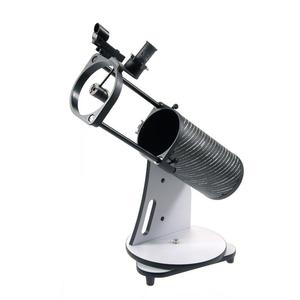
A compact tabletop Dobson with a true parabolic mirror. Folds down, fits in a bag: the Moon, planets and the bright deep-sky classics.
Price: € 265
If you want more: With 200 mm of aperture, the Dobsonian gathers more than twice as much light. That shows more detail in Jupiter’s belts – and is what really brings M 81 and M 82 into view. The extra cost is worth it if you want to see not just planets but galaxies too.
For advanced observers: Skywatcher Dobson Telescope N 200/1200 Skyliner Classic
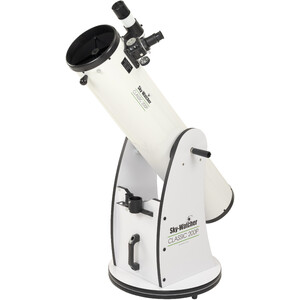
200 mm of aperture — the most sky for your money. Set it on the ground, point by hand: nebulae, clusters and galaxies for years to come.
Price: € 479
* Affiliate link: if you buy through this link we may earn a small commission from Astroshop, High Point Scientific or another linked retailer, at no extra cost to you.
Frequently asked questions about the night sky in March
When does spring begin in 2027?
On 20 March 2027 at 21:24 CET. At that moment the Sun is exactly over the celestial equator, and day and night are almost the same length. All the dates are listed under astronomical seasons.
When is the full moon in March 2027?
On 22 March 2027 at 11:43 CET. It is the “Worm Moon” and at the same time the Paschal full moon – which is why Easter Sunday is as early as 28 March.
Which planets can you see in March 2027?
In the evening, Jupiter and Mars high in the south-east, and in early March Saturn low in the west. Venus is in the morning sky, but very low. Uranus is a binocular target in Taurus in the evening.
When do the clocks change in 2027?
In the night to 28 March 2027 the clock jumps from 2:00 to 3:00. As a result it gets dark an hour later in the evening.
Which constellations can you see in March?
Around 22:00, Cancer and Gemini stand high in the south, the winter sky with Orion sinks in the west, and Leo already stands high in the south-east. The Big Dipper is high in the north-east.
When is the Moon near the Pleiades in March 2027?
On the evening of 13 March. At 20:00 the slender crescent is 2.4° from the star cluster and closes in to less than one degree by the time it sets after midnight.
➡️ What comes next: The night sky in April 2027 – with the Moon between Mars and Jupiter and the Lyrids.
⬅️ The month before: The night sky in February 2027 – with the double opposition of Jupiter and Mars.