By Alexander Merz · Updated on · Details checked on 14 September 2026
⏳ Countdown to the next top event: Saturn at opposition
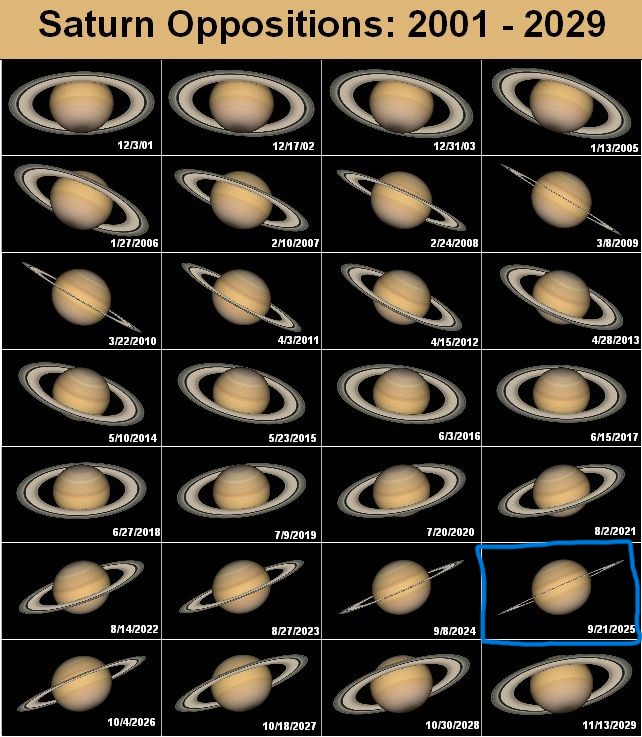
4 October 2026 — Saturn visible all night, its rings opened to 9.2° again.
To the Saturn guide →What a year for the sky! The deep solar eclipse over Germany and the Perseids at new moon on 12 August are now history – but still ahead this year are the Saturn opposition on 4 October and the moonless Geminids in December, and 2027 follows right up with the Mars opposition. Here is your overview of all the astronomical highlights of 2026/2027, each with a link to the detailed guide.
The top events at a glance
| Date | Event | Rating |
|---|---|---|
| 12 August 2026 | Partial solar eclipse (up to 90 % over Germany!) | ⭐⭐⭐ Event of the century |
| 12/13 August 2026 | Perseid maximum at new moon | ⭐⭐⭐ Best conditions in years |
| 28 August 2026 | Partial lunar eclipse at dawn | ⭐⭐ |
| late September 2026 | Neptune opposition (next to Saturn!) | ⭐⭐ |
| 4 October 2026 | Saturn opposition – 0.33 mag, 19.7″, rings opened to 9.2° again, visible all night (October guide) | ⭐⭐⭐ |
| mid-November 2026 | Morning planetary parade: Jupiter, Mars, Venus & Mercury | ⭐⭐ |
| late November 2026 | Uranus opposition | ⭐⭐ |
| 13/14 December 2026 | Geminids – up to 150 meteors/hour, moon-free | ⭐⭐⭐ |
| 24 December 2026 | Full moon on Christmas Eve (“Cold Moon”) | ⭐ |
| 19 February 2027 | Mars opposition in Leo | ⭐⭐⭐ |
| 2 August 2027 | Total solar eclipse over North Africa – partial in southern Germany too | ⭐⭐⭐ Travel event |
Month by month through the astronomical year
For every month we have prepared a detailed observing guide with moon phases, planets and deep-sky tips:
➡️ August 2026 (eclipse + Perseids!) · September (Neptune opposition) · October (Saturn opposition) · November (planetary parade) · December (Geminids)
Also: Meteor shower calendar 2026/27 · Full moon calendar · Moon calendar 2026
What you need, and for which event
Most dates on this list are naked-eye events. For the Geminids on 13/14 December and the morning planetary parade in November you need nothing but a dark spot, warm clothes and patience. A telescope even narrows the field of view and gets in the way.
With the oppositions it is the other way round. In binoculars Saturn is no more than an oval dot of light – exactly how Galileo saw it in 1610, mistaking the rings for two handles. They only separate from the planet at around 30x magnification, the Cassini division at about 100x.
For 4 October a compact Dobson is enough: folded down it fits into any boot, and it needs no polar alignment.
Enough for the rings: Skywatcher Dobson Telescope N 130/650 Heritage FlexTube
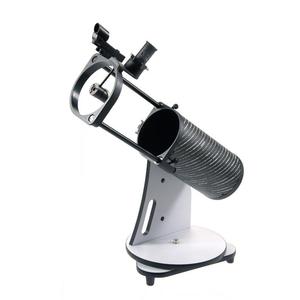
A compact tabletop Dobson with a true parabolic mirror. Folds down, fits in a bag: the Moon, planets and the bright deep-sky classics.
Price: € 265
The same instrument carries the Mars opposition on 19 February 2027: the polar cap and the larger dark regions are visible in it. There is not much more to be had in 2027 even with big instruments – Mars stays comparatively far from Earth at this opposition.
If you want more aperture, for cloud belts and later galaxies too: the beginner's guide compares the optical designs, the Saturn guide shows magnification by magnification what becomes visible on the ring. On a fixed budget, the comparison telescope under 300 euros helps.
☀️ The one exception: the Sun
The solar and lunar eclipses of 2026 are over. The next solar date is the total eclipse on 2 August 2027, visible as a partial eclipse in southern Germany. The same rule applies as on 12 August: never without certified eclipse glasses – no sunglasses, no emergency blanket, no sooted glass.
A certified pair costs less than the drive to the observing site: Omegon Solar Eclipse Glasses Solar Safe, pack of 3 for € 13. Why home-made solutions are dangerous is explained in the eclipse guide.
* Affiliate link: if you buy through this link we may earn a small commission from Astroshop or High Point Scientific, at no extra cost to you.
Frequently asked questions
What is the most important celestial event of 2026?
The partial solar eclipse on 12 August 2026 – with up to 90 % coverage it was the biggest solar event over Germany since 1999. The best Perseid night in years began the same evening. The most important event still to come this year is the Saturn opposition on 4 October 2026.
When is the next total solar eclipse?
On 2 August 2027 – total over North Africa (including Egypt, with over 6 minutes of totality), visible as a partial eclipse in southern Germany.
Which planetary oppositions are coming up?
Neptune (late September 2026), Saturn (4 October 2026), Uranus (late November 2026) and Mars (19 February 2027).
🗓️ Also interesting: Astro events 2026/2027: all celestial phenomena at a glance