By Alexander Merz · Updated on · Details checked on 14 September 2026
Vega is the brightest star in the constellation Lyra: only 25 light-years away, magnitude 0.03, and visible from Central Europe almost all year round.
Look up on a clear summer evening and the brightest point almost directly overhead is very likely the Vega star. The jewel of the constellation Lyra and the dazzling apex of the Summer Triangle, this blue-white beacon is one of the easiest stars to spot in the northern sky — and one of the most remarkable.
⚡ The quick answer: The Vega star is the fifth-brightest star in the night sky (magnitude 0.03), lying just 25 light-years away in the constellation Lyra. It forms the Summer Triangle with Deneb and Altair, is visible almost year-round from mid-northern latitudes, and rides high near the zenith on summer nights.
The lead star of the summer sky
Vega, in Lyra, is the fifth-brightest star in the night sky and the most brilliant corner of the Summer Triangle, which it shares with Deneb (Cygnus) and Altair (Aquila). On August evenings it stands almost straight overhead — when you look nearly vertically, you’re looking at Vega. Its bluish-white glow reveals a surface temperature of around 9,600 degrees, considerably hotter than our Sun.
A star rich in history — and future
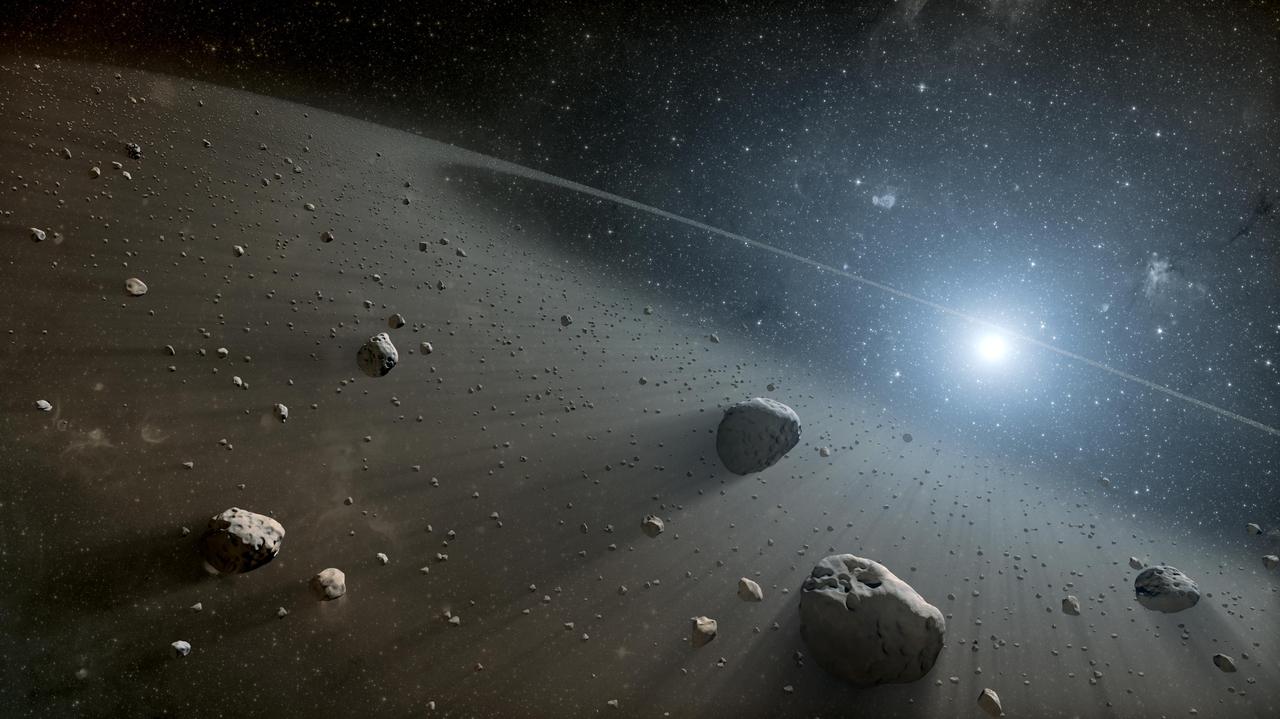
Vega holds a special place in the story of astronomy. It was one of the first stars to have its distance measured (in 1838), the first star ever photographed (in 1850), and it long served as the zero point of the stellar magnitude scale. Even more striking: in roughly 12,000 years, thanks to the slow wobble of Earth’s axis — precession — it will become our pole star. Vega is also encircled by a broad disk of dust, a possible planetary system in the making, made famous by Carl Sagan’s novel Contact.
How to find Vega in the sky
The easiest method in summer: simply look straight up. The brightest star near the zenith is Vega. From there you can trace the small parallelogram of Lyra, home to the famous Ring Nebula M57, a rewarding target for mid-sized telescopes. Even a simple pair of binoculars will already reveal the rich star field surrounding it.
What can you see around Vega?
| Object | What you see | Suggested gear |
|---|---|---|
| Vega | Brilliant blue-white point | Naked eye |
| The Summer Triangle | Three bright stars | Naked eye |
| Parallelogram of Lyra | Small quadrilateral of stars | Binoculars |
| Ring Nebula M57 | Tiny grey smoke ring | Mid-sized telescope |
To sweep the Summer Triangle and follow the Milky Way as it streams through Lyra, a good pair of binoculars is the perfect companion — light, instant, and ideal for beginners.
Great for starting out: Celestron Cometron 7x50 Binoculars
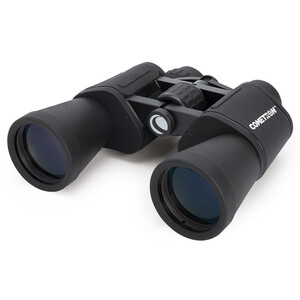
The astronomy classic among affordable binoculars: 7×50 with a large exit pupil for bright handheld views of the Moon and Milky Way – the ideal first step before a telescope.
Price: € 65
* Affiliate link: if you buy through this link we may earn a small commission from Astroshop or High Point Scientific, at no extra cost to you.
Frequently asked questions
When can you see the Vega star?
From mid-northern latitudes, almost all year round, and best from May to October. On summer evenings it climbs nearly to the zenith.
What is the Summer Triangle?
A large triangle formed by the bright stars Vega (Lyra), Deneb (Cygnus) and Altair (Aquila) — the best signpost of the summer sky.
Will Vega really become the pole star?
Yes. The precession of Earth’s axis slowly shifts the celestial pole; in about 12,000 years it will lie close to Vega.
Does Vega have planets?
A large disk of debris and dust around the star has been confirmed. A few planet candidates are debated, but none is yet definitively confirmed.
How far away is Vega?
About 25 light-years from Earth, making it one of the nearest bright stars to us.
Read next: