By Alexander Merz · Published on · Details checked on 6 November 2026
A dark nebula, also called a dark cloud, is a cold, dense cloud of gas and dust that swallows the light of the stars and nebulae behind it. It only becomes visible as a dark silhouette against a brighter background (Wikipedia, in German: Dunkelwolke).
The best-known example is the Horsehead Nebula in Orion. This page shows how dark nebulae fit in with the other nebulae in space.
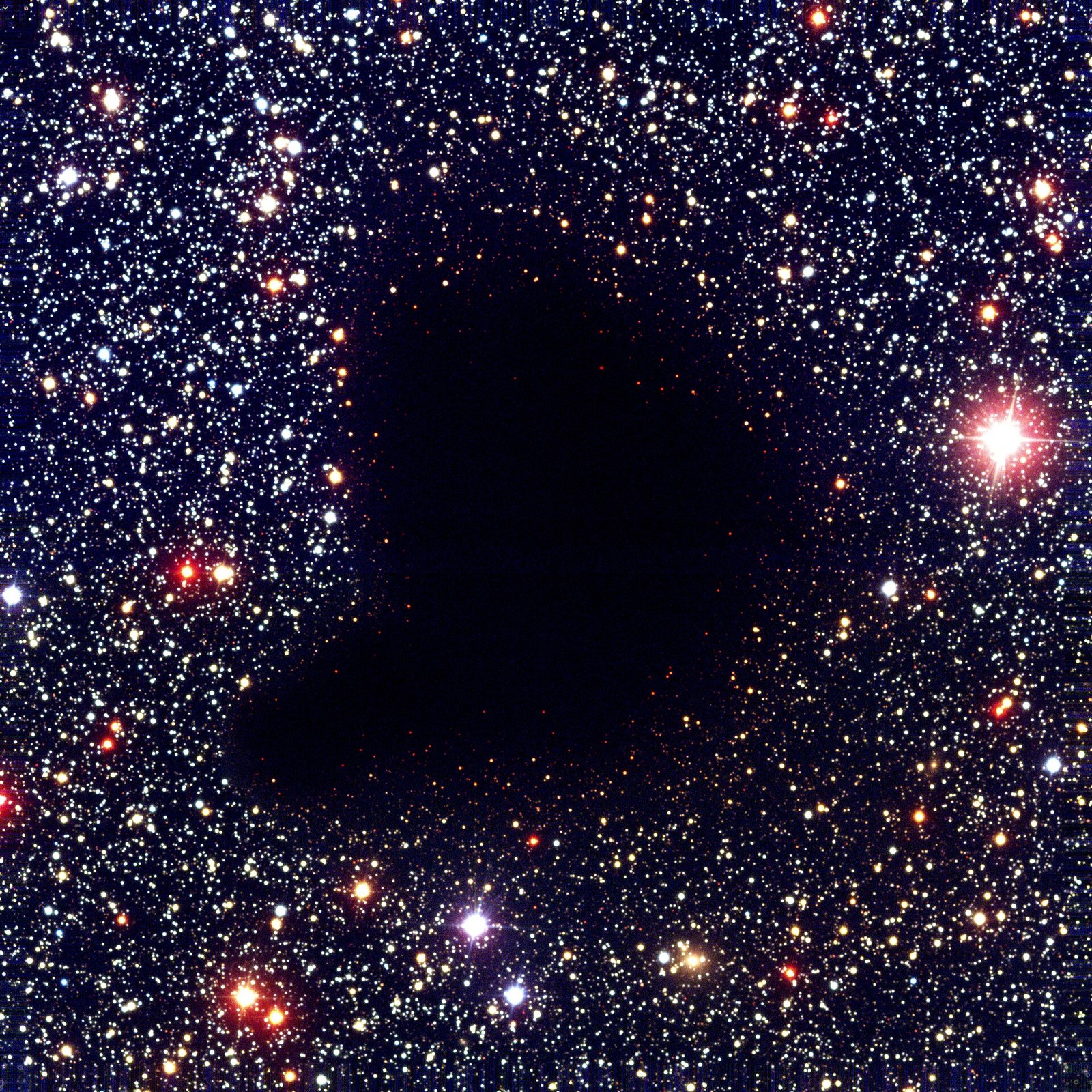
What is a dark nebula?
A dark nebula is not an empty hole but a cloud that is too dense to let light through. It consists mainly of molecular hydrogen and fine dust. At only 7 to 15 kelvin it is one of the coldest places in space (Wikipedia, in German: Dunkelwolke).
Edward Emerson Barnard recognised around 1900, using photography, that these were clouds. His catalogue lists 349 dark clouds north of −35° declination. That is why many of them carry a “B” with a number today, such as B 33 for the Horsehead (Wikipedia, in German: Barnard catalogue).
Dark nebulae and star formation
Dark nebulae are where tomorrow’s stars are born. Because the gas is so cold, it can collapse under its own gravity into dense cores. Small, round dark clouds are called globules or Bok globules, after Bart Bok, who proposed them in 1947 as an early stage of star formation (Wikipedia, in German: Globule).
Astronomers look inside with infrared and radio telescopes. In visible light the centres are completely opaque, but the molecules give themselves away through their microwave radiation. The famous pillars in the Eagle Nebula are also dense, cold dust – more on that in the Pillars of Creation.
Famous dark nebulae: from naked eye to telescope
With dark nebulae, size is the problem, not brightness. Many are so extended that they do not fit into any telescope’s field of view. That is why the list runs from the naked eye all the way to a large Dobsonian.
| Dark nebula | Constellation | Size in the sky | Best time | With what? |
|---|---|---|---|---|
| ⭐ Best starting pointGreat Rift of the Milky Way | Cygnus to Sagittarius | across many constellations | Jul–Sep | naked eye, dark sky |
| Barnard’s E (B 142/143) | Aquila | approx. 30′ | Jul–Sep | binocular, small telescope |
| Pipe Nebula (incl. B 59) | Ophiuchus | large, binocular field | Jun–Jul, very low | naked eye/binocular, only with a clear southern horizon |
| Barnard 86 | Sagittarius | small, next to NGC 6520 | Jul–Aug, low | telescope |
| Horsehead Nebula B 33 | Orion | 8′ × 6′ | Dec–Feb | large telescope + H-beta, or photo |
| Coalsack | Southern Cross | 5° × 7° | never from mid-northern latitudes (Europe, most of the US) | naked eye, southern hemisphere only |
The Great Rift is the dark nebula everyone has already seen. The dark gap that splits the band of the summer Milky Way from Cygnus to Sagittarius is dust swallowing the light of the stars behind it (Wikipedia: Great Rift). You see it best on moonless summer nights far from town – more about the band itself on our Milky Way page.
Barnard’s E in Aquila is a lovely binocular target. The pair of clouds forms a sharply outlined, dark “E” against the Milky Way, about as large as the full moon and around 2,000 light years away (Wikipedia, in German: E Nebula). It lies in the Summer Triangle area, not far from Altair.
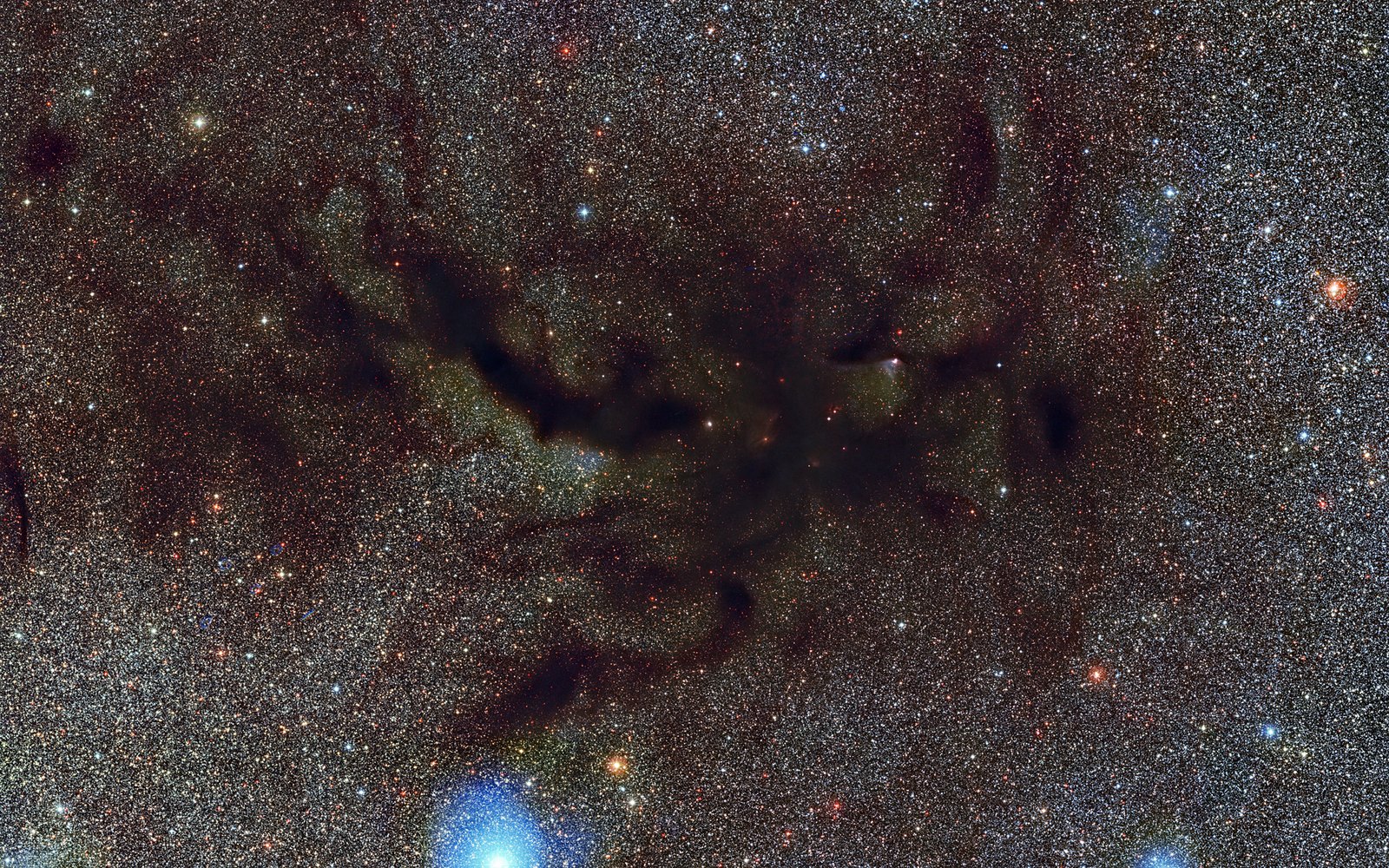
The Coalsack is the best-known example in the southern sky. It lies next to the Southern Cross, 500 to 600 light years away, and forms a conspicuous “hole” in the Milky Way (Wikipedia, in German: Kohlensack). If you travel to the southern hemisphere, you can see it with the naked eye.
Horsehead Nebula: the most famous dark nebula
The Horsehead is an extension of a dark cloud that stands out against the red glowing gas of IC 434. It is around 1,500 light years away and appears about a quarter the size of the Moon (Wikipedia, in German: Pferdekopfnebel). It lies close to Alnitak, the eastern star of Orion’s Belt.
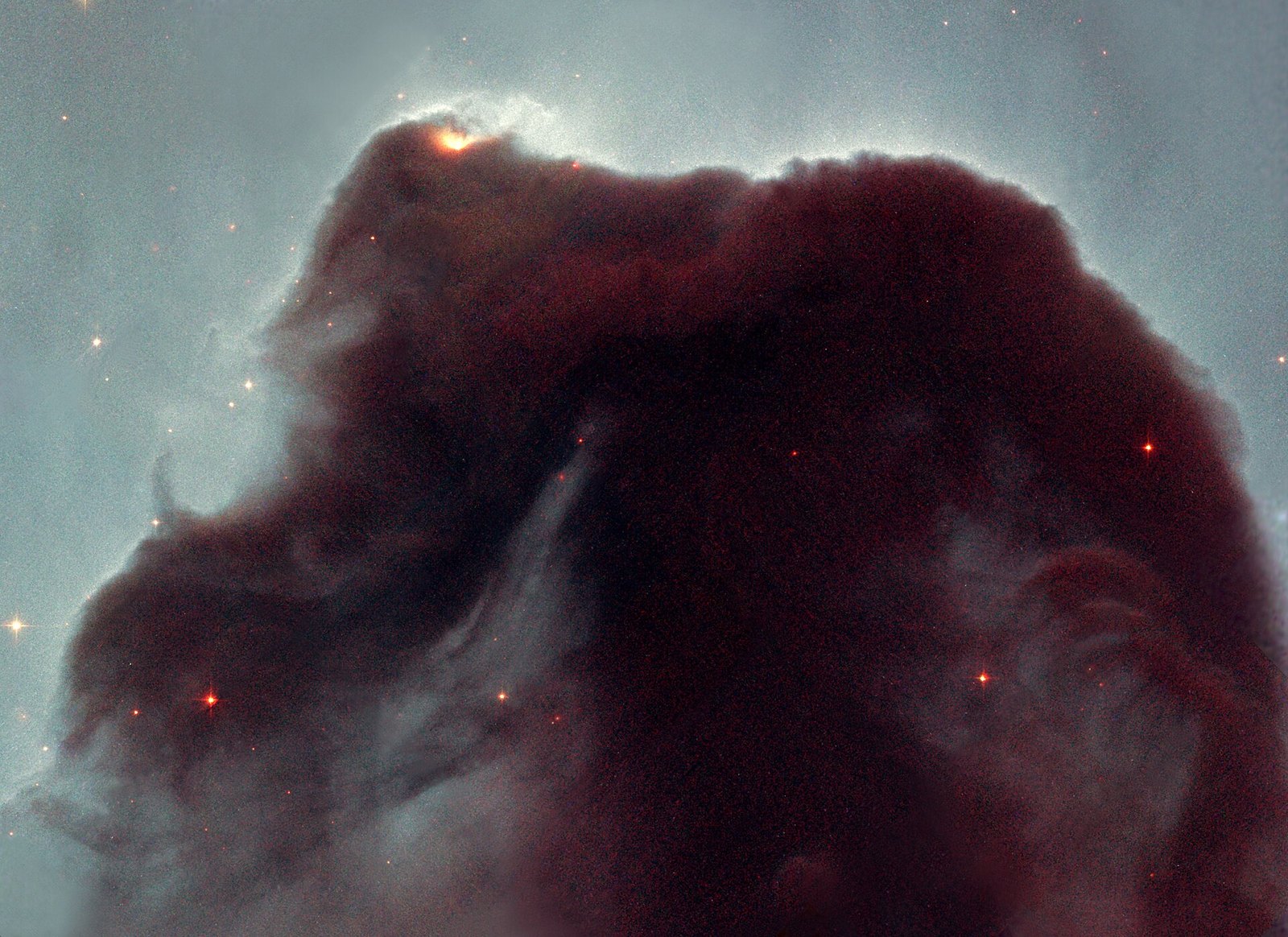
Visually, the Horsehead is considered a touchstone – and experiences differ widely. Wikipedia gives a telescope of 20 cm aperture or more as a rule of thumb. In a German-language forum, observers report sightings with a 12-inch Dobsonian under a suburban sky and even with 60 mm under a very dark mountain sky, while others did not see it even with 20 inches in a suburban garden (forum.astronomie.de, January 2023, in German).
Almost everyone agrees on three points: an H-beta filter, good transparency and a large exit pupil. The filter brightens the background nebula IC 434, against which the head can stand out in the first place. A transparent, dark sky matters more than any amount of aperture.
Observing dark nebulae: binocular instead of telescope
You only see dark nebulae as contrast – so you need a bright background and a dark sky. Under city lights the background itself is brightened and the contrast disappears. Our guide to light pollution shows how dark your site is; you will find good places under dark sky areas.
A wide field of view matters more than magnification. Only when there is enough star field around the dark patch in the view does it stand out at all. A 10×50 binocular or a telescope with the longest eyepiece you own is therefore the best choice.
Budget pick: Celestron UpClose G2 10x50 Porro Binoculars
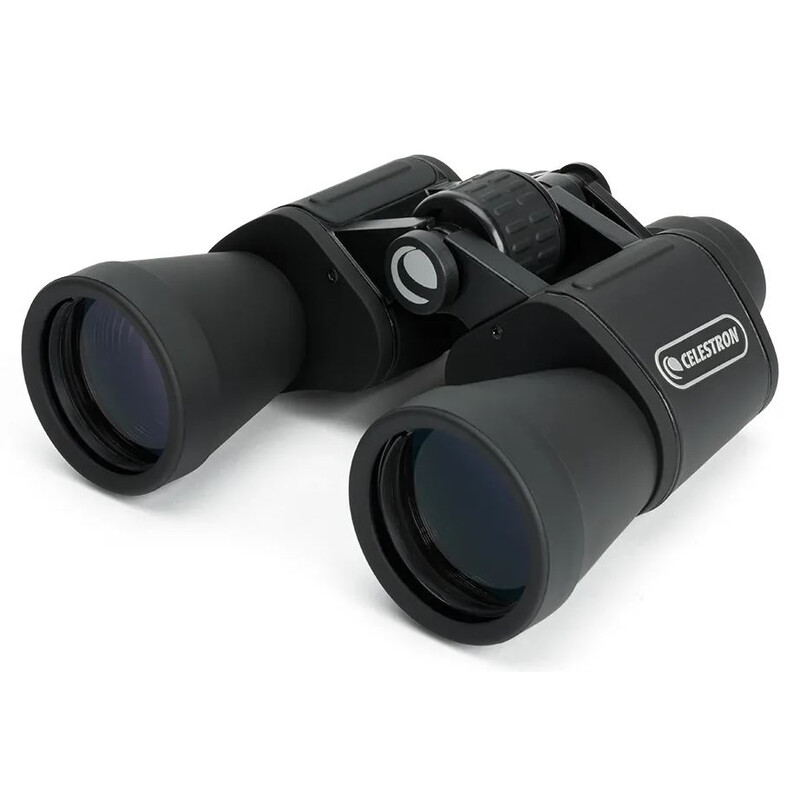
Simple 10×50 binocular: shows the Great Rift in the Milky Way, Barnard’s E in Aquila and the star clouds of summer. On a tripod you see much more than hand-held.
Price: € 62
Lots of aperture for the money: Skywatcher Dobson Telescope N 200/1200 Skyliner Classic
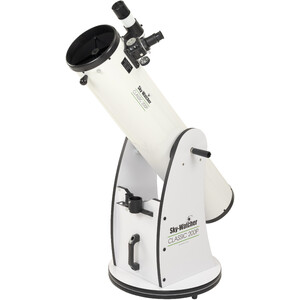
200 mm aperture for smaller dark clouds such as Barnard 86 and – with an H-beta filter and a very dark sky – an attempt at the Horsehead. A long-focal-length eyepiece gives you enough field.
Price: € 479
For advanced observers: Omegon Dobson Telescope Advanced X N 254/1250
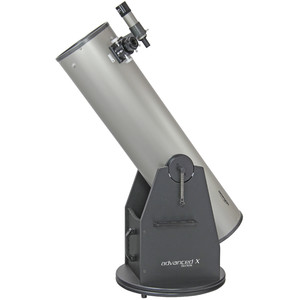
254 mm aperture: the more realistic choice for the Horsehead and faint Barnard objects. Only worthwhile if you regularly drive to a dark site.
Price: € 699
Photographing dark nebulae
Photographically, dark nebulae call for a dark sky and plenty of exposure time. The delicate brown dust clouds stand out only faintly from the background and quickly get lost in light pollution. In a German-language forum, photographers show images of this kind, for example of dark clouds in Cassiopeia and Cepheus (forum.astronomie.de, September 2026, in German; August 2025).
For pure dust clouds you shoot broadband, without narrowband filters. The dust itself does not glow in emission lines; it only dims the starlight behind it. You only use a dual-band filter for targets with glowing gas, such as the Horsehead in front of IC 434 or the Elephant’s Trunk in IC 1396.
Short focal lengths have the advantage here. The Great Rift and the Pipe Nebula only fit into the frame of a wide-angle or standard lens on a tracking mount. How to photograph the Milky Way and our guide to equatorial mounts show how it is done.
Horsehead on your phone: ZWO Seestar S50 Pro Smart Telescope
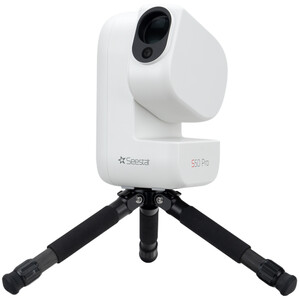
Smart telescope with 50 mm aperture and a built-in dual-band filter: shows the Horsehead in front of IC 434 after only a short total exposure. The field of view is too small for large dark-cloud regions.
Price: € 999
FAQ about dark nebulae
What is the difference between a dark nebula and a dark cloud?
None – both terms mean the same thing, and Wikipedia lists them as synonyms. You will come across both in star charts and catalogues, often along with the abbreviations B (Barnard) and LDN (Lynds).
What are dark nebulae made of?
Mainly molecular hydrogen, plus fine dust that swallows the light. At 7 to 15 kelvin they are extremely cold, and new stars form in their densest cores.
Can you see dark nebulae with the naked eye?
Yes, the large ones. The Great Rift in the summer Milky Way is impossible to miss under a dark sky, and in the southern hemisphere the Coalsack next to the Southern Cross catches the eye immediately.
What aperture do you need for the Horsehead Nebula?
The rule of thumb is 20 cm or more, plus an H-beta filter. What matters more, though, is a very dark, clear sky: there are sightings with small optics under mountain skies and failed attempts with 50 cm in a suburban garden.
How many dark nebulae are there?
Barnard’s catalogue alone lists 349 dark clouds north of −35° declination. Later catalogues such as the one by Beverly Lynds (LDN) list considerably more, and countless small clouds have never been catalogued at all.
* Affiliate link: if you buy through this link we may earn a small commission from Astroshop, High Point Scientific or another linked retailer, at no extra cost to you.